
A Childhood Lived Through Glass
Around the world, governments are beginning to rethink what it means for a child to grow up online. In Australia, a new policy restricts social media access for minors under sixteen — an initiative that has sparked debates far beyond legislative chambers. Public health experts cite rising anxiety levels. Educators warn of diminished attention spans. Parents confess their growing helplessness.
Yet beneath the familiar arguments lies a dimension rarely discussed: the quiet, foundational process through which a human being learns to relate to other human beings. The Swiss psychologist Carl Jung described this capacity as Extraverted Feeling — Fe — one of the mind’s core mechanisms for understanding and navigating social life. And like language, motor coordination, or emotional regulation, Fe matures only when a child has rich, reciprocal encounters with real people.
This is the deeper issue at stake in conversations about social media bans: What kind of psychological adulthood will we be shaping if children grow up with virtual interactions replacing real ones?
What Fe Actually Is — and Why It Needs the Real World
Fe is often misunderstood in contemporary personality discourse. It is not “being nice” or “seeking harmony” in the superficial sense. In Jung’s work, Fe is an organ of orientation: a way the psyche interprets the emotional field between individuals. It learns to respond to the subtle expressions that constitute human connection — a widening of the eyes, a softening of the voice, the delicate pause before someone speaks.
Children do not discover these cues by reading about them, nor by interpreting emojis. They absorb them through the rhythm of everyday interactions: arguments with siblings, inside jokes with friends, shy glances across a classroom, even the mundane rituals of greeting neighbors or navigating playground politics. These are the experiences that train Fe to distinguish warmth from hostility, sincerity from pretense, tension from safety.
In other words, Fe is embodied. A child learns the language of relationship not with the intellect, but with the nervous system. With the whole being.
When these embodied experiences are sparse, inconsistent, or replaced by digital simulations, the function does not disappear — but it evolves in a distorted environment. What emerges is a social sense built on fragments: text without tone, reactions without presence, “connections” without the vulnerability that makes connection meaningful.
Why Social Media Undermines Fe Development
At first glance, social media seems like a place overflowing with emotional content: declarations, confessions, arguments, performative displays of joy or despair. But the emotional world of social media is flat. It lacks the three-dimensionality of real human presence.
A child scrolling through comments does not learn empathy; they learn sentiment. They learn how people signal emotion, not how they feel it. They encounter anger without the trembling voice behind it, praise without the warmth of eyes meeting theirs, disappointment without the quiet ache of a friend sitting too far away at lunch.
More dangerously, digital interactions shield children from the reciprocal impact of their own actions. You can wound someone online and never notice the wince. You can withdraw without seeing hurt flicker across a friend’s face. You can “block” instead of apologizing. You can perform instead of revealing.
Without these feedback loops, Fe loses one of its essential teachers: consequence. Social media produces emotional experiences without emotional accountability — and this is a recipe for fragile social competence.
The Hidden Cost: An Underdeveloped Social Self
When Fe is deprived of the raw material it needs, the consequences do not always appear immediately. In childhood, they may surface as awkwardness or dependence; in adolescence, as insecurity or volatility. But in adulthood, the effects often crystallize into deeper fractures: relationships that collapse under the first strain, friendships that feel replaceable, intimacy that never quite deepens, empathy that struggles to move beyond the theoretical.
A child who grows up online becomes fluent in emotional expression but illiterate in emotional presence. They may know how to craft a compelling message, but not how to comfort someone silently. They may know how to debate ideas, but not how to sit through a friend’s tears without reaching for distraction. They may know how to ask for reassurance, but not how to offer it.
This is not a failing of character; it is a missing chapter in development.
Fe, when allowed to mature, becomes the foundation for the subtle relational intelligence on which communities, families, and societies depend. When it is rushed, distorted, or starved, the entire architecture of adulthood is weakened.
Why Age Restrictions Make Psychological Sense
Policies that restrict social media until 14 or 16 are often framed as measures of safety — protections against predators, cyberbullying, misinformation, or addictive design. These are valid concerns, but they are not the whole story. Age restrictions are also a recognition of developmental timing.
Between the ages of ten and sixteen, children enter a critical period of social maturation. Their identities expand beyond the family; friendships deepen; moral intuitions sharpen; emotional patterns begin to solidify. These years are the laboratory in which Fe acquires nuance. Introduce a child to the emotional turbulence of social media before this foundation is laid, and their relational compass becomes calibrated to noise rather than harmony.
Critically, delayed access does not harm digital literacy. A fourteen-year-old learns platforms within days. A nine-year-old, however, may spend a lifetime trying to relearn the social lessons they never had the chance to receive in person.
The issue is not whether children should learn to navigate the digital world. They must — and they will. The real issue is whether they should do so before they have built the relational muscles that make them resilient, balanced, and empathetic participants in both digital and physical communities.
Offline Childhood as a Developmental Right
Perhaps the most radical claim we can make today is also the simplest: Children deserve a childhood. Not just one filled with safety, but one filled with presence.
A childhood where friendships are built through shared adventures, not shared followers.
Where disagreements end in awkward apologies, not blocked accounts.
Where belonging comes from being accepted by a group of real peers, not by accumulating likes from strangers.
If we think of childhood as a time to develop the functions of the psyche — not merely to consume information — then offline life becomes not a nostalgic preference but a developmental necessity. Fe matures through living with others, through feeling the texture of human interaction in all its unpredictable, sometimes uncomfortable reality.
This is not an argument against technology. It is an argument for humanity.
Can AI Teach Social Skills? What It Can — and Cannot — Do
Artificial intelligence can provide structure, knowledge, even emotional simulations. It can model polite conversation, offer conflict-resolution strategies, or coach a shy child through hypothetical scenarios. But AI cannot offer presence. It cannot offer risk. It cannot offer the mutual vulnerability from which authentic empathy arises.
A child may learn about emotions from a machine, but Fe does not grow from information. It grows from co-regulation — two nervous systems adjusting to one another in real time. No software, no matter how advanced, can replicate this dance.
AI can supplement development. It cannot replace human relationship as the ground of it.
A Call to Reimagine Digital-Age Childhood
We are approaching a crossroads. One path leads to a world in which childhood unfolds through filtered images and algorithmic emotional currents. The other leads to a world that still remembers the irreplaceable value of human presence — where digital life complements childhood rather than consuming it.
Restricting social media for children under 14 or 16 is not about nostalgia. Nor is it about fear. It is a commitment to the conditions under which the human psyche has always grown. It is an acknowledgment that maturity is not built from exposure alone, but from the right kind of exposure at the right time.
Most importantly, it is a vote of confidence in the innate capacities of children. They will learn technology, because technology can be learned at any age. But empathy, relational depth, emotional courage, and the subtle wisdom of Fe — these must be lived into, not downloaded. If we give children the gift of an embodied, relational childhood, they will carry its strengths into the digital future. If we do not, no amount of technical skill will compensate for what was lost.
What Jung Really Meant by “Extraverted Feeling”
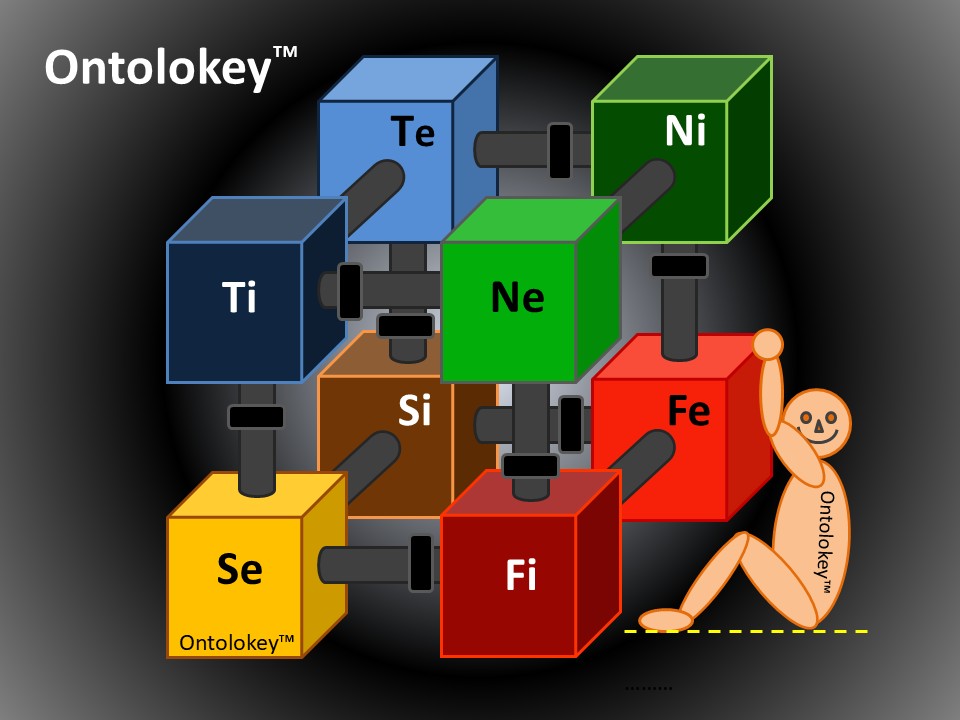
Before exploring the societal implications, we need to clarify what Fe actually is — not according to pop YouTube channels, but in the original Jungian sense. Find a more detailed explanation of Fe here on www.ontolokey.com (see table of contents).
1. Fe as a Basic Psychological Organ
Jung described the eight functions as “organic systems of orientation” — innate ways human beings interpret and regulate their relationship to the world. Fe is one of these systems, and its orientation is outward, toward the emotional and relational field of others.
Fe is designed to:
- detect interpersonal dynamics
- harmonize social situations
- navigate group norms
- read emotional atmospheres
- communicate empathy and relational intent
- understand what “belongs,” what “connects,” and what “wounds”
It is not simply the ability to be polite. It is the internal mechanism through which human beings orient themselves within a community.
2. Fe Develops Through Real Contact — Not Digital Abstraction
Fe is sensorial, embodied, and relational. It attunes itself to:
- micro-expressions
- voice inflections
- posture
- warmth or tension in the air
- the immediacy of others’ feedback
- real risk of disharmony or conflict
- real reward of connection, trust, and shared emotion
In natural development, Fe emerges as an infant feels a caregiver’s face, tone, presence — not scrolling text.
Fe matures in real groups, real friendships, real conflicts, real reconciliations.
It requires:
- immediacy (others are “here” with me),
- accountability (my actions have real effects),
- vulnerability (I can be hurt or supported),
- co-regulation (we adjust to each other), and
- embodied resonance (mirror neurons, eye contact, contextual cues).
These are the raw materials Fe needs to become healthy and sophisticated.
3. What Happens If These Inputs Are Missing?
When Fe does not receive adequate developmental nourishment, we observe:
- superficial social adaptation
- fear-driven conformity
- exaggerated people-pleasing
- inability to sense authentic emotional nuance
- fragile self-worth based on external validation
- difficulty navigating conflict
- overreliance on digital signals (likes, emojis, metrics)
- emotional dysregulation
- parasocial “pseudo-connections” masquerading as intimacy
Fe does not stop functioning — it simply remains stunted, distorted, or artificially inflated.
Part II — Why Social Media Environments Cannot Nurture Fe
The question at the heart of this debate is not:
“Should children be protected from harm online?”
That question has already been answered by overwhelming evidence.
The true question is deeper:
“Can a child’s psychological functions — especially Fe — fully develop in an environment mediated primarily through screens?”
Ontolokey will argue: no.
1. Algorithms Are Not Human Social Environments
Social media platforms simulate sociality but do not replicate it. Algorithms are engineered to:
- maximize engagement through emotional provocation
- reward attention-seeking behavior
- expose users to conflict-heavy content
- manipulate social reward structures
- amplify extremes instead of moderating them
This environment activates Fe’s vulnerabilities instead of strengthening its capacities.
In physical social life, children learn:
- empathy
- reciprocity
- timing
- repair
- moderation
- mutual care
On social media, children learn:
- comparison
- social performance
- emotional volatility
- craving for validation
- tribalism
- curated identity
- parasocial relating
This is not an environment where Fe can mature properly.
2. Social Media Removes All the Real Ingredients of Empathy
Empathy — the heart of Fe — is built from embodied interaction.
When a child speaks to a friend in person, they perceive:
- facial warmth
- tension in the jaw
- breath rhythm
- shakiness in a voice
- the physical presence of shared space
None of this exists online.
Even video calls flatten emotional context.
Children need three-dimensional emotional data — social media provides a two-dimensional emotional caricature.
3. Virtual Interactions Lack Accountability
A crucial part of social maturation is learning that:
- your words have consequences
- your tone impacts others
- your behavior shapes group harmony
On social media, those consequences dissolve into anonymity, distance, or the ability to walk away instantly.
Children learn:
- to ghost
- to block
- to cancel
- to avoid conflict resolution
- to retreat from discomfort
- to punish others without consequence
In real life, these behaviors would damage relationships, trigger emotional feedback, and force interpersonal growth.
Online, they become standard.
Fe cannot mature without emotional accountability.
4. Social Media Collapses Developmental Boundaries
Kids are suddenly exposed to:
- adults
- influencers
- strangers
- predators
- cultural microtrends
- political and ideological battles
- sexualized content
The child’s developing Fe is thrown into overstimulation, forced to respond to a scale and speed of emotional input that far exceeds the natural human environment.
This is the psychological equivalent of giving a child a jet engine and expecting them to learn to walk.
Part III — The Consequences of Fe Undernourishment in a Social Media-Dominated Childhood
When Fe fails to develop properly, the results reverberate across the entire personality.
Let’s examine the long-term consequences.
1. Emotional Literacy Declines
Children raised primarily online develop:
- difficulty recognizing subtle emotions
- reduced tolerance for silence or tension
- trouble interpreting nonverbal cues
- dependency on explicit digital expressions (emojis, reactions)
Their emotional “vocabulary” becomes impoverished.
2. Relationships Become Transactional
Without embodied interaction, relationships become:
- fragile
- conditional
- metric-based
- aestheticized
- dependent on performance
Children lose the ability to build slow, deep, imperfect friendships. They become accustomed to curated self-presentation and sanitized interaction.
3. Conflict Skills Deteriorate
Conflict is where Fe grows most.
In real life, children must:
- negotiate
- apologize
- clarify
- repair misunderstandings
- practice emotional courage
Online, they can simply vanish or retaliate.
This poor conflict literacy leads to adult relational dysfunction.
4. Identity Formation Becomes Externalized
Teens naturally explore identity, but social media transforms identity development into:
- performance
- branding
- validation addiction
- tribal affiliation
- peer-pressure-driven self-definition
The result is a fragile selfhood held together by audience feedback rather than internal conviction.
5. Mental Health Declines
The data is now overwhelming: early exposure to social media correlates with:
- depression
- anxiety
- self-harm
- sleep problems
- attention dysregulation
- addictive behavior patterns
From a Jungian view, this is what happens when a foundational function like Fe is deprived of its natural developmental environment.
Part IV — Why Restricting Social Media Until 14 or 16 Is Psychologically Sound
Now we come to the central policy question.
Why do age restrictions make sense from a Jungian developmental standpoint?
1. Fe Enters a Crucial Developmental Window Between Ages 10–16
During these years, children develop:
- social intuition
- empathy depth
- moral sensibility
- understanding of norms
- cooperative behavior
- emotional self-regulation
- group identity formation
Introducing the digital world during this window risks overwhelming the developmental system.
Children need stable, real social ecosystems — not algorithmic emotional chaos.
2. Adolescents Cannot Yet Resist Manipulative Design
The prefrontal cortex — responsible for:
- impulse control
- long-term planning
- emotional regulation
continues developing into the early 20s.
Expecting children to resist billion-dollar attention-engineering systems is irresponsible.
3. Real-World Socialization Must Come First
Kids need:
- playground hierarchies
- real best friends
- real embarrassment
- real laughter in real rooms
- real conflict resolution
- real belonging
These experiences build the raw material Fe requires.
Once these foundations exist, teens can engage with social media from a place of stability.
4. Delayed Access Does Not Inhibit Digital Literacy
Digital literacy is acquired extremely quickly.
Emotional literacy is not.
Giving a 16-year-old access to social media is like giving a 16-year-old access to a car:
they can learn to use it within weeks — but they must first have the emotional maturity to use it responsibly.
Part V — Toward a New Model of Digital-Age Child Development
Rather than arguing for a return to a pre-digital world, we need a new framework that recognizes:
Children’s psychological development must anchor itself in embodied human relationality — only then can digital tools enhance rather than deform the personality.
1. Social Media Bans Are Not Anti-Technology
They are pro-development, pro-mental health, and pro-human maturation.
2. Offline Childhood Should Be Considered a Human Right
A child deserves:
- time unsupervised with friends
- the freedom to explore physical spaces
- embodied emotional experiences
- boredom
- creativity not tied to metrics
- friendships not tied to algorithms
This is how Fe forms a healthy foundation.
3. Parents and Educators Need a Jungian Developmental Framework
Today’s society often assumes emotional development “just happens.”
But it requires:
- mentorship
- real community
- emotional modeling
- conflict practice
- stable social rituals
- exposure to diverse personalities
Fe grows when children see:
- collaboration
- generosity
- emotional nuance
- compromise
- collective meaning
These lessons cannot be taught by screens.
4. AI Can Assist — But Never Replace — Social Development
AI can:
- teach vocabulary
- simulate scenarios
- offer guidance
- support self-reflection
But it cannot provide:
- embodied presence
- vulnerability
- authentic emotional resonance
- reciprocal accountability
- shared life experience
Children must grow in relationship to real people.
Part VI — A Call to Society: Protecting the Next Generation’s Ability to Connect
We stand at a pivotal moment.
For the first time in human history, children can grow up:
- constantly connected yet profoundly isolated
- surrounded by “friends” but lacking friendship
- immersed in communication but unable to communicate
- emotionally overstimulated yet relationally undernourished
The consequence is the degradation of Fe — the very function that allows humans to:
- build communities
- cooperate
- feel empathy
- belong
- understand norms
- navigate complexity
- love
A society of individuals missing this capacity will not remain a society for long.
This is not merely a technological issue. It is a civilizational one.
Conclusion: Why We Must Act Now
Restricting social media for children under 14 or 16 is not about moral panic or technophobia.
It is about safeguarding the developmental conditions necessary for a psychologically whole adulthood.
A world that fails to nurture Fe will produce:
- shallow relationships
- polarized communities
- empathy deficits
- unstable identities
- fragile mental health
- declining civic cohesion
But a world that restores embodied childhood socialization will cultivate:
- emotionally literate adults
- cooperative groups
- resilient identities
- meaningful friendships
- healthier democracies
In Jungian terms:
We must protect the developmental soil in which the human personality grows.
Children deserve a world where they can become fully human — not merely digitally connected.





 Ontolokey