With the help of Ontolokey the 16 personality types according to C.G.Jung can be shown three-dimensionally just by turning the cube into the desired position.
One of the greatest challenges of shadow work is that the shadow, by definition, is difficult to see. People may recognize recurring emotional reactions, interpersonal conflicts, or unconscious patterns, yet struggle to understand where these experiences originate. The Ontolokey Cube offers a structured framework that helps make the hidden dynamics of the psyche more visible.
Unlike traditional approaches that treat the shadow as a single, undefined region of the unconscious, the Ontolokey Cube divides the shadow into four distinct psychological functions: the Inferior Function, the Tertiary Function (Blindspot), the Anima or Animus Function, and the Golden Shadow Function. Together, these functions form what Ontolokey calls the “Shadow Tripod,” providing a more detailed map of psychological development.
The primary advantage of this model is differentiation. Instead of merely noticing that one has been emotionally triggered, the individual can ask more precise questions. Is the reaction connected to a vulnerability in the Inferior Function? Does it stem from the immaturity of the Blindspot? Is it related to a projection onto another person through the Anima or Animus? Or does it reveal an undeveloped strength represented by the Golden Shadow? The cube transforms vague self-observation into a process of structured inquiry.
Another benefit is the recognition of positive projections. Traditional shadow work often focuses on undesirable traits that individuals reject in themselves. The Ontolokey Cube expands this perspective by introducing the concept of the Golden Shadow—qualities that are admired in others but remain unrealized within oneself. This insight encourages growth not only through confronting weaknesses but also through reclaiming hidden strengths and potentials.
The cube also promotes a developmental view of the shadow. Rather than seeing shadow aspects as flaws that must be eliminated, they become opportunities for greater psychological integration. Emotional triggers, recurring conflicts, and idealized perceptions of others can all be interpreted as signals pointing toward unexplored dimensions of the self.
Ultimately, the value of the Ontolokey Cube lies in its ability to provide a language and structure for self-reflection. By organizing shadow dynamics into a coherent system, the cube helps individuals engage with unconscious aspects of their personality in a more conscious, deliberate, and constructive way. Check your shadow type description further below…
This essay was written in the spirit of psychological honesty rather than comfort. Its purpose is not to flatter, condemn, shame, or pathologize anyone, but to illuminate unconscious patterns that often remain hidden beneath the surface of personality. Some readers may find certain observations uncomfortable, confronting, or even unsettling, particularly when they recognize aspects of themselves within these pages.
Those who are unwilling to engage with candid self-examination or who are seeking reassurance rather than insight may find this material difficult to read. The analyses presented here are intended solely for self-reflection and personal growth. They should never be used as weapons against others, as tools for judgment, manipulation, or psychological labeling. The shadow exists within every human being, and genuine understanding requires humility, maturity, and the willingness to confront uncomfortable truths with compassion rather than hostility.
The Architecture of a Hidden Shadow
Every personality develops a public face and a private underworld. The public face is the aspect that receives social approval, gathers competence, earns trust, and establishes a recognizable identity. The private underworld contains everything that does not fit this identity. It houses impulses, emotions, desires, fears, fantasies, resentments, and vulnerabilities that contradict the image a person has built of themselves. The deeper and more successful the conscious identity becomes, the more material tends to accumulate in the unconscious regions of the psyche. This principle is not unique to any one personality structure; it is a universal law of psychological development. Yet it manifests differently depending on the architecture of the personality involved. In the case of the ISTJ, the shadow often develops in a particularly concealed form because the conscious personality is organized around stability, reliability, predictability, duty, and control. The very strengths that make this personality admirable can also create ideal conditions for the formation of a powerful and largely invisible shadow.
To understand the deepest shadow side of the ISTJ, one must first understand that this personality is often profoundly identified with reality as it is. Unlike personalities that orient themselves primarily toward possibilities, visions, ideals, or emotional atmospheres, the ISTJ tends to orient toward what has proven itself through experience. Reality is not approached as an open canvas waiting to be reinvented but as a structured environment that reveals patterns over time. Experience becomes authority. Repetition becomes evidence. Consistency becomes truth. This orientation creates remarkable strengths. Such individuals frequently become the guardians of continuity within families, organizations, institutions, and communities. They remember what worked. They preserve what has value. They resist collective madness when others become intoxicated by novelty. Yet every strength contains a hidden danger. When experience becomes the ultimate authority, the unfamiliar can gradually become associated not merely with uncertainty but with psychological threat.
The shadow begins forming whenever a person repeatedly suppresses aspects of themselves that do not align with their conscious identity. The ISTJ often learns early in life that competence is rewarded while emotional chaos is not. Reliability receives approval while vulnerability invites risk. Self-control generates respect while impulsiveness creates problems. Consequently, many ISTJs become highly skilled at regulating themselves. They learn to endure discomfort without complaint. They learn to suppress emotional turbulence. They learn to continue functioning even when exhausted, disappointed, lonely, or angry. From the outside this appears admirable. Indeed, it often is admirable. However, psychological reality operates according to a principle that is both simple and unforgiving: whatever is denied internally does not disappear. It merely moves underground. The emotions that are not consciously experienced do not cease to exist. They become autonomous forces operating beneath awareness.
This process creates one of the central paradoxes of the ISTJ shadow. The more disciplined the conscious personality becomes, the more primitive the unconscious compensations can become. Because the conscious self identifies with order, the shadow often accumulates disorder. Because the conscious self values responsibility, the shadow may secretly crave irresponsibility. Because the conscious self values restraint, the shadow may contain hidden impulses toward excess. These impulses are not usually visible during ordinary life. In fact, many ISTJs can maintain a highly controlled existence for decades. The shadow becomes visible primarily under conditions of stress, disappointment, burnout, betrayal, emotional deprivation, or existential crisis. At such moments the carefully constructed psychological structure begins to crack, and previously disowned aspects of the personality emerge with surprising force.
One of the darkest aspects of this shadow concerns emotional alienation. Many ISTJs possess deep emotional lives, but these emotions are frequently experienced through the lens of practicality rather than direct expression. Feelings are evaluated according to their usefulness, legitimacy, or relevance. As a result, emotional experiences may be processed intellectually long before they are consciously felt. Over time this can create a subtle separation between the individual and their own inner world. The person knows what they think but becomes increasingly uncertain about what they feel. They understand obligations but struggle to identify desires. They can explain responsibilities in exquisite detail while remaining disconnected from their own emotional needs. The tragedy is that this disconnection often develops gradually and invisibly. Because the individual continues functioning effectively, neither they nor those around them recognize the growing psychological distance between external performance and internal experience.
When this emotional alienation deepens, another shadow phenomenon begins to emerge. Resentment accumulates. The ISTJ frequently becomes the dependable person upon whom others rely. They fulfill duties that others neglect. They carry burdens that others avoid. They maintain standards that others disregard. Initially this role provides meaning and identity. Yet beneath the surface a dangerous imbalance can develop. The individual begins giving more than they receive while simultaneously feeling unable to articulate their needs. Since expressing such needs may feel uncomfortable, inappropriate, or selfish, they remain unspoken. Over the years these unspoken needs transform into hidden grievances. The individual may continue appearing calm and composed while internally compiling a detailed ledger of disappointments, betrayals, and inequities. Because the resentment remains largely unconscious, it often emerges indirectly through criticism, emotional withdrawal, passive resistance, stubbornness, or sudden disproportionate anger.
The shadow becomes even more complex when one examines the ISTJ relationship with control. Control is often misunderstood as a desire for power. In many cases it is something far more psychological. Control represents protection against uncertainty. It creates a sense of security within a world that can otherwise feel chaotic and unpredictable. The ISTJ often develops sophisticated systems for managing reality precisely because those systems reduce anxiety. Schedules, routines, procedures, standards, and expectations provide psychological structure. Problems arise when control shifts from being a tool to becoming an unconscious necessity. At that point uncertainty no longer feels merely uncomfortable; it feels intolerable. The individual begins defending familiar structures not because those structures remain useful but because they have become psychologically intertwined with identity itself. Any challenge to the structure is experienced as a challenge to the self.
This dynamic frequently produces rigidity, but rigidity is only the visible symptom. Beneath rigidity lies fear. The ISTJ shadow often contains a profound fear of disintegration. There is an unconscious concern that if the standards are relaxed, if the responsibilities are abandoned, if the routines are disrupted, something fundamental may collapse. Consequently, the personality may become increasingly invested in maintaining external order while neglecting internal development. Yet psychological growth inevitably requires encounters with uncertainty. Every major transformation in life involves entering territory that cannot be fully controlled. Love cannot be controlled. Creativity cannot be controlled. Grief cannot be controlled. Meaning cannot be controlled. The more the individual attempts to impose absolute order upon these experiences, the more frustrated and disconnected they become.
At its deepest level, the shadow of the ISTJ is not laziness, recklessness, irresponsibility, or emotional instability. Those qualities merely represent distorted compensations that may occasionally erupt from the unconscious. The true shadow is far more subtle and far more dangerous. It is the gradual replacement of authentic life with functional life. It is the slow transformation of existence into duty. It is the unconscious belief that being useful is more important than being alive. It is the conviction that responsibility alone can provide meaning. Under the influence of this shadow, the individual may become extraordinarily effective while simultaneously feeling increasingly empty. They fulfill obligations yet lose connection with desire. They maintain structures yet lose contact with spontaneity. They preserve stability yet become strangers to vitality itself.
The deepest tragedy is that this condition often goes unnoticed because society rewards it. The disciplined worker, the reliable partner, the responsible citizen, and the dependable family member are praised precisely for the qualities that may be contributing to their inner impoverishment. The individual receives external validation while internal dissatisfaction quietly expands. Eventually a crisis emerges. Sometimes it arrives through burnout. Sometimes through depression. Sometimes through unexpected rage. Sometimes through a destructive attraction toward experiences that appear completely out of character. Whatever form it takes, the crisis represents an attempt by the neglected parts of the psyche to reclaim existence. The shadow demands recognition because every rejected aspect of the self ultimately seeks integration.
Therefore, the deepest shadow side of the ISTJ is not found in obvious pathology. It is found in the silent conflict between structure and aliveness, between duty and desire, between reliability and authenticity. The shadow grows whenever order is purchased at the cost of humanity. It expands whenever self-control replaces self-knowledge. It deepens whenever the individual becomes so identified with responsibility that they forget they are also a living, feeling, imperfect human being. Only by confronting this conflict can the ISTJ move beyond mere functionality and enter a more complete form of psychological maturity. The journey begins when the individual stops asking merely what must be done and begins asking a far more unsettling question: what parts of myself have I sacrificed in order to become the person everyone trusts?
The Repressed Emotional World — Why the ISTJ Often Becomes a Stranger to Their Own Feelings
One of the most misunderstood aspects of the ISTJ personality is the assumption that emotional restraint is equivalent to emotional simplicity. Many observers encounter an ISTJ and conclude that emotions simply occupy a smaller place within their psychological life. Such conclusions are usually mistaken. The reality is often far more complex and, in some cases, considerably more tragic. Emotional restraint does not indicate emotional absence. It merely indicates that emotion is managed differently. In fact, many ISTJs experience emotional states with surprising intensity, yet those emotions are frequently filtered through layers of discipline, analysis, self-control, and internal regulation before they ever reach conscious expression. The result is a personality that may appear emotionally stable while simultaneously carrying a vast and largely invisible emotional burden. Over time this burden can become one of the primary foundations of the shadow.
The roots of this process often begin early. Many ISTJs naturally discover that competence generates security. Being useful creates acceptance. Fulfilling obligations earns trust. Reliability reduces conflict. Consequently, emotional expression may gradually become subordinated to practical effectiveness. The individual learns, consciously or unconsciously, that there is usually a task to complete, a responsibility to fulfill, a problem to solve, or a situation to manage. Emotional experiences are therefore pushed into the background, not because they are denied intellectually, but because they are continually postponed. The person tells themselves that there will be time later to process disappointment, grief, loneliness, frustration, or fear. Yet life rarely provides such opportunities voluntarily. Responsibilities multiply faster than self-reflection. As the years pass, emotions accumulate in storage rather than moving through healthy psychological integration.
The danger of this pattern lies in its apparent success. Unlike more emotionally expressive personalities, the ISTJ often remains highly functional while carrying enormous amounts of unresolved emotional material. They continue working. They continue supporting others. They continue meeting obligations. Their external life may remain remarkably stable even while their inner world becomes increasingly crowded with neglected experiences. This creates a particularly deceptive psychological situation because both the individual and those around them interpret functionality as evidence of well-being. The assumption becomes that if the person is still performing effectively, they must also be coping effectively. Yet these are not the same thing. Human beings can endure extraordinary emotional suffering while continuing to function at a high level. Indeed, some of the most psychologically exhausted individuals are often the very people whom others describe as strong.
As this pattern deepens, emotional awareness itself may begin to deteriorate. The issue is not that emotions disappear. Rather, the individual gradually loses direct access to them. Feelings that are repeatedly ignored become increasingly difficult to identify. Emotional signals that would normally provide valuable psychological information are overridden before they reach conscious recognition. The person learns to notice obligations faster than desires, problems faster than needs, and responsibilities faster than feelings. Eventually an unusual condition can emerge in which the individual possesses sophisticated knowledge about the external world while remaining surprisingly disconnected from their own emotional reality. They know exactly what must be done, yet struggle to answer questions about what they actually want. They understand their duties in precise detail, yet feel uncertain when asked about their deeper emotional longings.
This emotional estrangement creates fertile ground for shadow development because the unconscious begins expressing itself through indirect means. Emotions that are not consciously acknowledged do not remain passive. They seek alternative channels. Anger may emerge as chronic irritation. Grief may manifest as emotional numbness. Fear may disguise itself as excessive caution. Loneliness may transform into workaholism. Resentment may appear as relentless criticism. Because these expressions seem rational on the surface, the individual often fails to recognize their emotional origins. They believe they are responding objectively to reality when, in fact, unresolved emotional material is quietly shaping their perceptions. The shadow becomes powerful precisely because it wears the mask of reason.
Among the emotions most frequently relegated to the shadow are vulnerability and dependency. The ISTJ often develops a self-image centered around competence and self-sufficiency. Needing others may therefore feel psychologically uncomfortable. Depending on support can create feelings of exposure. Expressing emotional needs may generate anxiety because such expressions seem to conflict with the internal identity of being capable and reliable. Consequently, the individual learns to carry burdens alone. They become the listener rather than the speaker, the supporter rather than the supported, the problem-solver rather than the person seeking help. While this pattern may appear noble, it often comes at considerable psychological cost. Human beings are not designed to function in emotional isolation. The refusal to acknowledge dependency does not eliminate dependency; it merely drives it underground where it begins influencing behavior unconsciously.
One of the most painful manifestations of this hidden dependency appears in intimate relationships. Many ISTJs genuinely desire deep emotional connection, yet they may struggle to communicate this desire directly. Instead, affection is often expressed through actions rather than words. Loyalty becomes a love language. Responsibility becomes a love language. Protection becomes a love language. Practical assistance becomes a love language. While these expressions are sincere and meaningful, they sometimes create misunderstandings. Partners may fail to recognize the emotional significance behind such behaviors. The ISTJ, meanwhile, may feel profoundly unappreciated without fully understanding why. They know they have invested enormous energy into the relationship, yet the emotional recognition they unconsciously seek remains absent. Because their own emotional needs are only partially conscious, they often struggle to articulate them. The resulting frustration becomes another source of shadow material.
The repression of emotional life also affects the individual’s relationship with suffering. Many ISTJs possess remarkable endurance. They can tolerate difficult circumstances for extended periods. They can continue functioning during crises that would overwhelm others. They can absorb stress without immediate collapse. However, endurance can become pathological when it transforms into chronic self-neglect. The person begins assuming that suffering is simply something to be managed rather than understood. Emotional pain becomes another responsibility. Loneliness becomes another responsibility. Exhaustion becomes another responsibility. Instead of asking whether their current life remains psychologically sustainable, they focus exclusively on continuing to fulfill obligations. Such endurance often receives admiration from others, yet admiration does not heal emotional wounds. In some cases it actually reinforces the very behaviors that created those wounds.
At a deeper level, the repression of feeling often produces a subtle existential problem. Emotions are not merely psychological inconveniences. They are among the primary mechanisms through which human beings experience meaning. Joy reveals what matters. Grief reveals what has been lost. Fear reveals what feels threatened. Love reveals what is valued. Anger reveals where boundaries have been violated. When emotional awareness diminishes, meaning itself can become increasingly difficult to access. Life may continue operating efficiently while simultaneously feeling strangely empty. The individual performs all the correct actions yet senses that something essential is missing. This experience often emerges during midlife, when external achievements no longer provide sufficient psychological nourishment. The person discovers that a well-organized life is not necessarily a meaningful life.
The shadow responds to this emptiness in predictable ways. Sometimes it generates sudden attractions toward impulsive behavior. Sometimes it produces fantasies of escape. Sometimes it manifests through emotional affairs, compulsive spending, reckless decisions, or abrupt life changes that appear completely inconsistent with the individual’s previous character. Such behaviors often shock family members because they seem so out of alignment with the established personality. Yet from a psychological perspective they are rarely random. They represent attempts by neglected emotional energies to force themselves into conscious awareness. The individual has spent years prioritizing order over vitality, and the unconscious begins demanding compensation. What appears irrational from the outside frequently contains a hidden logic. The psyche is attempting to restore balance through whatever means remain available.
This phenomenon becomes particularly relevant when examining descriptions of pathological instability associated with distorted expressions of the broader psychological structure discussed in the source material. The text repeatedly highlights themes of impulsivity, avoidance of responsibility, hedonistic escape, emotional shallowness, and susceptibility to external influences. Although healthy ISTJs rarely resemble such descriptions on the surface, the psychological significance lies elsewhere. Extreme pathology often reveals, in exaggerated form, what the conscious personality fears becoming. The disciplined individual may unconsciously fear chaos. The responsible individual may unconsciously fear irresponsibility. The self-controlled individual may unconsciously fear indulgence. Consequently, the shadow frequently develops around precisely those qualities that the conscious personality rejects most strongly. What is condemned externally often reflects what has been disowned internally.
The path toward integration therefore requires more than emotional expression alone. It requires emotional honesty. The ISTJ must gradually learn that feelings are not enemies of reason. They are not obstacles to responsibility. They are not signs of weakness. Emotions are data. They provide information about psychological reality just as sensory perception provides information about physical reality. Ignoring emotions because they seem inconvenient is no different from ignoring pain because it interrupts productivity. Both strategies may work temporarily, but eventually the neglected signals become impossible to ignore. The psyche always demands payment for prolonged neglect.
Ultimately, the deepest emotional challenge facing the ISTJ is not learning how to feel. They already feel far more than most people realize. The real challenge is allowing themselves to acknowledge those feelings without immediately subordinating them to duty, practicality, or control. Emotional maturity begins when the individual recognizes that inner experience deserves attention even when it serves no immediate function. Not every feeling must be solved. Not every emotion requires correction. Some experiences simply need to be witnessed, understood, and integrated. Only then can the person move beyond emotional survival and enter genuine psychological wholeness. The shadow loses much of its power when the individual finally grants themselves permission to become emotionally real rather than merely emotionally controlled.
Resentment, Duty, and the Secret Anger of the Responsible Person
Among all the emotions that accumulate within the shadow of the ISTJ, none is more misunderstood than anger. This misunderstanding exists both within the individual and among those who know them. Because the ISTJ is usually associated with discipline, reliability, and emotional restraint, many people assume that anger plays only a minor role in their psychological life. In reality, anger often occupies a far more significant position than appearances suggest. The difference is that it rarely manifests in obvious or theatrical ways. Instead of explosive displays, it frequently develops as a slow-moving psychological current beneath the surface of consciousness. It accumulates gradually through years of unspoken disappointments, unequal responsibilities, ignored sacrifices, and unmet emotional needs. By the time it becomes visible, neither the individual nor those around them fully understand its origins. What appears to be sudden anger is often the final expression of grievances that have been silently accumulating for decades.
To understand this phenomenon, one must first examine the relationship between duty and identity. For many ISTJs, responsibility is not merely a behavior. It becomes a defining psychological principle. They do not simply fulfill obligations; they derive part of their self-worth from fulfilling them. Being dependable becomes intertwined with being valuable. Being useful becomes intertwined with being respected. Being responsible becomes intertwined with being good. This fusion creates remarkable strengths, but it also creates a hidden vulnerability. Whenever self-worth depends heavily upon responsibility, the individual becomes susceptible to exploitation. Not necessarily because others intend harm, but because responsible people naturally attract responsibilities. The more competent someone becomes, the more demands are placed upon them. Over time, the individual may find themselves carrying burdens that were never truly theirs to carry.
The tragedy is that this process often unfolds with the individual’s active participation. The ISTJ rarely views themselves as a victim. They usually assume additional responsibilities voluntarily because doing so appears practical, necessary, or morally correct. They step in when others fail. They solve problems that others create. They repair situations that others neglect. In many cases they do so without complaint. Yet every act of self-sacrifice creates a psychological debt. If that debt is acknowledged through appreciation, reciprocity, or emotional connection, the burden remains manageable. However, when sacrifice becomes expected rather than appreciated, resentment begins to form. The individual continues giving, yet increasingly feels unseen. They continue helping, yet increasingly feels alone. The emotional imbalance widens while remaining largely invisible.
One reason resentment becomes so powerful within this personality is that direct confrontation often feels uncomfortable. The ISTJ generally prefers practical solutions over emotional negotiations. They may recognize that something feels wrong but hesitate to discuss it openly. Expressing dissatisfaction can feel inefficient, unnecessary, or potentially disruptive. As a result, concerns are frequently minimized or postponed. The individual tells themselves that the issue is not serious enough to mention. They convince themselves that they can tolerate the situation a little longer. They assume that others should recognize the imbalance without being told. Unfortunately, human relationships rarely operate according to such assumptions. What remains unspoken often remains unknown. Consequently, the resentment continues growing beneath a surface that appears calm and cooperative.
Over time, this creates one of the defining paradoxes of the ISTJ shadow. Outwardly, the person may seem patient and accommodating. Inwardly, they may be maintaining an increasingly detailed record of disappointments. Every broken promise is remembered. Every neglected responsibility is remembered. Every act of ingratitude is remembered. Every instance of unfairness is remembered. The remarkable memory that often contributes to the ISTJ’s strengths can become a liability when combined with emotional injury. The mind begins functioning like an archive of unresolved grievances. Events that others forgot years ago remain psychologically active because they were never fully processed or addressed. The resentment acquires a historical dimension. The present is interpreted through the accumulated weight of the past.
This hidden archive of grievances often produces a specific form of anger that differs significantly from impulsive rage. Rather than exploding immediately, it hardens. Anger becomes crystallized into judgment. The individual develops increasingly rigid opinions about people, institutions, or relationships. Trust becomes difficult to restore once it has been damaged. Forgiveness becomes complicated because the emotional injury remains vividly remembered. From the outside, this may appear as stubbornness. In reality, it often represents a defensive response to unresolved emotional pain. The individual is not merely defending a principle. They are defending themselves against the possibility of being hurt again. The rigidity serves a protective function, even when it ultimately becomes self-defeating.
The shadow becomes especially dangerous when resentment merges with moral certainty. Because the ISTJ frequently evaluates situations according to standards of responsibility and accountability, anger can acquire an ethical dimension. The person does not merely feel hurt. They feel justified. Their grievances are often based upon genuine observations. Someone really was irresponsible. Someone really did fail to contribute. Someone really did violate expectations. The factual basis of the complaint gives the anger tremendous psychological power. Unlike irrational hostility, this resentment contains elements of truth. Yet truth alone does not prevent distortion. When emotional wounds remain unexamined, even legitimate grievances can gradually expand beyond their original context. The individual begins viewing entire categories of people through the lens of accumulated disappointment. Cynicism emerges not because reality is entirely negative, but because the psyche has become organized around evidence supporting its distrust.
At this stage, the shadow often expresses itself through chronic criticism. Criticism provides a socially acceptable outlet for anger. The individual can focus on inefficiency, incompetence, irresponsibility, or poor judgment without acknowledging the emotional pain underlying their observations. On the surface, they are merely identifying problems. Beneath the surface, they are expressing unresolved resentment. This distinction is crucial because problem-solving and emotional healing are not the same process. A person can correctly identify every flaw in their environment while remaining completely disconnected from the emotional injuries driving their perception. The more the shadow develops, the more criticism becomes a substitute for vulnerability. It feels safer to point out what others are doing wrong than to admit how deeply one has been hurt.
Another manifestation of this hidden anger appears through emotional withdrawal. Unlike personalities that externalize conflict aggressively, the ISTJ often responds to disappointment by retreating. Communication becomes minimal. Affection diminishes. Engagement decreases. The individual continues fulfilling obligations while quietly withdrawing emotionally from the relationship. This pattern can be profoundly confusing for partners, friends, and family members because the external structure of the relationship remains intact. Responsibilities are still performed. Promises are still honored. Daily routines continue. Yet something vital has disappeared. Emotional presence has been replaced by functional participation. The relationship survives operationally while deteriorating psychologically. In many cases, neither party fully understands what is happening until the distance has become immense.
This dynamic reveals a deeper truth about the shadow. Anger is often easier for the ISTJ to experience than vulnerability. Anger preserves strength. Vulnerability exposes need. Anger creates distance. Vulnerability invites connection. Anger allows the individual to maintain a sense of control. Vulnerability requires surrendering control. Consequently, the psyche may unconsciously choose resentment over openness because resentment feels safer. It protects against disappointment by reducing emotional investment. Unfortunately, it also prevents genuine intimacy. The very defense mechanism designed to prevent suffering often guarantees isolation.
The psychological descriptions contained within the source material repeatedly emphasize the consequences of weak structure, lack of responsibility, and avoidance of obligations in their most pathological forms. For the healthy ISTJ, these qualities frequently represent precisely what has been rejected and condemned within the self. The shadow therefore develops around an unconscious tension. On one side stands the disciplined identity that values duty above all else. On the other side lurks a disowned desire to escape burdens entirely. The individual may never consciously acknowledge such fantasies, yet they often appear in subtle forms. Daydreams about abandoning responsibilities, disappearing from obligations, withdrawing from demanding relationships, or escaping structured environments are more common than many realize. These fantasies are not evidence of weakness. They are evidence that the psyche has limits.
When resentment reaches advanced stages, the individual may begin experiencing periods of emotional numbness. Contrary to popular belief, numbness is rarely the absence of emotion. More often it represents emotional overload. The psyche temporarily shuts down conscious feeling because the accumulated burden has become too great to process directly. During such periods, life can feel mechanical. Motivation declines. Pleasure becomes muted. Relationships feel distant. The person continues functioning because functionality has become habitual, but the sense of vitality disappears. This condition is particularly dangerous because it often masquerades as maturity. Others see composure. The individual experiences emptiness.
The path toward integration requires confronting a difficult reality. Duty alone cannot sustain psychological health. Responsibility alone cannot create meaning. Self-sacrifice alone cannot produce love. The ISTJ must eventually recognize that resentment is not caused solely by the failures of others. It is also maintained by the refusal to acknowledge personal limits. Every unspoken boundary contributes to future resentment. Every hidden need contributes to future disappointment. Every sacrifice made without conscious consent becomes fertile ground for anger. Psychological maturity therefore requires learning to communicate needs before they transform into grievances and establishing boundaries before they become emotional emergencies.
Ultimately, the secret anger of the responsible person arises from a profound misunderstanding about human worth. The individual unconsciously assumes that their value depends upon what they provide. As long as this belief remains unquestioned, resentment will continue accumulating because no amount of effort can permanently satisfy such a demand. Human beings are not machines designed exclusively for service. They require rest, recognition, affection, reciprocity, and emotional connection. The shadow begins to lose its power when the ISTJ recognizes that their worth does not originate from endless responsibility. It originates from their humanity. Only then can duty become a choice rather than a prison, and only then can anger transform from a hidden poison into a source of self-knowledge.
Control, Rigidity, and the Fear of Chaos — The Hidden Anxiety Beneath the ISTJ’s Need for Order
Few qualities are more strongly associated with the ISTJ than order. They are often the people who create systems, maintain routines, preserve standards, and ensure that life continues functioning when others become distracted, impulsive, or careless. Their environments frequently reflect this orientation: schedules are respected, commitments are remembered, resources are managed carefully, and responsibilities are approached with seriousness. Because these behaviors are so visibly effective, they are usually interpreted as simple preferences. The deeper psychological reality is often more complex. For many ISTJs, order is not merely convenient; it is emotionally regulating. Structure provides a sense of predictability in a world that can otherwise feel unstable, irrational, and difficult to trust. The need for order therefore often contains an unspoken emotional component: it helps manage anxiety. This does not mean that every organized ISTJ is secretly fearful. Rather, it means that the attachment to structure frequently serves a psychological function that extends far beyond efficiency.
To understand this function, one must recognize how the ISTJ typically relates to uncertainty. Uncertainty is not merely the absence of information; it is the absence of reliable expectations. For a personality that values proven experience, stable patterns, and practical predictability, uncertainty can feel uniquely destabilizing. When the future becomes unclear, familiar rules lose some of their power. Procedures no longer guarantee outcomes. Experience no longer provides complete guidance. In such situations, many ISTJs experience a subtle but significant increase in internal tension. Their natural response is often to increase structure. They gather more information, create more plans, establish clearer rules, and tighten existing systems. From the outside this appears rational, and often it is. Yet beneath the rationality there may also be an attempt to restore psychological equilibrium. Control becomes a defense against the discomfort of not knowing.
This defense is usually highly adaptive during ordinary life. The ISTJ often excels in environments that reward consistency, planning, and reliability precisely because these qualities reduce unnecessary chaos. Problems arise when control gradually shifts from being a useful tool to becoming an unconscious necessity. At that point, flexibility begins to feel dangerous rather than merely inconvenient. The individual may become increasingly uncomfortable with spontaneity, ambiguity, emotional unpredictability, and unconventional approaches. New ideas are not evaluated solely on their merits; they are also evaluated according to how much uncertainty they introduce. Change becomes psychologically expensive because it threatens the structures that provide internal stability.
One of the clearest signs that the shadow is becoming active is the emergence of rigidity. Rigidity is often misunderstood as simple stubbornness, but psychologically it usually serves a protective function. The person clings to familiar methods because those methods have become associated with safety. Rules become emotionally charged. Traditions become emotionally charged. Established routines become emotionally charged. Any challenge to them can provoke a disproportionate reaction because the issue is no longer purely practical. The unconscious interprets the challenge as a threat to psychological security itself. Consequently, debates that appear trivial to others may feel surprisingly significant to the ISTJ. They are not merely defending a procedure; they are defending a sense of stability that the procedure has come to represent.
This dynamic becomes especially visible in relationships. Partners, children, friends, or colleagues may experience the ISTJ as controlling, overly particular, or resistant to change. The ISTJ, meanwhile, often experiences themselves as simply trying to prevent avoidable problems. Both perspectives contain truth. The difficulty is that anxiety frequently disguises itself as responsibility. The individual genuinely believes they are acting in everyone’s best interest, yet the intensity of their need for predictability may exceed what the situation objectively requires. Because the motivation feels rational, they may have little awareness that fear is influencing their behavior. The shadow becomes powerful precisely because it operates beneath conscious justification.
At a deeper level, many ISTJs carry an unspoken fear that if control is relaxed, disorder will spread. This fear may not be articulated directly, yet it often reveals itself through behavior. They may feel compelled to monitor details that others would ignore. They may struggle to delegate because they anticipate mistakes. They may become tense when plans change unexpectedly. They may overprepare for future problems long before those problems exist. Such behaviors are often praised because they produce reliability and competence. However, they can also create chronic hypervigilance. The individual remains psychologically braced against potential disruption, rarely allowing themselves to fully relax into uncertainty.
The cost of this vigilance is considerable. Human life contains many experiences that cannot be managed through planning alone. Love involves risk. Parenthood involves unpredictability. Illness ignores schedules. Aging disregards control. Loss arrives without permission. Creativity emerges from experimentation rather than certainty. Meaning often develops through experiences that were never planned. When the personality becomes excessively organized around control, it may begin avoiding precisely the kinds of experiences that lead to deeper psychological growth. The person becomes skilled at managing life while remaining somewhat protected from fully experiencing it.
This avoidance is rarely conscious. Few ISTJs deliberately decide to live narrowly. More often, they gradually discover that predictable environments feel easier, safer, and more manageable than emotionally ambiguous ones. They choose responsibilities they understand. They remain within familiar roles. They rely on established competencies. Over time, however, a subtle stagnation can develop. The individual continues functioning effectively yet senses that something has stopped developing internally. They have become highly competent at maintaining what already exists but increasingly uncertain about how to enter unknown territory. The shadow manifests not as obvious dysfunction but as arrested growth.
Paradoxically, the unconscious often compensates for excessive control by generating fantasies of complete escape. The more tightly life is regulated, the more attractive unstructured freedom can become. The person who appears highly disciplined may privately imagine abandoning obligations, traveling without plans, disappearing from demanding roles, or living without constant responsibility. Such fantasies frequently surprise ISTJs because they seem inconsistent with their conscious identity. Yet psychologically they make perfect sense. The psyche seeks balance. When order dominates consciousness, neglected impulses toward spontaneity, pleasure, and freedom accumulate in the unconscious. The shadow begins carrying everything that the conscious personality has excluded.
This compensatory mechanism helps explain why some highly controlled individuals occasionally engage in behavior that appears dramatically out of character. Sudden impulsive decisions, reckless spending, emotional affairs, abrupt career changes, or unexpected acts of rebellion often emerge after long periods of excessive self-regulation. These behaviors are rarely random. They represent attempts by the neglected parts of the psyche to reclaim space within a life that has become too narrowly organized around duty and control. The individual may later feel shocked by their own actions because the behavior seems to come from a different person. In a sense, it does: it comes from the parts of the self that were never allowed conscious expression.
The psychological descriptions associated with pathological instability in the source material repeatedly emphasize themes of weak structure, impulsive escape, susceptibility to external influence, and avoidance of sustained responsibility. These descriptions do not portray the healthy ISTJ; they portray a distorted and disorganized expression of related psychological dynamics. Their relevance here lies in what they reveal symbolically. The disciplined ISTJ often defines themselves in opposition to such qualities. Consequently, those qualities become especially likely to be pushed into the shadow. The more strongly the conscious personality identifies with control, the more threatening uncontrolled impulses become. What is rejected externally frequently acquires hidden power internally.
Another important consequence of excessive control is emotional narrowing. Uncertainty is not only external; it is also internal. Feelings are often ambiguous, contradictory, and difficult to predict. If the individual becomes uncomfortable with ambiguity in general, they may also become uncomfortable with emotional ambiguity in particular. They prefer clear decisions over mixed feelings, clear roles over evolving identities, and clear expectations over emotional complexity. Yet mature psychological life requires tolerating ambiguity. People can be loved and resented simultaneously. Decisions can be right and painful simultaneously. Stability and change can both be necessary. The more the individual demands absolute certainty, the less capable they become of navigating the nuanced realities of human experience.
Integration therefore requires a difficult shift. The ISTJ must gradually discover that control is not the same thing as safety. No system can eliminate uncertainty completely. No amount of planning can prevent every loss, mistake, disappointment, or change. The attempt to achieve perfect control often creates its own form of suffering because it turns life into an endless project of risk management. Psychological maturity emerges when the individual learns to distinguish between reasonable structure and defensive rigidity. Structure supports life. Rigidity protects against life.
Ultimately, the deepest fear beneath excessive control is often the fear of chaos within the self. The individual worries, consciously or unconsciously, that if the structures are loosened, unwanted emotions, impulses, needs, and vulnerabilities may emerge. Yet those aspects already exist. The question is not whether they are present but whether they will be acknowledged consciously or forced to erupt through the shadow. The path toward wholeness is not the destruction of order. The ISTJ does not need to become chaotic in order to become healthy. Rather, they must learn that order is strongest when it serves life rather than replacing it, and that true stability arises not from eliminating uncertainty but from developing the inner capacity to face uncertainty without losing oneself.
The Seduction of Escape — Why the ISTJ Shadow Sometimes Longs to Abandon Everything
One of the most disturbing experiences an ISTJ can encounter is the sudden realization that part of them wants to escape. Not merely to rest, not merely to take a vacation, and not merely to reduce stress, but to abandon the entire structure of life that they have spent years constructing. Such thoughts often arrive unexpectedly and feel profoundly foreign to the conscious personality. The individual who has devoted decades to responsibility suddenly fantasizes about disappearing. The person who has always fulfilled obligations imagines walking away from them. The reliable partner dreams of isolation. The diligent worker imagines never returning. The caretaker longs to stop caring. Because these fantasies seem incompatible with the established identity, they are frequently dismissed, suppressed, or treated as evidence of personal failure. Yet psychologically they deserve careful attention. They are often among the most important messages the shadow can send.
To understand why these fantasies emerge, one must first recognize a fundamental truth about psychological energy. Every human being possesses finite emotional resources. Discipline can extend those resources. Responsibility can organize them. Commitment can focus them. None of these qualities, however, can make them infinite. When a person consistently expends more energy than they replenish, an imbalance develops. In the early stages, this imbalance appears as fatigue. Later it becomes resentment. Eventually it transforms into something deeper: a desire to escape the entire system that is producing the exhaustion. The individual does not necessarily want freedom itself. They want relief from the burden of carrying more than they can sustain.
For the ISTJ, this process is particularly dangerous because exhaustion often remains invisible for a very long time. Many people recognize burnout quickly because their performance deteriorates. The ISTJ frequently continues functioning long after healthy limits have been exceeded. Responsibilities are still completed. Deadlines are still met. Obligations are still honored. Externally, very little appears wrong. Internally, however, psychological reserves may already be critically depleted. Because self-worth is often linked to competence and reliability, admitting exhaustion can feel uncomfortable. The individual continues pushing forward, convinced that perseverance will eventually restore equilibrium. Unfortunately, exhaustion rarely responds to further effort. The very strategy that created the problem is often applied in an attempt to solve it.
As this condition deepens, the psyche begins searching for compensation. One of the most common forms of compensation is fantasy. The mind starts constructing images of escape. These fantasies vary widely in content but tend to follow similar psychological themes. The individual imagines abandoning obligations, moving to an entirely different environment, severing demanding relationships, leaving their career, or starting life over from the beginning. Sometimes the fantasy is highly dramatic. Sometimes it is surprisingly simple. In either case, its emotional appeal lies in the same promise: freedom from accumulated pressure. The fantasy offers what reality no longer provides—a temporary experience of psychological spaciousness.
Importantly, these fantasies should not automatically be interpreted literally. The person who imagines quitting their job may not actually need a new career. The person who imagines ending a relationship may not truly desire separation. The person who dreams of disappearing may not genuinely wish to leave their life behind. The unconscious often communicates symbolically rather than directly. What appears to be a desire for external escape is frequently a desire for internal liberation. The psyche is not necessarily demanding new circumstances. It is demanding relief from old patterns. Unfortunately, because the conscious personality tends to think concretely, the symbolic nature of these fantasies is often overlooked.
One reason these impulses become so powerful is that the ISTJ frequently postpones personal desires for extended periods of time. Practical concerns are prioritized. Responsibilities come first. Long-term commitments take precedence over immediate satisfaction. Such sacrifices can be entirely appropriate when made consciously and temporarily. Problems arise when postponement becomes a permanent lifestyle. The individual gradually loses contact with spontaneous wants, pleasures, curiosities, and aspirations. Entire regions of psychological life are placed on indefinite hold. Years later, these neglected desires begin accumulating pressure within the unconscious. The shadow becomes a storage container for everything that was considered impractical, inefficient, irresponsible, or unnecessary. Eventually that container overflows.
At this stage, the desire for escape often acquires an almost intoxicating quality. The fantasy is appealing not only because it promises freedom but because it promises a reunion with lost vitality. The individual remembers what it felt like to be curious rather than obligated. They remember what it felt like to pursue interests without evaluating their usefulness. They remember what it felt like to act from desire rather than duty. The longing is therefore deeper than mere rebellion. It is an attempt to recover abandoned aspects of the self. The shadow does not merely want less responsibility. It wants the return of psychological aliveness.
This dynamic becomes particularly significant in midlife. During early adulthood, responsibility often generates a sense of purpose. Building a career, supporting a family, creating stability, and fulfilling obligations provide meaningful direction. As the years pass, however, a subtle question begins emerging from the unconscious. Once stability has been achieved, what comes next? Many ISTJs discover that they have become highly skilled at maintaining structures but less skilled at imagining possibilities beyond them. The life they built functions correctly, yet they increasingly wonder whether functionality is enough. The question is unsettling because it challenges assumptions that may have guided them for decades. The shadow often enters precisely at this point, presenting fantasies of radical change that seem both frightening and strangely attractive.
The descriptions contained within the source material repeatedly emphasize forms of escape that appear in highly pathological expressions of related psychological structures. Running away from obligations, seeking stimulation, avoiding responsibility, pursuing immediate gratification, and abandoning long-term commitments emerge as recurring themes. The healthy ISTJ usually lives at the opposite end of this spectrum. Yet psychological opposites frequently exist in dynamic relationship. What the conscious personality rejects often accumulates within the shadow. Thus, the disciplined individual may secretly envy spontaneity. The reliable individual may secretly envy freedom. The responsible individual may secretly envy those who appear unconstrained by obligation. Such envy is rarely acknowledged because it conflicts with conscious values. Nevertheless, it remains psychologically active.
This hidden attraction to freedom often creates intense internal conflict. On one side stands loyalty, commitment, duty, and responsibility. On the other side stands the longing for self-determination, pleasure, exploration, and personal autonomy. The individual may experience both impulses simultaneously and feel unable to reconcile them. If responsibility dominates completely, resentment grows. If freedom dominates completely, guilt emerges. The psyche becomes trapped between competing needs. Many ISTJs attempt to resolve this tension by suppressing one side entirely. Unfortunately, suppression rarely produces integration. It merely strengthens the shadow. The rejected impulse becomes more emotionally charged precisely because it is denied expression.
Another important aspect of escape fantasies concerns emotional fatigue. Human beings require periods during which they are not performing a role. They need moments when they are not functioning as employees, parents, partners, providers, caretakers, or problem-solvers. They need opportunities to exist without constantly producing value. The ISTJ often struggles with this requirement because identity has become closely connected to usefulness. When usefulness becomes a primary source of self-worth, rest can feel undeserved. Leisure can feel unproductive. Play can feel irresponsible. Consequently, the individual remains psychologically “on duty” even when no genuine duty exists. Over time this creates profound exhaustion. The fantasy of escape therefore becomes attractive because it promises something deeper than rest: it promises release from identity itself.
Yet the shadow contains a paradox. The individual who finally abandons everything rarely finds what they expected. External escape cannot solve an internal conflict. If the underlying patterns remain unchanged, the same psychological dynamics eventually reappear in new environments. A different job becomes another responsibility. A new relationship develops obligations of its own. A fresh start gradually acquires structure. The problem was never the existence of responsibility. The problem was the absence of balance. The individual attempted to build an entire life upon one psychological principle while neglecting others that were equally necessary.
True integration requires a more difficult solution. Instead of abandoning the structure of life, the ISTJ must learn to renegotiate their relationship with it. This means granting legitimacy to desires that were previously dismissed. It means creating space for spontaneity without waiting for collapse. It means allowing pleasure to exist without demanding that it justify itself through productivity. It means recognizing that rest is not earned through suffering but required for health. Most importantly, it means understanding that responsibility is meant to support life rather than replace it.
Ultimately, the shadow’s longing for escape is not a call to destruction. It is a call to restoration. The unconscious is attempting to recover parts of the self that have been sacrificed in service of stability. The fantasies become dangerous only when they are ignored until they erupt in extreme forms. When listened to carefully, they reveal something essential. Beneath the desire to abandon everything lies a simpler and more human need: the desire to live as a complete person rather than a perpetual function. The shadow whispers about freedom because some part of the psyche has forgotten what freedom feels like. The task is not to destroy the life that has been built but to make that life spacious enough for the neglected self to return home.
Emotional Desertification — How the ISTJ Slowly Loses Contact with Vitality, Desire, and Meaning
Among the most subtle dangers facing the ISTJ is not emotional collapse, reckless self-destruction, or visible psychological dysfunction. Those outcomes, while possible, are relatively easy to recognize. A far more insidious danger exists beneath the surface of ordinary life. It develops gradually, often over decades, and frequently remains unnoticed until it has become deeply entrenched. This danger can be described as emotional desertification. Like a landscape that slowly loses water year after year without dramatic catastrophe, the psyche can gradually lose access to vitality while maintaining the appearance of stability. Nothing spectacular happens. There is no major breakdown. No dramatic crisis announces the change. Instead, life slowly becomes less vivid, less emotionally alive, and less meaningful. The individual continues functioning, yet an invisible impoverishment spreads through the inner world. The tragedy of this process lies precisely in its subtlety. Because everything continues working, nobody notices that something essential is disappearing.
The first stage of emotional desertification usually begins with adaptation. The ISTJ learns to prioritize what is necessary over what is desired. This adaptation often serves an important developmental purpose. Every mature adult must occasionally postpone immediate gratification in order to pursue long-term goals. The problem arises when postponement becomes habitual and eventually transforms into a governing principle of life. The individual repeatedly chooses obligation over desire, practicality over curiosity, efficiency over exploration, and duty over spontaneity. None of these choices appear harmful in isolation. In fact, many of them appear admirable. Yet psychological life is shaped not merely by individual decisions but by cumulative patterns. When the same pattern is repeated thousands of times, it eventually alters the structure of the personality itself.
What begins as self-discipline can therefore evolve into self-abandonment. The distinction between the two is subtle but crucial. Self-discipline involves regulating desires in service of a larger purpose. Self-abandonment involves losing contact with desire altogether. The disciplined person still knows what they want even when they choose not to pursue it. The self-abandoning person gradually forgets what they want in the first place. This forgetting often occurs so slowly that it escapes conscious awareness. The individual becomes increasingly skilled at identifying obligations while becoming increasingly uncertain about personal aspirations. Questions concerning responsibility are answered immediately. Questions concerning longing, passion, creativity, or meaning generate hesitation. The inner compass that once pointed toward vitality begins losing its clarity.
This phenomenon is particularly common among individuals whose identity has become strongly associated with reliability. Because the ISTJ often receives recognition for competence, the personality gradually becomes organized around fulfilling external expectations. Family members depend on them. Colleagues depend on them. Institutions depend on them. Communities depend on them. Such dependence creates a powerful sense of purpose, but it also creates a dangerous temptation. The individual begins measuring their value according to their usefulness. Their attention becomes directed outward toward what must be maintained, repaired, protected, or managed. The more successful they become at meeting external demands, the less attention remains available for cultivating inner life. Eventually an imbalance emerges in which external functionality expands while internal development stagnates.
At first, this stagnation is difficult to detect because it does not necessarily produce suffering. The individual may experience satisfaction through achievement, responsibility, and competence. Yet satisfaction and vitality are not identical. Satisfaction often arises from accomplishing goals. Vitality arises from direct engagement with life itself. One can be satisfied without being deeply alive. One can be successful without being inwardly nourished. The difference becomes apparent only over time. Activities that once generated excitement begin feeling routine. Achievements that once provided fulfillment lose their emotional impact. Responsibilities remain, but the sense of aliveness that once accompanied them slowly diminishes. The person discovers that accomplishment alone cannot sustain the soul indefinitely.
As emotional desertification progresses, desire itself becomes increasingly muted. This does not mean that desires disappear. Rather, they cease reaching conscious awareness with their original intensity. The psyche learns that practical concerns will almost always take priority, so many desires stop presenting themselves altogether. Curiosities remain unexplored. Creative impulses remain undeveloped. Adventures remain postponed. Emotional risks remain unchosen. The unconscious gradually concludes that such impulses are irrelevant to the individual’s actual life. Consequently, entire regions of potential experience fall silent. The person becomes highly efficient at managing reality while losing contact with possibilities that once might have inspired them.
This loss of desire often manifests through a peculiar form of emotional neutrality. The individual is neither profoundly unhappy nor genuinely enthusiastic. They function competently within a narrow emotional range. Strong excitement becomes rare. Deep wonder becomes rare. Spontaneous joy becomes rare. Yet because overt suffering may also be absent, the condition often goes unnoticed. Others describe the person as stable, grounded, mature, and dependable. The individual themselves may even take pride in their consistency. Nevertheless, something vital has been sacrificed. Emotional richness has gradually been replaced by emotional predictability. The psyche becomes orderly at the cost of becoming less alive.
One of the most revealing symptoms of this condition is boredom. Boredom is frequently misunderstood as a trivial inconvenience. Psychologically, however, chronic boredom often carries profound significance. It signals that the relationship between the self and the world has become impoverished. The individual continues engaging with reality, yet no longer experiences genuine participation in it. Activities become repetitive. Conversations become predictable. Goals become mechanical. The future appears as an extension of the present rather than an unfolding horizon of possibility. For the ISTJ, this form of boredom can be especially confusing because external circumstances may appear entirely successful. The person has achieved stability, competence, and security, yet remains haunted by an unarticulated sense of emptiness.
The shadow responds to this emptiness in various ways. Sometimes it generates restlessness. Sometimes it creates fantasies of radical change. Sometimes it produces sudden attractions toward people, experiences, or opportunities that seem completely inconsistent with established values. These attractions often bewilder the individual because they emerge from regions of the psyche that have been neglected for many years. Yet their appearance is not accidental. The unconscious is attempting to restore psychological balance by reintroducing vitality into a life that has become overly organized around function. The more severe the desertification, the more dramatic these compensatory impulses may become.
The source material repeatedly describes pathological patterns characterized by stimulation-seeking, pursuit of immediate gratification, avoidance of sustained responsibility, and attraction toward novelty for its own sake. In healthy individuals, such tendencies are generally contained and regulated. Their psychological significance lies elsewhere. They reveal the existence of needs that cannot be permanently eliminated. Human beings require stimulation. They require novelty. They require pleasure. They require periods of freedom from obligation. When these needs are integrated consciously, they enrich life. When they are denied entirely, they migrate into the shadow. The disciplined personality may therefore find itself secretly fascinated by exactly those forms of spontaneity it publicly dismisses.
At a deeper level, emotional desertification is closely connected to meaning. Meaning cannot be manufactured through effort alone. It emerges from a living relationship between the self and existence. This relationship requires participation, curiosity, vulnerability, and engagement. Meaning arises when a person feels connected to something larger than mere function. It may emerge through love, creativity, spirituality, exploration, beauty, service, or intellectual discovery. Yet all of these experiences require openness. They require the willingness to encounter reality without fully controlling it. When life becomes excessively structured around predictability and obligation, opportunities for such encounters gradually diminish. The result is not immediate despair but a slow erosion of existential depth.
Many ISTJs reach a point where they can no longer ignore this erosion. Often it occurs during midlife, though it may arise earlier or later depending on circumstances. The individual begins noticing that efficiency no longer provides fulfillment. Accomplishment no longer provides meaning. Stability no longer provides vitality. What once seemed sufficient now feels incomplete. This realization can be deeply unsettling because it challenges assumptions that may have guided an entire lifetime. The person discovers that psychological health requires more than order. It requires aliveness. It requires participation in experiences that cannot be justified solely through utility.
The path out of emotional desertification begins with a radical shift in orientation. Instead of asking only what is necessary, the individual must also ask what is meaningful. Instead of evaluating every activity according to productivity, they must learn to recognize intrinsic value. Instead of treating desire as a distraction from responsibility, they must understand it as a source of psychological information. Desires reveal where vitality wishes to move. Curiosity reveals where growth wishes to occur. Longing reveals what aspects of life require attention. None of these signals are infallible, but neither are they meaningless. They are part of the psyche’s natural guidance system.
Ultimately, the deepest danger for the ISTJ is not chaos but lifelessness. Chaos is visible and therefore manageable. Lifelessness is subtle and therefore far more difficult to confront. A person can spend years defending themselves against disorder while never noticing that joy has quietly disappeared. They can preserve every structure and still lose connection with the reasons those structures were originally built. Emotional desertification represents the culmination of this process. The individual survives, functions, achieves, and endures, yet gradually becomes separated from the living core of experience itself. The shadow emerges to challenge this separation. Its disturbances, fantasies, restlessness, and dissatisfaction are not merely problems to be eliminated. They are signals pointing toward neglected dimensions of life. The task is not to abandon responsibility but to reconnect responsibility with vitality, so that order once again serves existence rather than replacing it.
The Moral Prison — When Principles Become Defenses Against Life
Every mature personality requires principles. Without principles, human behavior becomes governed by impulse, circumstance, and immediate gratification. Principles create continuity across time. They allow individuals to remain committed to values even when emotions fluctuate. They provide structure for ethical decision-making and help protect both individuals and communities from destructive tendencies. For the ISTJ, principles often occupy an especially important place within psychological life. They provide orientation, stability, and a framework through which reality can be interpreted. Many of the qualities for which this personality is respected—integrity, reliability, consistency, loyalty, and accountability—are rooted in a deep commitment to principles that remain stable across changing circumstances. Yet every psychological strength carries within it the possibility of distortion. Principles can guide life, but they can also imprison it. The difference depends on whether principles remain connected to reality or become substitutes for reality itself.
The danger begins when moral structure becomes intertwined with psychological security. At first, the individual follows principles because they believe those principles are right. Over time, however, something more subtle may occur. The principles no longer function merely as ethical guides; they begin functioning as emotional defenses. They provide certainty in situations that feel uncertain. They provide clarity in situations that feel ambiguous. They provide stability in situations that feel threatening. Consequently, the individual becomes emotionally invested not only in the truth of the principle but also in the security that the principle provides. At this point, questioning the principle no longer feels like an intellectual exercise. It feels like a personal threat. The person is not merely defending an idea. They are defending an entire psychological structure that has become built around that idea.
This process is particularly common among individuals who have spent much of their lives relying on discipline and responsibility. The ISTJ often learns early that clear standards reduce chaos. Rules prevent confusion. Expectations create predictability. Accountability protects against disorder. These lessons are usually correct. The problem arises when they become universalized beyond their appropriate limits. Human existence contains many realities that cannot be reduced to rules. Love resists standardization. Grief follows no schedule. Creativity refuses complete predictability. Identity evolves over time. Meaning emerges through experiences that often defy established expectations. When principles become excessively rigid, they lose their capacity to engage with the complexity of life. Instead of illuminating reality, they begin filtering reality.
The shadow enters whenever principles are used to avoid uncertainty rather than engage with it. Consider the individual who insists that every problem has a correct solution if people simply behave responsibly enough. Such a belief contains an element of truth. Responsibility matters. Yet reality also contains tragedy, ambiguity, contradiction, and limitation. Not every problem can be solved through discipline. Not every suffering can be prevented through effort. Not every outcome is deserved. When the individual refuses to acknowledge these realities, principles become a defense against vulnerability. They provide the comforting illusion that life is fully understandable and therefore controllable. The moral framework ceases to be a guide and becomes a fortress.
One of the consequences of this fortress mentality is judgment. The ISTJ is often capable of remarkable fairness when psychologically balanced. They recognize effort. They appreciate competence. They value accountability. Yet when the shadow becomes active, fairness can slowly transform into moral rigidity. The individual begins evaluating people primarily according to standards of responsibility and self-discipline. Those who fail to meet these standards are viewed with increasing skepticism. Compassion becomes conditional. Understanding becomes limited. Complexity is reduced to questions of effort and character. Such judgments often contain legitimate observations. Some people are irresponsible. Some people do avoid accountability. Yet the shadow encourages a dangerous simplification. Human beings are interpreted primarily through their failures rather than through the full complexity of their circumstances.
This tendency becomes especially pronounced when the individual has sacrificed extensively in service of duty. The more one has denied personal desires, endured hardship, and fulfilled obligations, the more difficult it becomes to understand those who have made different choices. Resentment quietly enters the moral system. The person begins thinking, consciously or unconsciously, “If I carried my burdens, why should others be excused from carrying theirs?” This perspective possesses emotional power because it is rooted in genuine sacrifice. Yet it also conceals a hidden wound. The judgment directed outward often reflects unresolved feelings about sacrifices that were never fully acknowledged or consciously chosen. The individual condemns others not only for their behavior but also for violating an internal standard that has governed their own life.
At a deeper level, the moral prison often develops around identity itself. The ISTJ may become strongly attached to being a good person, a responsible person, a dependable person, or a principled person. These identities are admirable, but they contain a hidden danger. The more tightly the personality identifies with virtue, the more difficult it becomes to acknowledge imperfections. Human beings possess contradictory impulses. They are capable of generosity and selfishness, courage and fear, loyalty and betrayal, honesty and deception. Psychological maturity requires recognizing this complexity within oneself. Yet if the individual’s identity depends heavily upon moral consistency, acknowledging darker impulses may feel intolerable. The shadow therefore becomes populated with everything that contradicts the preferred self-image.
This creates one of the most important paradoxes of moral development. The person who most desperately needs to confront their imperfections is often the person least willing to admit they possess them. Not because they are dishonest, but because their entire identity structure depends upon maintaining a coherent image of themselves as responsible and principled. Consequently, unacceptable emotions are projected outward. Aggression is recognized in others but not in oneself. Selfishness is recognized in others but not in oneself. Manipulation is recognized in others but not in oneself. The individual becomes highly sensitive to flaws in the external world while remaining partially blind to corresponding tendencies within their own psyche.
The source material repeatedly describes pathological patterns characterized by avoidance of responsibility, lack of discipline, impulsivity, susceptibility to pleasure, and failure to sustain long-term commitments. For many ISTJs, these qualities represent precisely what they have spent their lives resisting. As a result, they become ideal candidates for shadow projection. The individual may react with disproportionate hostility toward irresponsibility because it symbolizes something deeply threatening within their own psychological landscape. The rejection is not solely ethical. It is also defensive. By condemning the trait externally, the individual avoids confronting their own hidden longing for freedom from obligation.
The moral prison becomes particularly restrictive when applied to emotional life. Many ISTJs unconsciously categorize emotions according to their perceived legitimacy. Some feelings appear reasonable and therefore acceptable. Others appear inconvenient and therefore suspect. Anger may be tolerated if it can be justified. Sadness may be tolerated if it serves a clear purpose. Fear, dependency, envy, longing, uncertainty, or emotional confusion often receive far less acceptance. The person attempts to regulate these experiences through discipline rather than understanding. Yet emotions do not disappear because they fail a moral evaluation. They simply retreat into the unconscious. The shadow grows stronger with every feeling that is judged before it is understood.
Another consequence of the moral prison is the gradual erosion of curiosity. Curiosity requires openness to being wrong. It requires the willingness to encounter perspectives that challenge existing assumptions. When identity becomes strongly attached to certainty, curiosity feels risky. The individual becomes increasingly invested in defending conclusions rather than exploring possibilities. Intellectual flexibility decreases. Psychological development slows. What once served as a stabilizing framework becomes an obstacle to growth. The person remains loyal to principles that may no longer correspond fully to lived reality. The map becomes more important than the territory.
This rigidity often produces existential consequences. Human life inevitably presents situations that defy established frameworks. A trusted person behaves dishonorably. A flawed person demonstrates extraordinary courage. A sacrifice yields no reward. An undeserved tragedy occurs. A cherished belief proves incomplete. Such experiences challenge simplistic moral narratives. They reveal that reality is larger than any system designed to explain it. The psychologically mature individual allows these encounters to deepen their understanding. The rigid individual attempts to force reality back into familiar categories. Over time, this effort becomes exhausting because reality persistently exceeds the boundaries imposed upon it.
The path toward integration requires a profound transformation in the relationship between principles and life. Principles must remain important, but they must become servants rather than masters. They must illuminate reality rather than replace it. This means accepting ambiguity where ambiguity genuinely exists. It means recognizing that compassion and accountability are not opposites. It means acknowledging personal imperfections without collapsing into self-condemnation. Most importantly, it means allowing reality to challenge cherished assumptions when necessary. Psychological growth always involves surrendering smaller certainties in exchange for larger truths.
Ultimately, the deepest danger of the moral prison is not that it makes a person unethical. Quite the opposite. It often develops in individuals who care deeply about integrity and responsibility. The danger is that it replaces living wisdom with rigid certainty. Wisdom remains connected to experience. Certainty becomes detached from it. Wisdom evolves. Certainty resists change. Wisdom recognizes complexity. Certainty seeks simplicity. The ISTJ reaches a higher level of psychological maturity when they discover that principles are strongest when held with conviction and humility simultaneously. The shadow begins losing its power when the individual no longer needs moral certainty to protect themselves from the unpredictability of life. At that point, principles cease being walls and become what they were always meant to be: guides for navigating a reality that will forever remain richer, deeper, and more mysterious than any system designed to explain it.
The Rejected Self — Projection, Envy, and the Parts of the ISTJ They Refuse to See
Perhaps no psychological mechanism is more important for understanding the shadow than projection. Projection occurs whenever qualities that exist within the individual are unconsciously attributed to others. These qualities may be negative or positive, admired or despised, conscious or unconscious. The defining characteristic of projection is not the nature of the quality itself but the individual’s inability to recognize it as belonging to their own psychological reality. Instead of encountering these traits internally, they encounter them externally. They experience them as characteristics of other people, other groups, other cultures, or other ways of life. For the ISTJ, projection often becomes one of the primary ways through which the shadow reveals itself because this personality frequently develops a strong and coherent conscious identity. The more clearly a person defines who they are, the more likely they are to overlook aspects of themselves that do not fit that definition.
The process begins innocently enough. Every personality develops preferred traits and disowned traits. The ISTJ generally learns to value discipline, reliability, accountability, practicality, self-control, consistency, and competence. These qualities become integrated into conscious identity. At the same time, qualities associated with impulsivity, emotional volatility, unpredictability, dependency, self-indulgence, aimlessness, or irresponsibility may be viewed with suspicion. This distinction often appears entirely reasonable because the preferred traits genuinely contribute to success and stability. The problem emerges when the rejected traits are not merely regulated but psychologically exiled. The individual ceases to recognize them as potential aspects of their own humanity. They become characteristics that belong exclusively to other people.
At first glance, this may seem harmless. After all, many ISTJs genuinely possess extraordinary self-discipline. Yet psychological reality is rarely so simple. Every human being contains contradictory tendencies. The disciplined person also contains impulses toward laziness. The responsible person also contains impulses toward escape. The rational person also contains emotional irrationalities. The loyal person also contains fantasies of freedom. Psychological health does not require eliminating these opposites. It requires acknowledging them. The shadow develops when acknowledgement is replaced by denial. The unwanted qualities do not disappear. They merely move into the unconscious, where they continue influencing behavior indirectly.
One of the clearest indicators of projection is disproportionate emotional intensity. Whenever a person reacts to someone else with an intensity that exceeds the objective situation, there is often shadow material involved. Consider the ISTJ who becomes unusually irritated by someone who appears carefree, spontaneous, or unconcerned with long-term consequences. The irritation may initially appear justified. Perhaps the other person really is irresponsible. Yet the emotional intensity often reveals a deeper dynamic. The carefree individual embodies something that the ISTJ has denied within themselves. They represent a mode of being that feels simultaneously attractive and threatening. Attraction generates fascination. Threat generates hostility. The resulting mixture often manifests as judgment.
This phenomenon helps explain why some of the strongest emotional reactions occur not toward complete opposites but toward psychological mirrors. The individual encounters a trait in another person that resonates with a hidden aspect of their own psyche. Because this aspect remains unconscious, it cannot be recognized internally. Instead, all attention becomes focused on the external target. The person becomes obsessed with correcting, criticizing, condemning, or analyzing behavior that secretly reflects an unresolved inner conflict. What appears to be concern about another person’s choices often conceals anxiety about one’s own disowned impulses.
Among the most powerful forms of projection is envy. Envy is particularly difficult to acknowledge because it conflicts with the self-image of being mature, responsible, and self-sufficient. Consequently, many ISTJs experience envy indirectly. They do not consciously think, “I wish I had that person’s life.” Instead, they focus on what is wrong with that person’s life. They notice the risks, weaknesses, irresponsibilities, inefficiencies, or moral compromises involved. While these observations may contain truth, they often coexist with a hidden fascination. The individual is simultaneously criticizing and studying the very qualities they claim to reject. The shadow reveals itself through this contradiction.
For example, the ISTJ who has spent decades fulfilling obligations may feel inexplicably drawn to individuals who appear unconstrained by duty. Artists, adventurers, entrepreneurs, wanderers, unconventional thinkers, and emotionally expressive personalities often evoke complex reactions. On the surface, such individuals may be viewed as impractical or irresponsible. Yet beneath the criticism there may exist a powerful unconscious longing. These people embody possibilities that were sacrificed in service of stability. They represent roads not taken. They symbolize dimensions of life that were postponed indefinitely. The emotional charge surrounding them arises because they carry pieces of the self that were abandoned long ago.
This dynamic becomes particularly significant during periods of psychological transition. Midlife often forces individuals to confront aspects of themselves that were previously neglected. The ISTJ who once felt completely certain about their choices may suddenly become fascinated by lifestyles they previously dismissed. The attraction is rarely about copying another person. Rather, it reflects the psyche’s attempt to recover lost possibilities. The shadow is presenting evidence that the personality has become too narrow. The individual has overidentified with one side of their nature while neglecting the other. Projection serves as a messenger, directing attention toward what remains undeveloped.
The source material provides a particularly interesting lens through which to understand this process. The pathological descriptions repeatedly emphasize themes of irresponsibility, pleasure-seeking, avoidance of sustained effort, attraction to stimulation, and resistance to structure. For a healthy ISTJ, these qualities often represent precisely what has been excluded from conscious identity. Consequently, they possess immense symbolic power. The disciplined individual may consciously reject such traits while unconsciously envying the freedom they appear to represent. The envy does not concern the pathology itself. It concerns the underlying psychological need that the pathology exaggerates. Beneath irresponsibility lies freedom from burden. Beneath pleasure-seeking lies the desire for enjoyment. Beneath avoidance of duty lies the longing for relief. These needs remain human even when their distorted expressions become destructive.
Another important form of projection involves emotionality. Many ISTJs pride themselves on being rational, composed, and grounded. These qualities are valuable. Yet they can also create blind spots. Strong emotional expression may be interpreted as weakness, instability, or lack of self-control. Such judgments often conceal discomfort with one’s own emotional intensity. The individual has spent years regulating feelings so effectively that they forget how powerful those feelings actually are. When others express emotions openly, they become reminders of an inner world that has been carefully contained. The reaction is therefore not merely about the other person. It is also about the individual’s relationship with their own emotional life.
Projection becomes even more complex when positive qualities are involved. Not all projections are negative. Sometimes the individual encounters someone who appears extraordinarily creative, charismatic, passionate, courageous, or alive. They become captivated by this person and may place them on a pedestal. The admiration seems directed outward, but psychologically it often contains hidden information about the self. The admired individual embodies unrealized potentials that exist within the observer. The fascination arises because the psyche recognizes something familiar. The person is not merely seeing another individual; they are seeing an undeveloped part of themselves reflected back at them.
This insight carries profound implications for personal growth. Every intense admiration contains a question. What quality am I encountering here that I have not fully developed within myself? Likewise, every intense hostility contains a question. What quality am I encountering here that I refuse to acknowledge within myself? The shadow communicates through both attraction and repulsion. It draws attention toward what consciousness has neglected. The emotions generated by projection are therefore not obstacles to self-understanding. They are pathways toward it.
One of the greatest challenges facing the ISTJ is the tendency to define themselves too narrowly. The conscious identity often becomes organized around a relatively small set of virtues: responsibility, competence, reliability, practicality, and integrity. While these qualities are genuinely admirable, no human being can be reduced to a collection of virtues. Human nature is inherently contradictory. We contain impulses toward order and chaos, discipline and indulgence, certainty and exploration, loyalty and independence. The attempt to eliminate one side of these polarities inevitably strengthens the shadow. What is denied does not disappear. It simply becomes unconscious.
The path toward integration therefore requires a willingness to encounter the rejected self without condemnation. This does not mean acting out every impulse. It does not mean abandoning standards or responsibilities. It means recognizing that the capacity for impulsivity, selfishness, envy, anger, laziness, and emotional intensity exists within every human being. It means understanding that these tendencies become dangerous primarily when they remain unconscious. The individual who acknowledges their capacity for irresponsibility is often more responsible than the person who believes they are incapable of it. Awareness creates choice. Denial creates vulnerability.
Ultimately, the shadow is not an enemy. It is a repository of unrealized humanity. Within it lie not only weaknesses but also strengths, not only destructive impulses but also neglected capacities for joy, spontaneity, creativity, and emotional depth. The ISTJ often spends years constructing a life based on admirable principles, only to discover that certain parts of themselves were left behind during the process. Projection and envy are among the mechanisms through which those abandoned parts attempt to return. The task is not to destroy the conscious identity but to expand it. Psychological maturity emerges when the individual can finally say: the qualities I admire, the qualities I fear, the qualities I condemn, and the qualities I desire all belong to the same human psyche. They belong, in one form or another, to me. Only then does the rejected self cease being a shadow and begin becoming a source of wholeness.
The Inferior Realm — The ISTJ’s Relationship with Desire, Impulse, Pleasure, and Temptation
If there is one region of the psyche that most consistently unsettles the ISTJ, it is the realm of impulse. This is not because the ISTJ lacks impulses, desires, fantasies, appetites, or temptations. On the contrary, these forces exist within them as they exist within every human being. The difficulty lies elsewhere. The conscious personality is often built around precisely those qualities that regulate impulse: discipline, foresight, responsibility, self-restraint, and practical judgment. Consequently, instinctive desires frequently occupy an ambiguous position within the inner world. They are not entirely rejected, yet they are rarely granted full legitimacy. They are tolerated as long as they remain controlled, managed, and subordinated to more important concerns. Over time, however, this relationship can become increasingly strained. The more aggressively desire is regulated, the more psychologically charged it often becomes. What begins as healthy self-control can gradually evolve into an unconscious war against the instinctive dimensions of life itself.
The central problem is that desire does not obey the same logic as duty. Duty concerns necessity. Desire concerns vitality. Duty asks what must be done. Desire asks what wants to emerge. Duty operates according to obligation and consequence. Desire operates according to attraction and aliveness. These two forces are not enemies by nature, yet they frequently become adversaries within personalities that strongly identify with responsibility. The ISTJ often learns to trust duty because duty produces reliable outcomes. Desire, by contrast, appears unpredictable. It changes. It evolves. It sometimes contradicts long-term plans. It introduces uncertainty into carefully constructed systems. As a result, many ISTJs develop an unconscious hierarchy in which duty is regarded as mature and trustworthy while desire is viewed as potentially disruptive or suspect.
Initially this hierarchy appears entirely reasonable. Human civilization itself depends upon the ability to regulate impulse. Every meaningful achievement requires some capacity for delayed gratification. Relationships require commitment beyond temporary moods. Careers require persistence beyond immediate enthusiasm. Financial stability requires restraint. Long-term goals require sacrifice. Yet psychological health demands balance rather than domination. Problems emerge when the individual begins treating desire not as a partner that requires guidance but as an adversary that requires suppression. The instinctive life is gradually pushed into the background. Pleasure becomes secondary. Curiosity becomes secondary. Spontaneity becomes secondary. The individual remains functional, productive, and reliable, yet increasingly disconnected from sources of vitality that cannot be measured through accomplishment alone.
One consequence of this disconnection is the development of a peculiar relationship with pleasure. Many ISTJs unconsciously approach pleasure with suspicion. Enjoyment must be earned. Leisure must be justified. Recreation must serve a purpose. Relaxation must not interfere with productivity. Such attitudes often develop gradually and may seem entirely rational. Yet they reveal a deeper psychological tension. Pleasure is permitted only under certain conditions. It must remain subordinate to responsibility. The result is that experiences capable of nourishing the psyche are frequently approached with subtle guilt. The person struggles to fully inhabit moments of enjoyment because some part of the mind remains focused on obligations waiting elsewhere. Rest becomes incomplete because responsibility remains psychologically present even in its absence.
This tension becomes particularly visible when examining temptation. Temptation exerts power not merely because something is desired but because the desired object symbolizes something larger. The temptation itself is often less important than what it represents psychologically. For the overburdened ISTJ, temptation frequently embodies freedom. It symbolizes relief from constraint, release from obligation, and temporary escape from responsibility. Consequently, the emotional intensity surrounding temptation often exceeds the actual value of the thing being desired. The individual is not simply attracted to pleasure. They are attracted to what pleasure appears to promise: liberation from an identity built around perpetual duty.
This dynamic helps explain why highly disciplined individuals sometimes experience surprisingly intense attractions toward behaviors that seem inconsistent with their character. Such attractions are often misunderstood as evidence of weakness. In reality, they frequently reveal the existence of neglected psychological needs. The person who has denied themselves enjoyment for years may become fascinated by indulgence. The person who has lived according to rigid standards may become intrigued by transgression. The person who has prioritized responsibility above all else may feel drawn toward experiences that appear irresponsible. The attraction is not necessarily directed toward the behavior itself. Rather, it is directed toward qualities that have been excluded from conscious life.
The source material offers an illuminating contrast in this regard. The pathological descriptions repeatedly emphasize a relentless pursuit of immediate gratification, stimulation, entertainment, intoxication, and avoidance of sustained effort. These behaviors represent an extreme and distorted surrender to impulse. Yet psychologically they also reveal something fundamental: human beings possess instinctive needs that cannot be abolished. The healthy ISTJ typically spends a lifetime developing structures capable of regulating such impulses. However, regulation is not the same thing as integration. Regulation controls desire. Integration understands it. When desire is merely controlled, it remains psychologically separate from the conscious personality. When it is integrated, it becomes part of a larger and more balanced whole.
Many ISTJs unconsciously assume that acknowledging desire will strengthen it. Consequently, they avoid examining certain longings too closely. They fear that attention itself may be dangerous. Yet the opposite is often true. Unexamined desires possess greater power than examined ones because they operate in darkness. The individual experiences their influence without understanding their origins. A sudden attraction appears inexplicable. An unexpected obsession seems irrational. A compulsive fantasy emerges without warning. Because the underlying need remains unconscious, the person focuses on the surface manifestation rather than the deeper issue it represents.
At a deeper level, the relationship between impulse and identity becomes particularly important. The ISTJ often constructs a self-image based upon being dependable, competent, and self-controlled. While these qualities are admirable, they can become restrictive when they exclude other aspects of human nature. The individual begins viewing certain impulses as fundamentally incompatible with who they are. Anger feels unacceptable. Sensuality feels uncomfortable. Recklessness feels foreign. Emotional intensity feels dangerous. Yet these experiences remain part of the human condition. The attempt to distance oneself from them entirely creates a split within the psyche. The conscious identity occupies one side of the divide. The rejected instincts occupy the other. The shadow grows within the gap.
One of the most significant consequences of this split is periodic overcompensation. The psyche naturally seeks equilibrium. When one side of human nature becomes excessively dominant, neglected forces begin exerting pressure from below. This pressure often appears through fantasies, dreams, compulsions, attractions, and emotional reactions that seem inconsistent with conscious values. The individual becomes fascinated by what they consciously reject. They feel drawn toward experiences they cannot easily explain. The shadow is attempting to restore balance by reintroducing dimensions of life that have been excluded.
Importantly, integration does not require surrendering to every impulse. Such an interpretation represents a common misunderstanding of psychological growth. Maturity is not achieved by abandoning discipline. It is achieved by developing a more nuanced relationship with instinct. The individual learns to listen to desires without automatically obeying them or condemning them. They become curious about their longings rather than frightened by them. They recognize that impulses often contain information. A craving for freedom may reveal excessive constraint. A longing for pleasure may reveal chronic deprivation. A desire for novelty may reveal stagnation. The task is not to act impulsively but to understand what the impulse is communicating.
This understanding becomes especially important when examining pleasure. Pleasure is frequently treated as a reward rather than a necessity. Yet from a psychological perspective, pleasure serves essential functions. It replenishes energy. It deepens engagement with life. It strengthens relationships. It enhances creativity. It reminds the individual that existence contains value beyond productivity. When pleasure is systematically marginalized, psychological vitality inevitably declines. The person becomes increasingly efficient while becoming less fully alive. The shadow responds by intensifying cravings for experiences capable of restoring lost vitality.
The deeper issue therefore concerns permission. Many ISTJs unconsciously deny themselves permission to enjoy life except under narrowly defined conditions. They grant legitimacy to work more easily than play, to service more easily than pleasure, to obligation more easily than desire. Over time, this imbalance creates profound psychological consequences. The instinctive life becomes associated with guilt, while responsibility becomes associated with worth. The individual begins relating to themselves primarily through performance rather than experience. They know how to achieve, contribute, and endure, but gradually lose familiarity with simple enjoyment.
Ultimately, the inferior realm of desire and impulse is not a hostile territory that must be conquered. It is a neglected province of the psyche waiting to be understood. The shadow becomes dangerous only when instinctive needs are denied so completely that they can no longer communicate through ordinary channels. Then they erupt through compulsions, obsessions, temptations, and crises. The path toward wholeness requires a different approach. The ISTJ must learn that desire is not the enemy of responsibility. Pleasure is not the enemy of integrity. Enjoyment is not the enemy of discipline. When integrated consciously, these forces enrich life rather than undermine it. The deepest shadow begins to dissolve when the individual recognizes that being fully human requires more than self-control. It requires the courage to acknowledge what the soul longs for and the wisdom to give those longings an honorable place within life.
Burnout, Collapse, and the Shadow Eruption — What Happens When the ISTJ Can No Longer Carry the Weight
Every psychological system possesses a breaking point. This statement applies not only to fragile personalities but also, and perhaps especially, to strong ones. In fact, strength often conceals vulnerability more effectively than weakness because it delays recognition of limits. The ISTJ is particularly susceptible to this dynamic. Their capacity for endurance is frequently extraordinary. They can tolerate stress that would overwhelm others. They can maintain responsibility under difficult circumstances. They can continue functioning through disappointment, exhaustion, uncertainty, and emotional pain. These qualities make them invaluable in times of crisis. Yet they also create a dangerous illusion. Because the individual survives previous burdens, they gradually begin believing that survival itself is evidence of sustainability. The distinction between enduring something and being healthy within it slowly disappears. As a result, the ISTJ often reaches burnout not because they are weak but because they are strong enough to ignore warning signs long after others would have been forced to stop.
Burnout rarely arrives suddenly. The popular image of burnout as a dramatic collapse captures only the final stage of a much longer process. Long before visible symptoms emerge, subtle changes begin occurring within the psyche. Energy becomes increasingly difficult to replenish. Tasks that once felt meaningful become mechanical. Motivation becomes dependent upon obligation rather than genuine engagement. Emotional responsiveness decreases. Irritability increases. Pleasure loses intensity. Rest provides less recovery than it once did. Yet because these changes occur gradually, they are often interpreted as normal consequences of adulthood rather than signals of psychological distress. The individual continues fulfilling responsibilities while remaining largely unaware that an internal depletion process is already underway.
One reason burnout becomes so dangerous for the ISTJ is that many of their greatest strengths actively conceal it. Conscientiousness prevents them from abandoning obligations. Reliability prevents them from disappointing others. Discipline prevents them from surrendering to exhaustion. Responsibility prevents them from prioritizing personal needs over external commitments. Ironically, the very qualities that make them resilient also make them vulnerable. The personality becomes trapped within a paradox. The healthier aspects of character are recruited into the service of an increasingly unhealthy situation. Instead of helping the individual restore balance, these strengths enable further overextension. The person continues functioning precisely because they are capable of functioning.
At the heart of this process lies a profound misunderstanding about effort. Many ISTJs unconsciously believe that difficulties can be solved through increased commitment. When a problem arises, they work harder. When circumstances become demanding, they become more disciplined. When obstacles appear, they become more determined. This strategy often succeeds because effort genuinely does solve many problems. However, burnout represents a fundamentally different challenge. Burnout is not caused by insufficient effort. It is caused by the chronic overuse of effort. Applying more effort to burnout is analogous to extinguishing a fire with gasoline. The solution requires restoration rather than persistence. Yet restoration often feels psychologically uncomfortable because it requires the individual to relinquish their most familiar strategy.
As emotional reserves become depleted, the shadow begins accumulating pressure. Under ordinary conditions, the conscious personality successfully regulates many unconscious impulses. Responsibilities are fulfilled. Desires are managed. Frustrations are contained. Resentments remain controlled. However, psychological regulation requires energy. When energy declines, regulation weakens. The unconscious gains influence. Thoughts, emotions, fantasies, and impulses that were previously held at bay begin surfacing with increasing frequency. The individual may experience reactions that feel strangely unfamiliar. They become more irritable, more cynical, more emotionally volatile, or more impulsive than usual. These changes often cause confusion because they appear inconsistent with established character. Yet they are not evidence of sudden transformation. They are evidence that hidden aspects of the personality are becoming visible.
One of the earliest manifestations of shadow eruption is emotional disproportion. Minor frustrations provoke unusually strong reactions. Small inconveniences feel intolerable. Criticism becomes difficult to tolerate. Delays become infuriating. Demands that once seemed manageable now feel overwhelming. From the outside, such reactions appear irrational. Internally, however, they make perfect psychological sense. The individual is no longer responding solely to the immediate situation. They are responding from the accumulated weight of years of unprocessed stress, resentment, exhaustion, and unmet needs. The current trigger merely activates emotional material that has been waiting for an opportunity to emerge.
Another common manifestation involves cynicism. Cynicism is often mistaken for wisdom because it presents itself as realism. Yet psychologically it frequently represents disappointment that has lost contact with hope. The burned-out ISTJ may begin viewing people, institutions, relationships, and ideals through increasingly negative lenses. Trust declines. Compassion declines. Patience declines. The individual becomes preoccupied with inefficiency, incompetence, hypocrisy, and failure. While such observations may contain elements of truth, their growing dominance reflects something deeper. The psyche is struggling to justify sacrifices that no longer feel meaningful. Cynicism becomes a defense against further disappointment. If nothing is expected, nothing can be lost.
This defensive withdrawal often extends into relationships. Emotional intimacy requires energy, and energy has become scarce. The individual therefore retreats into functional participation. Conversations become practical rather than personal. Affection becomes routine rather than spontaneous. Presence becomes increasingly mechanical. Family members and partners frequently notice this shift before the individual does. They sense that something essential has disappeared, even though responsibilities continue being fulfilled. The relationship remains operational, but emotional engagement diminishes. The person is physically present yet psychologically distant.
At more advanced stages, burnout begins resembling existential crisis. The individual starts questioning assumptions that once seemed unquestionable. Why am I doing this? What is all of this for? Why does achievement no longer satisfy me? Why does responsibility feel heavier than it used to? Such questions often emerge with surprising intensity because they have been postponed for years. During periods of high functioning, practical concerns dominate awareness. Burnout weakens the ability to maintain that focus. Existential concerns that were previously ignored suddenly demand attention. The person discovers that they have constructed a life around competence without fully examining whether competence alone provides meaning.
It is precisely at this stage that the shadow often erupts most dramatically. The individual may experience powerful urges to escape, resign, withdraw, rebel, or radically restructure their life. These impulses can be deeply unsettling because they contradict decades of established behavior. The responsible employee imagines quitting. The devoted partner fantasizes about disappearance. The dependable caregiver longs to stop caring. The disciplined individual becomes fascinated by recklessness. Such experiences are frequently interpreted as evidence of psychological failure. In reality, they are often signals of severe imbalance. The unconscious is attempting to compensate for years of one-sided development. What appears irrational from the perspective of the conscious personality often contains an urgent psychological logic.
The pathological descriptions contained within the source material repeatedly portray themes of avoidance, escape from obligations, pursuit of stimulation, and flight from responsibility. In healthy ISTJs, these tendencies generally remain well regulated. However, burnout weakens regulation. Consequently, impulses that were previously confined to fantasy may acquire greater emotional force. The individual becomes vulnerable not because they suddenly transform into a different person but because the psychological equilibrium sustaining their usual functioning has deteriorated. The shadow exploits exhaustion because exhaustion reduces the strength of conscious control.
Yet the deepest danger of burnout is not impulsive behavior. It is despair. Despair emerges when the individual concludes that continued effort will never restore vitality. They continue carrying burdens but no longer experience purpose within them. They continue meeting obligations but no longer understand why. The future appears as an endless extension of the present. Meaning recedes. Hope diminishes. The psyche begins contemplating withdrawal not because it desires destruction but because it can no longer imagine renewal. This condition is profoundly painful because it strikes at the very foundation of identity. The qualities that once provided pride and purpose now feel hollow.
Fortunately, burnout also contains transformative potential. Collapse often forces confrontations that voluntary reflection never would. The individual can no longer maintain the illusion of infinite endurance. Limits become undeniable. Neglected needs become visible. Suppressed emotions demand recognition. The shadow ceases operating at the margins and moves into the center of awareness. Although this process is uncomfortable, it creates an opportunity for genuine psychological development. The person is finally confronted with realities that strength alone could no longer conceal.
Recovery begins when the individual abandons the belief that worth is measured exclusively through productivity. This is often one of the most difficult lessons for the ISTJ because productivity has frequently served as a primary source of identity. Yet healing requires a radical reorientation. Rest must be recognized as necessary rather than optional. Emotional needs must be acknowledged rather than dismissed. Boundaries must be established before exhaustion becomes catastrophic. Most importantly, the individual must accept that being human includes limitation. No amount of discipline can eliminate this truth.
Ultimately, burnout represents the moment when the shadow refuses further negotiation. For years it has communicated through subtle dissatisfaction, fleeting fantasies, chronic resentment, and emotional numbness. These messages were ignored because responsibility always appeared more urgent. Eventually the neglected parts of the psyche become too powerful to suppress. The shadow erupts not because it seeks destruction but because it seeks recognition. It demands that vitality be restored, that meaning be reconsidered, and that humanity be valued alongside competence. The collapse, painful as it may be, often marks the beginning of a more authentic life. What breaks down is not merely energy but an outdated psychological arrangement that can no longer sustain the person who lives within it. The shadow forces a question that the exhausted individual can no longer avoid: if I am more than my responsibilities, then who am I when I stop carrying them?
How the ISTJ Transforms the Shadow into Psychological Strength
Every discussion of the shadow risks creating a misunderstanding. After examining rigidity, repression, burnout, projection, emotional desertification, and the hidden longing for escape, one could easily conclude that psychological development consists of eliminating weaknesses. Such a conclusion would be profoundly mistaken. The shadow is not a defect to be removed from the personality. It is a dimension of the personality that has not yet been adequately understood. The goal of psychological development is therefore not purification but integration. Human beings do not become whole by amputating undesirable aspects of themselves. They become whole by bringing previously unconscious aspects into conscious relationship with the rest of their character. For the ISTJ, this distinction is especially important because the personality often approaches growth through the language of improvement, discipline, correction, and optimization. These approaches are useful when dealing with skills, habits, and performance. They become far less useful when dealing with the deeper realities of the psyche. The shadow cannot be conquered in the same way that one conquers a technical problem. It must be encountered, understood, and ultimately incorporated into a larger conception of the self.
The first step in this process requires a difficult act of humility. The ISTJ must abandon the fantasy that strength consists primarily of control. Throughout much of life, control has likely served them well. It has enabled achievement, stability, reliability, and competence. Yet the shadow repeatedly demonstrates that there are dimensions of human existence that refuse complete regulation. Desire cannot be fully controlled. Grief cannot be fully controlled. Love cannot be fully controlled. Creativity cannot be fully controlled. Meaning cannot be fully controlled. The attempt to dominate these realities often results in psychological stagnation rather than mastery. Integration begins when the individual recognizes that certain aspects of life must be engaged rather than managed. This realization does not weaken character. It deepens it.
One of the central tasks of integration involves developing a new relationship with vulnerability. For many ISTJs, vulnerability has long been associated with risk. It threatens competence. It threatens self-sufficiency. It threatens the image of being dependable and capable. Consequently, vulnerability is often tolerated only when absolutely necessary. Yet vulnerability is not merely exposure to pain. It is also openness to experience. The person who refuses vulnerability may avoid certain forms of suffering, but they also restrict their capacity for intimacy, creativity, wonder, and transformation. Every meaningful encounter with life requires some degree of openness to uncertainty. Integration therefore demands the courage to enter experiences that cannot be fully predicted or controlled.
This shift fundamentally alters the individual’s relationship with emotion. Earlier chapters explored how many ISTJs learn to prioritize function over feeling. Emotions are often acknowledged only after practical concerns have been addressed. While this approach may create efficiency, it frequently produces alienation from important dimensions of psychological life. Feelings contain information. They reveal needs, values, injuries, desires, and aspirations. They do not always provide accurate guidance, but neither are they meaningless disturbances. The integrated ISTJ learns to listen to emotional experience without becoming enslaved by it. Instead of suppressing feelings or immediately translating them into action plans, they become curious about what those feelings reveal. Emotional awareness gradually replaces emotional avoidance.
Another essential aspect of integration concerns desire. Throughout much of this essay, desire has appeared as a neglected force operating from the margins of consciousness. The shadow often communicates through longings that seem irrational, inconvenient, or incompatible with established identity. The immature response is either to obey these desires impulsively or suppress them completely. Neither approach produces genuine development. Integration requires a third possibility. The individual learns to dialogue with desire. They ask what the longing symbolizes. They explore what need remains unmet. They examine what aspect of life has become neglected. In many cases, the surface object of desire is less important than the deeper psychological reality it represents. The fantasy of escape may symbolize the need for freedom. The attraction to novelty may symbolize the need for growth. The craving for pleasure may symbolize the need for restoration. Understanding transforms compulsion into insight.
The source material repeatedly portrays a distorted psychological condition characterized by surrender to immediate gratification, avoidance of responsibility, flight from effort, and chronic immersion in distraction. These descriptions are valuable not because they define the healthy ISTJ, but because they reveal what often becomes relegated to the shadow. The integrated individual does not become this caricature. Rather, they acknowledge the underlying human needs hidden beneath these exaggerated expressions. The desire for enjoyment, the need for freedom, the longing for spontaneity, and the wish to escape burden are not pathological in themselves. They become destructive only when they are denied until they emerge in distorted forms. Psychological maturity consists of granting these needs conscious expression before they are forced to demand recognition through crisis.
Perhaps the most difficult task facing the ISTJ is learning that worth and usefulness are not identical. This lesson strikes at the heart of many of the shadow dynamics explored throughout this work. The tendency toward burnout, over-responsibility, emotional suppression, and self-sacrifice often rests upon a hidden assumption: I matter because I contribute. While contribution is undeniably meaningful, it cannot serve as the sole foundation of identity. Human value precedes productivity. A person remains worthy during periods of weakness, uncertainty, illness, confusion, and rest. This truth may seem obvious intellectually while remaining extraordinarily difficult to embody emotionally. Yet integration requires precisely this embodiment. The individual must discover that existence itself possesses value independent of performance.
As this realization deepens, relationships begin changing as well. The integrated ISTJ no longer approaches relationships primarily through responsibility. Responsibility remains important, but it is joined by presence. Many people feel cared for when their practical needs are met. They feel loved when they are emotionally encountered. The distinction is subtle yet profound. The healthy ISTJ gradually becomes more willing to reveal uncertainty, share inner experiences, express affection spontaneously, and tolerate emotional complexity. They no longer need to earn intimacy through service alone. They allow themselves to participate in relationships as full human beings rather than exclusively as providers of stability.
This transformation also alters the individual’s relationship with failure. Earlier stages of development often involve a powerful need to avoid mistakes. Errors feel threatening because they challenge competence and self-respect. The shadow, however, frequently exploits perfectionism by making failure psychologically intolerable. The integrated personality adopts a different perspective. Failure becomes information rather than condemnation. Imperfection becomes evidence of humanity rather than inadequacy. Growth accelerates because the individual is no longer investing enormous amounts of energy in defending an idealized image of themselves. They become freer to learn because they are less concerned with appearing flawless.
Another profound shift occurs in relation to uncertainty. Much of the shadow’s power derives from fear of the unknown. Control, rigidity, overplanning, and excessive caution often function as defenses against unpredictability. Yet life continually demonstrates that uncertainty cannot be eliminated. Careers change. Relationships evolve. Bodies age. Circumstances shift. Loss arrives. Opportunities appear unexpectedly. The integrated ISTJ gradually develops trust in their capacity to navigate uncertainty rather than attempting to prevent it altogether. This trust is not optimism in the simplistic sense. It is confidence rooted in experience. The individual discovers that they can survive ambiguity without collapsing into chaos. Order becomes a tool rather than a necessity.
Integration also brings a renewed relationship with vitality. Earlier chapters described emotional desertification as one of the greatest hidden dangers facing the ISTJ. The integrated personality reverses this process by consciously cultivating experiences that nourish the psyche. Creativity is no longer dismissed as impractical. Play is no longer treated as frivolous. Exploration is no longer viewed solely through the lens of utility. The individual begins allowing themselves encounters with beauty, curiosity, wonder, and spontaneity. These experiences are not luxuries. They are psychological necessities. They restore dimensions of life that excessive responsibility gradually erodes.
Importantly, integration does not require abandoning the strengths that define the ISTJ. This point cannot be overstated. The goal is not transformation into a fundamentally different personality. Discipline remains valuable. Reliability remains valuable. Loyalty remains valuable. Practical wisdom remains valuable. Responsibility remains valuable. The difference is that these strengths are no longer maintained at the expense of the rest of the psyche. They become part of a larger and more balanced system. The personality expands without losing its core. The individual remains grounded while becoming more alive.
At the deepest level, shadow integration represents a reconciliation between opposing forces. Duty and desire cease being enemies. Stability and freedom cease being enemies. Discipline and pleasure cease being enemies. Responsibility and vitality cease being enemies. The individual discovers that psychological maturity is not achieved by choosing one side of these polarities over the other. It emerges through the capacity to hold both simultaneously. This capacity requires wisdom rather than certainty. It requires flexibility rather than rigidity. It requires self-awareness rather than self-control alone.
Ultimately, the shadow transforms from an adversary into a teacher. Everything that once appeared threatening begins revealing hidden lessons. Burnout teaches the necessity of limits. Envy reveals neglected possibilities. Temptation exposes unmet needs. Emotional pain uncovers forgotten values. Restlessness points toward unrealized growth. Even the longing for escape contains guidance, revealing dimensions of life that have become too narrow to sustain the soul. The integrated ISTJ learns to listen to these messages rather than suppress them. The shadow loses its destructive power because it no longer operates in darkness.
Wholeness is not perfection. It is the willingness to acknowledge the full complexity of one’s humanity. The mature ISTJ eventually discovers that strength is not measured by how much of themselves they can suppress, control, or sacrifice. True strength emerges from the capacity to remain responsible without becoming rigid, disciplined without becoming lifeless, principled without becoming imprisoned, and stable without becoming emotionally absent. The shadow’s final gift is the realization that the qualities once feared most deeply often contain the missing pieces of psychological completeness. What was rejected becomes integrated. What was hidden becomes known. What was fragmented becomes whole. And in that wholeness, the personality achieves a depth of character that no amount of discipline alone could ever create.
The ISTJ’s Deepest Shadow Side — The Final Synthesis
After examining the many dimensions of the ISTJ shadow—control, rigidity, emotional repression, projection, burnout, moral absolutism, the longing for escape, the fear of vulnerability, and the gradual erosion of vitality—a deeper question remains. What lies beneath all of these phenomena? What is the central psychological wound around which the shadow ultimately organizes itself? Every personality possesses numerous weaknesses, contradictions, and defensive patterns, but these diverse manifestations often emerge from a smaller number of underlying psychological conflicts. The deepest shadow is therefore not a collection of behaviors. It is a fundamental distortion in the relationship between the self and life. To understand the ISTJ’s deepest shadow side, one must move beyond individual traits and examine the core existential dilemma that repeatedly appears beneath them.
At the heart of the ISTJ psyche lies an immense respect for reality. This respect is one of the personality’s greatest strengths. The ISTJ tends to understand that actions have consequences, that commitments matter, that life requires effort, and that stability is not maintained automatically. While others may become distracted by fantasies, wishes, or temporary emotional states, the ISTJ often remains anchored in what is concrete, practical, and enduring. This grounding provides extraordinary resilience. Entire families, organizations, and communities often depend upon individuals who possess this orientation. Yet every strength contains a hidden danger when pursued to its extreme. The danger emerges when responsibility becomes so dominant that it begins replacing other dimensions of existence. The individual gradually learns how to maintain life while forgetting how to inhabit it.
This is the deepest shadow. It is not laziness, selfishness, emotional instability, or recklessness. In fact, those qualities are often the opposite of the conscious personality. The deepest shadow is the gradual transformation of a human being into a function. It is the unconscious belief that one’s primary purpose is to fulfill obligations, maintain systems, solve problems, and carry burdens. At first this belief appears noble. It generates competence, reliability, and strength. Over time, however, it begins consuming aspects of the self that cannot be measured through usefulness. Desire becomes secondary. Creativity becomes secondary. Play becomes secondary. Emotional life becomes secondary. The individual increasingly defines themselves through what they do rather than through what they are. The soul becomes subordinated to the role.
The tragedy of this process is that it rarely feels tragic while it is happening. The individual often receives praise. They are respected for their dedication. They become known as dependable, trustworthy, and capable. Others rely upon them. Society rewards them. Their identity becomes reinforced by external validation. Consequently, the gradual narrowing of the personality remains largely invisible. The individual assumes they are becoming stronger when, in reality, certain dimensions of psychological life are quietly being abandoned. What disappears is not competence but aliveness. The person becomes increasingly effective while simultaneously becoming less connected to spontaneity, wonder, curiosity, emotional depth, and inner freedom.
This dynamic helps explain why so many of the shadow phenomena explored throughout this work appear paradoxical. The longing for escape emerges because the individual has become trapped within a life organized entirely around obligation. Emotional numbness emerges because feelings that interfere with responsibility have been repeatedly suppressed. Rigidity emerges because control has become a substitute for trust. Projection emerges because disowned desires seek expression through other people. Burnout emerges because the personality attempts to function indefinitely without adequate replenishment. These are not separate problems. They are different expressions of the same underlying imbalance. The psyche is attempting to compensate for a life that has become excessively organized around duty at the expense of humanity.
Perhaps the most painful aspect of the ISTJ shadow is that the individual often believes they are being virtuous precisely when they are abandoning themselves. They sacrifice personal needs in order to support others. They suppress emotions in order to remain reliable. They ignore exhaustion in order to fulfill commitments. They postpone joy in order to achieve stability. Each decision appears reasonable in isolation. Yet over decades, these decisions accumulate into a pattern. The person becomes extraordinarily skilled at taking care of everything except the inner life. They know how to maintain relationships but not always how to experience intimacy. They know how to build security but not always how to experience freedom. They know how to endure hardship but not always how to receive nourishment.
The shadow therefore confronts the individual with a terrifying possibility: what if responsibility alone is not enough? This question often emerges during periods of crisis because crisis strips away psychological illusions. The person discovers that achievement cannot fully compensate for emotional deprivation. Competence cannot fully compensate for lack of meaning. Stability cannot fully compensate for absence of vitality. The structures that once provided certainty begin revealing their limitations. The individual is forced to confront dimensions of existence that cannot be solved through effort alone. They encounter grief, longing, uncertainty, aging, mortality, and the mystery of being human. At this level, the shadow ceases to be a problem of personality and becomes a problem of existence.
One of the most profound realizations available to the ISTJ is that life is not merely a task to be completed. This statement sounds deceptively simple, yet its implications are enormous. Many people unconsciously approach existence as though fulfillment will finally arrive once all obligations have been managed successfully. There is always one more responsibility to address, one more problem to solve, one more goal to achieve, one more burden to carry. The horizon of completion continually recedes. The person postpones life while preparing for life. They organize, plan, maintain, and endure. Yet existence unfolds in the present, not in the imagined future where all responsibilities have finally been conquered. The shadow repeatedly attempts to communicate this truth through dissatisfaction, restlessness, and longing.
Another aspect of the deepest shadow concerns identity itself. Throughout much of life, the ISTJ may unconsciously define themselves through admirable qualities: responsibility, loyalty, integrity, competence, and dependability. These qualities become so central that they appear synonymous with the self. Yet no human being can be reduced to a set of virtues. The psyche contains contradictory impulses, hidden desires, irrational emotions, forgotten dreams, and unexplored possibilities. The shadow represents everything excluded from the conscious self-definition. Consequently, integration requires a radical expansion of identity. The individual must discover that they are more than the qualities for which they are known. They are also the qualities they fear, resist, envy, suppress, and deny.
This expansion often produces a profound psychological liberation. The person no longer needs to maintain an image of perfect reliability. They no longer need to prove their worth through constant usefulness. They no longer need to earn existence through productivity. Instead, they begin relating to themselves as complete human beings. Strength remains, but it is joined by vulnerability. Discipline remains, but it is joined by pleasure. Stability remains, but it is joined by spontaneity. Integrity remains, but it is joined by compassion for imperfection. The personality becomes larger rather than merely stronger.
The deepest shadow also reveals an important truth about control. Much of the ISTJ’s psychological development involves learning how to create order within a chaotic world. This capacity is valuable and necessary. Yet eventually life presents realities that cannot be controlled. Time cannot be controlled. Mortality cannot be controlled. Love cannot be controlled. Change cannot be controlled. The mature individual eventually realizes that control is not the highest psychological achievement. Relationship is. One can spend an entire lifetime attempting to master reality only to discover that reality asks not for mastery but for participation. The shadow repeatedly pushes the individual toward this realization because every attempt at total control ultimately generates suffering.
At the existential level, the deepest fear hidden within the ISTJ shadow is often the fear that if they stop carrying everything, they may discover that they do not know who they are. This fear explains much of the over-identification with duty. Responsibility provides identity. Obligation provides structure. Service provides meaning. Without these frameworks, the individual may feel exposed to questions that have been postponed for years. What do I actually desire? What gives me joy? What kind of life feels meaningful to me? What parts of myself have I neglected? Who am I beyond my function? These questions are unsettling precisely because they require self-discovery rather than performance.
Yet it is also here that the possibility of transformation emerges. The shadow does not seek to destroy the personality. It seeks to complete it. Every symptom examined throughout this work contains a hidden invitation. Burnout invites rest. Projection invites self-awareness. Envy invites growth. Emotional pain invites honesty. Longing invites exploration. Dissatisfaction invites change. The shadow becomes destructive only when its messages are ignored. When listened to carefully, it becomes a guide toward greater wholeness.
The fully integrated ISTJ is therefore not someone who abandons responsibility, discipline, or structure. Such a person would merely fall into the opposite extreme. True integration is more subtle. It involves retaining the strengths of the personality while dissolving the rigidity surrounding them. Responsibility becomes a choice rather than an identity. Discipline becomes a tool rather than a prison. Stability becomes a foundation rather than a limitation. The individual learns that they can remain dependable without sacrificing vitality, principled without becoming dogmatic, and strong without becoming emotionally inaccessible.
In the final analysis, the ISTJ’s deepest shadow side is not found in weakness but in one-sided strength. It emerges whenever admirable qualities become so dominant that they suppress equally necessary dimensions of life. The shadow is the forgotten self standing outside the walls of duty, waiting patiently for recognition. It is the neglected capacity for wonder hidden beneath efficiency. It is the longing for freedom concealed beneath responsibility. It is the emotional life buried beneath competence. It is the human being hidden beneath the function.
And perhaps this is the final truth. The greatest danger facing the ISTJ is not failure. It is success achieved at the cost of the soul. A life can be perfectly organized, highly productive, morally respectable, and socially admired while still remaining psychologically incomplete. The shadow emerges to prevent this outcome. It disrupts certainty, challenges identity, exposes neglected needs, and refuses to allow the individual to live forever within the confines of a narrow self-definition. Its purpose is not punishment but completion.
The ISTJ reaches the highest level of psychological development when they no longer ask only how to fulfill life’s demands, but also how to participate fully in life’s mystery. At that point, responsibility and vitality become allies rather than adversaries. Duty and desire enter into dialogue. Strength becomes balanced by humanity. The shadow is no longer an enemy lurking in darkness. It becomes an essential part of a larger and more complete self. What was once rejected is finally welcomed home, and in that reconciliation the personality discovers something deeper than control, achievement, or certainty.
This essay was written in the spirit of psychological honesty rather than comfort. Its purpose is not to flatter, condemn, shame, or pathologize anyone, but to illuminate unconscious patterns that often remain hidden beneath the surface of personality. Some readers may find certain observations uncomfortable, confronting, or even unsettling, particularly when they recognize aspects of themselves within these pages.
Those who are unwilling to engage with candid self-examination or who are seeking reassurance rather than insight may find this material difficult to read. The analyses presented here are intended solely for self-reflection and personal growth. They should never be used as weapons against others, as tools for judgment, manipulation, or psychological labeling. The shadow exists within every human being, and genuine understanding requires humility, maturity, and the willingness to confront uncomfortable truths with compassion rather than hostility.
The Gentle Mask and the Unseen Abyss
When people think about the ISFJ personality, they usually imagine warmth, loyalty, patience, reliability, and a profound concern for the well-being of others. They imagine a person who remembers birthdays, notices emotional shifts in the room, protects traditions, and quietly carries responsibilities that many others would rather avoid. Such a portrait is not wrong. In fact, it contains an important truth. Yet it contains only half of the truth. Every personality structure develops a public face and a hidden interior, a visible character and an invisible compensation. What appears on the surface is often maintained by forces that remain unconscious even to the person who embodies them. The more benevolent and socially valued a personality appears, the more difficult it becomes to recognize the darker dynamics operating beneath the surface. This difficulty is particularly pronounced in the ISFJ because its strengths are so deeply associated with care, harmony, and emotional stability that observers often assume the absence of serious shadow material. Such an assumption is psychologically naive. Every personality pays a price for its strengths, and the deepest shadows frequently emerge precisely from those qualities that society praises most enthusiastically.
The ISFJ often develops an identity around being the stabilizer of human life. This individual becomes the keeper of continuity, the guardian of emotional comfort, and the protector of familiar realities. Such people tend to invest enormous psychological energy into maintaining a world that feels safe, predictable, and humanly manageable. They do not merely prefer stability; they often experience stability as a psychological necessity. Their inner world is strongly rooted in subjective impressions, personal memories, emotional associations, sensory familiarity, and lived experience. The result is a personality that frequently appears calm, accommodating, and grounded. Yet beneath this apparent calmness lies a profound dependence on an internal reality that may differ considerably from objective reality. The individual does not simply react to events as they are. Rather, events are filtered through layers of personal meaning, emotional memory, symbolic associations, and unconscious interpretations. As a result, the ISFJ can gradually begin living less in reality itself and more within an internally constructed version of reality. This tendency was already observed in classical psychological descriptions of the introverted sensation type, where subjective perception increasingly mediates and sometimes even replaces direct contact with objective facts.
This is where the shadow begins. The shadow of the ISFJ is not primarily aggression, domination, or open hostility. It is not the obvious darkness that people readily recognize. Instead, it emerges through subtle distortions of perception. The ISFJ often trusts personal impressions more than detached analysis. This trust can become so natural that it is no longer questioned. Over time, subjective emotional certainty may begin to feel more convincing than external evidence. The person feels something deeply and therefore assumes that the feeling must correspond to reality. Yet feelings are not reality. They are interpretations of reality. When this distinction becomes blurred, the personality slowly drifts into a world governed less by objective observation and more by unconscious symbolic meanings. What begins as sensitivity can become projection. What begins as empathy can become assumption. What begins as intuition about human motives can become a private mythology about people and events that has little connection to what is actually happening. The individual may remain entirely unaware of this process because subjective certainty often feels more real than objective verification. Classical descriptions of this personality pattern noted that such individuals may gradually orient themselves toward an inner mythological reality while remaining largely unconscious of the extent to which subjective interpretations are shaping their judgments.
The tragedy of this development is that it often occurs behind a façade of kindness. People rarely suspect that a gentle individual may be profoundly mistaken about reality. Human beings tend to associate danger with overt aggression rather than with unconscious distortion. Yet distorted perception can damage relationships just as effectively as hostility. An ISFJ who unconsciously projects hidden fears onto others may become convinced that certain people are untrustworthy, disloyal, selfish, or dangerous despite little evidence supporting such conclusions. Because the judgment arises from a felt certainty rather than a logical argument, it can be remarkably resistant to correction. The person does not think, “I am making an assumption.” Instead, the person feels, “I simply know.” At this point the shadow is already active. It is no longer operating as a hidden potential but as an invisible influence shaping perceptions, decisions, and emotional reactions.
One of the most misunderstood aspects of the ISFJ shadow concerns the repression of darker possibilities. The outward personality is often associated with benevolence, patience, and emotional goodwill. However, every conscious attitude creates an unconscious counterweight. The stronger the conscious commitment to harmony, the stronger the possibility that conflict, suspicion, hostility, and destructive imagination will be pushed into the unconscious. When these elements are excluded from conscious awareness, they do not disappear. They simply relocate. They continue to operate beneath the surface where they acquire greater autonomy and less supervision. Classical psychological observations described how the unconscious side of this personality can develop an extraordinary sensitivity toward hidden dangers, ambiguous motives, dark possibilities, and threatening interpretations that stand in sharp contrast to the individual’s conscious benevolence.
This phenomenon produces one of the deepest paradoxes of the ISFJ personality. The more consciously good-natured the individual becomes, the more disturbing the unconscious compensations may become. The person who appears gentle may secretly be haunted by catastrophic expectations. The person who seems trusting may privately imagine betrayal. The person who advocates peace may carry immense reservoirs of unacknowledged resentment. Because these contents are rarely integrated consciously, they emerge indirectly. They appear as suspicions, anxieties, compulsive worries, passive resistance, emotional withdrawal, victim narratives, or sudden emotional eruptions that seem disproportionate to the triggering event. The individual often experiences these reactions as something happening to them rather than something emerging from within them. Consequently, self-understanding remains limited. The shadow acts, but the ego claims innocence.
At a deeper level, the ISFJ’s greatest vulnerability may not be emotional sensitivity itself but rather the tendency to identify with an image of being good. This distinction is crucial. Genuine goodness requires continuous self-examination because it recognizes the existence of destructive impulses within every human being. The image of goodness, however, seeks validation rather than truth. Once a person becomes attached to the belief that they are fundamentally caring, selfless, and morally reliable, acknowledging darker motives becomes psychologically threatening. The shadow then gains protection from conscious scrutiny. Instead of confronting envy, manipulation, resentment, possessiveness, dependency, or self-interest directly, the individual begins explaining these impulses away. The mind creates narratives that preserve innocence. Responsibility is displaced. Motives are rationalized. Uncomfortable truths are softened into more acceptable stories. The person remains sincere, but sincerity is not the same thing as self-knowledge.
This dynamic becomes especially dangerous because it often manifests through self-deception rather than deliberate deception. Certain psychological descriptions associated with the broader emotional structure connected to this personality pattern emphasized a remarkable human capacity to suppress unwanted truths until the individual genuinely believes the revised narrative. In its extreme form, a person may no longer consciously distinguish between reality and the emotionally comforting version of reality. What matters here is not intentional dishonesty but the unconscious need to protect a preferred self-image. The individual does not necessarily lie to others first. The individual lies to themselves. Only afterward does the revised reality become available for communication to others.
The deepest shadow of the ISFJ therefore begins with a question that few members of this personality type naturally ask themselves: What if my perception is not reality? What if my emotional certainty is concealing something rather than revealing it? What if the story I tell myself about my motives is incomplete? These questions threaten the foundations of the personality because they challenge the internal world upon which psychological stability has been built. Yet without such questioning, genuine growth remains impossible. The shadow grows strongest wherever certainty replaces reflection. It thrives wherever self-images become sacred. It flourishes wherever subjective impressions are granted unquestioned authority.
The path toward psychological maturity requires the ISFJ to confront an uncomfortable truth. Benevolence does not eliminate darkness. Loyalty does not eliminate manipulation. Kindness does not eliminate resentment. Caregiving does not eliminate self-interest. Human beings do not transcend their shadow by becoming good. They transcend it by becoming conscious. The ISFJ who refuses this confrontation may spend an entire lifetime protecting an identity while remaining a stranger to the deeper forces shaping that identity. The ISFJ who accepts this confrontation begins a far more difficult journey, one that leads away from comforting illusions and toward genuine self-knowledge. It is precisely this journey that we must now examine, because the deepest shadow of the ISFJ is not cruelty, malice, or evil. The deepest shadow is unconsciousness itself.
The Psychology of Self-Deception: When Kindness Becomes a Mask
If there is one shadow dynamic that deserves to be called the central psychological danger of the ISFJ personality, it is not cruelty, narcissism, or overt destructiveness. It is self-deception. Not ordinary deception in the crude sense of consciously manipulating reality, but a far more subtle process through which uncomfortable truths gradually disappear from conscious awareness while emotionally acceptable narratives take their place. This distinction is essential because the ISFJ is rarely motivated by malicious intentions. In fact, many of the most psychologically unhealthy manifestations of this personality emerge precisely because the individual sincerely believes in their own benevolence. The tragedy is not that the person wishes to deceive others. The tragedy is that the person often becomes incapable of seeing where self-protection ends and truth begins. As a result, a gap develops between subjective experience and objective reality, and that gap can slowly expand over decades without ever being consciously recognized. What makes this process so dangerous is that it frequently hides itself beneath genuinely admirable qualities such as loyalty, compassion, responsibility, and sacrifice. The more these virtues become central to identity, the more difficult it becomes to acknowledge anything that contradicts them.
At the heart of this phenomenon lies a fundamental psychological fact: human beings do not experience themselves objectively. Every person carries an internal narrative about who they are, why they act as they do, and what motivates their decisions. The ISFJ often constructs this narrative around being supportive, caring, dependable, and morally conscientious. Such an identity is not inherently false. In many cases it is substantially true. Yet every identity becomes dangerous when it hardens into an unquestionable certainty. Once the individual becomes emotionally invested in the image of being a fundamentally good person, unconscious mechanisms begin filtering information that threatens this image. Resentment becomes concern. Possessiveness becomes loyalty. Control becomes protection. Dependency becomes love. Manipulation becomes sacrifice. The individual does not consciously invent these reinterpretations. Rather, they emerge automatically because the psyche seeks coherence between self-image and experience. The result is a form of psychological blindness in which the person remains sincere while simultaneously misunderstanding their own motives. Classical descriptions associated with this personality pattern repeatedly emphasize how subjective perception can become so influential that it gradually shapes thought, feeling, and action independently of objective reality.
The ISFJ’s capacity for self-deception is closely connected to an unusual relationship with emotional certainty. Many people assume that strong feelings indicate truth. The ISFJ is particularly vulnerable to this assumption because personal experience often carries more psychological authority than abstract analysis. When an emotional impression forms, it tends to acquire a sense of authenticity that is difficult to challenge. If someone feels hurt, they assume they have been wronged. If they feel excluded, they assume exclusion has occurred. If they feel mistrust, they assume there must be a reason for mistrust. Yet emotions are not objective measurements. They are subjective responses generated by conscious and unconscious factors alike. The shadow emerges when emotional conviction becomes indistinguishable from factual reality. At that point the individual may begin defending interpretations rather than examining them. The psyche becomes less interested in discovering what is true and more interested in preserving what feels true. This shift is subtle, almost invisible, yet it fundamentally alters the relationship between consciousness and reality.
A particularly revealing manifestation of this tendency appears in the ISFJ’s relationship with suffering. Few personalities identify as deeply with the role of caregiver. From early life onward, many ISFJs learn that their value comes from helping, supporting, nurturing, and stabilizing others. Such behavior is often rewarded by families, communities, and social institutions. Over time the person may become so accustomed to being needed that their entire sense of identity depends upon it. What begins as generosity can gradually transform into a hidden psychological dependency. The individual unconsciously requires situations in which others need support because these situations validate their existence. Yet acknowledging such dependency would threaten the self-image of pure altruism. Therefore the underlying need often remains unconscious. The person experiences themselves as selfless while remaining unaware of how deeply they need others to need them. In this way caregiving itself can become a sophisticated defense mechanism that conceals emotional dependency beneath a morally admirable exterior.
The shadow becomes darker when this unconscious dependency encounters disappointment. Suppose the ISFJ sacrifices time, energy, attention, and emotional labor for another person. Consciously, they may insist that they expect nothing in return. They may even believe this wholeheartedly. Yet beneath the surface there often exists an unspoken expectation of appreciation, loyalty, recognition, or emotional reciprocity. When these expectations are not fulfilled, resentment begins to accumulate. The crucial point is that the resentment frequently remains unconscious because it conflicts with the individual’s preferred identity. The person continues acting helpful while internally growing bitter. Instead of acknowledging anger directly, they may withdraw emotionally, become passive-aggressive, engage in guilt-inducing behavior, or cultivate narratives of victimhood. Because the resentment is denied rather than integrated, it acquires a covert quality. The individual suffers, yet often struggles to understand why. They experience themselves as unappreciated saints surrounded by insensitive people, while remaining largely blind to the hidden emotional contracts that contributed to the disappointment.
This dynamic explains why some ISFJs become remarkably skilled at moral self-justification. When people consciously identify with goodness, they often assume that their motives must also be good. As a consequence, motives are rarely examined with sufficient rigor. The individual may control others while believing they are helping them. They may guilt-trip loved ones while believing they are teaching responsibility. They may undermine independence while believing they are providing support. Because the conscious intention appears benevolent, the darker dimensions remain concealed. This phenomenon resembles a psychological process described by several classical theorists who observed that individuals can gradually lose awareness of uncomfortable truths while preserving emotionally satisfying narratives. In its more developed forms, a person may genuinely believe a version of reality that protects the ego from conflict, contradiction, or guilt.
The danger here is not deliberate hypocrisy. Deliberate hypocrisy is relatively easy to identify because the person knowingly presents one face while living another reality. Self-deception is far more difficult because the individual remains convinced of their own sincerity. The ISFJ may honestly believe that every sacrifice was freely chosen, every intervention was necessary, and every emotional reaction was justified. Yet honesty about one’s feelings does not guarantee accuracy about one’s motives. A person can be completely sincere and completely mistaken at the same time. In fact, the strongest self-deceptions are often accompanied by profound sincerity because the individual no longer recognizes the discrepancy between inner reality and conscious interpretation. The shadow thrives precisely in this territory where certainty replaces curiosity. Whenever self-examination stops, unconscious motives gain freedom to operate without supervision.
Another important dimension of the ISFJ shadow involves memory itself. This personality often experiences life through a richly textured network of emotional impressions, personal associations, and remembered experiences. Memory is not merely a storage system; it becomes a lens through which reality is interpreted. Yet memory is never objective. Human beings reconstruct memories continuously, emphasizing certain details while minimizing others. The ISFJ’s attachment to emotionally meaningful narratives can therefore create a tendency to remember events in ways that preserve psychological continuity. Conflicts may be remembered selectively. Personal mistakes may become softened. Sacrifices may become enlarged. Injuries received from others may acquire symbolic significance disproportionate to the original event. None of this requires conscious dishonesty. It emerges naturally from the psyche’s attempt to maintain a coherent identity. Over many years, however, such processes can create an increasingly mythologized personal history in which the individual relates not to what happened but to an emotionally reconstructed version of what happened.
Classical psychological descriptions of this personality structure contain a striking observation. The individual may gradually become oriented toward an inner reality that functions almost like a private mythology. People, situations, and events are unconsciously endowed with symbolic meanings that shape perception and judgment. The person may experience certain individuals as inherently trustworthy, others as inherently dangerous, and still others as embodiments of particular emotional themes. These perceptions often feel self-evident because they arise from deep subjective impressions rather than conscious reasoning. Yet the objective person standing before them may differ dramatically from the internal image. The ISFJ then begins relating to the image rather than to reality. Relationships become entangled with projections, expectations, and unconscious narratives. Misunderstandings multiply because the individual believes they are responding to what exists while actually responding to what has been psychologically constructed.
The shadow reaches its most sophisticated form when self-deception becomes morally reinforced. Society tends to celebrate caregivers, helpers, loyal friends, and self-sacrificing family members. Consequently, many of the ISFJ’s defenses receive external validation. People praise their devotion. They admire their reliability. They appreciate their willingness to endure burdens. Such praise strengthens the conscious identity while simultaneously making shadow work more difficult. The individual receives countless confirmations of who they believe themselves to be, but very few invitations to examine who they might also be. Yet maturity requires precisely this examination. The psychologically developed person recognizes not only their virtues but also their hidden motives, unconscious resentments, possessive tendencies, manipulative capacities, and need for validation. The undeveloped person remains attached to innocence. They seek confirmation instead of truth.
Ultimately, the deepest self-deception of the ISFJ may be the belief that goodness eliminates darkness. It does not. The more psychologically accurate perspective is that goodness and darkness coexist within every human being. Genuine compassion does not arise from denying this fact. It arises from confronting it. The mature ISFJ gradually learns that kindness can contain control, sacrifice can contain pride, loyalty can contain possession, and care can contain dependency. Such realizations are painful because they dismantle comforting illusions. Yet they also create the possibility of authentic integrity. A person who knows their shadow becomes less controlled by it. A person who denies their shadow becomes its servant.
The path forward therefore begins with a difficult act of humility. The ISFJ must learn to distrust emotional certainty just enough to investigate it. They must ask whether their interpretation is true or merely familiar. They must question whether their generosity is freely given or secretly transactional. They must examine whether their suffering originates in reality or in unspoken expectations. Above all, they must recognize that sincerity alone does not guarantee self-knowledge. Until this lesson is learned, the shadow remains hidden behind the most convincing mask imaginable: the mask of virtue itself.
The Dark Intuition Beneath the Surface: Suspicion, Catastrophizing, and the Hidden Paranoia of the ISFJ
One of the most misunderstood aspects of the ISFJ personality is the existence of a psychological force that appears to contradict everything commonly associated with this type. Most descriptions focus on warmth, empathy, practical care, and emotional attentiveness. These qualities are real, but they are not the whole story. Beneath the visible personality there often exists a second psychological current moving in the opposite direction. While the conscious personality seeks stability, reassurance, and human connection, the unconscious psyche frequently searches for danger, betrayal, disruption, and hidden threats. This creates a profound internal tension. The ISFJ may consciously desire peace while unconsciously scanning for evidence that peace is about to disappear. They may consciously trust others while unconsciously searching for reasons why that trust will eventually be violated. The result is a personality that often appears calm externally while internally managing a continuous stream of imagined possibilities, many of which revolve around loss, disappointment, humiliation, abandonment, illness, or catastrophe. This hidden psychological process is rarely discussed because it remains largely invisible until it reaches a level where it begins influencing behavior in obvious ways.
The roots of this phenomenon lie in the structure of perception itself. The ISFJ does not simply observe reality in a detached manner. Reality is filtered through a rich inner network of memories, associations, emotional impressions, symbolic meanings, and subjective interpretations. This internal world creates psychological depth, but it also creates vulnerability. When perception becomes strongly subjective, the boundary between observation and interpretation gradually weakens. The person no longer merely sees what is happening. They also see what might happen, what previously happened, what could be hidden behind appearances, and what emotional significance an event might possess. In healthy forms this capacity contributes to empathy and insight. In unhealthy forms it generates suspicion. The individual begins perceiving not only reality but countless potential realities layered beneath it. Because many of these possibilities originate unconsciously, they are often experienced as intuitions rather than hypotheses. The person does not think, “Perhaps this could be true.” They feel, “Something is wrong.” The certainty comes first, while evidence often arrives later or never arrives at all.
Classical psychological descriptions of this personality structure contain a remarkable observation regarding its unconscious processes. Beneath the consciously benevolent and accommodating personality there may exist what was described as an archaic form of intuition possessing an extraordinary sensitivity toward ambiguous, dangerous, gloomy, and threatening possibilities hidden behind ordinary events. This unconscious faculty does not focus on the visible intentions of people. Instead, it searches for concealed motives, hidden dangers, secret agendas, and future complications. It continually peers behind appearances looking for what might be wrong rather than what is immediately evident. In moderation, this process serves a protective function by compensating for excessive trust and idealization. However, when the unconscious becomes increasingly autonomous, these dark intuitions may begin dominating perception, producing compulsive suspicions and increasingly distorted interpretations of reality.
This dynamic helps explain a phenomenon that many ISFJs privately experience but rarely discuss. They often possess a surprisingly vivid imagination when it comes to negative outcomes. A delayed text message can become evidence of rejection. A change in someone’s tone can become evidence of hidden resentment. A minor physical symptom can become evidence of serious illness. An unexpected event can become the beginning of a catastrophic chain reaction. What distinguishes these reactions is not merely pessimism but the emotional realism attached to imagined scenarios. The possibility does not remain a possibility. It begins to feel like an approaching reality. The individual emotionally inhabits the feared future long before any objective confirmation exists. As a result, anxiety is experienced not as anticipation but as virtual certainty. The body reacts to imagined disasters as though they were already unfolding.
This tendency toward catastrophizing is especially powerful because it frequently disguises itself as responsibility. The ISFJ often believes that worrying is a form of preparation. They may tell themselves that considering every possible problem demonstrates maturity and conscientiousness. There is some truth in this belief. Responsible people do anticipate difficulties. Yet there is a crucial difference between preparation and psychological preoccupation. Preparation ends when sufficient action has been taken. Catastrophizing continues indefinitely because its purpose is not practical problem-solving but emotional control. The unconscious mind hopes that by imagining every possible disaster it can somehow prevent disaster from occurring. Unfortunately, reality does not operate according to this logic. The result is chronic vigilance, mental exhaustion, and a persistent sense that safety remains fragile and temporary.
The shadow becomes darker when these fears begin attaching themselves to other people. Relationships are particularly vulnerable because they activate the ISFJ’s deepest emotional investments. The more important a person becomes, the more psychological energy is devoted to preserving the relationship. Yet preservation often involves anticipation of loss. Consequently, attachment and anxiety become intertwined. The individual may unconsciously monitor loved ones for signs of withdrawal, disappointment, disloyalty, or emotional distance. Neutral behaviors acquire symbolic meaning. Ambiguous comments become clues. Ordinary fluctuations in mood become evidence of deeper problems. Because the interpretations originate from unconscious intuition rather than deliberate reasoning, they often feel indisputably true. The person may therefore react emotionally to possibilities that exist only within their own psychological landscape.
A particularly painful consequence of this process is the gradual development of defensive mistrust. The ISFJ usually wants to trust people. Their conscious values encourage loyalty, cooperation, and goodwill. However, repeated exposure to internally generated fears can slowly undermine this trust. The individual begins preparing for betrayals that have not occurred. They rehearse future disappointments in advance. They create emotional contingency plans for relationships that are currently functioning perfectly well. On the surface they remain supportive and caring. Underneath they increasingly expect eventual injury. This expectation influences behavior in subtle ways. They may become possessive without recognizing it. They may seek reassurance excessively. They may test loyalty indirectly. They may withdraw before others can withdraw from them. Ironically, the very behaviors intended to prevent abandonment can sometimes contribute to the relational tensions they fear most.
The connection between suspicion and projection must also be understood. Human beings often attribute unconscious contents to external objects. Traits, motives, and impulses that remain unrecognized within the self are unconsciously perceived in others. The ISFJ is not exempt from this universal tendency. In fact, because the personality often strives to maintain an image of kindness and moral reliability, darker impulses may be especially difficult to acknowledge consciously. Anger, envy, selfishness, aggression, competitiveness, and manipulative desires may therefore become shadow material. Once repressed, these qualities do not disappear. Instead, they frequently reappear as suspicions about the motives of others. The person becomes highly sensitive to selfishness because they cannot tolerate their own selfishness. They become preoccupied with manipulation because they cannot recognize their own subtle manipulations. They become suspicious of hidden agendas because they have not fully examined their own unconscious motives. The psyche externalizes what it cannot consciously integrate.
This process creates a peculiar psychological paradox. The ISFJ may genuinely be one of the most compassionate people in a social environment while simultaneously entertaining some of the darkest assumptions about human nature. On one level they want to help people. On another level they expect people to disappoint them. On one level they seek closeness. On another level they anticipate betrayal. On one level they desire harmony. On another level they continuously imagine conflict lurking beneath the surface. These contradictory tendencies often coexist without conscious recognition. The individual experiences only the emotional consequences: anxiety, tension, vigilance, and occasional bursts of distrust that seem disproportionate to external circumstances.
In more extreme forms, this shadow can produce obsessive patterns of thought. The individual becomes trapped in repetitive mental loops centered around a feared possibility. They revisit conversations repeatedly, searching for hidden meanings. They analyze behaviors for signs of concealed motives. They mentally reconstruct events, attempting to identify where danger first appeared. Classical observations noted that when unconscious dark intuition becomes excessively powerful, it may generate compulsive ideas about people and situations, forcing itself upon consciousness with remarkable intensity. What begins as ordinary concern can gradually evolve into obsession. The person knows they are overthinking, yet feels unable to stop. They become both observer and prisoner of their own imagination.
Health anxiety provides another revealing example. Many ISFJs possess a strong awareness of bodily states and physical well-being. In balanced forms this encourages self-care and practical responsibility. Under stress, however, bodily awareness may become amplified. Minor sensations acquire significance. Temporary discomfort becomes a symptom. Symptoms become evidence. Evidence becomes catastrophe. Clinical descriptions of conscientious and highly vigilant personalities frequently note a tendency toward excessive concern regarding health, sometimes progressing toward hypochondriacal patterns in which imagined illness acquires overwhelming emotional reality. The underlying mechanism is essentially the same as in interpersonal suspicion. The mind detects a possibility, emotionally invests in it, and gradually treats it as probable or inevitable. Once fear and imagination reinforce one another, objective evaluation becomes increasingly difficult.
What makes all of this particularly tragic is that the ISFJ often suffers in silence. Unlike personalities that externalize anxiety through dramatic expression, the ISFJ frequently internalizes it. They continue fulfilling responsibilities. They continue caring for others. They continue appearing dependable and composed. Friends and family may remain entirely unaware of the psychological storms occurring beneath the surface. The individual becomes a container for fears that are rarely shared openly. Consequently, loneliness often accompanies anxiety. The person feels burdened by concerns that seem difficult to explain because they themselves cannot fully distinguish intuition from projection, caution from fear, or insight from imagination.
Yet this dark intuition is not inherently pathological. In fact, when consciously integrated, it becomes one of the ISFJ’s greatest strengths. The problem is not the perception of danger. The problem is the unconsciousness of the perception. Integrated intuition functions as discernment. Unintegrated intuition functions as paranoia. Integrated intuition asks questions. Unintegrated intuition assumes answers. Integrated intuition remains open to evidence. Unintegrated intuition treats emotional certainty as proof. The mature ISFJ learns that every dark possibility is merely a possibility until reality confirms it. They learn to hold suspicion lightly rather than worship it. They learn to examine fears instead of obeying them.
The deepest lesson here is that the ISFJ’s hidden paranoia is rarely about other people. It is ultimately about uncertainty itself. The psyche fears what it cannot control, predict, or secure. Because life remains fundamentally uncertain, the mind attempts to compensate by imagining every possible threat in advance. Yet no amount of vigilance can eliminate uncertainty. No amount of preparation can guarantee safety. No amount of suspicion can prevent every betrayal. Psychological maturity therefore requires a surrender that feels almost unbearable to this personality: the acceptance that security can never be absolute. Only when this truth is accepted does the mind gradually release its compulsive need to search for danger everywhere.
The shadow then loses much of its power. Suspicion becomes discernment. Anxiety becomes awareness. Fear becomes wisdom. The individual no longer mistakes every shadow for a predator. They no longer assume that every unfamiliar movement conceals catastrophe. They begin living in reality rather than in imagined futures. And for a personality that has spent much of its life preparing for disaster, this transition may feel less like a psychological adjustment and more like a liberation.
The Martyr Complex: Victimhood, Silent Resentment, and Emotional Manipulation in the ISFJ
Among the many shadows that can emerge within the ISFJ personality, few are as psychologically complex, socially invisible, and personally destructive as the martyr complex. Unlike overt forms of manipulation, domination, or narcissism, the martyr complex rarely announces itself openly. It often develops beneath qualities that are widely admired: generosity, sacrifice, responsibility, loyalty, and devotion. Indeed, one of the reasons it is so difficult to recognize is that its foundations are built from virtues. The problem is not that these virtues are false. The problem is that they gradually become intertwined with unconscious emotional needs that remain unexamined. What begins as genuine care can slowly evolve into a hidden psychological economy in which giving, suffering, and self-denial acquire meanings that extend far beyond simple kindness. The individual may continue believing they are acting entirely for the benefit of others while remaining largely unaware of the deeper emotional dynamics motivating their behavior. As a result, the line between love and self-sacrifice, between generosity and self-erasure, becomes increasingly difficult to distinguish.
To understand this process, one must first understand the ISFJ’s profound relationship with responsibility. Many individuals of this personality structure experience responsibility not merely as a practical obligation but as a central component of identity itself. They often feel compelled to maintain relationships, preserve stability, solve problems, absorb emotional burdens, and ensure that the needs of others are met. This tendency frequently develops early in life. Whether through family dynamics, cultural expectations, or personal temperament, the individual learns that value is earned through usefulness. Being needed becomes synonymous with being loved. Being reliable becomes synonymous with being worthy. Over time this creates a psychological structure in which self-esteem becomes increasingly dependent upon service to others. Such a structure may function effectively for many years because society often rewards exactly these traits. Yet beneath the surface a dangerous equation begins to form: “I matter because I sacrifice.”
This equation contains the seed of the martyr complex. The moment personal worth becomes linked to sacrifice, suffering acquires psychological value. The individual may never consciously seek suffering, yet they begin unconsciously organizing life around situations that require endurance, accommodation, and self-denial. Healthy boundaries become difficult because boundaries threaten the identity of the caregiver. Saying no risks guilt. Prioritizing personal needs feels selfish. Asking for reciprocity feels uncomfortable. Consequently, the individual gives more than they can comfortably sustain. At first this pattern appears noble. Friends admire their dedication. Family members rely upon their support. Colleagues appreciate their reliability. Yet every act of giving depletes emotional resources. If replenishment does not occur, exhaustion inevitably follows. The tragedy is that the ISFJ often reaches exhaustion long before admitting it to themselves.
At this stage resentment begins its silent growth. Resentment is one of the least acknowledged emotions within this personality because it directly contradicts the preferred self-image of kindness and devotion. The individual wants to see themselves as generous, patient, and understanding. Therefore feelings of bitterness often remain unconscious. Instead of recognizing resentment directly, they experience secondary emotions such as disappointment, sadness, fatigue, loneliness, or a vague sense of being unappreciated. The conscious mind continues insisting that all sacrifices were freely chosen. Yet the unconscious mind quietly keeps score. Every unrecognized effort, every forgotten kindness, every unreturned favor is recorded somewhere beneath awareness. The individual may sincerely deny expecting anything in return while simultaneously carrying a growing ledger of emotional debts that others do not even know exists.
This hidden accounting system creates one of the central paradoxes of the martyr complex. The ISFJ often gives without explicitly asking for reciprocity, yet unconsciously expects reciprocity nonetheless. Because the expectation remains unspoken, others frequently fail to meet it. The resulting disappointment feels deeply unfair. From the individual’s perspective, they have invested enormous amounts of energy, loyalty, and care. They have been present during crises, offered emotional support, remembered important details, and sacrificed personal comfort for the sake of others. Yet when similar support is needed in return, reality often falls short of the idealized standard they themselves uphold. The person then experiences profound hurt. However, because the original expectation was never consciously acknowledged, the source of the hurt remains obscure. They know they feel betrayed, but they struggle to explain exactly why.
What follows is often a gradual shift toward victim consciousness. Victim consciousness should not be confused with genuine victimization. Human beings can experience real injustice, exploitation, neglect, and mistreatment. The psychological phenomenon under discussion here is different. It refers to a pattern in which personal suffering becomes central to identity and moral self-understanding. The individual begins viewing life primarily through the lens of how much they have endured for others. Every sacrifice becomes evidence of virtue. Every disappointment becomes evidence of others’ selfishness. Every burden reinforces the conviction that they carry more responsibility than anyone else. The world is increasingly divided into those who take and those who give, with the self firmly occupying the role of the giver. Such a worldview provides emotional validation, but it also prevents deeper self-examination because it externalizes responsibility for suffering.
The shadow becomes even more complex when passive forms of emotional manipulation emerge. The term manipulation often evokes images of calculated deceit and conscious exploitation. Yet manipulation can also occur unconsciously. An individual may influence others emotionally without fully recognizing what they are doing. The ISFJ’s version of this dynamic frequently operates through guilt rather than force. Because direct expressions of anger feel uncomfortable, frustration is communicated indirectly. Instead of saying, “I feel resentful because I have overextended myself,” the person may emphasize how much they have sacrificed. Instead of expressing unmet needs openly, they may remind others of past acts of generosity. Instead of establishing clear boundaries, they may continue giving while subtly communicating disappointment. The message remains implicit: “Look at everything I have done for you.” Others often sense the emotional pressure even when no explicit demand is made.
This pattern is particularly difficult to recognize because it often emerges from genuine suffering. The individual is not necessarily pretending to feel hurt. The hurt is real. The exhaustion is real. The disappointment is real. What remains unconscious is the role that self-sacrifice itself played in creating these outcomes. Because personal responsibility is not fully acknowledged, blame is directed outward. Family members become selfish. Friends become ungrateful. Partners become insensitive. Colleagues become exploitative. Sometimes these judgments contain elements of truth. Yet they frequently overlook the individual’s participation in the dynamic. Others cannot respect boundaries that were never communicated. They cannot honor needs that were never expressed. They cannot reciprocate expectations that were never articulated.
One of the most revealing aspects of the martyr complex is its relationship with power. On the surface, martyrs appear powerless. They seem burdened, overlooked, and taken for granted. Yet psychologically speaking, martyrdom often contains a hidden form of power. The individual occupies the moral high ground. Because they have sacrificed more, they feel entitled to moral authority. Because they have suffered more, they feel justified in their judgments. Because they have given more, they believe their perspective deserves greater legitimacy. This hidden superiority rarely appears consciously. In fact, many ISFJs would be horrified by the suggestion that they feel superior to others. Nevertheless, the dynamic often exists beneath awareness. Suffering becomes evidence of virtue, and virtue becomes evidence of moral elevation. The individual may therefore develop a subtle contempt for people who establish stronger boundaries, prioritize personal needs, or refuse excessive responsibility.
This hidden moral superiority creates significant obstacles to psychological growth. As long as suffering serves as proof of goodness, reducing suffering feels psychologically dangerous. Healthier behavior would require relinquishing part of the identity built around sacrifice. It would require admitting that some forms of suffering were not imposed from outside but chosen from within. It would require acknowledging that self-neglect is not the same thing as love. Such realizations can be profoundly destabilizing because they challenge narratives that may have guided the individual for decades. Yet without this confrontation, the martyr complex remains intact. The person continues creating the very conditions that generate resentment while simultaneously blaming others for the resulting pain.
The origins of this pattern often reach deeper than simple behavior. At its core lies a fundamental fear concerning worthiness. Many ISFJs unconsciously worry that their value depends upon what they provide rather than who they are. If they stop giving, who are they? If they stop helping, will they still be loved? If they stop carrying responsibilities, will they still matter? These questions rarely appear consciously, yet they shape countless decisions. The individual keeps proving their worth through service because they have not fully internalized the belief that worth exists independently of usefulness. Consequently, every act of sacrifice becomes both an expression of care and a plea for validation. The tragedy is that validation obtained through self-sacrifice never resolves the underlying insecurity. It merely reinforces the cycle.
Psychological maturity requires a radical shift in perspective. The healthy ISFJ eventually learns that genuine love does not require self-erasure. Caring for others does not necessitate abandoning oneself. Responsibility does not require omnipresence. Support does not require exhaustion. Most importantly, personal worth does not depend upon suffering. These lessons sound simple in theory but often require years of painful self-confrontation in practice. The individual must learn to express needs directly rather than hoping others will intuit them. They must learn to establish boundaries without guilt. They must learn to give freely rather than transactionally. They must learn to recognize resentment before it hardens into bitterness. Above all, they must relinquish the seductive moral identity of the misunderstood sacrificer.
This relinquishment is difficult because martyrdom offers psychological rewards. It provides certainty, innocence, and moral validation. It allows the individual to avoid examining their own participation in dysfunctional dynamics. Yet it ultimately leads to loneliness because relationships built upon hidden expectations and silent resentment cannot sustain genuine intimacy. Authentic intimacy requires transparency. It requires the courage to reveal needs, limits, frustrations, and vulnerabilities directly rather than expressing them through sacrifice. It requires abandoning the fantasy that love can be earned through endless giving.
The deepest shadow of the martyr complex therefore lies not in suffering itself but in the unconscious attachment to suffering. The individual becomes loyal to pain because pain has become meaningful. They cling to burdens because burdens have become identity. They remain trapped in cycles of disappointment because disappointment confirms familiar narratives about themselves and others. Liberation begins only when they recognize that their humanity does not depend upon sacrifice. They do not need to bleed in order to prove they care. They do not need to suffer in order to deserve love. And they do not need to become a victim in order to remain a good person.
Possessive Love and Hidden Control: The Dark Side of ISFJ Attachment
Love is perhaps the domain in which the ISFJ appears most admirable and, simultaneously, most vulnerable to shadow distortion. Few personality structures invest themselves as completely into the maintenance of emotional bonds. Relationships are rarely experienced as temporary arrangements or casual exchanges. Instead, they often become deeply woven into the individual’s sense of continuity, meaning, and personal identity. The ISFJ does not merely love people. They often build parts of their psychological world around them. Memories, routines, shared experiences, obligations, traditions, and emotional investments accumulate over time until the relationship becomes integrated into the architecture of the self. This capacity for devotion can create extraordinary loyalty and emotional depth. Yet every strength contains the seed of its opposite. The very intensity that allows profound attachment can also produce possessiveness, dependency, and subtle forms of control that frequently remain invisible to both the individual and those around them. The shadow emerges not because the ISFJ lacks love, but because love itself becomes entangled with fear.
At the center of this dynamic lies a fundamental psychological reality: human attachment is never purely about the other person. Every attachment simultaneously reflects something about the self. We seek not only connection but also stability, reassurance, belonging, validation, and emotional continuity. The ISFJ tends to experience these needs with particular intensity because relationships often serve as anchors within an uncertain world. Familiar people provide psychological orientation. Trusted bonds create predictability. Established emotional structures reduce existential ambiguity. Consequently, the loss of a significant relationship is often experienced not merely as separation from another person but as a disruption of the internal order upon which emotional security depends. This helps explain why many ISFJs invest extraordinary effort into preserving relationships long after other individuals might have withdrawn. The attachment is not simply to the person. It is also to the emotional reality that the relationship sustains.
This emotional investment can gradually create a hidden fear that remains largely unconscious. The fear is not merely abandonment in the conventional sense. It is the fear of losing a part of oneself. Because relationships become integrated into identity, separation can feel psychologically disorienting. The individual may therefore become highly motivated to maintain relational stability at almost any cost. Initially this motivation appears entirely positive. They become attentive partners, devoted friends, supportive family members, and dependable companions. They remember details. They anticipate needs. They provide consistency. Yet beneath these admirable qualities another question slowly emerges: what happens when the relationship begins changing in ways that threaten the emotional structure upon which the individual depends?
This question marks the beginning of possessiveness. Possessiveness is often misunderstood as simple jealousy or overt control. In reality, it frequently begins as anxiety. The individual senses movement within the relationship. Perhaps a partner becomes more independent. Perhaps a friend develops new priorities. Perhaps a family member begins establishing boundaries. These developments are entirely normal aspects of human growth. Yet to the ISFJ’s attachment system they may feel like signs of instability. The unconscious mind interprets change as potential loss. Once this interpretation takes hold, protective mechanisms begin activating. The individual seeks reassurance. They increase emotional investment. They become more attentive, more available, more involved. From the outside these behaviors may appear loving. Internally, however, they are increasingly driven by fear.
The crucial psychological distinction is that genuine love allows movement while possessiveness seeks preservation. Genuine love recognizes that relationships evolve because people evolve. Possessiveness experiences such evolution as a threat. The ISFJ often struggles with this distinction because preservation feels synonymous with care. If something is valuable, it should be protected. If a relationship matters, it should be maintained. If a bond is meaningful, it should endure. These assumptions are understandable, yet they contain hidden dangers. Relationships are living systems rather than static structures. They require adaptation as much as stability. When preservation becomes the primary objective, the individual may begin resisting necessary change. They do not necessarily do so consciously. In fact, they often believe they are acting entirely in the interest of the relationship. Nevertheless, unconscious fear gradually transforms care into control.
One of the most subtle manifestations of this process appears through emotional over-involvement. The ISFJ may become deeply invested in the emotional states, decisions, and life trajectories of people they love. Their concern is often genuine. They sincerely want others to flourish. Yet concern can gradually become intrusion when boundaries between self and other become blurred. The individual begins experiencing another person’s choices as emotionally consequential to their own stability. Independence then feels threatening because it reduces influence. Differentiation feels uncomfortable because it introduces uncertainty. The loved one is unconsciously expected to remain psychologically available in ways that support the individual’s need for continuity. Although these expectations are rarely articulated, they shape behavior nonetheless.
This dynamic becomes particularly visible in close romantic relationships. The ISFJ often expresses affection through service, attentiveness, reliability, and practical care. These expressions can create extraordinarily nurturing partnerships. However, when attachment insecurity enters the equation, caregiving itself may become a vehicle for control. The individual provides support not only because they wish to help but also because helping strengthens emotional indispensability. Being needed creates security. If the partner depends upon them, abandonment appears less likely. Consequently, acts of care may acquire a hidden function. They become investments in relational permanence. The person remains largely unaware of this motivation because it operates beneath conscious intention. Yet the emotional logic remains powerful: if I become essential, I cannot be replaced.
This unconscious pursuit of indispensability creates numerous complications. The first is disappointment. No human being can permanently occupy the role of emotional necessity within another person’s life. Healthy relationships involve interdependence, not dependency. As partners mature, they naturally seek autonomy alongside connection. When this occurs, the ISFJ may experience unexpected feelings of rejection. The partner’s independence is interpreted not as growth but as withdrawal. The resulting hurt often appears disproportionate because its true source lies beneath awareness. The individual believes they are reacting to present circumstances when they are actually responding to a deeper fear concerning emotional significance and security.
The second complication involves hidden expectations. Earlier chapters explored the tendency toward unspoken emotional contracts, and nowhere are such contracts more influential than in intimate relationships. The ISFJ frequently gives love in highly concrete forms: attention, support, loyalty, sacrifice, remembrance, and care. Because these expressions feel natural, the individual may unconsciously assume that love should be reciprocated in similar ways. When reciprocity does not occur, disappointment accumulates. Yet because the expectations were never fully communicated, the partner often remains unaware of the growing frustration. Resentment develops in silence. The individual begins feeling unseen, undervalued, or emotionally neglected while continuing to fulfill relational responsibilities outwardly. The relationship becomes increasingly burdened by needs that exist but have never been clearly expressed.
Possessiveness also manifests through memory. The ISFJ’s relationship to the past often intensifies attachment because emotional experiences acquire lasting significance. Shared histories become psychologically sacred. Important moments remain vivid long after they have faded for others. This capacity contributes to loyalty, but it also creates resistance to change. The individual may continue relating to a person based partly upon who they were rather than who they have become. Old versions of loved ones remain alive within memory. Expectations derived from previous phases of the relationship continue influencing perception. When reality diverges from these internal representations, conflict emerges. The person experiences not only the present relationship but also an entire archive of emotional associations attached to it. Consequently, letting go becomes extraordinarily difficult because one is not merely releasing a person. One is releasing a history.
The shadow deepens further when fear of loss combines with unconscious projection. Individuals often attribute their own hidden desires and anxieties to others. The ISFJ is particularly vulnerable to this process because conscious identity tends to emphasize loyalty and devotion. As a result, fears concerning disloyalty may become amplified. The individual becomes highly sensitive to signs of distance, detachment, or competing priorities. Innocent behaviors acquire symbolic significance. Ambiguous situations generate suspicion. Emotional energy is devoted to monitoring the relationship for indications of future abandonment. Ironically, these protective efforts can create precisely the tensions they were intended to prevent. Partners feel scrutinized. Friends feel pressured. Family members feel obligated. The relationship becomes burdened by anxieties that originated not from actual threats but from unconscious fears.
One of the most uncomfortable truths about attachment is that love and control often coexist. Few people enjoy acknowledging this reality because it contradicts idealized notions of affection. Yet whenever we become emotionally invested in another human being, we inevitably develop preferences regarding their behavior. We want them to remain close. We want them to choose us. We want them to value the relationship. These desires are normal. The problem arises when they remain unconscious. Unconscious desires seek fulfillment indirectly. They emerge through guilt, obligation, emotional pressure, passive resistance, and subtle manipulation. The individual does not say, “I want to control you.” Instead, they say, “I only want what is best for you.” Often they genuinely believe this. Yet psychological honesty requires recognizing that concern for another person’s welfare can sometimes conceal concern for one’s own emotional security.
The mature ISFJ eventually faces a painful realization. Love cannot eliminate uncertainty. No amount of devotion can guarantee permanence. No amount of sacrifice can prevent loss. No amount of attentiveness can ensure loyalty. Human relationships remain fundamentally vulnerable because human beings themselves are vulnerable. The desire to secure love through control is understandable, but it is ultimately futile. The more tightly one attempts to hold another person, the more fragile the relationship becomes. Genuine intimacy requires something far more difficult than control. It requires trust in the face of uncertainty.
This trust does not mean passivity or blind idealism. It means accepting that every relationship contains risk. The loved one may change. They may leave. They may disappoint. They may outgrow expectations. Such possibilities cannot be eliminated through vigilance. They can only be tolerated. The psychologically mature ISFJ learns to love without converting love into possession. They learn to care without becoming indispensable. They learn to support without controlling. Most importantly, they learn that another person’s freedom is not the enemy of intimacy but one of its prerequisites.
The deepest shadow of ISFJ attachment is therefore not jealousy, dependency, or possessiveness in isolation. It is the unconscious attempt to transform love into certainty. Yet love has never been certainty. Love has always been vulnerability. The moment this truth is accepted, relationships cease being fortresses built against loss and become living encounters between two autonomous human beings. Only then can attachment evolve beyond fear and become something genuinely transformative.
The Repressed Aggression of the ISFJ: Anger, Passive Aggression, and the Shadow of Niceness
Among all the shadows that inhabit the ISFJ personality, perhaps none is more difficult for both the individual and their environment to recognize than aggression. The very suggestion appears contradictory. The ISFJ is commonly associated with kindness, consideration, loyalty, patience, emotional sensitivity, and an instinctive concern for the welfare of others. Aggression, by contrast, evokes images of confrontation, domination, hostility, selfishness, and emotional insensitivity. The two seem fundamentally incompatible. Yet psychological reality rarely conforms to such simplistic oppositions. Every human personality contains aggressive energy because aggression is not merely a destructive force. At its most basic level, aggression is the energy required for self-assertion, boundary formation, differentiation, protection, and the pursuit of personal needs. Without aggression, no individual could say no, defend themselves, express disagreement, or establish an autonomous identity. The question is therefore never whether aggression exists. The question is what happens to it.
For the ISFJ, aggression often becomes one of the earliest casualties of social adaptation. Many individuals of this personality structure learn, either explicitly or implicitly, that harmony is preferable to conflict, accommodation is preferable to confrontation, and self-sacrifice is preferable to self-assertion. They discover that being agreeable generates approval, while expressing anger risks disapproval. They learn that caring for others strengthens relationships, while demanding attention for their own needs may create tension. Over time a psychological hierarchy develops in which kindness becomes associated with goodness and aggression becomes associated with moral failure. The result is not the elimination of aggression but its repression. The individual begins constructing an identity organized around being pleasant, reliable, understanding, and emotionally safe. Anything that threatens this identity is pushed out of conscious awareness. Anger becomes particularly problematic because it directly challenges the image of oneself as patient and benevolent.
The difficulty is that repressed emotions do not disappear. They merely change form. Psychological energy cannot simply be erased through acts of will. When anger is denied conscious expression, it continues operating beneath the surface, seeking indirect avenues through which it can manifest. This is where the shadow of niceness begins to emerge. The ISFJ often becomes extraordinarily skilled at appearing calm while simultaneously experiencing significant emotional frustration. Outwardly they remain courteous. Internally they accumulate grievances. Outwardly they continue fulfilling obligations. Internally they feel increasingly burdened. Outwardly they avoid confrontation. Internally they replay conflicts repeatedly, imagining conversations that never occurred and arguments that were never expressed. The tension between external behavior and internal reality gradually widens. As this gap expands, psychological strain becomes inevitable.
One reason this process remains hidden for so long is that the ISFJ frequently experiences anger indirectly. Rather than recognizing, “I am angry,” the individual may experience disappointment, sadness, fatigue, anxiety, hurt, or emotional withdrawal. These secondary emotions are often more acceptable because they align with the self-image of sensitivity and care. Anger, by contrast, feels foreign. Consequently, the original emotion becomes disguised even from the individual experiencing it. This phenomenon creates profound confusion because the person feels distressed without fully understanding why. They know something is wrong, yet they cannot clearly identify the source of their dissatisfaction. Emotional energy accumulates without a corresponding awareness of its true nature.
This pattern is especially evident in relationships characterized by chronic self-sacrifice. As discussed in previous chapters, the ISFJ often assumes responsibilities beyond what is sustainable. They give more than they receive. They provide support without requesting support. They suppress needs in order to maintain harmony. Initially these choices appear voluntary. Over time, however, they create emotional imbalances. The individual begins feeling overextended and underappreciated. Yet because they struggle to acknowledge resentment directly, the resulting anger remains unconscious. What emerges instead is passive aggression. Rather than openly expressing frustration, the person communicates it indirectly through behavior, tone, withdrawal, procrastination, subtle criticism, emotional distance, or guilt-inducing remarks. The aggression is present, but it is disguised.
Passive aggression deserves careful examination because it represents one of the most characteristic expressions of repressed hostility. Unlike direct aggression, passive aggression allows the individual to maintain the self-image of kindness while simultaneously expressing negative emotions. The person does not openly attack. Instead, they obstruct, withhold, delay, sulk, or communicate dissatisfaction through implication rather than declaration. For example, they may agree to a request while secretly resenting it. They may fulfill an obligation while ensuring that their resentment remains visible through their demeanor. They may repeatedly mention how busy and exhausted they are without directly addressing the underlying issue. In each case the conflict remains unresolved because the true emotion is never openly acknowledged. The relationship becomes filled with emotional signals that everyone senses but nobody explicitly discusses.
The psychological function of passive aggression is profoundly revealing. It allows the individual to express anger while avoiding responsibility for being angry. This distinction is crucial. Direct anger requires ownership. One must admit dissatisfaction, articulate needs, and risk confrontation. Passive aggression bypasses these challenges by externalizing responsibility. The person can continue viewing themselves as entirely reasonable while implying that others should recognize and correct the situation. Yet because the underlying problem remains unspoken, others often respond with confusion rather than understanding. They sense hostility but cannot identify its source. Consequently, misunderstandings multiply. Relationships become burdened by tensions that remain invisible precisely because they are never openly addressed.
Another manifestation of repressed aggression appears through moral judgment. When direct expressions of anger feel unacceptable, hostility often disguises itself as righteousness. The ISFJ may become increasingly critical of behaviors they perceive as selfish, irresponsible, inconsiderate, or insensitive. On the surface these criticisms may appear entirely justified. Indeed, they often contain legitimate observations. Yet the intensity of the reaction frequently reveals something deeper. The individual is not merely responding to another person’s behavior. They are also expressing accumulated frustration regarding their own unacknowledged sacrifices. Every encounter with selfishness reminds them of how much they have given. Every display of irresponsibility reminds them of how much responsibility they have carried. The external judgment becomes a vehicle through which internal resentment finds expression.
This dynamic frequently produces what might be called the shadow of virtue. Because the ISFJ consciously identifies with goodness, responsibility, and care, they often develop high standards regarding how people should behave. Such standards are not inherently problematic. Difficulties arise when these standards become infused with unconscious anger. The individual begins dividing the world into responsible and irresponsible people, caring and uncaring people, loyal and disloyal people. These distinctions may contain truth, but they also simplify psychological reality. Human beings are complex mixtures of virtue and flaw. When resentment enters the picture, nuance disappears. Moral categories become sharper. Judgments become harsher. Compassion becomes conditional. The individual who consciously values understanding may become surprisingly unforgiving toward those who fail to meet their expectations.
One of the most paradoxical consequences of repressed aggression is emotional exhaustion. Many people assume that anger is energizing. In its conscious form it often is. Directly expressed anger can clarify priorities, strengthen boundaries, and motivate action. Repressed anger produces the opposite effect. Because it cannot move outward, it turns inward. The individual becomes chronically tense. Emotional resources are consumed by suppression. Mental energy is devoted to monitoring behavior, maintaining composure, and preventing conflict. Over time this process creates profound fatigue. The person feels drained without understanding the source of the exhaustion. They attribute their condition to external responsibilities while overlooking the immense psychological effort required to contain emotions that have never been consciously integrated.
The shadow deepens further when anger becomes fused with guilt. Many ISFJs experience significant discomfort after expressing frustration, even when the frustration is entirely justified. They may replay conversations repeatedly, questioning whether they were too harsh, too demanding, or too insensitive. This tendency reflects an internal conflict between self-assertion and self-image. The moment aggression becomes visible, the individual fears they have violated their identity as a good person. Consequently, they retreat. Boundaries soften. Apologies emerge prematurely. Needs are minimized. The original issue remains unresolved. In effect, the person punishes themselves for exhibiting normal human emotions. Such self-punishment reinforces the cycle of repression and ensures that future anger will remain hidden as well.
Perhaps the most destructive consequence of repressed aggression is the erosion of authenticity. Genuine intimacy requires emotional honesty. Relationships cannot thrive when significant portions of emotional reality remain concealed. If anger is never expressed directly, others encounter only fragments of the individual. They interact with the agreeable exterior while remaining disconnected from deeper truths. The ISFJ may therefore become trapped within relationships that appear harmonious but lack genuine transparency. Conflict is avoided, yet understanding remains incomplete. Peace is preserved, but authenticity is sacrificed. Over time this imbalance creates loneliness because the individual feels unseen. They long for deeper recognition while simultaneously concealing the very emotions that would make such recognition possible.
Psychological maturity requires a radical re-evaluation of aggression itself. The healthy ISFJ gradually learns that anger is not the opposite of love. In many situations, anger is one of love’s necessary companions. A parent becomes angry when a child is endangered. A partner becomes angry when trust is violated. A friend becomes angry when boundaries are repeatedly ignored. These reactions do not negate care. They arise because care exists. The problem is not anger but unconscious anger. Once aggression becomes conscious, it can be directed toward constructive purposes. It becomes boundary-setting rather than hostility, honesty rather than resentment, self-respect rather than domination.
The mature ISFJ therefore undertakes a difficult psychological task. They must learn to recognize anger before it transforms into bitterness. They must learn to communicate dissatisfaction before it becomes passive aggression. They must learn to establish boundaries before resentment accumulates. Most importantly, they must abandon the illusion that goodness requires perpetual pleasantness. Human beings are not virtuous because they never become angry. They are virtuous because they engage their anger responsibly. They neither deny it nor surrender to it. They integrate it.
The deepest shadow of niceness is not kindness itself. It is the belief that kindness requires the suppression of truth. Once this belief is abandoned, aggression ceases to be an enemy and becomes an ally. The individual no longer needs to choose between caring for others and caring for themselves. They discover that genuine compassion includes both. Only then can the ISFJ move beyond the exhausting cycle of repression and toward a form of emotional integrity in which love and strength coexist rather than compete.
The Addiction to Familiarity: Why the ISFJ Clings to the Past and Fears Psychological Transformation
Every personality develops a particular relationship to time. Some live primarily in anticipation of the future. Others immerse themselves in the immediacy of the present. The ISFJ, however, often inhabits a psychological territory in which the past exerts an extraordinary gravitational force. This does not merely refer to nostalgia in the ordinary sense. It refers to a deep structural tendency to orient identity around what has already been experienced, already been proven, already been integrated into the inner world. Memory is not simply a record of life for the ISFJ. It becomes a source of psychological security, a repository of meaning, and a framework through which present reality is interpreted. This capacity contributes significantly to the personality’s strengths. It supports loyalty, continuity, emotional depth, and respect for experience. Yet it also creates one of the most powerful shadows within the entire personality structure: an unconscious attachment to familiarity so profound that genuine transformation begins to feel threatening.
To understand this shadow, one must first recognize that familiarity is not merely comfortable. Familiarity is psychologically stabilizing. Human beings naturally seek patterns because patterns reduce uncertainty. The ISFJ tends to experience this need with particular intensity because subjective experience often carries more authority than abstract possibility. What has been lived feels more real than what has merely been imagined. What has been proven through experience feels more trustworthy than what exists only as potential. Consequently, the individual often develops a strong preference for realities that can be anchored in memory. Familiar people, familiar environments, familiar routines, familiar emotional dynamics, and familiar interpretations of reality create a sense of orientation that protects against psychological disorganization. The problem is that life itself is not organized around familiarity. Life is organized around change.
This tension between the need for continuity and the inevitability of change creates a central existential conflict within the ISFJ psyche. Consciously, the individual may acknowledge that growth is necessary. They may support personal development in theory. They may even encourage transformation in others. Yet when transformation begins affecting the structures upon which their own psychological security depends, resistance often emerges. This resistance is rarely dramatic. It does not usually appear as open rebellion against change. Instead, it manifests as hesitation, caution, procrastination, rationalization, and subtle emotional reluctance. The individual convinces themselves that more information is needed, that timing is not yet right, or that existing arrangements should be preserved a little longer. Beneath these justifications lies a deeper reality: transformation threatens familiarity, and familiarity has become psychologically indispensable.
One of the most important truths about human development is that identity itself often becomes attached to suffering. This phenomenon is especially relevant to the ISFJ because emotional continuity frequently matters more than emotional quality. In other words, a familiar pain may feel safer than an unfamiliar freedom. An unhealthy relationship may be preserved because it is known. A limiting self-concept may be maintained because it is familiar. A dysfunctional family dynamic may continue because it provides psychological orientation. The individual does not consciously choose suffering. Rather, they choose continuity, and suffering happens to be part of what is continuous. This distinction is crucial because it reveals why intelligent and emotionally aware individuals sometimes remain trapped in situations that clearly undermine their well-being. The obstacle is not ignorance. The obstacle is attachment.
The power of memory plays a central role in this process. The ISFJ often experiences memories not as distant events but as emotionally living realities. Past experiences continue exerting influence long after they have objectively concluded. Relationships that ended years ago may still occupy psychological space. Childhood experiences may continue shaping present decisions. Old disappointments may remain emotionally active beneath conscious awareness. This capacity for deep remembrance contributes to emotional richness, yet it also creates a tendency toward psychological preservation. The past is not simply remembered. It is carried. Every significant experience becomes part of an internal archive that continues influencing perception, judgment, and emotional reaction.
Classical descriptions of this personality structure observed that subjective experience frequently acquires greater significance than objective reality itself. External events are absorbed into a deeply personal psychological landscape where they become associated with meanings, symbols, emotional impressions, and internal narratives. Over time, this process can produce an increasing orientation toward subjective reality. The individual may gradually become more loyal to internal representations than to present circumstances. They respond not only to what is happening but also to what similar experiences once meant. In effect, the past begins participating in every present encounter. Reality becomes layered with memory.
This phenomenon explains why the ISFJ often struggles with endings. Endings require more than behavioral adjustment. They require psychological reorganization. To release a relationship, a role, a belief, or a life chapter means relinquishing not only the external reality but also the internal structures attached to it. The individual must surrender familiar meanings, familiar narratives, and familiar emotional patterns. Such surrender can feel profoundly destabilizing because it creates temporary uncertainty regarding identity itself. Who am I if this relationship no longer defines me? Who am I if this responsibility disappears? Who am I if the story I have told myself for years is no longer true? These questions are psychologically unsettling precisely because they expose the fluid nature of identity.
Many ISFJs unconsciously defend against these questions by preserving outdated versions of themselves. They continue identifying with roles they have outgrown. They remain loyal to beliefs that no longer reflect reality. They maintain emotional commitments long after their psychological purpose has expired. What appears to be loyalty is sometimes fear. What appears to be dedication is sometimes avoidance. What appears to be stability is sometimes stagnation. The distinction is difficult because the behaviors often look identical from the outside. Only through careful self-examination can the individual determine whether they are preserving something because it remains meaningful or because they fear the uncertainty that would accompany its loss.
The shadow becomes particularly evident during periods of major life transition. Career changes, relocations, relationship transformations, aging, parenthood, divorce, illness, and personal reinvention all challenge established psychological structures. During such periods the ISFJ often experiences disproportionate anxiety. The anxiety is not necessarily about the practical challenges involved. It is about the dissolution of familiarity. The known world begins disappearing before the new world has fully emerged. The individual finds themselves suspended between identities, and this intermediate state can feel intolerable. Consequently, there is often a powerful temptation to retreat into old patterns simply because they are recognizable. Even painful patterns possess a certain comfort when compared to uncertainty.
This attachment to familiarity frequently extends beyond external circumstances and into the realm of self-perception. Every personality develops a story about who they are. The ISFJ often becomes deeply attached to this narrative because it provides continuity across time. Yet psychological growth inevitably requires revision of the self-story. New experiences reveal new capacities. Hidden motives become visible. Previously ignored aspects of the personality demand recognition. The individual discovers that they are more complex than they once believed. Such discoveries are essential for development, but they also threaten existing identity structures. The person must relinquish certainty regarding who they thought they were. In many cases, this process feels less like growth and more like death.
This is one reason shadow work is so difficult for the ISFJ. Every confrontation with the shadow challenges familiar self-images. The individual may have spent decades viewing themselves as selfless, patient, forgiving, or endlessly supportive. Then they discover resentment, possessiveness, anger, dependency, envy, or hidden desires for control. These discoveries are not signs of failure. They are signs of increased consciousness. Yet psychologically they can feel devastating because they undermine established narratives. The familiar self begins dissolving. A more complex and realistic self begins emerging. The transition requires tolerating ambiguity, contradiction, and uncertainty—all experiences that directly challenge the personality’s preference for psychological stability.
At a deeper level, the addiction to familiarity reflects a universal human fear: the fear of becoming someone we do not yet recognize. Transformation always contains an encounter with the unknown. Before a new identity can emerge, the old identity must weaken. Before a new life chapter can begin, the previous chapter must end. Before greater consciousness can develop, familiar illusions must collapse. These transitions are inherently disorienting because they temporarily remove the structures that previously organized experience. The ISFJ often experiences this disorientation with particular intensity because continuity functions as one of the primary foundations of emotional security.
Yet paradoxically, the very thing the individual seeks to preserve eventually becomes impossible to preserve. Life changes regardless of preference. Relationships evolve. Bodies age. Roles shift. Beliefs transform. Entire psychological worlds disappear. The attempt to prevent change ultimately creates greater suffering because it places the individual in opposition to reality itself. What could have been experienced as growth becomes experienced as loss. What could have been embraced as transformation becomes resisted as threat. The psyche expends enormous energy attempting to maintain structures that life has already begun dissolving.
The mature ISFJ gradually learns a different relationship to time. They begin understanding that continuity does not require permanence. Meaning does not require preservation. Love does not require possession. Memory does not require imprisonment. The past remains valuable, but it no longer governs the present. Experiences continue informing identity, but they no longer define it completely. The individual develops the capacity to honor what has been without becoming enslaved to it. They discover that psychological security cannot ultimately be found in familiarity because familiarity itself is temporary.
This realization marks a profound turning point in development. The person begins trusting their ability to survive transformation rather than trusting only what is already known. They become willing to release outdated identities, obsolete narratives, and relationships that have completed their purpose. They stop treating change as an enemy and start recognizing it as a fundamental aspect of existence. Most importantly, they discover that authenticity requires continual renewal. The self is not a fixed structure to be preserved but a living process that must remain open to evolution.
The deepest shadow of the ISFJ is therefore not attachment to the past itself. The deepest shadow is the unconscious belief that safety exists only within what is familiar. Once this belief is challenged, a remarkable freedom emerges. The individual no longer needs to remain loyal to old versions of themselves. They no longer need to preserve emotional realities that have ceased to serve life. They become capable of participating fully in transformation rather than merely enduring it. And in that moment, something extraordinary occurs: the guardian of continuity discovers that true continuity is not found in resisting change but in growing through it.
The Inferior Mind: Obsession, Overthinking, and the Collapse into Psychological Chaos
One of the greatest mistakes people make when attempting to understand personality is assuming that individuals are always defined by their strengths. In reality, human beings are often defined just as much by the psychological functions they trust least as by those they trust most. The conscious personality is only one part of the psyche. Beneath it exists an entire territory of underdeveloped capacities, neglected tendencies, rejected impulses, and latent potentials that remain largely outside conscious control. Under ordinary circumstances these unconscious elements remain relatively quiet. They influence behavior indirectly, but they do not dominate the personality. During periods of stress, however, the situation changes dramatically. The structures that normally maintain psychological equilibrium begin weakening. The unconscious starts compensating more aggressively. Qualities that usually remain hidden suddenly become powerful, disruptive, and at times overwhelming. For the ISFJ, this process often manifests through a peculiar and deeply unsettling phenomenon: the eruption of obsessive thinking, compulsive analysis, and psychological over-intellectualization.
To understand why this occurs, one must recognize that the ISFJ’s natural mode of orientation is rooted in lived experience rather than abstract conceptualization. The personality tends to trust what has been personally observed, emotionally experienced, and concretely verified. Reality is approached through familiarity, practical understanding, memory, and subjective experience. Abstract systems of thought may certainly be appreciated, but they rarely function as the primary organizing principle of consciousness. As a consequence, highly detached analytical thinking often occupies a relatively underdeveloped position within the psyche. It remains available, but it is not deeply integrated. Most of the time this creates few problems because the individual relies upon other strengths. Yet under sufficient pressure the neglected function begins demanding attention, and when an underdeveloped psychological function suddenly assumes center stage, it rarely behaves in a balanced manner.
The result is not mature analysis but compulsive analysis. Instead of producing clarity, thought becomes increasingly fragmented. Instead of organizing experience, it begins multiplying uncertainty. The individual who normally trusts personal impressions suddenly finds themselves trapped in endless chains of reasoning. Every possibility generates another possibility. Every explanation produces additional questions. Every conclusion immediately becomes subject to doubt. The mind begins operating at a speed and intensity that feels foreign to the personality’s usual way of functioning. Thoughts no longer serve experience. Experience becomes subordinate to thought. The individual feels compelled to think because thinking appears to offer control. Yet the more they think, the less control they possess.
This psychological state often emerges during periods when established sources of stability have been disrupted. A relationship crisis, career uncertainty, health concern, betrayal, existential transition, or significant personal loss may trigger the process. Faced with ambiguity, the psyche desperately seeks certainty. Under ordinary circumstances the ISFJ would attempt to restore equilibrium through familiar routines, trusted relationships, or practical action. When these strategies prove insufficient, however, the unconscious introduces a different solution: relentless mental analysis. The individual begins searching for answers through cognition rather than experience. They attempt to solve emotional uncertainty through intellectual effort. Unfortunately, emotions rarely yield to such methods. The result is a mind trapped in an endless effort to think its way out of problems that cannot be resolved through thought alone.
One of the most striking characteristics of this state is the transformation of curiosity into obsession. Healthy curiosity remains flexible. It explores possibilities without becoming imprisoned by them. Obsession functions differently. It narrows consciousness around a specific concern and repeatedly returns attention to the same unresolved issue. The ISFJ may find themselves analyzing conversations from months ago, replaying interpersonal interactions, scrutinizing motivations, examining hypothetical scenarios, and constructing elaborate explanations for events whose significance remains uncertain. The individual often recognizes the irrationality of the process while simultaneously feeling incapable of stopping it. Thought becomes self-perpetuating. Each attempt to achieve certainty produces additional uncertainty, which in turn generates more thinking.
This tendency is particularly visible in interpersonal situations because relationships occupy such a central place within the ISFJ’s psychological life. A simple disagreement may evolve into weeks of analysis. A partner’s ambiguous comment may become the subject of extensive interpretation. A perceived shift in emotional tone may trigger countless theories regarding its meaning. The individual searches desperately for hidden patterns because uncertainty feels intolerable. Yet human relationships contain unavoidable ambiguity. Not every behavior possesses a deeper meaning. Not every emotional fluctuation signals a hidden problem. The obsessive mind, however, struggles to accept such realities. It continues searching long after useful information has been exhausted.
Classical psychological observations associated with this personality structure contain a fascinating insight regarding what happens when unconscious compensatory processes become excessively activated. The normally grounded personality may become vulnerable to intrusive thoughts, suspicious interpretations, compulsive concerns, and exaggerated intellectual constructions that bear only a partial relationship to objective reality. What begins as an attempt to understand life gradually transforms into a distorted effort to control life through thought. The individual becomes increasingly detached from immediate experience and increasingly absorbed in mental speculation.
The psychological mechanism behind this phenomenon is deceptively simple. Thought promises certainty. Uncertainty creates anxiety. Therefore the mind attempts to eliminate anxiety through increased thinking. Yet certain forms of uncertainty cannot be eliminated because they are inherent to existence itself. No amount of analysis can guarantee that a relationship will survive. No amount of reasoning can remove the possibility of illness, loss, rejection, aging, or death. The obsessive mind refuses to accept these limitations. It continues working because it assumes that sufficient analysis will eventually produce safety. Consequently, the individual becomes trapped in a fundamentally unwinnable game. The goal remains absolute certainty. The prize does not exist.
Another important aspect of this shadow concerns perfectionism. Many ISFJs possess a strong desire to do things correctly. In healthy forms this contributes to conscientiousness and reliability. Under stress, however, the desire for correctness may become exaggerated. The individual begins believing that every decision must be optimized, every possibility considered, and every risk minimized. Ordinary choices become psychologically burdensome because they appear loaded with potential consequences. The person spends excessive amounts of time evaluating options, comparing alternatives, anticipating outcomes, and searching for reassurance. Decision-making slows dramatically because the mind becomes increasingly preoccupied with avoiding mistakes. Ironically, the pursuit of certainty often creates greater paralysis than the uncertainty it seeks to eliminate.
This dynamic frequently intersects with anxiety disorders, though it should not be confused with them. One can observe similar mechanisms even in psychologically healthy individuals undergoing significant stress. The essential issue is not pathology but compensation. When familiar methods of navigating reality cease functioning effectively, the psyche recruits underdeveloped resources in an attempt to restore balance. Unfortunately, underdeveloped resources often appear in exaggerated forms. The individual does not become calmly analytical. They become obsessively analytical. They do not become thoughtfully reflective. They become trapped in endless mental loops. They do not achieve objectivity. They become consumed by abstraction.
Perhaps the most destructive consequence of this process is alienation from immediate reality. The ISFJ’s natural strengths involve direct engagement with lived experience. They notice practical details, emotional nuances, interpersonal dynamics, and concrete realities. Obsessive overthinking interrupts this connection. Instead of inhabiting life, the individual begins analyzing life. Instead of experiencing relationships, they begin interpreting relationships. Instead of responding to events, they construct theories about events. Gradually, a peculiar form of psychological distance emerges. The person is present physically but absent mentally. They occupy an increasingly elaborate internal world composed of explanations, possibilities, concerns, and projections.
The irony is profound. The very process intended to create certainty ultimately generates greater confusion. The more the individual thinks, the less clear reality becomes. Endless analysis produces diminishing returns because many of life’s most important questions cannot be answered through intellectual effort alone. Trust, love, grief, identity, meaning, and purpose all contain dimensions that transcend rational explanation. They must be lived as much as understood. The obsessive mind resists this truth because lived experience requires vulnerability. Analysis feels safer. One can think endlessly without risking action. One can construct theories indefinitely without confronting reality directly.
At the deepest level, obsessive overthinking reflects an inability to tolerate uncertainty. The mind continues working because it assumes uncertainty is a problem to be solved. Yet maturity requires recognizing that uncertainty is not a temporary obstacle. It is a permanent feature of existence. No human being possesses complete knowledge. No relationship offers absolute guarantees. No future can be predicted with total accuracy. Once this reality is accepted, thought can return to its proper role. Thinking becomes a tool rather than a refuge. Analysis becomes useful rather than compulsive. The mind serves life instead of attempting to replace it.
The mature ISFJ eventually learns a lesson that feels almost paradoxical. The solution to excessive thinking is not better thinking. It is greater trust. Not blind trust in outcomes, but trust in one’s capacity to navigate uncertainty as it unfolds. The individual gradually discovers that they do not need to solve every possible future problem in advance. They do not need to understand every emotional ambiguity immediately. They do not need perfect certainty before taking action. Life becomes manageable not because uncertainty disappears but because the fear of uncertainty diminishes.
When this transformation occurs, the psyche regains balance. Thought remains available, but it no longer dominates consciousness. Analysis becomes disciplined rather than compulsive. Reflection becomes insightful rather than obsessive. The individual reconnects with direct experience and rediscovers the strengths that excessive intellectualization had temporarily obscured. Most importantly, they recognize that the mind’s deepest temptation is not ignorance but the illusion of total understanding.
The deepest shadow of the ISFJ’s thinking process is therefore not irrationality. It is the fantasy that enough thinking can eliminate the fundamental uncertainty of life. Once that fantasy collapses, psychological energy is liberated. The individual stops trying to control existence through analysis and begins participating in existence more fully. They return from the labyrinth of endless thought to the reality of lived experience. And in doing so, they discover that wisdom begins precisely where obsession ends.
The Hidden Narcissism of the Good Person: Moral Superiority, Innocence, and the ISFJ Ego
One of the most uncomfortable truths in psychology is that the ego rarely identifies itself through obvious selfishness. Popular culture often portrays narcissism as grandiosity, arrogance, entitlement, and overt self-importance. While such forms certainly exist, they represent only one manifestation of a much broader phenomenon. The ego is infinitely more adaptive than most people imagine. It can construct identities around strength, weakness, intelligence, suffering, spirituality, victimhood, humility, generosity, and even selflessness. In fact, some of the most difficult forms of narcissism to recognize are those that hide behind socially admired virtues. Whenever a particular self-image becomes psychologically sacred, the ego begins defending it. Whenever a person becomes deeply attached to seeing themselves in a certain way, reality gradually becomes distorted in service of preserving that identity. The shadow under examination in this chapter emerges precisely from this dynamic. It is not the narcissism of superiority through power or achievement. It is the narcissism of goodness itself.
For many ISFJs, the desire to be a good person is not merely a preference. It becomes a central organizing principle of identity. From an early age, they often receive positive reinforcement for qualities such as kindness, reliability, responsibility, patience, loyalty, and emotional sensitivity. These traits become associated not only with social approval but also with moral worth. Over time, the distinction between behavior and identity begins dissolving. The individual does not merely try to act kindly. They become psychologically invested in seeing themselves as kind. They do not merely value responsibility. They become attached to the image of themselves as responsible. Initially, this development appears entirely positive. Society benefits from conscientious individuals. Relationships benefit from dependable people. Yet every identity, no matter how admirable, eventually creates a shadow. The moment goodness becomes part of the ego, the ego begins protecting it.
This protection often occurs unconsciously. The individual develops a narrative regarding who they are and what role they occupy within the moral landscape of life. They become the helper, the caretaker, the loyal friend, the devoted partner, the responsible family member, the person who remains when others leave. Such identities provide meaning and stability. However, they also create blind spots. Every aspect of the personality that contradicts the preferred self-image becomes increasingly difficult to acknowledge. Anger threatens the identity of kindness. Selfishness threatens the identity of generosity. Envy threatens the identity of goodwill. Manipulation threatens the identity of sincerity. Consequently, these qualities are often pushed into the shadow. The conscious personality remains identified with virtue while the rejected aspects of human nature accumulate beneath awareness.
At first glance this process may appear harmless. Yet it produces a profound psychological distortion. The more strongly a person identifies with goodness, the more difficult it becomes to recognize their own capacity for harm. Human beings are not dangerous because they possess shadows. Human beings are dangerous because they deny shadows. The individual who acknowledges their aggression can regulate it. The individual who believes they have no aggression becomes vulnerable to acting it out unconsciously. The same principle applies to every other aspect of the psyche. When the ISFJ becomes excessively attached to the image of being good, the possibility of self-deception increases dramatically. The person begins assuming benevolent motives even when unconscious motives are simultaneously present.
This dynamic frequently manifests through the preservation of innocence. Innocence occupies a special place within the moral imagination of the ISFJ. Many derive considerable psychological comfort from perceiving themselves as fundamentally well-intentioned. Intentions matter deeply because they provide protection against guilt. If one meant well, then one’s actions feel morally justified. Unfortunately, psychological reality is rarely so simple. Human behavior is often motivated by multiple forces operating simultaneously. A person may help because they genuinely care and because they desire appreciation. They may sacrifice because they love and because they fear abandonment. They may forgive because they are compassionate and because they fear conflict. These motives are not mutually exclusive. They coexist. Yet the ego often prefers simpler narratives. It emphasizes noble motives while minimizing less flattering ones.
The consequence is a subtle form of moral inflation. The individual begins viewing themselves as more selfless, more understanding, and more virtuous than they actually are. This does not necessarily involve conscious arrogance. In fact, it often appears as humility. The person may rarely speak about their goodness directly. They may even deny possessing exceptional moral qualities. Yet beneath the surface exists a powerful conviction regarding their own innocence. Because they perceive themselves as fundamentally good, criticism feels disproportionately painful. Feedback that challenges the self-image is experienced not merely as disagreement but as a threat to identity. The person becomes defensive because the criticism strikes at the foundation upon which their moral self-understanding rests.
One of the most revealing indicators of hidden moral superiority is the difficulty many people experience when confronting their own contradictions. The ISFJ may readily acknowledge minor flaws while resisting recognition of deeper shadow dynamics. They can admit occasional impatience but struggle to acknowledge resentment. They can admit occasional mistakes but struggle to recognize manipulation. They can admit occasional selfishness but resist confronting dependency, possessiveness, or hidden hostility. The ego permits imperfections that do not fundamentally threaten identity while rejecting those that do. As a result, self-awareness often develops unevenly. Certain aspects of the personality become highly conscious while others remain hidden behind carefully maintained narratives of virtue.
The phenomenon becomes particularly visible in interpersonal conflicts. Because the ISFJ often invests heavily in being considerate and responsible, they may unconsciously assume that their perspective carries greater moral legitimacy than the perspectives of others. This assumption rarely appears explicitly. Instead, it manifests through subtle judgments. The individual begins seeing themselves as the reasonable party in conflicts, the mature party in disagreements, the caring party in relationships. Others become cast in complementary roles: insensitive, selfish, irresponsible, or emotionally immature. These judgments may contain elements of truth, but they also serve an important psychological function. They preserve innocence. If others are consistently responsible for relational problems, then one’s own contribution remains invisible.
This tendency intersects powerfully with the martyr complex discussed in earlier chapters. The individual who sacrifices extensively often develops an unconscious sense of moral entitlement. Suffering becomes evidence of virtue. Endurance becomes proof of goodness. Responsibility becomes justification for superiority. Because the person has carried more burdens, they feel more justified in their judgments. Because they have given more, they feel more deserving of recognition. Because they have suffered more, they feel more innocent. The shadow enters when this innocence becomes absolute. The individual no longer sees themselves as a participant in relational dynamics but primarily as a victim of them.
Psychologically speaking, innocence can become addictive. Innocence protects against guilt, uncertainty, and self-confrontation. It allows individuals to maintain stable identities even when reality becomes complicated. Yet growth requires something innocence cannot provide: accountability. Accountability means recognizing that good intentions do not eliminate unconscious motivations. It means acknowledging that caring people can manipulate, loving people can control, generous people can resent, and responsible people can harm. Such realizations are profoundly unsettling because they dissolve simplistic moral categories. The individual can no longer divide humanity into good people and flawed people. They must confront the fact that goodness and shadow coexist within the same psyche.
Classical depth psychology repeatedly emphasized that moral development requires more than the cultivation of virtue. It requires confrontation with one’s capacity for darkness. The individual who sees themselves exclusively through the lens of goodness remains psychologically incomplete because significant portions of their humanity remain unintegrated. The shadow does not disappear simply because it is ignored. It continues influencing behavior from outside conscious awareness. In many cases, the strongest moral judgments directed toward others reveal precisely those aspects of the self that have not yet been recognized. The person who cannot tolerate selfishness may be repressing their own legitimate needs. The person who condemns manipulation may be blind to their own indirect influence tactics. The person who despises weakness may be terrified of their own vulnerability.
One of the most painful stages of psychological development occurs when the idealized self-image begins collapsing. The ISFJ may gradually discover that they are not as selfless as they once believed. They may realize that many acts of generosity contained hidden expectations. They may recognize that some sacrifices were motivated by fear rather than love. They may confront possessiveness beneath devotion, resentment beneath kindness, and control beneath care. Such discoveries often provoke intense shame because they appear to invalidate cherished aspects of identity. Yet this interpretation is mistaken. The emergence of shadow material does not reveal moral failure. It reveals psychological reality. The person is not becoming worse. They are becoming more conscious.
This distinction is essential because the goal of development is not perfection. Perfection is an ego fantasy. The goal is wholeness. Wholeness requires embracing the totality of one’s nature rather than identifying exclusively with preferred qualities. The mature ISFJ learns that genuine goodness is fundamentally different from moral innocence. Innocence depends upon not seeing one’s darkness. Goodness depends upon seeing it clearly and choosing responsibly nonetheless. Innocence is fragile because it requires continual self-deception. Goodness is resilient because it is grounded in reality.
As this transformation unfolds, moral superiority gradually dissolves. The individual becomes less interested in maintaining an image of virtue and more interested in understanding the complexity of human nature. Compassion deepens because they recognize in themselves the very contradictions they once condemned in others. Judgment softens because certainty softens. Humility emerges not as a performance but as a consequence of genuine self-knowledge. The person no longer needs to be the good one, the innocent one, or the morally superior one. They become something far more psychologically mature: a human being aware of both light and shadow.
The deepest shadow of the ISFJ is therefore not selfishness, aggression, possessiveness, or resentment in isolation. It is the belief that these qualities exist everywhere except within oneself. The ego’s greatest temptation is not evil but innocence. The desire to remain good can become so powerful that it prevents genuine self-understanding. Yet the path toward wholeness begins precisely where innocence ends. It begins with the recognition that virtue without shadow awareness is merely self-image. Only when the individual confronts the darkness they carry can their goodness become something real, grounded, and transformative rather than merely idealized.
The Final Shadow: Self-Betrayal, the Fear of Individuation, and the ISFJ’s Encounter with the Authentic Self
If one examines all the shadows discussed throughout this work—martyrdom, possessiveness, repressed aggression, obsession, moral superiority, fear of change, hidden suspicion, and unconscious control—a common thread gradually emerges. These phenomena may appear distinct on the surface, yet they often originate from a single underlying psychological conflict. The ISFJ does not merely struggle with anger, dependency, anxiety, or attachment. At the deepest level, the ISFJ frequently struggles with themselves. More specifically, they struggle with the tension between the person they have learned to be and the person they actually are. Every personality develops an adaptation to life. Every child discovers certain ways of being that generate acceptance, belonging, and emotional security. Over time these adaptations become identity. What begins as a strategy gradually becomes a self-concept. Eventually the individual forgets that the adaptation was ever an adaptation at all. It simply feels like reality. Yet beneath every adaptation there remains another possibility: the unlived self. The final shadow of the ISFJ is not a particular trait or behavior. It is the lifelong temptation to betray that unlived self in order to preserve psychological safety.
The concept of self-betrayal is often misunderstood because people tend to associate betrayal with dramatic actions. They imagine major moral failures, broken promises, or conscious acts of dishonesty. Psychological self-betrayal is usually far subtler. It occurs whenever an individual repeatedly abandons inner truth in order to maintain external stability. It occurs when authentic desires are sacrificed for approval. It occurs when personal needs are suppressed to preserve relationships. It occurs when individuality is exchanged for belonging. Such compromises are not always avoidable. Human beings must adapt to social reality. Problems arise when adaptation becomes permanent. The person becomes so skilled at meeting expectations that they gradually lose contact with their own nature. The life they live may appear successful, responsible, and admirable while simultaneously feeling strangely disconnected from something essential within.
For the ISFJ, this danger is particularly pronounced because the personality often receives significant social reinforcement for adaptation. Reliability is rewarded. Self-sacrifice is praised. Loyalty is admired. Emotional accommodation is appreciated. The individual learns that being useful creates value. Being dependable creates security. Being agreeable creates acceptance. None of these lessons are inherently false. Yet when they become absolute, a profound distortion emerges. The person begins organizing life around external needs while neglecting internal realities. They become highly skilled at sensing what others require and increasingly uncertain about what they themselves require. Gradually, the center of gravity shifts outward. Identity becomes relational rather than intrinsic. The individual knows who they are for others but struggles to answer who they are for themselves.
This process often unfolds so gradually that it remains invisible for decades. The individual fulfills obligations, maintains relationships, supports loved ones, and contributes meaningfully to their communities. From the outside everything appears healthy. Yet beneath the surface a subtle dissatisfaction accumulates. There is a feeling that life is somehow smaller than it could be. There is a sense of incompleteness that cannot easily be explained. The person may feel restless despite stability, lonely despite connection, and unfulfilled despite accomplishment. Such experiences are frequently misunderstood because they do not correspond to obvious external problems. The issue is not that life has failed. The issue is that parts of the self have remained unlived.
One of the central themes of depth psychology is the distinction between adaptation and individuation. Adaptation concerns fitting into existing structures. Individuation concerns becoming who one truly is. During the first half of life, adaptation often dominates because survival and belonging require it. During the second half of life, however, a different task gradually emerges. The psyche begins demanding authenticity. Previously neglected aspects of the personality seek recognition. Hidden desires become more difficult to ignore. Old identities begin losing vitality. What once provided meaning no longer feels sufficient. The individual encounters a question that cannot be avoided indefinitely: Whose life am I actually living?
For the ISFJ, this question can be profoundly destabilizing because it challenges the very foundations upon which identity has often been built. The person may have spent decades defining themselves through service, responsibility, caregiving, loyalty, and relational commitment. These qualities are real and valuable. Yet they do not necessarily encompass the entirety of the personality. Beneath them may exist ambitions that were never pursued, creative impulses that were never expressed, anger that was never acknowledged, desires that were never legitimized, and aspects of individuality that were sacrificed in the name of harmony. Individuation requires confronting these neglected dimensions. It demands recognizing that the self is larger than the role.
This confrontation frequently triggers fear because authenticity threatens established structures. The individual begins realizing that some relationships depend upon the continuation of old patterns. Certain people benefit from their self-sacrifice. Certain systems rely upon their compliance. Certain identities are maintained through their willingness to suppress personal truth. If genuine transformation occurs, these structures may change or even collapse. Consequently, the pursuit of authenticity often generates guilt. The individual feels as though they are betraying others when, in reality, they are merely ceasing to betray themselves. This distinction is psychologically crucial yet emotionally difficult to accept.
One of the most painful aspects of individuation is the recognition of lost time. As consciousness expands, the person begins seeing how often fear influenced major decisions. They notice relationships maintained long after they ceased being healthy. They recognize opportunities abandoned because uncertainty felt too threatening. They become aware of countless moments in which adaptation was chosen over authenticity. Such realizations can provoke grief. Not ordinary grief directed toward external loss, but grief directed toward unlived possibilities. The individual mourns versions of themselves that never fully emerged. They grieve talents left undeveloped, dreams postponed indefinitely, and truths that remained unspoken. This mourning is not pathological. It is a natural consequence of becoming conscious.
At the heart of this process lies a profound psychological paradox. The ISFJ often spends much of life attempting to create security through stability. Yet genuine psychological growth eventually reveals that excessive stability can become a prison. Every identity, no matter how functional, becomes restrictive when it is treated as permanent. The caretaker becomes trapped by caregiving. The helper becomes trapped by helping. The responsible person becomes trapped by responsibility. The loyal person becomes trapped by loyalty. What once served life begins constraining it. Individuation therefore requires a willingness to dismantle aspects of the self that previously appeared indispensable.
This dismantling is frightening because it resembles death. Symbolically speaking, it is death. The old identity cannot remain intact if a larger identity is to emerge. The individual must relinquish certainty regarding who they have always been. They must tolerate periods of confusion, ambiguity, and psychological disorientation. The familiar self begins dissolving before the authentic self has fully appeared. During this transitional phase the person often feels lost. Yet this feeling of being lost is frequently misunderstood. One is not lost because one has abandoned the path. One feels lost because one has finally left a path that was never entirely one’s own.
The deepest resistance to individuation often comes from the ego’s attachment to predictability. The ego prefers known suffering to unknown freedom because suffering can at least be managed. Freedom introduces uncertainty. Authenticity introduces risk. Individuality introduces conflict. The self that emerges through individuation cannot be fully controlled because it arises organically rather than strategically. It may desire different relationships, different priorities, different forms of expression, and different ways of living. Such changes threaten established structures not because they are wrong but because they are alive. Life seeks expansion. The ego seeks preservation. The conflict between these forces lies at the center of psychological development.
For many ISFJs, the decisive turning point occurs when they realize that being needed is not the same as being known. They may spend years earning appreciation through service while remaining emotionally unseen. They may receive gratitude without receiving understanding. They may become indispensable to others while remaining strangers to themselves. This realization can be devastating because it exposes the limitations of adaptation. No amount of usefulness can substitute for authenticity. No amount of approval can replace self-knowledge. No amount of relational harmony can compensate for internal alienation. The individual eventually understands that they have spent enormous energy maintaining an image while neglecting the deeper task of becoming a person.
The encounter with the authentic self is rarely dramatic. It often begins through subtle moments of honesty. A boundary is established where none existed before. A truth is spoken despite fear of disapproval. A long-suppressed desire is acknowledged. An outdated role is relinquished. A relationship based upon obligation rather than genuine connection is questioned. These moments appear small externally yet possess enormous psychological significance. Each represents a refusal to continue living according to inherited expectations. Each represents a movement toward wholeness.
As this process deepens, the individual gradually discovers that authenticity does not destroy love. It transforms love. Relationships become less dependent upon obligation and more dependent upon truth. Care becomes less sacrificial and more reciprocal. Loyalty becomes a conscious choice rather than a compulsive necessity. Boundaries cease being threats to connection and become conditions for genuine intimacy. The person learns that they do not need to disappear in order to belong. They do not need to suffer in order to be valued. They do not need to adapt endlessly in order to deserve love.
Ultimately, the final shadow of the ISFJ is not aggression, dependency, fear, resentment, or moral innocence. These are merely expressions of something deeper. The final shadow is the temptation to remain loyal to an outdated identity long after the soul has begun demanding transformation. It is the temptation to choose safety over authenticity, adaptation over individuation, and familiarity over truth. Every other shadow emerges, in one way or another, from this central conflict.
The path toward wholeness therefore culminates in a simple yet terrifying realization: the person one has spent years trying to protect may not be the person one was meant to become. The carefully maintained identity, the admired role, the socially rewarded adaptation—all may represent only a partial expression of a much larger self waiting beneath the surface. The deepest challenge is not learning how to preserve the old self more effectively. The deepest challenge is finding the courage to outgrow it.
And perhaps this is the ultimate truth about the ISFJ’s shadow. The greatest danger is not becoming lost in darkness. The greatest danger is remaining imprisoned within a light that has become too small. True psychological maturity begins when the individual finally accepts that they were never meant merely to be good, useful, reliable, or needed. They were meant to become whole. And wholeness always requires the courage to betray every false version of oneself in service of something more authentic, more conscious, and more alive.
The Integrated ISFJ: What Happens When the Shadow Is Conscious
Every serious psychological journey eventually arrives at a decisive question. After the shadow has been exposed, after the illusions have been challenged, after the defensive structures of the personality have been examined, what comes next? Many people unconsciously assume that the purpose of shadow work is self-improvement. They imagine that psychological development consists of eliminating flaws, correcting weaknesses, and becoming a more refined version of oneself. Yet this assumption fundamentally misunderstands the nature of the shadow. The shadow is not a collection of mistakes waiting to be removed. It is a collection of realities waiting to be recognized. The goal is not purification. The goal is integration. Human beings do not become whole by amputating unwanted parts of themselves. They become whole by bringing those parts into consciousness and establishing a new relationship with them. For the ISFJ, this distinction is particularly important because so much of the personality’s suffering originates from the attempt to maintain an identity organized around goodness, reliability, and emotional safety. The integrated ISFJ is not the ISFJ who has eliminated darkness. The integrated ISFJ is the one who no longer needs to deny it.
Throughout the previous chapters, we have examined numerous shadow manifestations: hidden resentment, martyrdom, possessiveness, passive aggression, fear of change, obsessive thinking, moral superiority, unconscious control, and self-betrayal. At first glance these patterns may appear unrelated. Yet they all emerge from a common psychological strategy. The individual attempts to secure love, belonging, safety, and identity through adaptation. The personality becomes organized around maintaining stability and avoiding disruption. Every shadow phenomenon can ultimately be understood as an unintended consequence of this strategy. Resentment emerges when self-sacrifice exceeds healthy limits. Possessiveness emerges when attachment becomes a defense against uncertainty. Obsession emerges when thought attempts to control the uncontrollable. Moral superiority emerges when the ego seeks protection through innocence. Self-betrayal emerges when belonging is valued more highly than authenticity. The integrated personality does not simply suppress these tendencies more effectively. Instead, it understands their origins and therefore ceases to be unconsciously governed by them.
One of the first transformations that occurs during genuine integration involves the individual’s relationship with vulnerability. In the earlier stages of development, vulnerability is often experienced as danger. To need something is dangerous. To depend upon someone is dangerous. To reveal anger is dangerous. To express dissatisfaction is dangerous. To acknowledge personal desires is dangerous. Consequently, the personality develops countless strategies for managing vulnerability indirectly. Needs are transformed into service. Fear becomes control. Desire becomes sacrifice. Dependency becomes caretaking. Yet none of these strategies actually eliminate vulnerability. They merely disguise it. The integrated ISFJ gradually discovers that vulnerability becomes less threatening when it is consciously acknowledged. The person no longer needs elaborate psychological defenses because they are no longer at war with their own humanity.
This realization profoundly changes the nature of relationships. Earlier in life, many ISFJs unconsciously seek security through indispensability. They become the reliable one, the supportive one, the responsible one, the emotional caretaker. These roles provide value, but they also create subtle forms of dependency. The individual fears that if they stop providing, they may stop mattering. Integration dismantles this fear by separating worth from usefulness. The mature ISFJ begins understanding that authentic relationships cannot be built upon perpetual service. Genuine intimacy emerges when two people encounter one another as complete human beings rather than as roles. The person no longer needs to earn connection through self-sacrifice because they recognize that love based entirely upon usefulness is not love at all. It is a transaction disguised as affection.
As this transformation deepens, the relationship with anger changes as well. One of the defining characteristics of the unintegrated ISFJ is the tendency to experience aggression indirectly. Anger becomes resentment. Frustration becomes guilt. Boundaries become passive aggression. Yet anger itself is not the problem. The problem is the fear of anger. Once the individual understands that anger is a natural aspect of psychological life rather than evidence of moral failure, an enormous amount of energy is liberated. Anger becomes information rather than threat. It reveals violated boundaries, neglected needs, unresolved conflicts, and areas requiring attention. The person no longer experiences self-assertion as incompatible with kindness. Instead, they begin recognizing that authentic compassion requires honesty. Relationships become healthier because truth replaces suppression. Conflict becomes less frightening because it no longer threatens the individual’s sense of identity.
The integrated ISFJ also undergoes a profound transformation in relation to uncertainty. Earlier chapters explored the tendency toward suspicion, catastrophizing, and obsessive overthinking. These patterns all originate from a common desire: the desire for certainty. The psyche desperately wants guarantees. It wants assurance that relationships will endure, that losses can be prevented, that risks can be controlled, and that life can be managed through sufficient vigilance. Integration requires the gradual abandonment of this fantasy. The mature individual comes to understand that uncertainty is not a temporary problem awaiting a solution. It is a permanent condition of existence. Once this reality is accepted, a remarkable shift occurs. Energy previously consumed by anxiety becomes available for living. The person stops preparing endlessly for hypothetical futures and begins participating more fully in the present.
Perhaps the most difficult aspect of integration involves the collapse of moral innocence. Few experiences are more destabilizing than realizing that one is capable of the very qualities one has spent years condemning in others. The ISFJ who identifies strongly with kindness eventually discovers selfishness within themselves. The individual who prides themselves on loyalty discovers possessiveness. The person who values honesty discovers manipulation. These realizations often produce shame because they challenge cherished self-images. Yet integration transforms shame into humility. The individual recognizes that psychological maturity does not require perfection. It requires honesty. Human beings become trustworthy not because they are free from darkness but because they acknowledge darkness and take responsibility for it. The integrated ISFJ no longer needs to be innocent. They would rather be conscious.
This movement from innocence to consciousness fundamentally alters the individual’s relationship with other people. Judgment begins softening. The person becomes less interested in categorizing individuals as good or bad, caring or selfish, mature or immature. Such distinctions lose their certainty because the individual has encountered similar contradictions within themselves. Compassion deepens precisely because idealization diminishes. One no longer expects impossible purity from others because one no longer expects it from oneself. This shift often produces a richer and more realistic form of empathy. Instead of loving idealized images, the individual begins loving actual human beings with all their complexity, inconsistency, and imperfection.
A particularly significant change occurs in the realm of identity. The unintegrated ISFJ often defines themselves through specific roles. They are the helper, the caretaker, the loyal friend, the devoted partner, the responsible family member. While these roles may reflect genuine qualities, they can also become psychological prisons when treated as absolute definitions of the self. Integration loosens these identifications. The person gradually realizes that they are larger than any role they perform. They can care without becoming a caretaker. They can love without becoming a martyr. They can support without becoming responsible for everyone. Identity becomes more flexible, more fluid, and more authentic because it is no longer constrained by rigid self-concepts.
One of the most beautiful consequences of integration is the emergence of genuine freedom. Freedom, in this context, does not mean the absence of obligations or relationships. It means liberation from compulsive patterns. The individual no longer helps because they fear rejection. They help because they choose to help. They no longer remain loyal because they fear abandonment. They remain loyal because loyalty reflects their values. They no longer maintain relationships because they need validation. They maintain relationships because connection enriches life. The external behaviors may appear similar to those of the unintegrated personality, but their psychological foundation has changed completely. Actions emerge from consciousness rather than compulsion.
Another important transformation concerns the relationship between stability and growth. Earlier chapters explored the ISFJ’s attachment to familiarity and the fear of psychological transformation. Integration does not eliminate the desire for stability. Rather, it redefines stability. Previously, stability depended upon preserving external conditions. Familiar relationships, familiar routines, familiar identities, and familiar narratives provided security. The integrated personality discovers a deeper source of stability. Security is no longer derived primarily from circumstances. It emerges from trust in one’s ability to adapt. The individual realizes that they can survive change. They can survive uncertainty. They can survive transformation. This realization dramatically reduces the fear of growth because growth no longer threatens psychological annihilation.
At the deepest level, shadow integration changes the individual’s relationship with themselves. The unintegrated personality often operates through internal division. Certain aspects of the self are accepted while others are rejected. Kindness is welcomed. Anger is denied. Loyalty is embraced. Dependency is hidden. Compassion is celebrated. Selfishness is condemned. The psyche becomes fragmented because significant portions of human experience remain exiled from consciousness. Integration reverses this process. The person gradually develops the capacity to contain contradictions. They recognize that they are caring and selfish, generous and resentful, loving and possessive, courageous and fearful. These opposites no longer require resolution. They simply require acknowledgment. The self becomes larger because it no longer depends upon simplification.
This capacity to tolerate complexity marks one of the clearest signs of psychological maturity. Children need certainty. The immature ego needs certainty. The integrated individual develops a relationship with ambiguity. They understand that contradictory truths can coexist. They understand that virtue and shadow are intertwined. They understand that human beings cannot be reduced to moral categories. Such understanding produces a quieter, deeper form of wisdom than the certainty that preceded it. The person becomes less reactive because they no longer need reality to conform to rigid expectations. They become less defensive because self-worth no longer depends upon maintaining specific self-images.
Ultimately, the integrated ISFJ does not become a different personality. Integration is not transformation into another type of human being. The essential strengths remain intact. The individual continues valuing loyalty, connection, responsibility, compassion, and emotional depth. What changes is the relationship to these qualities. They are no longer used as defenses against insecurity. They are no longer employed as substitutes for identity. They become conscious expressions of character rather than unconscious strategies for survival.
And perhaps this is the deepest meaning of shadow integration. The goal was never to become less human. The goal was to become more fully human. The ISFJ who has integrated the shadow does not emerge purified, perfected, or morally superior. They emerge real. They become capable of love without possession, responsibility without self-erasure, kindness without denial, strength without aggression, and authenticity without guilt. They no longer need to choose between light and darkness because they understand that both belong to the same psyche.
Only then does the shadow cease to be an enemy. It becomes a teacher. And the individual who once feared it discovers that the path toward wholeness had been hidden inside it all along.
Beyond Goodness: The Individuated ISFJ and the Birth of Psychological Wholeness
Every serious psychological journey ultimately arrives at a point where the language of pathology becomes insufficient. Up to this stage, much of our exploration has focused on conflict, shadow, repression, compensation, fear, dependency, control, resentment, and self-betrayal. Such themes are unavoidable because genuine self-knowledge requires confrontation with everything the personality would prefer not to see. Yet if psychological development consisted only of exposing dysfunction, it would remain incomplete. The purpose of confronting the shadow is not to become endlessly preoccupied with darkness. The purpose is to remove the obstacles that prevent the emergence of a larger and more authentic life. Once this process begins, the central question changes. The individual no longer asks, “What is wrong with me?” Instead, they begin asking a far more profound question: “Who am I beneath the adaptations, defenses, fears, and identities that have organized my life until now?” The final stage of development is therefore not about correcting the personality. It is about discovering the self that exists beyond the personality.
This distinction is essential because many people unconsciously confuse their personality structure with their total identity. They assume that who they have always been is who they must remain. Yet personality is only one layer of the psyche. It is a way of navigating reality, not the entirety of one’s being. Throughout life, the ISFJ often develops a highly refined adaptation based upon care, loyalty, responsibility, emotional awareness, and relational commitment. These qualities become so familiar that they appear inseparable from identity itself. Yet individuation gradually reveals that even the most admirable personality traits can become limitations when they are mistaken for the whole person. The self is always larger than the role it occupies. It is always deeper than the image it presents to the world. Psychological maturity begins when the individual stops asking how to become a better version of their role and starts asking how to become a fuller version of themselves.
One of the most remarkable transformations that occurs during individuation is the shift from externally derived value to internally grounded value. Earlier in life, the ISFJ often derives a significant sense of worth from their usefulness. They matter because they help. They matter because they support. They matter because they are reliable. While these experiences can be meaningful, they also create a subtle dependency upon external confirmation. The individual becomes accustomed to measuring value through contribution. Consequently, periods in which they are unable to give, support, or perform their customary role may trigger deep insecurity. The unconscious assumption remains that worth must be earned. Individuation dismantles this assumption. The person gradually realizes that existence itself possesses value independent of performance. They begin experiencing themselves not merely as a function within other people’s lives but as a unique center of consciousness whose worth does not depend upon utility.
This realization often feels revolutionary because it challenges one of the deepest psychological contracts the individual has unconsciously maintained. For years, perhaps decades, they may have operated according to the belief that love is something secured through service. Relationships are maintained through sacrifice. Acceptance is obtained through accommodation. Belonging is achieved through reliability. Such assumptions rarely disappear overnight. They are woven into countless behaviors and emotional reflexes. Yet as consciousness deepens, the person begins recognizing the cost of these arrangements. They understand that any love dependent upon the suppression of the self is ultimately unstable because it requires continual self-abandonment. Genuine connection becomes possible only when authenticity replaces adaptation as the foundation of relationship.
At this stage of development, a profound reorientation often occurs regarding the meaning of responsibility. Earlier in life, responsibility may have functioned primarily as an obligation. The individual carries burdens because someone must carry them. They endure because others depend upon them. They continue because stopping feels selfish. While such attitudes may appear noble, they frequently contain elements of compulsion. The mature personality gradually learns that responsibility is healthiest when chosen freely rather than imposed internally through guilt. One can remain deeply committed to others while relinquishing the belief that one is responsible for everything. In fact, authentic responsibility often becomes possible only after the fantasy of total responsibility has been abandoned. The person discovers that caring for others and controlling outcomes are not the same thing.
This transformation has significant implications for emotional life. Throughout earlier chapters, we explored how fear frequently operates beneath the surface of the ISFJ personality. Fear of abandonment, fear of conflict, fear of change, fear of uncertainty, fear of selfishness, fear of becoming unlovable—these anxieties often influence behavior in ways that remain partially unconscious. Individuation does not eliminate fear. No psychological process can accomplish that. What changes is the individual’s relationship to fear. Fear ceases to function as an authority. It becomes a source of information rather than a governing force. The person learns that courage is not the absence of anxiety but the willingness to act despite it. Decisions increasingly emerge from values rather than fears. Life becomes guided by meaning rather than protection.
One of the most important consequences of this shift is the emergence of genuine autonomy. Autonomy is frequently misunderstood as independence from others. In psychological terms, however, autonomy refers to freedom from unconscious compulsion. A person may live alone and remain psychologically dependent. Another may be deeply connected to others while remaining internally free. The individuated ISFJ develops this latter form of autonomy. They continue loving, supporting, and connecting, but these actions no longer arise from fear-based necessity. Relationships become expressions of freedom rather than strategies for security. The individual remains capable of profound attachment, yet attachment no longer requires self-erasure.
This development inevitably alters the person’s relationship with suffering. Earlier in life, suffering often carried hidden meanings. Sacrifice provided identity. Endurance provided moral validation. Struggle reinforced self-worth. The individual unconsciously interpreted pain as evidence of commitment and virtue. Individuation gradually dissolves these associations. Suffering loses its symbolic prestige. The person no longer feels compelled to prove love through self-denial or demonstrate goodness through exhaustion. They begin valuing vitality as much as duty. Joy becomes psychologically legitimate. Pleasure becomes acceptable. Personal fulfillment ceases to appear morally suspicious. Such changes may seem simple from the outside, yet they often represent enormous shifts in consciousness.
Another significant transformation concerns the individual’s relationship with complexity. Earlier stages of development frequently involve a strong need for coherence. The psyche seeks clear distinctions between right and wrong, loyalty and betrayal, selfishness and generosity, strength and weakness. While such categories provide orientation, they can also oversimplify reality. Individuation introduces a more nuanced perspective. The person learns that contradictory truths often coexist. Love can contain anger. Loyalty can contain resentment. Independence can coexist with vulnerability. Strength can coexist with fear. Rather than attempting to resolve these tensions, the mature psyche learns to hold them. This capacity for psychological complexity is one of the hallmarks of wisdom because reality itself is complex.
At the deepest level, individuation transforms the individual’s relationship with identity. Earlier chapters described how many ISFJs unconsciously organize themselves around particular roles and narratives. They become the helper, the caretaker, the protector, the dependable one. Such identities provide structure, but they can also restrict growth. The individuated personality no longer depends upon fixed definitions. Identity becomes fluid, evolving, and alive. The person remains recognizable to themselves, yet they are no longer imprisoned by old self-concepts. They can change without experiencing change as betrayal. They can evolve without interpreting evolution as disloyalty to the past. This flexibility creates a profound sense of psychological freedom because the self is no longer constrained by outdated narratives.
One of the most beautiful outcomes of this process is the emergence of inner authority. Earlier in life, the individual may have relied heavily upon external expectations, social norms, relational feedback, and inherited beliefs when making decisions. Such influences remain important, but they cease being decisive. The individuated person develops an internal center of gravity. They listen to others without becoming governed by others. They consider expectations without becoming imprisoned by expectations. They remain connected to the collective while retaining loyalty to their own experience. This balance between relatedness and individuality represents one of the highest achievements of psychological development because it allows the person to participate fully in life without losing themselves within it.
As this inner authority strengthens, a new understanding of goodness begins emerging. Throughout much of life, goodness may have been associated with compliance, sacrifice, accommodation, and self-denial. Individuation radically expands this definition. Goodness becomes inseparable from truth. A lie spoken to preserve harmony is no longer experienced as virtuous. A sacrifice motivated by fear is no longer experienced as noble. A relationship maintained through self-betrayal is no longer experienced as loving. The individual recognizes that genuine morality requires authenticity. One cannot truly care for others while abandoning oneself. One cannot create healthy relationships through chronic dishonesty regarding personal needs. Goodness ceases to be performance and becomes integrity.
Perhaps the most profound realization of all concerns the nature of wholeness itself. Many people unconsciously imagine wholeness as a state of perfection. They envision a future in which all conflicts are resolved, all wounds are healed, and all contradictions disappear. Yet psychological reality points toward a different conclusion. Wholeness does not eliminate tension. It creates a larger container capable of holding tension. The individuated ISFJ remains vulnerable, uncertain, imperfect, and human. The difference is that these realities no longer require denial. The personality becomes spacious enough to include them. Light and shadow coexist. Strength and weakness coexist. Love and fear coexist. The self no longer fragments in response to contradiction.
In this sense, individuation is not the triumph of the ideal self over the shadow. It is the reconciliation of opposites within a larger identity. The person who once sought safety through adaptation discovers freedom through authenticity. The person who once sought value through usefulness discovers value through being. The person who once sought certainty through control discovers peace through acceptance. None of these transformations occur because life becomes easier. They occur because consciousness becomes deeper.
And so we arrive at the final truth of this entire exploration. The deepest shadow of the ISFJ was never anger, dependency, anxiety, possessiveness, martyrdom, or fear. Those were manifestations of a more fundamental conflict. The deepest shadow was the belief that love required self-abandonment and that worth required adaptation. Every other shadow emerged from this hidden assumption. Every defense, every resentment, every fear, and every unconscious strategy ultimately attempted to protect a self that had learned to secure belonging through sacrifice.
The individuated ISFJ finally releases that burden. They discover that they do not need to disappear in order to be loved. They do not need to suffer in order to matter. They do not need to become indispensable in order to belong. They do not need to remain the same in order to remain themselves.
Beyond goodness lies something greater than goodness.
Beyond adaptation lies authenticity.
Beyond the personality lies the self.
And it is there, beyond every mask, every role, every fear, and every shadow, that psychological wholeness begins.
This essay was written in the spirit of psychological honesty rather than comfort. Its purpose is not to flatter, condemn, shame, or pathologize anyone, but to illuminate unconscious patterns that often remain hidden beneath the surface of personality. Some readers may find certain observations uncomfortable, confronting, or even unsettling, particularly when they recognize aspects of themselves within these pages.
Those who are unwilling to engage with candid self-examination or who are seeking reassurance rather than insight may find this material difficult to read. The analyses presented here are intended solely for self-reflection and personal growth. They should never be used as weapons against others, as tools for judgment, manipulation, or psychological labeling. The shadow exists within every human being, and genuine understanding requires humility, maturity, and the willingness to confront uncomfortable truths with compassion rather than hostility.
The Beautiful Mask and the Hidden Abyss
The INFJ is often described through qualities that society instinctively admires. Sensitivity, empathy, vision, intuition, idealism, emotional intelligence, moral concern, and a remarkable capacity to understand the psychological reality of other people all contribute to an image that appears almost archetypically noble. Such individuals often become counselors without formal training, healers without professional titles, and interpreters of human suffering long before they consciously decide to occupy those roles. They seem capable of perceiving emotional undercurrents that others overlook, detecting tensions beneath words, motivations beneath actions, and future consequences beneath present events. Many people experience the INFJ as unusually insightful because they often verbalize truths that others vaguely sense but cannot yet articulate. This ability creates an aura of depth that can easily lead observers to assume that the INFJ has already mastered the psychological terrain that most people spend a lifetime struggling to navigate. Yet this assumption is precisely where the first misunderstanding begins, because psychological depth and psychological integration are not the same thing. In many cases, the very capacities that make the INFJ appear wise can become the foundations upon which profound self-deception is built.
The tragedy of the INFJ does not emerge from a lack of psychological awareness. On the contrary, it emerges because awareness itself can become a hiding place. Individuals of this disposition often spend so much time observing human nature that they unconsciously exempt themselves from the same scrutiny they apply to everyone else. They become experts at understanding pain, trauma, fear, insecurity, and emotional defense mechanisms in others while remaining strangely disconnected from the darker motivations operating within their own psyche. Their insight can become selective. They can explain another person’s self-sabotage in exquisite detail while simultaneously remaining blind to their own hidden compulsions. This phenomenon is particularly dangerous because intelligence and introspection create an illusion of immunity. The INFJ often assumes that because they think deeply, they therefore know themselves deeply. Yet psychological history repeatedly demonstrates that self-knowledge and self-analysis are not synonymous. One can spend decades analyzing oneself while carefully avoiding the truths that would genuinely transform one’s life.
The source material associated with this personality structure repeatedly points toward a central characteristic: an inwardly directed intuitive perception that gravitates toward symbols, meanings, possibilities, and unseen realities rather than immediate external facts. The classic description portrays the individual as a dreamer, visionary, mystic, artist, seer, or psychological outsider. Such a person may become fascinated by patterns that transcend ordinary perception and may experience reality less as a collection of concrete objects than as an unfolding network of meanings. This gift can produce extraordinary creativity and profound psychological insight. However, every psychological gift contains the seed of its opposite. The same capacity that enables the INFJ to perceive hidden truths can also detach them from tangible reality. What begins as imagination can become projection. What begins as intuition can become assumption. What begins as vision can become fantasy. The individual may become increasingly captivated by internal images and symbolic narratives until these narratives gradually acquire more authority than reality itself. At that point, the person is no longer interpreting reality. They are interpreting their own interpretations.
This danger becomes especially significant because the INFJ often experiences inner certainty with unusual intensity. Many people arrive at conclusions through deliberate reasoning, evidence gathering, and external verification. The INFJ frequently arrives at conclusions through a different process. A perception emerges. A pattern crystallizes. A feeling of knowing appears. The conclusion feels complete before the evidence has been consciously assembled. While this process can generate startlingly accurate insights, it also creates a profound vulnerability. Human beings tend to trust what feels certain, and few experiences feel more certain than intuition that arrives fully formed. Consequently, the INFJ may become attached not merely to an idea but to the emotional conviction accompanying that idea. When challenged, they may defend not the conclusion itself but the deeper psychological structure supporting their sense of identity. What appears from the outside as stubbornness is often something more complicated: a defense of the inner world against the possibility that its organizing narrative may be incomplete.
One of the most misunderstood aspects of the INFJ shadow lies in their relationship to morality. Because they are often deeply concerned with ethical questions, many assume they are naturally less vulnerable to moral distortion. The opposite may sometimes be true. Individuals who consciously value morality often become susceptible to unconscious moral inflation. They begin to identify with the role of the good person, the helper, the understanding one, the emotionally mature one, the one who sees beyond selfishness. Over time, this identity becomes psychologically rewarding. The individual receives affirmation for being compassionate, insightful, and trustworthy. Gradually, an unconscious attachment forms. The ego becomes invested in maintaining the image of goodness. Once this occurs, darker emotions become increasingly difficult to acknowledge. Resentment, envy, vindictiveness, superiority, manipulation, passive aggression, and hidden hostility do not disappear. They merely descend beneath conscious awareness. The more strongly the individual identifies with goodness, the more threatening these emotions become. The shadow grows precisely because it is denied.
This process often creates a peculiar contradiction. Outwardly, the INFJ may appear remarkably compassionate. Inwardly, however, unacknowledged anger may accumulate for years. Because direct expressions of aggression conflict with their self-image, hostility frequently adopts indirect forms. Disappointment becomes silent withdrawal. Resentment becomes emotional distance. Judgment becomes concern. Control becomes guidance. Moral superiority becomes wisdom. The person may sincerely believe they are acting from benevolent motives while unconscious emotional forces shape their behavior from beneath awareness. This is not hypocrisy in the conventional sense. Hypocrisy implies conscious deception. The phenomenon described here is more psychologically subtle and therefore more dangerous. The INFJ often deceives themselves before they deceive anyone else.
The roots of this pattern can frequently be traced to an early psychological adaptation. Many INFJs learn, consciously or unconsciously, that emotional attunement creates safety. They become highly sensitive to the moods, needs, expectations, and vulnerabilities of others. This adaptation often grants them extraordinary interpersonal awareness, yet it may also create an unstable foundation for identity. Instead of developing a robust sense of self independent of external emotional environments, they may become accustomed to defining themselves through relational roles. They become the listener, the helper, the mediator, the healer, the understanding friend. While these roles provide meaning, they can also conceal an uncomfortable question: Who am I when I am not needed? Many INFJs spend years avoiding this question because the answer threatens structures of identity that have supported them since childhood.
The result is often a hidden dependency that contradicts the image of emotional independence they project. Although INFJs frequently appear self-sufficient, many derive significant psychological validation from being indispensable to others. Their generosity is often genuine, but it may coexist with unconscious needs for significance, purpose, and emotional relevance. When these needs remain unexamined, relationships become complicated. The INFJ may give excessively, sacrifice excessively, understand excessively, and tolerate excessively, not purely out of altruism but because the act of giving reinforces a particular self-concept. Eventually exhaustion emerges. Resentment follows. The person begins to feel unappreciated, misunderstood, or taken for granted. Yet the deeper issue is rarely addressed because it would require confronting a painful truth: some of the sacrifice was not entirely selfless. Some of it was connected to an unconscious need to feel valuable.
The deepest shadow of the INFJ begins precisely at the moment when the beautiful self-image starts to crack. It begins when the healer discovers their own hunger for recognition. It begins when the compassionate person encounters their own capacity for cruelty. It begins when the wise observer recognizes the extent of their own illusions. It begins when the idealist confronts the possibility that many cherished ideals have functioned as defenses against reality rather than bridges toward it. Such moments are psychologically devastating because they threaten not merely behaviors but identity itself. Yet they are also indispensable. No genuine psychological maturity is possible without them. The shadow exists not because the INFJ is uniquely flawed but because every human personality develops blind spots wherever it invests the greatest amount of psychic energy. The brighter the conscious image, the darker the unconscious counterpart tends to become.
For this reason, any serious exploration of the INFJ must move beyond flattering descriptions and enter more difficult territory. The real question is not why INFJs can be insightful, compassionate, visionary, or psychologically perceptive. Those qualities are already well documented. The more important question is what happens when those strengths become distorted, exaggerated, defended, and unconsciously weaponized against reality itself. Only there do we encounter the true shadow. Only there do we begin to understand why some of the most psychologically sensitive individuals can also become trapped within elaborate structures of self-deception. And only there does the path toward genuine integration begin, because the INFJ’s greatest enemy is rarely the external world. More often, it is the seductive beauty of an inner narrative that has gone unquestioned for too long.
The Seduction of the Inner World — When Intuition Becomes Delusion
Among all psychological gifts, few are as double-edged as profound intuition. The INFJ often experiences life through an ongoing process of symbolic perception in which visible events are merely surface expressions of deeper realities. Conversations are rarely interpreted at face value. Relationships are rarely viewed as simple exchanges between individuals. Social dynamics become manifestations of invisible psychological forces, and ordinary events acquire layers of meaning that appear inaccessible to less introspective minds. This capacity frequently allows the INFJ to anticipate developments long before they become obvious. It enables the detection of contradictions, hidden motives, emerging trends, and emotional truths that remain unnoticed by others. Many INFJs can accurately describe the trajectory of a relationship, the psychological condition of a friend, or the future consequences of a decision with remarkable precision. Yet the very success of this perceptive faculty creates the foundation for one of the most dangerous distortions within the INFJ psyche. The problem is not that intuition is unreliable. The problem is that intuition often becomes so reliable that the individual gradually loses the ability to distinguish between genuine insight and subjective projection.
The human mind naturally seeks coherence. It wants events to fit together. It wants experience to form patterns. It wants reality to make sense. The INFJ possesses an unusually powerful capacity to construct such patterns, often connecting seemingly unrelated observations into meaningful wholes. In its healthiest form, this process produces wisdom. In its darker form, it produces narrative addiction. The person becomes increasingly invested not in reality itself but in the explanatory structures they have built around reality. Gradually, the inner model begins to take precedence over direct experience. Facts that support the narrative are welcomed. Facts that contradict it are unconsciously minimized, reinterpreted, or ignored. The individual remains convinced that they are pursuing truth while becoming progressively more attached to a particular interpretation of truth. Because this process occurs largely beneath conscious awareness, it can continue for years without being recognized.
One of the most striking observations contained within the classical descriptions of this personality structure is the recurring image of the visionary who becomes detached from tangible reality. The same inward orientation that enables profound psychological perception can produce extraordinary distance from concrete circumstances. The individual becomes captivated by possibilities, meanings, archetypes, and future implications while neglecting the stubborn reality of what actually exists in the present moment. Reality becomes filtered through interpretation. Every event becomes symbolic. Every relationship becomes psychologically significant. Every conflict becomes evidence of a deeper pattern. At first glance, this tendency appears intellectually sophisticated. Yet there is a subtle danger hidden within it. Human beings can only interpret reality accurately if they maintain sufficient contact with reality itself. When interpretation becomes more important than observation, the individual begins to inhabit a world constructed primarily from their own psychological material.
The shadow emerges most clearly when intuition ceases to function as perception and begins functioning as certainty. Healthy intuition remains open to correction. It presents possibilities rather than final verdicts. It recognizes that insight is always partial and that every perception may contain blind spots. Unhealthy intuition behaves differently. It becomes absolute. The individual experiences an internal conviction so powerful that external evidence appears secondary. They do not merely suspect something; they know it. They do not merely perceive a pattern; they are convinced they have uncovered the hidden truth beneath appearances. Because INFJs often possess impressive psychological insight, they may accumulate numerous experiences that reinforce trust in their intuitive perceptions. Over time, this success can create overconfidence. The individual begins assuming that because many intuitions have proven correct, future intuitions must also be correct. What disappears is epistemological humility—the recognition that even the most insightful human being remains vulnerable to error.
This vulnerability becomes especially pronounced in relationships. Few personality structures devote as much psychological energy to understanding other people. The INFJ frequently studies behavior, emotional expression, inconsistencies, unconscious motives, and interpersonal dynamics with extraordinary intensity. They become highly skilled at reading between the lines. However, this skill contains an inherent danger. Because they often perceive hidden meanings accurately, they may begin assuming that hidden meanings always exist. A delayed response to a message becomes evidence of emotional withdrawal. A subtle shift in tone becomes evidence of deeper dissatisfaction. A minor inconsistency becomes proof of concealed motives. The individual ceases to observe behavior directly and instead interprets behavior through increasingly elaborate psychological frameworks. Sometimes these interpretations are correct. Sometimes they are profoundly mistaken. The problem is that certainty often arrives before verification.
This pattern can create a peculiar form of loneliness. The INFJ frequently feels misunderstood, but the reasons are often more complex than they initially appear. Many people genuinely fail to understand them. Yet another possibility exists. Sometimes the INFJ feels misunderstood because they are responding not to the actual behavior of others but to imagined meanings attributed to that behavior. They are having emotional reactions to psychological narratives rather than observable realities. A friend may feel confused because they are being held accountable for intentions they never possessed. A partner may feel scrutinized because ordinary actions are continuously interpreted through hidden psychological lenses. The INFJ often experiences these perceptions as self-evident truths, making disagreement particularly difficult. To challenge the interpretation feels like challenging reality itself.
What makes this dynamic especially dangerous is that the INFJ’s interpretations often contain partial truths. Delusions rarely succeed when they are entirely disconnected from reality. They succeed because they combine genuine perception with unconscious projection. The INFJ may correctly detect tension within a relationship but incorrectly identify its cause. They may accurately perceive emotional discomfort in another person but attribute motives that do not exist. They may recognize that something is wrong while misunderstanding precisely what is wrong. Because part of the perception is accurate, the entire narrative acquires credibility. The individual becomes unable to separate valid insight from subjective embellishment. This fusion of truth and projection forms one of the most persistent shadow patterns within the INFJ psyche.
Another manifestation of this dynamic appears in the realm of personal destiny. Many INFJs possess an unusually strong sense that their lives should possess meaning. They often feel driven by purpose, vision, or an internal awareness that existence must amount to something more than routine survival. This longing can inspire extraordinary achievements. It can also create profound suffering. The desire for meaning gradually evolves into an expectation of meaning. The individual begins constructing narratives about who they are supposed to become, what role they are destined to fulfill, or what kind of life they are meant to live. These narratives often possess tremendous emotional power because they emerge from genuine psychological needs. Yet the more emotionally invested the individual becomes in a particular vision, the more reality itself becomes threatening. Every deviation from the imagined path feels like failure. Every disappointment becomes existential. Every setback appears to invalidate the entire narrative.
The result is a subtle form of psychological tyranny. Instead of living life directly, the INFJ may begin evaluating every experience according to its relationship with an idealized future self. Reality becomes subordinate to destiny. The actual person becomes subordinate to the imagined person. Over time, this creates chronic dissatisfaction because no real life can consistently satisfy the demands of an idealized vision. The individual feels perpetually incomplete, perpetually behind, perpetually disconnected from the life they believe they should be living. Ironically, the very search for meaning becomes an obstacle to experiencing meaning. The person becomes so focused on fulfilling a narrative that they cease engaging fully with the reality unfolding before them.
The classical descriptions associated with this personality type repeatedly emphasize the figure of the dreamer, the mystic, the visionary, and occasionally the eccentric outsider whose internal world becomes inaccessible even to those closest to them. This observation touches upon a fundamental psychological truth. The INFJ often develops an intensely private inner reality that few people are permitted to enter. Within this internal world exist hopes, fears, symbolic narratives, imagined futures, moral ideals, romantic visions, and psychological interpretations accumulated over many years. Because this world feels rich and meaningful, it can gradually become preferable to ordinary reality. Relationships inside the imagination become more satisfying than relationships outside it. Future possibilities become more attractive than present circumstances. Idealized identities become more compelling than actual identities. At that point, withdrawal from reality no longer feels like avoidance. It feels like refinement. The individual convinces themselves they are pursuing depth while unconsciously retreating from life.
The deepest shadow appears when the INFJ begins mistaking subjective meaning for objective truth. Every human being interprets reality through personal filters, but some personalities remain closely anchored to external evidence. The INFJ often remains anchored to internal coherence instead. What matters is whether the interpretation feels meaningful, psychologically elegant, symbolically resonant, and emotionally convincing. Yet reality is not obligated to conform to psychological elegance. Human beings are inconsistent. Life is messy. Motives are contradictory. Events often occur without deeper significance. The shadow resists these truths because they threaten the beautiful architecture of meaning that intuition continuously constructs.
Psychological maturity therefore requires a painful transformation. The INFJ must learn to distrust certainty without abandoning intuition. They must learn to value reality more than interpretation. They must become willing to discover that some cherished insights are incomplete, some narratives are mistaken, and some convictions are projections disguised as wisdom. This process is profoundly uncomfortable because it feels like the loss of an identity. Yet it is actually the beginning of a more authentic relationship with truth. Genuine wisdom emerges not when intuition becomes infallible but when intuition becomes accountable to reality.
The mature INFJ eventually discovers that insight reaches its highest form not through certainty but through humility. The deepest truths are rarely accompanied by absolute conviction. They are accompanied by openness, curiosity, and the recognition that every perception remains incomplete. At that point, intuition ceases to function as a substitute for reality and becomes what it was always meant to be: a bridge toward reality. The inner world remains rich, imaginative, and meaningful, but it no longer imprisons the individual within its narratives. Instead, it serves as an instrument for engaging life more honestly. Only then does the visionary avoid becoming the dreamer lost within a dream. Only then does intuition illuminate rather than deceive. Only then does the INFJ begin to emerge from one of the deepest chambers of their shadow.
The Hidden Narcissism of the Helper — Moral Superiority, Martyrdom, and the Need to Be Needed
One of the most uncomfortable truths about the human psyche is that virtue and self-interest are rarely as separate as people imagine. Beneath many acts of generosity lie hidden desires for validation. Beneath sacrifice there may be a longing for significance. Beneath compassion there can exist a subtle need for emotional influence. This observation is not an indictment of kindness, nor is it an attempt to reduce all altruism to disguised selfishness. Human motivation is far more complex than such simplistic explanations allow. Nevertheless, genuine psychological maturity requires the willingness to examine not only what one does but also why one does it. For the INFJ, this examination becomes particularly important because few personality structures identify so strongly with being helpful, understanding, supportive, and emotionally available. The shadow does not emerge because these qualities are false. It emerges because they are real. Whenever a person builds a substantial portion of their identity around a virtue, that virtue inevitably becomes entangled with the needs of the ego.
The INFJ often develops a profound investment in understanding and helping other people. They become the confidant whom everyone trusts, the friend who listens for hours, the partner who anticipates emotional needs before they are spoken, and the individual who can often perceive suffering beneath carefully constructed social masks. Because many people experience genuine relief in their presence, the INFJ receives continual reinforcement for occupying this role. They become accustomed to being the psychologically aware one. Others come to them for guidance, comfort, interpretation, and emotional support. Over time, a powerful identity structure forms around this position. The individual no longer merely helps people. They become the helper. What began as a behavior gradually transforms into a self-definition. At first this appears entirely positive. Yet every identity carries hidden costs. The moment a role becomes psychologically necessary, the shadow begins to gather around it.
One of the most significant dangers arises from an unconscious dependency on being needed. Many INFJs sincerely believe that their motivation is entirely altruistic, and often large portions of it genuinely are. However, beneath the conscious desire to help may exist another force operating quietly in the background. The act of helping provides meaning. It provides direction. It provides psychological importance. Most importantly, it provides evidence that one’s existence matters. This hidden need is rarely acknowledged because it conflicts with the image of selfless service. Yet it often exerts enormous influence over behavior. The INFJ may repeatedly gravitate toward wounded individuals, emotionally unavailable partners, troubled friends, or psychologically dependent relationships not merely because they wish to help but because these environments continuously reinforce a particular identity. In such situations, they become indispensable. And indispensability can become psychologically addictive.
The reason this pattern remains hidden for so long is that it is wrapped in moral language. The INFJ does not consciously think, “I need people to depend on me.” Instead, they think, “People need support.” They do not think, “I fear being irrelevant.” They think, “I care deeply about others.” The surface statement is often true. Yet psychological truth frequently exists on multiple levels simultaneously. A person can genuinely care about others while also unconsciously seeking validation through caregiving. The presence of one motive does not eliminate the other. The shadow emerges when only one motive is acknowledged. Once the individual becomes convinced that their intentions are entirely pure, self-examination begins to deteriorate. The helper identity becomes protected from scrutiny. Any suggestion that hidden needs might be involved feels unfair, insulting, or morally offensive.
This psychological dynamic often leads to a form of emotional overextension that becomes characteristic of many unhealthy INFJs. They give more than they can sustain. They listen longer than they should. They tolerate behavior they privately resent. They invest energy in people who show little willingness to change. From the outside, such behavior appears noble. Internally, however, a different process unfolds. Exhaustion accumulates. Disappointment accumulates. Frustration accumulates. Because direct expressions of these emotions often conflict with the helper identity, they remain unspoken. The INFJ continues giving long after emotional resources have been depleted. Eventually, resentment begins to grow beneath the surface. Yet instead of recognizing resentment as a signal that boundaries have been violated, they often interpret it as evidence that others are ungrateful, selfish, or incapable of appreciation.
Here the shadow reveals one of its most paradoxical features. The INFJ who appears selfless may secretly expect recognition for their sacrifices. This expectation often remains unconscious because it contradicts their self-image. They believe they are giving freely. Yet when appreciation fails to appear, emotional pain emerges with surprising intensity. The individual feels invisible. They feel taken for granted. They feel misunderstood. Such reactions reveal an uncomfortable truth. Somewhere within the act of giving existed an expectation, however subtle, that the sacrifice would be seen, valued, or reciprocated. When that expectation remains unmet, disappointment exposes what consciousness had previously denied. The giving was not entirely unconditional. Hidden within it was a desire to receive something in return—not necessarily material rewards, but acknowledgment, emotional significance, loyalty, or validation.
This dynamic frequently evolves into what might be called psychological martyrdom. The martyr does not simply suffer. The martyr derives identity from suffering. They become attached to the narrative of being the one who gives the most, understands the most, sacrifices the most, and receives the least. For the INFJ, this pattern can become extraordinarily seductive because it preserves moral superiority while avoiding direct confrontation with personal needs. Instead of asking for support, they endure. Instead of expressing anger, they absorb it. Instead of establishing boundaries, they continue sacrificing. Eventually, their suffering becomes evidence of virtue. The more exhausted they become, the more righteous they feel. Yet beneath this moral elevation lies a hidden tragedy. The individual is no longer helping others from a position of strength. They are helping others in order to sustain an identity built around self-denial.
The psychological rewards of martyrdom are rarely discussed because they are difficult to acknowledge. Martyrdom grants moral authority. It allows the individual to occupy the position of the misunderstood giver surrounded by selfish recipients. It transforms personal suffering into proof of virtue. Most importantly, it eliminates the need to confront one’s own desires. As long as the INFJ remains focused on everyone else’s needs, they never have to examine the emptiness, loneliness, insecurity, or longing within themselves. The attention remains directed outward. The self remains hidden behind service. What appears to be compassion may therefore function partly as avoidance. The individual becomes so absorbed in rescuing others that they never develop a healthy relationship with their own unmet emotional needs.
This phenomenon often gives rise to another shadow characteristic: moral superiority. The phrase itself feels uncomfortable because it contradicts the image most INFJs hold of themselves. They do not usually experience themselves as arrogant. In fact, many appear humble and self-critical. Yet moral superiority rarely manifests through obvious grandiosity. It often emerges through comparison. The individual silently evaluates the emotional maturity, ethical awareness, authenticity, and psychological depth of those around them. Because they invest enormous effort in understanding emotions and motivations, they may gradually conclude that most people are less self-aware than they are. This conclusion is not entirely false. The problem arises when psychological insight becomes a basis for subtle judgment. The INFJ begins viewing others not as equals but as individuals who simply have not evolved to the same level of awareness.
Such judgment frequently remains invisible because it is expressed indirectly. Instead of overt contempt, there is disappointment. Instead of hostility, there is quiet withdrawal. Instead of direct criticism, there is a subtle sense that others are failing to meet certain psychological standards. The individual may genuinely wish people would become more authentic, more conscious, more compassionate, or more reflective. Yet beneath these aspirations often lies an unconscious assumption that they themselves already embody these qualities sufficiently. This assumption prevents further growth. After all, if one already occupies the moral high ground, what remains to be examined?
The irony is profound. The INFJ often spends years studying human psychology while remaining blind to the narcissistic elements hidden within their own virtue. This narcissism does not resemble the stereotypical image of vanity, self-promotion, or overt self-importance. It is far more subtle. It manifests as identification with goodness itself. The individual becomes attached to being compassionate, attached to being understanding, attached to being morally aware. Once this attachment forms, any evidence contradicting the self-image becomes difficult to integrate. Anger is denied. Self-interest is minimized. Manipulation is rationalized. Hidden motives are projected onto others. The shadow grows precisely because the conscious identity becomes too morally idealized to accommodate ordinary human complexity.
The deepest danger emerges when the helper begins unconsciously controlling others through generosity. This form of control is rarely malicious. Often it is invisible even to the person engaging in it. They offer guidance that was never requested. They provide solutions when empathy would suffice. They intervene in problems that are not theirs to solve. They become emotionally invested in outcomes that belong to someone else. On the surface, such behavior appears caring. Yet beneath it may exist an unconscious desire to shape reality according to one’s own vision of what is best. The individual mistakes influence for love and responsibility for intimacy. What they call helping may sometimes be an attempt to reduce anxiety by managing the lives of others.
The path out of this shadow begins with a difficult realization. True compassion does not require indispensability. Genuine love does not require sacrifice as proof of worth. Authentic service does not depend upon recognition. The mature INFJ eventually discovers that helping others and needing to help others are fundamentally different experiences. The first emerges from abundance. The second emerges from deficiency. One enriches relationships. The other quietly distorts them. As long as the individual remains dependent upon the helper identity, they cannot fully encounter either themselves or other people. Every interaction becomes filtered through the question of usefulness. Every relationship becomes vulnerable to hidden expectations.
Psychological integration therefore demands a radical shift. The INFJ must learn to derive worth from existence rather than usefulness. They must become willing to be ordinary, imperfect, limited, and occasionally unhelpful. They must discover that their value does not depend upon constant emotional labor. This realization feels threatening because it dismantles an identity structure that may have existed for decades. Yet it also creates the possibility of genuine freedom. When the need to be needed dissolves, compassion becomes cleaner. Relationships become more honest. Boundaries become healthier. The helper remains, but the hidden narcissism begins to fade.
Only then does the INFJ encounter a deeper form of love—one no longer rooted in rescue, sacrifice, or moral superiority, but in the quiet recognition that neither they nor anyone else needs saving in order to deserve care. It is at this point that the shadow of the helper begins to transform. What was once a source of unconscious control becomes a source of genuine presence. What was once martyrdom becomes humility. And what was once a desperate need to matter becomes the far more difficult and liberating realization that one already does.
The Secret Life of Repressed Anger — Passive Aggression, Withdrawal, and Emotional Revenge
Among the many misconceptions surrounding the INFJ personality, perhaps none is more persistent than the belief that sensitivity and compassion somehow diminish the capacity for aggression. Because INFJs often appear calm, understanding, diplomatic, and emotionally intelligent, others frequently assume that anger occupies only a minor place in their psychological landscape. Even many INFJs themselves subscribe to this perception. They identify strongly with empathy, understanding, and emotional harmony, and therefore tend to experience anger as something foreign to their essential nature. Yet psychology repeatedly demonstrates that emotions do not disappear because they are denied. They merely change form. The more thoroughly an emotion is rejected by consciousness, the more likely it is to operate from the shadows. Consequently, one of the deepest and least understood aspects of the INFJ shadow is not the absence of anger but the extraordinary lengths to which anger may be concealed, rationalized, spiritualized, intellectualized, or redirected. The result is often not peace but a complex subterranean world of resentment, withdrawal, passive aggression, and forms of emotional retaliation that remain largely invisible even to the person engaging in them.
The roots of this phenomenon often emerge early in life. Many INFJs develop an acute awareness of emotional atmospheres from childhood onward. They become highly sensitive to interpersonal tension and quickly learn that conflict can threaten emotional security. Whether through family dynamics, social experiences, or temperament itself, they often arrive at an implicit conclusion: maintaining harmony is safer than expressing hostility. As a result, they become skilled at managing emotions rather than expressing them. They monitor reactions, suppress impulses, and carefully regulate behavior in order to preserve relational stability. This adaptation may initially appear mature, particularly when compared to individuals who express anger impulsively or destructively. However, emotional suppression is not emotional resolution. The anger remains. It simply loses access to direct expression.
Over time, this creates a dangerous psychological split. The conscious personality becomes increasingly identified with patience, understanding, and emotional restraint, while aggression accumulates beneath awareness. Every unspoken disappointment, every tolerated boundary violation, every unresolved conflict, and every suppressed frustration contributes to a growing reservoir of emotional energy. Because the INFJ often prides themselves on being understanding, they may continually explain away the behavior of others. The friend who disappoints them is given another chance. The partner who neglects them is interpreted sympathetically. The colleague who takes advantage of them is excused due to stress or insecurity. Each explanation may contain genuine truth. Yet something important remains unaddressed. The emotional impact of these experiences is never fully processed. Compassion becomes a substitute for confrontation.
At first glance, such behavior appears noble. The individual demonstrates patience, forgiveness, and emotional maturity. Yet beneath the surface another process unfolds. Resentment begins accumulating in silence. The INFJ may not consciously experience themselves as angry because anger conflicts with their self-image. Instead, they experience exhaustion, disappointment, sadness, or emotional distance. What they often fail to recognize is that these states frequently contain anger in disguised form. Human emotions rarely remain neatly separated. Anger that cannot be expressed directly often transforms into other psychological experiences. It may become chronic irritation, emotional numbness, cynicism, moral judgment, or a growing sense that one is perpetually misunderstood. The conscious mind focuses on the secondary emotions while the primary emotion remains hidden.
This concealment creates one of the defining paradoxes of the INFJ shadow. Few personality structures can appear so gentle while harboring such intense unacknowledged hostility. The hostility is rarely overt. It seldom manifests through shouting, threats, or visible aggression. Instead, it operates indirectly. Communication becomes subtly colder. Enthusiasm disappears. Emotional availability decreases. Small acts of withdrawal begin to replace direct confrontation. The individual convinces themselves that they are simply protecting their energy or maintaining boundaries. Sometimes this explanation is accurate. At other times, however, the withdrawal functions as punishment. The person who caused pain is deprived of access, warmth, attention, or intimacy. The INFJ often remains unaware that this process constitutes a form of aggression because it lacks the outward appearance of hostility.
The phenomenon commonly referred to as the “door slam” provides an especially revealing example. Although often romanticized within popular discussions, psychologically it represents something far more complex. In its healthiest form, ending contact with a harmful person can be an act of necessary self-protection. There are relationships that genuinely require decisive closure. Yet not every instance of abrupt withdrawal belongs to this category. Sometimes the door slam emerges not from clarity but from accumulated resentment that was never communicated honestly. Years of frustration, disappointment, unmet expectations, and suppressed anger suddenly crystallize into a single act of emotional severance. The INFJ reaches a breaking point and concludes that the relationship is beyond repair. From their perspective, the decision feels justified because they have endured so much for so long. What often remains invisible is that the other person may never have fully understood the extent of the problem. The INFJ had been having an internal conversation for years while maintaining an external appearance of relative harmony.
This dynamic reveals a recurring shadow pattern: the substitution of silent endurance for direct communication. Many INFJs possess extraordinary skill when discussing emotions in theory. They can analyze psychological dynamics with remarkable sophistication. Yet when it comes to expressing personal anger in real time, they often struggle significantly. Anger requires confrontation with reality. It requires acknowledging personal needs, limits, disappointments, and grievances. Most importantly, it requires risking disapproval. For a personality structure strongly oriented toward emotional understanding and relational harmony, this risk can feel deeply threatening. Consequently, dissatisfaction is frequently communicated indirectly rather than explicitly. Hints replace requests. Withdrawal replaces confrontation. Silence replaces disagreement. Unfortunately, indirect communication rarely resolves conflict. More often, it intensifies misunderstanding.
As resentment accumulates, another shadow tendency may emerge: moralized anger. Because direct hostility conflicts with the INFJ’s self-concept, aggression often disguises itself as ethical concern. The individual becomes convinced that their frustration is entirely about principles, values, justice, authenticity, or emotional maturity. While these concerns may indeed be relevant, they frequently coexist with personal wounds that remain unacknowledged. The INFJ begins judging others not merely for specific actions but for perceived deficiencies of character. The friend becomes selfish. The partner becomes emotionally immature. The colleague becomes morally compromised. Such judgments provide psychological relief because they transform personal hurt into objective evaluation. The individual no longer feels angry. They feel correct.
This process is especially seductive because it allows aggression to masquerade as insight. The INFJ often possesses genuine psychological perceptiveness and can identify real flaws in others. The problem arises when those perceptions become entangled with unresolved emotional pain. At that point, insight ceases to function as understanding and begins functioning as weaponry. Psychological knowledge becomes a means of maintaining superiority. The individual does not attack directly. Instead, they silently categorize, diagnose, evaluate, and distance themselves. They convince themselves they have simply recognized the truth about another person. Yet beneath this apparent clarity often lies a deeper emotional reality: they have been hurt and do not know how to express it openly.
Perhaps the most troubling manifestation of repressed anger appears in the realm of emotional revenge. The phrase itself may seem incompatible with the INFJ image, yet shadow processes rarely conform to conscious identities. Emotional revenge does not necessarily involve cruelty in any overt sense. More often it consists of subtle attempts to restore psychological equilibrium after perceived injury. The INFJ may withdraw affection knowing that it will be noticed. They may become emotionally unavailable at precisely the moment another person seeks connection. They may cultivate an attitude of indifference that conceals profound resentment. In some cases, they may even derive quiet satisfaction from witnessing the consequences of another person’s mistakes. None of these behaviors are usually recognized as revenge because they lack dramatic aggression. Yet psychologically they serve the same function. They allow anger to express itself while preserving the illusion of innocence.
The deeper issue underlying all these patterns is the INFJ’s often complicated relationship with power. Anger is fundamentally connected to power. It signals that something matters, that a boundary has been crossed, or that an important need has been neglected. Healthy anger mobilizes action. It enables self-protection. It clarifies values. However, many INFJs unconsciously associate power with domination, selfishness, or emotional insensitivity. As a result, they become uncomfortable with their own aggressive capacities. They attempt to remain compassionate without recognizing that genuine compassion requires the ability to confront, oppose, and occasionally disappoint others. Without access to healthy aggression, kindness becomes fragile. It becomes dependent upon suppression rather than integration.
Psychological maturity therefore requires a radically different relationship with anger. The goal is not greater hostility but greater honesty. The INFJ must learn that anger is not evidence of moral failure. It is information. It reveals boundaries, needs, values, and injuries that require attention. When acknowledged consciously, anger becomes surprisingly constructive. It encourages direct communication before resentment accumulates. It prevents martyrdom. It reduces the likelihood of passive aggression. Most importantly, it eliminates the need for emotional revenge because grievances are addressed before they become poisonous.
The mature INFJ eventually discovers that confrontation and compassion are not opposites. In fact, genuine compassion often demands confrontation. To tell the truth when silence would be easier. To express disappointment when withdrawal would be safer. To establish boundaries before resentment takes root. To admit anger without transforming it into moral judgment. These capacities represent profound psychological achievements because they require abandoning the fantasy of being endlessly understanding. They require accepting one’s full humanity, including the uncomfortable emotions that accompany it.
Only then does anger cease to function as a shadow. It becomes integrated into the personality rather than exiled from it. The individual no longer needs passive aggression because they can speak directly. They no longer need emotional revenge because they can address injury honestly. They no longer need abrupt withdrawal because they have learned the difficult art of confrontation. What emerges is not a less compassionate person but a more authentic one. The hidden reservoir of resentment begins to dissolve, and in its place appears something far more powerful than suppressed anger: emotional integrity.
The Romantic Obsession — Idealization, Projection, and the Addiction to Impossible Love
Few dimensions of the INFJ shadow reveal themselves as dramatically as the realm of romantic attachment. While many personality structures struggle with unrealistic expectations in love, the INFJ often experiences this challenge with unusual intensity because romantic relationships do not exist merely as interpersonal arrangements within their psyche. They become symbolic events. Love is rarely interpreted as simple compatibility, mutual affection, or shared life-building. Instead, it becomes a vessel for meaning, transformation, destiny, redemption, psychological completion, and existential significance. The relationship is not merely a relationship. It becomes a story. It becomes an unfolding psychological narrative charged with archetypal importance. This tendency is partly responsible for the extraordinary depth many INFJs bring to intimacy. Yet it also forms the foundation of one of their most destructive shadow patterns: the addiction to idealization.
To understand this phenomenon, one must first recognize the unique way in which the INFJ often perceives other people. Their attention naturally gravitates toward latent potential rather than visible reality. They are frequently less interested in what a person currently is than in what that person could become. Hidden qualities, unrealized possibilities, suppressed talents, emotional wounds, and future growth trajectories attract their attention more strongly than immediate facts. In many situations this orientation is profoundly beneficial. It allows the INFJ to encourage development where others see only limitation. They often become catalysts for growth because they perceive strengths that have not yet fully emerged. However, the same ability that allows them to recognize potential also creates vulnerability to projection. The individual begins relating not to the person who exists but to the person they imagine exists beneath the surface.
The distinction is subtle yet psychologically decisive. Every human relationship contains some degree of projection. People inevitably fill gaps in their knowledge of others with imagination. Yet the INFJ’s tendency toward symbolic interpretation amplifies this process dramatically. A few meaningful conversations may generate a rich internal image of who someone is. Small signs of emotional depth become evidence of extraordinary compatibility. Shared values become indications of destiny. Emotional intensity becomes proof of significance. The imagination begins constructing an idealized figure long before sufficient evidence exists to support such conclusions. The actual person remains partially unknown, but the internal representation becomes increasingly vivid. Eventually the relationship may involve two parallel realities: the real individual and the symbolic figure created within the INFJ’s inner world.
This dynamic explains why INFJs often experience romantic disappointment with exceptional intensity. The pain they feel is rarely limited to the loss of a relationship. More often, they are mourning the collapse of an entire psychological narrative. The future they imagined disappears. The symbolic meaning attached to the relationship dissolves. The idealized image shatters. What makes this process particularly devastating is that the imagined reality often feels more emotionally compelling than the actual relationship itself. Consequently, the INFJ may struggle to understand why they remain attached long after objective reasons for attachment have disappeared. They are not only grieving a person. They are grieving a vision.
The source of this tendency lies partly in the INFJ’s relationship to imagination itself. Their inner world is often extraordinarily rich, nuanced, and emotionally charged. They do not merely experience events; they elaborate them. A glance, a conversation, a moment of emotional vulnerability, or a perceived sign of connection can generate extensive internal reflection. Meanings multiply. Possibilities expand. The relationship acquires depth long before external reality has had time to develop correspondingly. In effect, the emotional investment begins far earlier than the actual intimacy. By the time the other person is still exploring initial attraction, the INFJ may already be contemplating psychological compatibility, future trajectories, and profound emotional significance.
This asymmetry frequently creates suffering because reality develops more slowly than imagination. Human beings reveal themselves gradually. Genuine intimacy requires time, repetition, observation, and sustained contact with reality. The INFJ’s inner world, however, is capable of accelerating this process dramatically. The imagination fills empty spaces with meaning. Ambiguity becomes significance. Possibility becomes expectation. Eventually the individual may become emotionally attached not to what has actually occurred but to what could occur. The relationship exists partly in reality and partly in potential. Unfortunately, potential possesses a remarkable advantage over reality: it cannot disappoint. The imagined partner remains perfect precisely because they remain unfinished.
This attraction to potential often explains why many INFJs find themselves repeatedly drawn toward emotionally unavailable people. From a purely rational perspective, such attraction appears self-defeating. Yet psychologically it makes perfect sense. Emotional unavailability creates ambiguity, and ambiguity creates space for projection. The less accessible the person becomes, the more freedom the imagination acquires. The relationship remains unfinished, unresolved, and therefore infinitely expandable within the mind. The INFJ continues discovering meanings, possibilities, and hidden depths because reality never arrives decisively enough to impose limits upon the fantasy. What appears externally as unfortunate romantic luck may internally function as a sophisticated defense against reality.
The shadow becomes even more pronounced when one considers the role of suffering within these romantic narratives. Many INFJs possess an unconscious attraction to emotionally intense experiences. Not because they consciously desire pain, but because intensity often feels synonymous with significance. Relationships characterized by uncertainty, longing, complexity, and emotional struggle frequently generate stronger internal experiences than stable, healthy relationships. The emotional highs become intoxicating. The periods of separation intensify attachment. The obstacles enhance the sense of destiny. Gradually, the individual begins confusing emotional intensity with emotional depth. Yet the two are not identical. Intensity is often a product of instability. Depth emerges from reality.
This confusion creates one of the most destructive romantic patterns within the INFJ shadow: the addiction to impossible love. Impossible love possesses a unique psychological advantage. Because it cannot fully materialize, it remains protected from disillusionment. The unavailable partner never becomes ordinary. The relationship never encounters the mundane realities of shared life. The fantasy remains intact because reality never has the opportunity to challenge it. The INFJ may spend years emotionally attached to someone who was never truly available, convincing themselves that the strength of their feelings proves the significance of the connection. In reality, the impossibility of the relationship may be precisely what sustains the intensity.
Another dimension of this shadow emerges through the tendency to become emotionally invested in healing or transforming romantic partners. As discussed in previous chapters, many INFJs derive meaning from understanding and helping others. Within romantic contexts, this tendency can become particularly powerful. The wounded partner appears emotionally fascinating. Their struggles evoke compassion. Their hidden potential seems obvious. The INFJ begins imagining who the person could become if only they received sufficient understanding, support, or love. What begins as empathy gradually evolves into a rescue fantasy. The relationship becomes organized around transformation rather than mutuality.
The tragedy of this pattern is that it often prevents genuine intimacy. Real intimacy requires encountering another person as they are. Rescue fantasies focus on who the person might become. The partner becomes a project rather than a reality. The INFJ invests enormous emotional energy into potential growth while neglecting present compatibility. Red flags are overlooked because they are interpreted as temporary obstacles. Dysfunction is tolerated because it appears curable. Harmful behavior is rationalized because deeper wounds are perceived beneath it. The individual remains attached not to the existing relationship but to the imagined future relationship that might emerge after sufficient healing has occurred.
At a deeper level, these romantic dynamics reveal an underlying existential issue. Many INFJs unconsciously seek completion through love. They imagine that somewhere there exists a person capable of fully understanding them, fully seeing them, fully validating their inner world, and fully dissolving the loneliness that accompanies profound psychological sensitivity. This longing is understandable. Human beings naturally desire connection. Yet when the desire becomes absolute, love acquires impossible responsibilities. The partner is no longer expected merely to share life. They are expected to resolve existential isolation itself. No human being can fulfill such a role.
The inevitable consequence is disappointment. Even the healthiest relationship cannot eliminate the fundamental separateness of human existence. There will always remain aspects of the self that cannot be completely communicated. There will always be moments of misunderstanding. There will always be limitations. The mature INFJ eventually realizes that intimacy is not the elimination of distance but the willingness to remain connected despite distance. Love does not complete the self. It accompanies the self.
Psychological integration requires confronting a difficult truth: the qualities most passionately sought in others often reflect disowned aspects of oneself. The idealized partner frequently serves as a container for projections. Wisdom, strength, creativity, authenticity, courage, emotional depth, spiritual significance, or unconditional acceptance become concentrated within another person because the individual has not fully recognized these capacities within themselves. Romantic obsession therefore functions partly as a relationship with one’s own unrealized potential. The beloved becomes a mirror reflecting disowned possibilities.
When this realization occurs, the entire structure of idealization begins to weaken. The INFJ no longer seeks salvation through another person. They no longer require destiny to justify affection. They no longer confuse suffering with depth or ambiguity with significance. Instead, they gradually develop the capacity to love reality. This may sound less romantic, yet psychologically it represents a far deeper achievement. Reality includes flaws, limitations, contradictions, disappointments, and ordinary moments. It lacks the perfection of fantasy. Yet it possesses something fantasy can never provide: truth.
The mature INFJ eventually learns that genuine love begins precisely where idealization ends. It begins when projection dissolves. It begins when the symbolic figure fades and the actual human being emerges. It begins when the desire to rescue gives way to the willingness to witness. It begins when destiny becomes less important than presence. What remains is quieter than obsession, less dramatic than longing, and less intoxicating than fantasy. Yet it is infinitely more real.
And reality, though less glamorous than imagination, is the only place where love can truly exist.
The Dark Intuition — Paranoia, Catastrophizing, and the Tyranny of Future Visions
One of the most celebrated characteristics of the INFJ is the ability to perceive consequences before they become visible to others. Many INFJs possess a remarkable sensitivity to patterns unfolding across time. They often detect subtle developments, emerging tensions, hidden trajectories, and psychological undercurrents long before these elements crystallize into obvious reality. This capacity frequently appears almost prophetic to those around them. Friends may dismiss concerns that later prove justified. Colleagues may ignore warnings that eventually materialize. Partners may underestimate relational problems that the INFJ sensed months or years in advance. Experiences of this kind reinforce trust in intuition and strengthen the belief that one’s internal perceptions provide reliable guidance through an uncertain world. Yet every psychological strength carries within it the possibility of distortion. The same faculty that allows the INFJ to anticipate future outcomes can also become a source of profound psychological suffering when it loses contact with reality and becomes dominated by fear.
The central problem emerges from a simple fact: the human mind evolved not merely to perceive opportunities but also to detect threats. Pattern recognition therefore possesses a built-in negativity bias. Potential dangers demand attention because failure to notice them carries greater consequences than failure to notice positive possibilities. For most people this tendency remains moderated by external reality. The INFJ, however, often spends considerable time inhabiting the world of possibilities rather than immediate facts. As a result, threats may acquire psychological reality long before they acquire objective reality. The individual begins reacting not to events themselves but to anticipated futures. What exists becomes less important than what might exist. The imagination, which serves as a source of creativity and insight, gradually transforms into a generator of increasingly elaborate scenarios of loss, betrayal, failure, rejection, illness, catastrophe, or collapse.
This process rarely begins dramatically. More often it develops through subtle exaggerations of otherwise legitimate concerns. The INFJ notices a small inconsistency in someone’s behavior. Instead of treating it as an isolated observation, the mind immediately begins tracing potential implications. If this inconsistency exists, what does it suggest about the relationship? If the relationship contains this weakness, what future conflicts might emerge? If those conflicts occur, where will they ultimately lead? Within minutes, a minor observation has expanded into a comprehensive narrative about future deterioration. Importantly, every step in the chain may appear rational. The problem lies not in any individual conclusion but in the cumulative effect of endless extrapolation. The individual ceases living in the present and begins inhabiting a future that exists only within imagination.
This tendency toward future-oriented thinking becomes particularly dangerous because the INFJ often experiences imagined possibilities with extraordinary emotional intensity. Many people can entertain hypothetical scenarios without becoming psychologically absorbed by them. The INFJ frequently cannot. A possibility is not merely considered; it is felt. The emotional system reacts as though the anticipated event already possesses partial reality. Anxiety therefore emerges not as a response to what is happening but as a response to what could happen. Over time, the distinction between possibility and probability begins to erode. The individual becomes increasingly preoccupied with preventing outcomes that may never occur.
The psychiatric descriptions associated with inwardly intuitive personality structures repeatedly reveal a striking vulnerability to obsessive fears, catastrophic expectations, and forms of anxiety that gradually detach from objective circumstances. Several cases described in the source material demonstrate how an initially plausible concern can evolve into an all-consuming psychological reality. What begins as vigilance becomes hypervigilance. What begins as caution becomes obsession. What begins as awareness becomes imprisonment. Although such extreme manifestations do not characterize all INFJs, they illustrate a broader psychological principle. The imagination does not automatically distinguish between danger that exists and danger that is merely conceivable. Once fear attaches itself to a compelling narrative, the mind may continue elaborating that narrative indefinitely.
One reason this dynamic proves so difficult to recognize is that the INFJ often possesses genuine evidence supporting at least portions of their concerns. Unlike purely irrational fears, dark intuition frequently originates in accurate observations. The individual notices behavioral inconsistencies, social tensions, emerging risks, or subtle warning signs that others overlook. Unfortunately, the accuracy of the initial perception often lends credibility to increasingly speculative conclusions. Because the first step was correct, subsequent steps feel equally trustworthy. The mind moves seamlessly from observation to interpretation, from interpretation to prediction, and from prediction to certainty. At some point, however, the process ceases to be perception and becomes projection. The future is no longer being anticipated. It is being imagined.
This pattern frequently manifests in relationships. Few experiences torment the unhealthy INFJ more than uncertainty regarding emotional security. Because they often invest enormous psychological significance in close relationships, the possibility of loss acquires exceptional emotional weight. Consequently, minor fluctuations may trigger extensive internal analysis. A change in communication style becomes evidence of withdrawal. A period of emotional distance becomes evidence of fading affection. An unresolved disagreement becomes evidence of eventual abandonment. The mind relentlessly seeks patterns, and once anxiety enters the process, the search becomes biased toward threat detection. Every ambiguous signal acquires ominous significance.
The irony is that this fear-driven intuition often creates the very outcomes it seeks to prevent. The individual becomes preoccupied with signs of rejection and therefore behaves differently. They seek reassurance indirectly. They withdraw preemptively. They become emotionally guarded. They overanalyze interactions. The relationship begins experiencing strain, not because the feared future was inevitable, but because the fear itself altered behavior. This phenomenon represents one of the most tragic aspects of the INFJ shadow. The capacity to foresee possibilities becomes so entangled with anxiety that it actively participates in creating negative outcomes. The prophecy fulfills itself not because it was accurate but because it was believed.
Another manifestation of dark intuition appears in the realm of personal identity and life direction. Many INFJs possess a strong awareness of unrealized potential. While this awareness can be motivating, it can also generate chronic dissatisfaction. The individual becomes haunted by visions of future failure. They imagine lives wasted, opportunities missed, talents undeveloped, and destinies unfulfilled. Every decision acquires existential significance because it appears connected to a larger narrative about who they are meant to become. Small mistakes become evidence of larger inadequacies. Temporary setbacks become indicators of permanent decline. The imagination continuously projects forward, constructing futures in which current imperfections expand into lifelong limitations.
This tendency often creates a state of perpetual psychological tension. The INFJ feels responsible not merely for present actions but for entire future trajectories. Every choice seems loaded with consequences extending years or decades into the future. As a result, decision-making becomes increasingly difficult. The individual seeks certainty before acting, yet certainty remains impossible. More information is gathered. More reflection occurs. More possibilities are analyzed. Eventually, overthinking becomes paralysis. Life stalls because the person is attempting to eliminate all future risk before taking action in the present.
Underlying these patterns is a deeper psychological issue: the illusion of control. Dark intuition often functions as an unconscious attempt to manage uncertainty. If every possible threat can be anticipated, perhaps it can be prevented. If every negative outcome can be imagined, perhaps it can be avoided. Yet life refuses to cooperate with such strategies. Reality remains unpredictable. Human beings remain imperfectly knowable. The future remains fundamentally uncertain. The INFJ frequently experiences this uncertainty as intolerable because it challenges the very faculty upon which they rely most heavily. The mind continues generating scenarios in an effort to achieve security, unaware that the process itself is producing insecurity.
One of the most fascinating paradoxes of the INFJ shadow is that imagination and fear frequently become allies. Imagination expands possibilities. Fear selects the most threatening possibilities. Together they form an extraordinarily powerful psychological mechanism. The individual begins living within elaborate future narratives that possess immense emotional reality despite lacking objective confirmation. In severe cases, this process can approach paranoia. Not necessarily clinical paranoia in its psychiatric sense, but a more subtle form characterized by excessive suspicion, exaggerated interpretations, and chronic anticipation of hidden dangers. The individual becomes convinced that they are merely seeing what others cannot see. Sometimes this is true. Often it is only partially true. The challenge lies in distinguishing insight from fear.
Psychological maturity requires developing this distinction with exceptional rigor. The healthy INFJ learns that intuition is a hypothesis, not a verdict. A perception may be valuable without being infallible. A concern may be legitimate without being certain. An imagined future may deserve consideration without demanding emotional investment. This shift sounds simple, yet it represents a profound transformation. It requires relinquishing the illusion that enough foresight can eliminate uncertainty. It requires accepting that some risks must be faced rather than predicted away.
The mature INFJ eventually discovers that wisdom involves not only perceiving possibilities but also tolerating ambiguity. They learn that reality unfolds one moment at a time and that no amount of psychological forecasting can substitute for direct engagement with life. The future remains important, but it no longer dominates consciousness. Possibilities remain visible, yet they cease to function as tyrants. Anxiety loses its authority because it is no longer mistaken for insight.
At this stage, intuition becomes something very different from the fearful mechanism it once was. It remains perceptive, but it becomes grounded. It remains visionary, but it becomes accountable to evidence. Most importantly, it ceases to serve fear. Instead of generating endless catastrophic futures, it begins illuminating meaningful possibilities. The imagination remains powerful, but it no longer functions as a prison of anticipation.
Only then does the INFJ escape one of the darkest distortions of their gift. The ability to see the future remains, but the future no longer controls them. They cease living in imagined tomorrows and return to the only place where life can actually be lived: the present reality unfolding before them.
The Victim Archetype — Self-Pity, Misunderstood Identity, and the Addiction to Psychological Suffering
Among the many shadows that accompany the INFJ personality, few are as difficult to recognize because few are so deeply intertwined with genuine experience. Unlike arrogance, manipulation, or overt hostility, the victim archetype does not usually emerge from obvious moral failings. It often develops from real wounds, authentic disappointments, repeated misunderstandings, and legitimate experiences of alienation. Many INFJs genuinely do feel different from those around them. They often perceive emotional realities that others ignore, ask existential questions that others avoid, and experience psychological complexity that is difficult to communicate. Consequently, periods of loneliness, frustration, and social disconnection are often real rather than imagined. The shadow emerges not when these experiences occur, but when they gradually become integrated into identity itself. At that point, suffering ceases to be something one experiences and begins to become something one is.
This distinction is psychologically crucial. Human beings can endure extraordinary hardship without becoming victims in the psychological sense. Conversely, individuals can become trapped within a victim identity even when objective circumstances improve significantly. The difference lies in the relationship between suffering and selfhood. When suffering becomes central to identity, it acquires a paradoxical psychological value. The individual begins interpreting life through the lens of injury, disappointment, exclusion, and misunderstanding. Every new experience is unconsciously filtered through existing narratives of abandonment, rejection, invisibility, or emotional isolation. Over time, these narratives become increasingly difficult to challenge because they no longer function merely as interpretations. They become foundational explanations for existence itself.
The INFJ is particularly vulnerable to this process because of their tendency toward introspection and meaning-making. Most people experience pain and attempt to move beyond it. The INFJ often seeks to understand pain, contextualize it, explore its symbolism, trace its origins, and integrate it into a larger narrative about life. This tendency can facilitate profound growth. It can also create an unhealthy attachment to suffering. The individual becomes fascinated by their wounds. They revisit them repeatedly. They analyze them from multiple perspectives. They derive identity from surviving them. What initially serves healing gradually transforms into rumination. The psyche begins orbiting around pain rather than moving through it.
One reason this pattern proves so seductive is that suffering often provides coherence. Life is messy, contradictory, and ambiguous. Psychological pain offers a simple organizing principle. If one feels misunderstood, many difficulties can be interpreted through that framework. If one feels rejected, countless experiences appear connected by a common theme. The victim archetype therefore functions partly as a source of meaning. It explains disappointment. It explains loneliness. It explains unrealized potential. It explains relational failures. Most importantly, it explains why life has not unfolded according to one’s hopes. The narrative becomes psychologically attractive because it reduces complexity. Instead of confronting multiple contributing factors, the individual arrives at a single conclusion: people simply do not understand me.
There is often some truth within this conclusion. Many INFJs genuinely feel misunderstood because portions of their inner world remain difficult to communicate. Their psychological experience may differ significantly from prevailing social norms. Yet the shadow emerges when misunderstanding becomes an identity rather than an experience. The individual begins expecting not to be understood. They anticipate disappointment before it occurs. They unconsciously seek confirmation of their uniqueness and isolation. Ironically, this expectation often influences behavior in ways that perpetuate the very outcome being feared. Communication becomes indirect. Vulnerability becomes selective. Assumptions replace clarification. Others are expected to intuit emotional realities that have never been fully expressed. When understanding fails to materialize, the existing narrative gains further reinforcement.
A particularly subtle manifestation of this shadow involves the romanticization of suffering. Many INFJs possess a deep appreciation for psychological depth, emotional authenticity, and existential exploration. Consequently, suffering may acquire symbolic significance. Pain becomes evidence of sensitivity. Alienation becomes evidence of uniqueness. Emotional struggle becomes evidence of depth. While there is some validity to these associations, they contain hidden dangers. The individual begins distinguishing themselves from others through suffering. Psychological hardship becomes intertwined with identity and self-worth. Recovery therefore becomes complicated because healing threatens an established source of meaning.
The unconscious logic operates as follows: if suffering has made me who I am, then who will I become without it? If my wounds explain my sensitivity, my creativity, my insight, and my uniqueness, what remains when those wounds heal? These questions rarely reach consciousness directly, yet they exert considerable influence. The individual may sincerely desire relief while simultaneously resisting the psychological transformations required for relief. Healing becomes threatening because it demands relinquishing familiar narratives. The victim archetype therefore protects itself by maintaining attachment to pain even while consciously seeking liberation from it.
This dynamic often manifests through chronic self-pity. Self-pity differs from sadness in important ways. Sadness acknowledges suffering while remaining open to reality. Self-pity transforms suffering into identity. The individual becomes absorbed not merely by pain but by the perceived unfairness of pain. Attention turns inward. Perspective narrows. Life becomes organized around personal disappointment. The world is experienced less as a field of possibilities and more as a source of recurring injuries. Importantly, self-pity is rarely recognized as such by those experiencing it. It feels like realism. It feels like honesty. It feels like the accurate acknowledgment of hardship. Yet its psychological effects are profoundly different from genuine acceptance.
The victim archetype also influences relationships in subtle but significant ways. The INFJ may become attached to being the misunderstood one. This role provides moral innocence because responsibility for relational difficulties appears to reside elsewhere. Partners fail to understand. Friends fail to appreciate. Society fails to recognize depth. While these perceptions may occasionally be accurate, they often conceal an uncomfortable possibility. Understanding requires communication. Appreciation requires visibility. Recognition requires participation. The individual may unconsciously contribute to their own invisibility by withholding aspects of themselves from the very relationships they wish would perceive them more fully.
This tendency becomes particularly evident in situations involving unmet needs. Rather than expressing desires directly, the INFJ may hope others will recognize them intuitively. When recognition fails to occur, disappointment emerges. The disappointment reinforces feelings of being misunderstood. Yet the underlying issue often remains unaddressed because direct communication would challenge the victim narrative. It would introduce personal agency. The individual would need to acknowledge that some experiences of misunderstanding result not from the failures of others but from their own reluctance to communicate openly.
The psychiatric material associated with inwardly focused intuitive personalities repeatedly illustrates another relevant phenomenon: the tendency for certain forms of anxiety, obsession, and emotional fixation to persist because they become integrated into personality structure itself. The individual does not merely experience fear or suffering. They organize their psychological reality around it. As a result, the symptom acquires meaning beyond its immediate content. It becomes part of identity. This observation offers a useful lens through which to understand the victim archetype. Suffering persists not only because it hurts but because it serves hidden psychological functions.
One of those functions is moral protection. Victims are innocent. They have been wronged. They are not responsible for the injuries they have endured. While this perspective is entirely appropriate in many circumstances, problems arise when it expands beyond specific events and becomes a general worldview. The individual begins defining themselves primarily through what has happened to them rather than through how they respond to what has happened. Agency gradually diminishes. Responsibility becomes threatening because it appears to invalidate suffering. Yet the opposite is true. Acknowledging agency does not deny pain. It simply refuses to grant pain ultimate authority.
The deepest expression of the victim archetype emerges through what might be called the addiction to psychological suffering. Addiction in this context does not imply enjoyment. People rarely enjoy suffering. Rather, they become attached to the identity structures that suffering supports. Pain provides familiarity. Familiarity provides security. Even misery can feel safer than transformation because misery is known. Growth requires uncertainty. It requires abandoning established narratives and stepping into unfamiliar psychological territory. Consequently, many individuals unconsciously remain loyal to forms of suffering that no longer serve them.
For the INFJ, this loyalty often appears as recurring attachment to narratives of alienation, disappointment, and misunderstood uniqueness. The individual continues interpreting new experiences through old wounds. They become historians of their own pain. Every injury is remembered, contextualized, and integrated into an increasingly elaborate story about why connection remains difficult and fulfillment remains elusive. Yet eventually a critical realization becomes necessary. The story may explain suffering, but it cannot heal it. Explanation and liberation are not the same thing.
Psychological maturity begins when the INFJ recognizes that suffering, no matter how profound, cannot serve as the foundation of identity. Wounds are experiences. They are not selves. Disappointment is real, but it is not destiny. Misunderstanding occurs, but it is not an immutable condition. The individual must become willing to relinquish the emotional rewards associated with victimhood: moral innocence, explanatory simplicity, and familiar narratives of uniqueness through suffering. This relinquishment feels frightening because it removes a long-standing source of identity. Yet it also restores agency.
The mature INFJ eventually discovers a profound truth. One does not transcend suffering by denying it, minimizing it, or intellectualizing it. One transcends suffering by refusing to build a home within it. Pain may remain part of one’s history, but it ceases to dictate one’s future. The narrative changes. Instead of asking, “Why am I so misunderstood?” the individual begins asking, “How can I communicate more honestly?” Instead of asking, “Why does life continually disappoint me?” they begin asking, “What responsibilities am I avoiding?” Instead of defining themselves through wounds, they begin defining themselves through choices.
At that moment, the victim archetype loses its power. The suffering remains part of the story, but it is no longer the author of the story. And for the INFJ, few psychological transformations are more important than this one, because only when the identity built around pain dissolves can a deeper and more authentic self finally emerge from beneath it.
The Chameleon Self — Identity Diffusion, Adaptation, and the Fear of Being Truly Seen
One of the least visible yet most psychologically significant shadows within the INFJ personality is the problem of identity itself. To outsiders, INFJs often appear highly self-aware. They spend considerable time reflecting upon their inner world, analyzing motivations, examining emotional experiences, and searching for personal meaning. Such behaviors naturally create the impression that they possess a stronger sense of self than most people. Yet beneath this appearance there frequently exists a paradox that remains hidden for years, sometimes decades. The individual may know an enormous amount about their thoughts, emotions, ideals, values, and psychological patterns while remaining uncertain about who they actually are. This distinction is subtle but essential. Self-observation and self-possession are not identical. One may observe oneself continuously while still lacking a stable center from which to live.
The roots of this paradox often emerge from the INFJ’s extraordinary sensitivity to interpersonal environments. Few personality structures are as attuned to the emotional realities of other people. The INFJ instinctively notices shifts in mood, subtle expectations, unspoken tensions, relational dynamics, and hidden emotional needs. This sensitivity grants them remarkable social adaptability. They know how to communicate differently with different individuals. They understand how to make others feel comfortable. They can often adjust their presentation, tone, emphasis, and behavior in response to changing relational contexts without appearing artificial. In healthy forms, this flexibility becomes a valuable interpersonal skill. In unhealthy forms, however, it gradually erodes the distinction between adaptation and authenticity. The individual becomes so accustomed to adjusting themselves that they lose awareness of where adaptation ends and identity begins.
This process rarely feels deceptive because it is usually motivated by empathy rather than manipulation. The INFJ is not consciously trying to become someone they are not. More often, they are attempting to create harmony, understanding, connection, or emotional safety. They instinctively emphasize aspects of themselves that resonate with the people around them while minimizing aspects that may create distance or conflict. The problem is not the behavior itself. Every socially competent person adapts to some degree. The problem arises when adaptation becomes habitual and unconscious. Over time, the individual may discover that different people know radically different versions of them. One friend knows the intellectual side. Another knows the emotional side. A third knows the humorous side. A fourth knows the idealistic side. Yet very few people know the whole person because the whole person is rarely presented consistently.
The psychological consequences of this pattern are profound. When a person continually modifies self-expression according to context, they begin receiving fragmented reflections from the outside world. Each relationship mirrors a different version of the self. The individual becomes increasingly dependent upon external environments to determine which aspects of identity are expressed at any given moment. Eventually an unsettling question emerges: if every relationship brings forth a different version of me, which version is actually real? The answer is often more complicated than expected because all of the versions contain elements of truth. The problem is not falseness. The problem is fragmentation.
This fragmentation creates a peculiar form of loneliness that many INFJs struggle to articulate. They may be surrounded by people who care about them and yet feel deeply unseen. They may maintain numerous meaningful relationships while experiencing a persistent sense of invisibility. To others, this reaction can appear confusing. After all, the individual receives affection, validation, attention, and appreciation. Why then does the feeling of being unknown persist? The answer frequently lies in the fact that others can only know what they are allowed to encounter. If large portions of the self remain hidden behind adaptation, understanding becomes inherently limited. The INFJ often experiences the pain of not being fully seen while unconsciously participating in the conditions that make such invisibility inevitable.
At a deeper level, this tendency reflects a fundamental conflict between authenticity and belonging. Human beings possess two powerful psychological needs. One is the need to be accepted. The other is the need to be known. In healthy development, these needs become integrated. The individual learns that authentic self-expression and relational connection can coexist. For many INFJs, however, this integration remains incomplete. Somewhere within the psyche exists a fear that complete authenticity may threaten connection. Certain thoughts may appear too strange. Certain emotions may seem too intense. Certain desires may feel too unconventional. Certain aspects of personality may appear incompatible with acceptance. Consequently, selective self-disclosure becomes a survival strategy. The individual reveals enough to maintain closeness while withholding enough to remain protected.
The tragedy of this strategy is that it succeeds and fails simultaneously. It succeeds because relationships remain intact. The feared rejection often does not occur. Yet it fails because the resulting connection remains incomplete. Others form relationships with partial representations rather than the total person. The INFJ then experiences the painful sensation of being loved but not fully known. What often remains unrecognized is that these two experiences are intimately connected. The more carefully one curates self-presentation, the less opportunity others have to encounter the deeper layers that remain concealed.
This hidden fear of visibility is one of the most important dimensions of the INFJ shadow. On the surface, many INFJs long to be understood. Beneath that longing often exists an equally powerful fear of genuine exposure. Being truly seen means relinquishing control over how one is perceived. It means allowing others to encounter imperfections, contradictions, selfish impulses, insecurities, and unresolved conflicts. It means abandoning the carefully managed image of psychological depth, compassion, competence, wisdom, or emotional maturity. In other words, it requires vulnerability at a level far deeper than emotional disclosure alone. It requires the willingness to be ordinary.
For many INFJs, this is surprisingly difficult. The inner world often becomes a source of identity and pride. They may secretly view themselves as different from those around them—more reflective, more sensitive, more psychologically aware, or more concerned with meaning. While these perceptions may contain truth, they also create subtle barriers to authentic connection. The individual becomes attached to a particular image of who they are. Any aspect of reality that threatens this image becomes difficult to reveal. The shadow therefore remains hidden not only from others but from the self as well.
One of the more subtle manifestations of identity diffusion appears in decision-making. Because the INFJ often perceives multiple perspectives simultaneously, they may struggle to determine which desires genuinely belong to them. They understand what others need. They understand what society expects. They understand what morality demands. They understand what relationships require. Yet they frequently encounter difficulty identifying their own preferences independent of these influences. The internal question becomes complicated. Is this what I want, or is this what I believe I should want? Is this conviction genuinely mine, or have I absorbed it from my environment? Is this aspiration authentic, or does it exist because it aligns with a particular image of myself?
Such questions reveal an important psychological reality. Adaptation, when taken too far, weakens the development of a stable inner center. The individual becomes skilled at responding but less skilled at initiating. They become attuned to external realities while remaining uncertain about their own. As a result, life may gradually become organized around obligations, expectations, ideals, and relational responsibilities rather than direct personal desire. Years may pass before the individual realizes that they have become highly effective at living in accordance with psychological narratives while remaining disconnected from spontaneous authenticity.
This pattern often intensifies during periods of major life transition. Careers, relationships, belief systems, and identities that once provided structure begin to shift. Suddenly the adaptive self encounters a crisis. The roles that previously defined existence no longer function. The helper, the partner, the advisor, the visionary, the caretaker, or the emotionally aware one may discover that beneath these roles lies uncertainty. The question is no longer how to serve others or fulfill expectations. The question becomes far more uncomfortable: who am I when no role is available to define me?
Many INFJs experience such periods as profound existential disorientation. Yet these crises often contain tremendous transformative potential. The collapse of adaptive identities creates an opportunity for something more authentic to emerge. The individual begins recognizing that a true self cannot be constructed entirely through reflection, ideals, or relational roles. It must also be lived. Identity is not merely discovered through introspection. It is forged through choices, actions, boundaries, desires, failures, and experiences.
Psychological maturity therefore requires the INFJ to undertake a difficult task: separating authenticity from adaptation. This does not mean abandoning empathy or social awareness. Rather, it means developing the capacity to remain oneself even when doing so creates discomfort. It means expressing disagreement without excessive fear of disconnection. It means revealing imperfections without immediately compensating for them. It means allowing others to encounter complexity rather than carefully curated versions of the self. Most importantly, it means accepting that genuine intimacy cannot occur without genuine visibility.
The mature INFJ eventually realizes that the longing to be understood contains a hidden responsibility. If one wishes to be known, one must become knowable. This requires courage because visibility inevitably introduces risk. Some people may misunderstand. Some may disapprove. Some may leave. Yet the alternative is a life organized around perpetual adaptation—a life in which acceptance is achieved at the cost of authenticity.
When the fear of being seen begins to dissolve, something remarkable occurs. The fragmented selves gradually converge. The different versions presented to different people become less necessary. The individual no longer needs to shape-shift constantly in response to every emotional environment. Instead, a stable center emerges. This center remains flexible but no longer disappears. Relationships become simpler because less energy is devoted to self-management. Connection becomes deeper because more of the real person is present.
At that point, the chameleon ceases to be a survival strategy and becomes a choice. Adaptability remains available, but identity no longer depends upon it. The INFJ discovers that authenticity and belonging are not enemies. In fact, genuine belonging is impossible without authenticity. One cannot truly be accepted for a self that never fully appears. Only when the hidden person steps into the light can real connection begin. And only then does one of the deepest shadows of the INFJ finally start to dissolve.
The Spiritual Ego — Wisdom, Superiority, and the Seduction of Being Special
Few shadows are more difficult to confront than those that emerge from genuine strengths. Human beings generally recognize flaws more easily when those flaws appear in obviously undesirable forms. Vanity is easier to identify than righteousness. Greed is easier to recognize than moral superiority. Open arrogance is easier to detect than the subtle conviction that one’s depth, awareness, or insight places one slightly above the ordinary human condition. For the INFJ, this distinction becomes critically important because many of their most celebrated qualities—psychological insight, emotional intelligence, intuition, idealism, empathy, and existential curiosity—can gradually become the foundations of a highly sophisticated form of ego inflation. The resulting shadow is particularly dangerous because it rarely feels like arrogance. It feels like wisdom.
At the heart of this phenomenon lies a psychological paradox. The INFJ is often deeply interested in understanding human nature. They examine motivations, fears, traumas, emotional patterns, relational dynamics, and existential questions with unusual seriousness. Over time, this exploration frequently produces genuine insight. They may understand psychological mechanisms that remain invisible to many people. They may recognize self-deception, emotional avoidance, projection, and unconscious behavior with remarkable clarity. Such abilities are real. The problem begins when insight becomes identity. The individual ceases to merely possess psychological awareness and begins to define themselves through it. Awareness transforms into self-image. Self-image transforms into superiority.
This process rarely occurs consciously. Few INFJs walk through life believing themselves intellectually or spiritually superior in any overt sense. In fact, many experience themselves as humble, self-critical, and acutely aware of their shortcomings. Yet psychological superiority does not require conscious grandiosity. Often it operates beneath awareness through subtle comparisons. The individual notices how rarely others engage in self-reflection. They observe emotional immaturity, superficiality, dishonesty, conformity, or lack of psychological curiosity in those around them. Gradually, a silent conclusion begins to form. Most people seem asleep. Most people seem disconnected from deeper realities. Most people seem unaware of truths that feel obvious to the observer.
At first, such observations may contain considerable validity. Human beings vary significantly in self-awareness, emotional intelligence, and psychological curiosity. Yet the shadow emerges when these differences become integrated into identity. The INFJ begins seeing themselves not merely as someone who values depth but as someone who possesses depth to an exceptional degree. The distinction appears minor, but its psychological consequences are profound. Once identity becomes attached to being insightful, wise, conscious, or spiritually developed, an unconscious hierarchy is created. The self occupies a higher position. Others occupy lower positions. The ego has entered the realm of spirituality wearing the mask of humility.
One reason this shadow remains so difficult to recognize is that it often disguises itself as disappointment. The INFJ does not necessarily think, “I am better than other people.” Instead, they think, “Why are people so unconscious?” They do not consciously claim superiority. They simply find themselves repeatedly frustrated by what they perceive as emotional shallowness, intellectual laziness, ethical inconsistency, or lack of self-awareness. Yet beneath the frustration often lies an implicit assumption. The observer has positioned themselves outside the problem. They are the one who sees. Others are the ones who fail to see.
This pattern becomes especially visible in conversations about growth, healing, and personal development. Many INFJs devote significant energy to understanding themselves. They read extensively, reflect deeply, and engage seriously with psychological and existential questions. These efforts often produce genuine development. However, they may also produce a subtle attachment to being a person who grows. The individual begins identifying with the role of the seeker, the healer, the wise observer, or the psychologically evolved individual. Once this identification occurs, growth paradoxically becomes more difficult. After all, genuine growth requires confronting aspects of oneself that remain unconscious. Yet the ego now has a vested interest in believing that consciousness has already been largely achieved.
This is one of the most important psychological truths regarding the spiritual ego: it frequently emerges at precisely the point where genuine development has occurred. A person who has done meaningful inner work becomes vulnerable to believing that the work is largely complete. They become attached to the image of awareness. Consequently, new blind spots form around the very qualities that once facilitated growth. The INFJ who once questioned everything begins protecting certain self-concepts from examination. The pursuit of truth quietly transforms into the defense of identity.
The source material associated with this personality structure repeatedly describes individuals who become deeply immersed in symbolic realities, visionary thinking, philosophical concerns, and internal systems of meaning. Such tendencies can produce profound insight. Yet they also create vulnerability to what might be called metaphysical inflation. The individual begins experiencing themselves as uniquely connected to deeper truths. Their perceptions acquire heightened significance. Their interpretations acquire greater authority. Their inner experiences begin to feel more trustworthy than external reality itself. In extreme forms, this tendency can contribute to grandiose fantasies, obsessive belief systems, or increasingly detached relationships with objective evidence. More commonly, however, it manifests as a subtle conviction that one’s perspective possesses exceptional depth compared to those of ordinary people.
This conviction often influences relationships in ways that remain largely invisible. The INFJ may genuinely care for others while simultaneously relating to them from a position of psychological elevation. Advice is offered frequently. Insight is shared generously. Hidden motivations are perceived and interpreted. The individual becomes accustomed to understanding others more thoroughly than others understand them. Over time, reciprocity diminishes. Relationships become asymmetrical. The INFJ occupies the role of observer, counselor, interpreter, or guide while resisting situations in which they themselves must become vulnerable, confused, dependent, or uncertain.
Such asymmetry produces loneliness. Ironically, the very posture that creates a sense of superiority also creates isolation. The individual feels unseen because they rarely permit others to stand on equal psychological ground. They remain the analyst rather than the analyzed, the helper rather than the helped, the observer rather than the observed. Genuine intimacy becomes difficult because intimacy requires equality. It requires mutual vulnerability. The spiritual ego, however, depends upon differentiation. It requires maintaining a sense of exceptional awareness. Consequently, connection suffers.
Another manifestation of this shadow appears in the realm of suffering. As discussed in previous chapters, many INFJs derive meaning from psychological depth and emotional complexity. Over time, they may begin interpreting suffering as evidence of consciousness. Pain becomes proof of sensitivity. Alienation becomes proof of uniqueness. Existential struggle becomes proof of depth. Although such associations contain partial truth, they easily become distorted. The individual begins viewing ordinary happiness with suspicion. Simplicity appears shallow. Contentment appears unsophisticated. Complexity becomes preferable because complexity reinforces identity.
This dynamic contributes to one of the most subtle forms of ego inflation: the belief that one suffers more deeply, loves more deeply, understands more deeply, or feels more deeply than others. Again, the belief is rarely articulated explicitly. It exists as an emotional assumption. The individual experiences themselves as uniquely burdened by awareness. Their loneliness appears exceptional. Their existential struggles appear singular. Their emotional experiences seem unusually profound. While such perceptions may occasionally reflect reality, they often conceal a deeper psychological need to feel special.
The desire to be special occupies a central position within the spiritual ego. Human beings possess a fundamental need for significance. Some pursue significance through status, wealth, achievement, or power. Others pursue it through wisdom, depth, spirituality, or psychological awareness. The mechanism remains essentially identical. The ego seeks distinction. It seeks confirmation that it occupies a unique position within the world. For the INFJ, this pursuit often takes refined forms. Rather than wanting to be admired, they want to be understood. Rather than wanting to dominate, they want to illuminate. Rather than wanting superiority, they want depth. Yet the psychological structure may remain surprisingly similar.
The shadow reaches its peak when the pursuit of truth becomes subordinate to the need for uniqueness. At that point, the individual unconsciously resists experiences that would make them ordinary. Simplicity feels threatening. Common humanity feels disappointing. Shared limitations feel intolerable. The person becomes attached to exceptionalism in one form or another. They may reject this description consciously, but their behavior reveals an underlying investment in being different.
Psychological maturity requires confronting an uncomfortable realization. Genuine wisdom does not make a person special. It makes them humble. The deeper one understands human nature, the more clearly one recognizes shared vulnerability, shared confusion, shared fear, and shared limitation. Real insight dissolves superiority because it reveals how profoundly human everyone is. The mature INFJ eventually discovers that awareness is not a higher rung on a ladder separating them from others. It is a deeper descent into common humanity.
This realization transforms the entire structure of the spiritual ego. The individual no longer needs to be the wisest person in the room. They no longer need to interpret every interaction through the lens of psychological expertise. They no longer derive identity from being unusually conscious, unusually sensitive, or unusually deep. Instead, they become willing to participate fully in ordinary human life. They allow themselves to be wrong, confused, uncertain, needy, and imperfect.
Paradoxically, this surrender often produces the very wisdom that ego inflation imitates but can never achieve. True wisdom does not announce itself. It does not compare itself. It does not require recognition. It emerges quietly through direct contact with reality. It recognizes complexity without needing superiority. It recognizes depth without needing uniqueness. It recognizes truth without needing ownership.
For the INFJ, this transformation represents one of the most profound stages of psychological integration. The spiritual ego dissolves not because wisdom disappears but because wisdom finally becomes genuine. The need to be special fades. The need to be superior fades. The need to be uniquely aware fades. What remains is something far simpler and far more difficult: an honest human being confronting reality without the protection of exceptionalism.
And in that humility, perhaps for the first time, genuine depth begins.
The Inferior Reality Function — Chaos, Neglect, and the War Against the Concrete World
Every personality develops around certain strengths, and every strength extracts a price. The qualities that grant an individual psychological power simultaneously create regions of relative weakness. The INFJ’s greatest gifts often revolve around meaning, symbolism, vision, interpretation, future possibilities, emotional insight, and psychological depth. Their attention naturally gravitates toward what lies beneath appearances rather than toward appearances themselves. They are often fascinated by motives rather than behaviors, by trajectories rather than circumstances, and by existential significance rather than practical details. This orientation grants access to dimensions of reality that many people neglect. Yet it also creates one of the most consequential shadows within the INFJ personality: a difficult and frequently antagonistic relationship with the concrete world. While other shadow patterns primarily influence emotions and relationships, this one influences daily life itself. It determines how effectively the individual translates vision into reality, insight into action, and ideals into lived experience.
The problem rarely announces itself dramatically. In fact, many INFJs remain largely unaware of it because their attention is directed elsewhere. Their minds often operate several layers removed from immediate circumstances. While performing ordinary tasks, they may simultaneously be reflecting upon psychological dynamics, future possibilities, philosophical questions, unresolved relational issues, symbolic meanings, or creative ideas. The external environment frequently functions as a backdrop rather than the primary focus of consciousness. Consequently, practical matters can begin to accumulate unnoticed. Small obligations are postponed. Administrative details are neglected. Physical environments become disorganized. Financial realities receive less attention than abstract aspirations. Daily routines remain inconsistent. None of these issues necessarily appear serious in isolation. Yet over years they can create a widening gap between the life imagined and the life actually lived.
This gap is one of the defining tensions within the INFJ psyche. Few personalities possess such rich internal worlds. Their imagination often contains elaborate visions of future possibilities, meaningful projects, ideal relationships, personal transformations, and contributions they hope to make. These visions frequently feel vivid, emotionally compelling, and psychologically significant. The difficulty lies not in generating them but in manifesting them. Reality operates according to principles very different from imagination. The inner world responds to inspiration. The outer world responds to repetition. The inner world rewards insight. The outer world rewards execution. The inner world can change instantly. The outer world changes slowly. Consequently, many INFJs experience a recurring frustration: they can clearly perceive what should exist while struggling to create it consistently in concrete reality.
This struggle often produces feelings of inadequacy that remain difficult to explain. The individual knows they possess intelligence, insight, creativity, and depth. They know they are capable of extraordinary understanding. Yet portions of their external life may remain surprisingly chaotic. Projects remain unfinished. Goals remain unrealized. Plans remain conceptual. Opportunities pass without action. The discrepancy between inner potential and external results becomes increasingly painful because it appears irrational. How can someone who understands so much accomplish so little? The answer lies partly in the nature of psychological attention itself. Awareness directed toward abstract realities is not simultaneously available for concrete realities. Every strength creates a corresponding blind spot.
The classical descriptions associated with this personality structure repeatedly point toward a certain detachment from practical existence. The visionary, the mystic, the dreamer, the eccentric philosopher, and the symbolic thinker often struggle with ordinary tasks not because they lack intelligence but because their psychological energy is invested elsewhere. They perceive realities that others overlook while overlooking realities that others manage effortlessly. In severe forms, this imbalance can produce lives characterized by extraordinary insight alongside surprising practical dysfunction. The individual may possess profound understanding of human nature while struggling with organization, execution, routine maintenance, or material responsibilities. The contradiction appears paradoxical only from the outside. Psychologically, it is entirely consistent. Attention is finite, and what receives little attention inevitably deteriorates.
One of the most significant consequences of this dynamic is the tendency to romanticize potential while avoiding implementation. Potential possesses enormous psychological appeal because it remains perfect. An unrealized project cannot fail. An imagined future cannot disappoint. A vision remains untouched by the imperfections inherent in reality. Once action begins, however, limitations appear. Obstacles emerge. Mistakes occur. Complexity increases. The pristine image encounters the resistance of the actual world. Many INFJs unconsciously prefer the realm of possibility because possibility preserves idealism. Reality demands compromise.
This preference often contributes to chronic procrastination, though not always in the conventional sense. The issue is rarely simple laziness. More often it involves a subtle resistance to concretization itself. The moment a vision becomes real, it becomes finite. It acquires flaws. It reveals limitations. The INFJ may therefore remain trapped in cycles of preparation, refinement, analysis, and contemplation. Additional insight is sought. More understanding is gathered. Better timing is awaited. Meanwhile action remains deferred. The individual convinces themselves they are moving toward realization while remaining psychologically attached to the safety of potential.
The shadow becomes particularly evident in the relationship between ideals and ordinary responsibilities. Many INFJs are motivated by large questions. They care about meaning, authenticity, purpose, psychological growth, ethical integrity, and existential significance. Unfortunately, daily life is largely composed of smaller concerns. Bills must be paid. Schedules must be maintained. Emails require responses. Appointments must be kept. Environments require organization. Bodies require care. These realities often feel uninspiring compared to the grander themes that naturally attract the INFJ’s attention. As a result, practical responsibilities may be experienced as interruptions rather than foundations.
Yet reality possesses an inconvenient truth: lofty aspirations cannot exist independently of practical structures. Meaning requires embodiment. Purpose requires discipline. Vision requires execution. Without these foundations, even the most profound insights remain abstractions. Many INFJs spend years searching for deeper meaning while neglecting the mundane systems that would allow meaning to become effective. They seek transformation while resisting routine. They seek fulfillment while avoiding structure. They seek impact while neglecting implementation. Consequently, life becomes characterized by recurring cycles of inspiration followed by frustration.
Another manifestation of this shadow appears through periodic overcompensation. Because the INFJ is often aware of their practical weaknesses, they may occasionally attempt to correct them through extreme bursts of productivity and control. Suddenly schedules are created, goals are established, systems are implemented, and life becomes highly organized. For a brief period, everything appears transformed. Yet such efforts frequently collapse because they emerge from self-criticism rather than integration. The individual attempts to become someone fundamentally different rather than developing a sustainable relationship with practical reality. Eventually exhaustion occurs. The systems deteriorate. Chaos returns. The cycle begins again.
At a deeper psychological level, this struggle reflects an unresolved conflict with limitation itself. The inner world often experiences itself as expansive. Ideas are limitless. Possibilities are limitless. Imagination is limitless. Reality, however, imposes constraints. Time is finite. Energy is finite. Resources are finite. Human capability is finite. The concrete world continually reminds the individual that not every vision can be realized, not every possibility can be pursued, and not every ideal can be achieved. For a personality deeply invested in possibility, such reminders can feel profoundly frustrating. The result is often an unconscious hostility toward reality.
This hostility rarely appears openly. Instead, it manifests through avoidance. The individual delays confronting facts that conflict with aspirations. They postpone decisions requiring compromise. They remain attached to possibilities long after evidence suggests otherwise. Reality becomes something to negotiate with rather than something to engage directly. Yet reality always prevails. Unpaid attention accumulates consequences. Neglected responsibilities generate pressure. Ignored limitations eventually demand acknowledgment. The war against the concrete world cannot be won because the concrete world is where life actually occurs.
Perhaps the most painful expression of this shadow is the experience of unrealized potential. Many INFJs carry an enduring sense that they could become far more than they currently are. Often this perception is accurate. Their capacities may indeed exceed their visible achievements. Yet potential itself can become a psychological trap. The individual begins identifying more strongly with who they might become than with who they presently are. They derive self-worth from future possibilities rather than current realities. Over time, this creates chronic dissatisfaction because the idealized future continually overshadows the actual present.
The mature INFJ eventually confronts a difficult but liberating truth. Potential is meaningless unless embodied. Insight is meaningless unless enacted. Vision is meaningless unless translated into reality. The purpose of imagination is not to replace the world but to engage it more effectively. The purpose of understanding is not merely to perceive possibilities but to participate in their creation. This realization marks a profound turning point because it shifts attention away from internal perfection and toward external implementation.
Psychological integration therefore requires reconciliation with the concrete world. The INFJ must learn to respect reality rather than merely interpret it. They must recognize that ordinary responsibilities are not obstacles to meaning but vehicles for meaning. Discipline ceases to be the enemy of inspiration and becomes its ally. Structure ceases to be a limitation and becomes a container. Practicality ceases to be superficial and becomes essential.
When this transformation occurs, something remarkable happens. The individual’s insights acquire power. Their ideals acquire form. Their visions acquire consequences. The gap between inner life and outer life begins to narrow. No longer trapped between grand possibilities and practical avoidance, the INFJ develops the capacity to inhabit both worlds simultaneously. The dreamer learns to build. The visionary learns to execute. The philosopher learns to act.
Only then does one of the deepest fractures within the personality begin to heal. The war against reality ends, not because reality changes, but because the INFJ finally discovers that reality was never the enemy. The enemy was the illusion that understanding alone could substitute for participation. And once that illusion dissolves, the individual becomes capable of transforming not only their inner world but the world in which they actually live.
The INFJ Under Extreme Stress — Psychological Collapse, Obsession, and Shadow Possession
Every personality possesses a breaking point. Under ordinary circumstances, strengths and weaknesses remain relatively balanced. The conscious personality functions as intended, compensating for vulnerabilities through established habits, values, and coping mechanisms. However, extreme stress introduces a fundamentally different psychological reality. When pressure becomes severe enough, the structures that normally maintain internal equilibrium begin to weaken. Defenses fail. Repressed emotions emerge. Hidden motivations become active. Long-ignored aspects of the personality force themselves into awareness. What appears during such periods is often deeply unsettling because it bears little resemblance to the person’s usual self-image. For the INFJ, these moments can be particularly dramatic. The very qualities that normally create wisdom, empathy, and psychological depth may become distorted into obsession, paranoia, emotional volatility, rigid idealism, compulsive behavior, and profound disconnection from reality. To understand the deepest shadow of this personality, one must understand what happens when the entire psychological system begins to fracture under pressure.
Most people assume that psychological collapse resembles emotional breakdown in its simplest form. They imagine visible distress, uncontrollable sadness, or obvious dysfunction. While such symptoms can certainly occur, the INFJ often experiences something more complex. Because their identity is frequently organized around self-awareness, emotional understanding, and internal coherence, severe stress does not merely create pain. It creates disorientation. The person loses confidence in the very faculties that normally guide them through life. Intuition becomes unreliable. Emotional insight becomes distorted. Meaning becomes difficult to locate. The internal compass that once provided direction begins spinning unpredictably. As a result, the experience often feels less like suffering and more like psychological exile. The individual remains present within their own mind while simultaneously feeling disconnected from the person they thought they were.
The initial stages of this process are often subtle. Stress accumulates gradually. Emotional resources become depleted. Relationships require more energy than usual. Responsibilities begin exceeding capacity. Disappointment follows disappointment. The INFJ continues functioning because they are accustomed to enduring internal strain without external complaint. Yet beneath the surface, tension grows. Thoughts become repetitive. Emotional reactions intensify. Minor problems begin consuming disproportionate amounts of attention. The individual notices these changes but often assumes they can be managed through additional reflection. Unfortunately, reflection is not always the solution. In some cases, it becomes part of the problem.
One of the defining characteristics of the unhealthy INFJ under stress is the tendency toward obsessive psychological looping. Under normal circumstances, introspection produces insight. Under extreme pressure, introspection becomes rumination. The mind revisits the same questions repeatedly without arriving at resolution. Every conversation is analyzed. Every decision is reexamined. Every mistake is scrutinized. Every possibility is explored from multiple perspectives. The individual becomes trapped within a closed system of thought that continuously generates activity without producing clarity. What once functioned as psychological depth gradually transforms into cognitive imprisonment.
This process often intensifies because the INFJ tends to believe that sufficient understanding will eventually solve the problem. If they can think deeply enough, analyze carefully enough, or uncover the hidden pattern beneath events, relief will follow. Yet certain forms of suffering cannot be solved through analysis. They must be endured, expressed, or acted upon. The individual remains trapped because they continue applying the same psychological strategy long after it has ceased to function. More reflection produces more confusion. More analysis generates more complexity. The mind begins feeding upon itself.
The source material associated with this personality structure contains numerous descriptions of individuals whose inwardly directed intuitive processes become increasingly detached from reality under conditions of severe stress. In such states, symbolic interpretations expand dramatically. Ordinary events acquire excessive significance. Patterns appear everywhere. Personal concerns become interconnected with larger narratives. The distinction between possibility and certainty begins to blur. What emerges is not necessarily psychosis in the clinical sense but a profound distortion of perspective in which subjective interpretations acquire disproportionate authority. The individual becomes convinced that they are perceiving hidden truths while gradually losing the ability to evaluate those perceptions objectively.
This tendency toward interpretive inflation can create forms of obsession that dominate consciousness for months or even years. A relationship becomes the central organizing principle of life. A perceived betrayal becomes psychologically inescapable. An existential question consumes all available attention. A personal failure acquires symbolic significance far beyond its actual importance. The mind narrows around a particular issue and begins orbiting it endlessly. Everything becomes connected to the obsession. New experiences are interpreted through it. Conversations return to it. Emotional reactions become organized around it. Eventually the obsession ceases to be something the individual thinks about. It becomes the lens through which they experience reality itself.
Relationships often become primary targets of this process because they carry immense psychological significance for many INFJs. Under extreme stress, attachment can become distorted into fixation. The individual may become consumed by unanswered questions, unresolved conflicts, perceived betrayals, or imagined futures. Every interaction is analyzed. Every message is scrutinized. Every emotional shift acquires enormous importance. The relationship gradually expands until it occupies far more psychological space than reality justifies. From the outside, such behavior may appear irrational. From the inside, however, it feels entirely logical because the obsession has become integrated into the individual’s system of meaning.
Another common manifestation of stress involves the collapse of emotional regulation. Many INFJs spend years cultivating composure, empathy, and emotional restraint. These capacities are genuine strengths. Yet under sufficient pressure, the energy required to maintain them begins to disappear. Repressed anger emerges unexpectedly. Irritability increases. Emotional reactions become disproportionate. The individual may oscillate between numbness and overwhelming intensity. They may withdraw completely from others or become unusually confrontational. Because these behaviors conflict sharply with their self-image, they often produce shame in addition to distress. The person not only suffers emotionally but becomes disturbed by the fact that they are suffering in ways that seem inconsistent with who they believe themselves to be.
This experience introduces a concept of enormous psychological importance: shadow possession. Shadow possession occurs when aspects of the personality that have been denied, repressed, or excluded from conscious identity temporarily seize control of behavior. The individual does not merely experience anger. They become anger. They do not merely experience resentment. They become resentment. They do not merely experience fear. They become fear. The psychological distance that normally allows reflection disappears. The shadow no longer operates from beneath awareness. It occupies the center of consciousness.
For the INFJ, shadow possession frequently involves traits they have spent years attempting to avoid. Compassion becomes judgment. Understanding becomes suspicion. Idealism becomes rigidity. Sensitivity becomes self-absorption. Insight becomes certainty. The individual begins behaving in ways that seem foreign both to themselves and to those who know them. Yet these behaviors are not foreign. They are familiar aspects of the psyche that have remained excluded from conscious integration. Under normal circumstances they remain hidden. Under extreme stress they emerge with overwhelming force.
One of the most frightening aspects of shadow possession is the loss of psychological flexibility. Healthy consciousness remains capable of entertaining multiple perspectives. It tolerates ambiguity. It adapts to new information. The possessed state behaves differently. Certainty increases. Nuance decreases. The individual becomes convinced that their interpretation is correct. Alternative viewpoints appear threatening rather than informative. Relationships suffer because disagreement is experienced as invalidation. Reality itself begins narrowing around a single emotional narrative.
This rigidity often contributes to social withdrawal. Many INFJs already require periods of solitude for psychological renewal. Under extreme stress, however, solitude can become isolation. The individual retreats not to recover but to avoid. Contact with others feels exhausting. Misunderstanding appears inevitable. Vulnerability becomes intolerable. Consequently, the person withdraws deeper into their internal world precisely when external perspective is most needed. The inner world becomes increasingly self-referential. Without corrective feedback, distortions intensify.
Perhaps the most tragic consequence of severe stress is the erosion of meaning. Meaning serves as a central psychological resource for many INFJs. It provides direction, resilience, and coherence. Yet prolonged suffering often undermines the narratives that previously organized life. The individual begins questioning values, relationships, aspirations, and beliefs that once seemed self-evident. Cynicism emerges where idealism once existed. Emotional exhaustion replaces hope. The person becomes haunted by a disturbing possibility: perhaps the meaning they relied upon was never real to begin with.
Yet paradoxically, this collapse often contains the seeds of transformation. Psychological structures that never break are rarely examined. Assumptions that never fail are rarely questioned. Extreme stress forces confrontation with realities that ordinary functioning can conceal indefinitely. The INFJ begins recognizing hidden dependencies, unrealistic expectations, repressed emotions, and fragile identities that previously operated beneath awareness. What initially feels like destruction may actually be exposure. The collapse reveals what was unstable all along.
The path through such periods does not involve returning to the previous version of oneself. That version often contributed to the problem. Instead, recovery requires integration. The individual must acknowledge aspects of themselves that were previously denied. They must accept anger without becoming controlled by it. They must recognize vulnerability without building identity around it. They must relinquish certainty and reestablish contact with reality. Most importantly, they must abandon the illusion that psychological depth exempts them from ordinary human limitations.
The mature INFJ eventually learns that breakdown and breakthrough are often separated by surprisingly little distance. What appears initially as psychological failure may become an invitation to greater wholeness. The shadow emerges not to destroy the personality but to complete it. The qualities that surface during extreme stress are not enemies. They are neglected dimensions of the self demanding recognition.
Only when these neglected dimensions are integrated can true stability emerge. Not the fragile stability based on repression, idealization, and self-image, but a deeper stability rooted in reality. At that point, the INFJ no longer fears the shadow because they understand it. They no longer fear collapse because they know what lies beneath it. And they no longer need to maintain the illusion of psychological perfection because they have discovered something far more valuable: psychological wholeness.
The Final Confrontation — Individuation, Integration, and the Redemption of the INFJ Shadow
Every psychological journey eventually arrives at a decisive threshold. Before this threshold, growth is often experienced as improvement. The individual seeks greater self-awareness, healthier relationships, stronger emotional regulation, deeper understanding, and more effective ways of navigating life. Such efforts are valuable and necessary. Yet there comes a point where the central challenge is no longer improvement but integration. The question ceases to be how one can become a better version of oneself and becomes something far more difficult: how one can become a whole version of oneself. For the INFJ, whose personality is often organized around ideals, visions, aspirations, and images of what should be, this transition represents the final and most demanding confrontation. It requires abandoning the pursuit of psychological perfection and entering into relationship with everything that has been rejected, feared, denied, or hidden within the shadow.
Throughout the previous chapters, we have explored numerous expressions of the INFJ shadow. We have examined manipulation disguised as empathy, emotional repression disguised as maturity, idealization disguised as love, spiritual superiority disguised as wisdom, self-pity disguised as sensitivity, and obsessive future-oriented thinking disguised as intuition. Each of these distortions shares a common structure. In every case, a genuine strength becomes exaggerated, isolated, or detached from reality. The shadow is therefore not merely a collection of flaws. It is the consequence of imbalance. The very qualities that make the INFJ extraordinary become destructive when they are elevated above the rest of the personality and transformed into identity.
This realization immediately changes the nature of psychological growth. If the shadow were merely evil, integration would be simple. One would simply eliminate it. Yet the shadow cannot be eliminated because it contains aspects of the self that are necessary for wholeness. The manipulative tendencies explored earlier often conceal legitimate needs for influence and agency. Repressed anger frequently contains valuable information about violated boundaries. Cynicism may contain truths that idealism refuses to acknowledge. Emotional withdrawal may reflect the need for protection. Even the spiritual ego often emerges from authentic encounters with meaning and insight. The problem is not the existence of these qualities. The problem is the refusal to recognize them consciously.
The INFJ frequently struggles with this reality because their self-image is often strongly moralized. Many see themselves as compassionate, understanding, idealistic, thoughtful, and emotionally aware. These qualities become central components of identity. Consequently, traits that appear inconsistent with this image are pushed into the unconscious. Aggression, selfishness, envy, resentment, possessiveness, superiority, and the desire for control become difficult to acknowledge because they threaten the integrity of the preferred self-concept. Yet whatever is excluded from consciousness does not disappear. It merely relocates. The rejected qualities continue operating from beneath awareness, influencing behavior while remaining hidden from direct observation.
The central task of individuation begins precisely here. Individuation does not mean becoming a particular kind of person. It means becoming the person one already is in their entirety. It requires recognizing that human beings are fundamentally paradoxical. The compassionate individual also contains cruelty. The wise individual also contains foolishness. The idealist also contains cynicism. The healer also contains wounds. The morally conscious person also contains impulses that are neither noble nor admirable. Psychological maturity does not emerge through the elimination of these contradictions. It emerges through the capacity to tolerate them.
For the INFJ, this tolerance often feels profoundly threatening because it dismantles cherished illusions. Many spend years pursuing a coherent identity built around virtue, meaning, and psychological depth. Yet genuine wholeness inevitably disrupts coherence. The self becomes more complex, not less. Instead of seeing themselves as exceptionally compassionate, the individual begins recognizing both compassion and aggression. Instead of identifying exclusively with wisdom, they acknowledge ignorance. Instead of seeing themselves as uniquely sensitive, they recognize their capacity for insensitivity. Such realizations initially feel like regression. In reality, they represent expansion.
One of the most important transformations during this stage involves the collapse of idealized self-images. Earlier chapters explored how the INFJ often projects idealization onto romantic partners, future possibilities, spiritual aspirations, and personal identities. Eventually the same process must be examined within the self. Many INFJs unconsciously maintain an image of who they believe they should become. This image is often extraordinarily refined. It may involve perfect authenticity, complete wisdom, emotional mastery, profound creativity, flawless integrity, or extraordinary insight. While such aspirations may inspire growth, they also create endless dissatisfaction because reality can never fully conform to idealization.
The tragedy is that the ideal self frequently becomes an obstacle to actual development. Every imperfection appears as failure. Every weakness appears as evidence of inadequacy. Every contradiction appears as a threat. Consequently, enormous energy is devoted to maintaining an image that no human being can sustain. The individual becomes divided between the self that exists and the self that should exist. Life becomes a perpetual attempt to close an impossible gap.
Individuation begins when this struggle is abandoned. The INFJ gradually realizes that psychological perfection is neither attainable nor desirable. Human beings are not designed for perfection. They are designed for consciousness. Consciousness does not remove flaws. It illuminates them. The mature person is not the one who possesses no shadow. The mature person is the one who knows their shadow and remains accountable for it.
This shift produces a profound change in relationships. Previously, many interactions were influenced by hidden needs for validation, understanding, admiration, rescue, or significance. The individual often sought completion through others without fully recognizing it. Once integration begins, these unconscious demands gradually weaken. Relationships cease being arenas for projection and become opportunities for genuine encounter. Other people are no longer required to fulfill symbolic roles. They no longer need to serve as saviors, students, mirrors, validators, or sources of existential meaning. They can simply be human.
This development often brings disappointment at first because reality is less intoxicating than fantasy. Human beings reveal themselves as imperfect. Relationships contain ambiguity. Love includes misunderstanding. Friendship includes limitation. Yet what disappears in intensity is replaced by authenticity. The individual no longer relates primarily to projections. They relate to reality. Although reality lacks the dramatic appeal of fantasy, it possesses a depth that fantasy can never achieve because reality is alive.
A similar transformation occurs in the relationship with suffering. Earlier chapters explored the tendency toward victimhood, romanticized pain, and identification with wounds. Integration does not erase suffering. Rather, it alters one’s relationship to it. Pain ceases to function as identity. It becomes experience. The individual no longer derives uniqueness from suffering or meaning from perpetual struggle. Instead, suffering becomes part of the larger human condition. This realization is simultaneously humbling and liberating. One is no longer special because one suffers. One is simply human.
Perhaps the most difficult aspect of individuation involves confronting limitation. Much of the INFJ shadow emerges from resistance to limits. The idealist resists imperfect reality. The visionary resists practical constraints. The romantic resists ordinary love. The spiritual ego resists common humanity. The future-oriented mind resists uncertainty. Yet maturity requires surrendering these resistances. Reality cannot be forced into conformity with psychological ideals. Human beings remain flawed. Life remains uncertain. Relationships remain incomplete. Mortality remains unavoidable.
At first glance, this realization appears pessimistic. In truth, it is profoundly liberating. The endless struggle to perfect reality finally ends. The individual no longer needs to transform life into an idealized narrative. They no longer need to become extraordinary in order to justify existence. They no longer need to understand everything before acting. They no longer need to eliminate every weakness before accepting themselves. Instead, they learn to participate in life as it actually is.
This participation represents the redemption of the shadow. Redemption does not mean victory over darkness. It means relationship with darkness. The aggressive impulses become healthy assertiveness. The desire for control becomes responsibility. The tendency toward obsession becomes dedication. Emotional intensity becomes passion. Skepticism balances idealism. Practicality grounds vision. The shadow ceases to function as an enemy and becomes a source of psychological energy.
The integrated INFJ therefore looks remarkably different from the idealized image often associated with this personality. They are less mystical and more grounded. Less certain and more curious. Less idealistic and more realistic. Less obsessed with being understood and more capable of understanding others without demanding reciprocity. Less attached to uniqueness and more comfortable with ordinary humanity. They retain their depth, but the depth is no longer defensive. They retain their intuition, but it is no longer tyrannical. They retain their empathy, but it is no longer self-sacrificial.
Most importantly, they become capable of embracing contradiction. They understand that wisdom and foolishness coexist. Strength and vulnerability coexist. Compassion and anger coexist. Hope and despair coexist. The self is no longer divided into acceptable and unacceptable regions. It becomes a living totality.
This is the final confrontation because it demands the sacrifice of every illusion that previously protected the ego. The fantasy of perfection must die. The fantasy of uniqueness must die. The fantasy of complete understanding must die. The fantasy of total control must die. Yet what emerges after these deaths is not emptiness. It is freedom.
The deepest shadow of the INFJ is ultimately not manipulation, obsession, victimhood, idealization, superiority, or fear. Beneath all these expressions lies a single refusal: the refusal to be fully human. The shadow persists wherever the individual attempts to transcend ordinary humanity through perfection, exceptionalism, spiritual identity, romantic fantasy, or psychological superiority.
Individuation begins when that refusal ends.
At the end of the journey, the INFJ does not become more than human. They become human completely. And in that acceptance lies a depth far greater than any fantasy of perfection could ever provide.
This essay was written in the spirit of psychological honesty rather than comfort. Its purpose is not to flatter, condemn, shame, or pathologize anyone, but to illuminate unconscious patterns that often remain hidden beneath the surface of personality. Some readers may find certain observations uncomfortable, confronting, or even unsettling, particularly when they recognize aspects of themselves within these pages.
Those who are unwilling to engage with candid self-examination or who are seeking reassurance rather than insight may find this material difficult to read. The analyses presented here are intended solely for self-reflection and personal growth. They should never be used as weapons against others, as tools for judgment, manipulation, or psychological labeling. The shadow exists within every human being, and genuine understanding requires humility, maturity, and the willingness to confront uncomfortable truths with compassion rather than hostility.
The Tragedy of Inner Sovereignty
When people speak about the INTJ personality, they almost always describe its strengths. They speak about strategic thinking, independence, foresight, intellectual rigor, long-range vision, and resistance to social conformity. Such descriptions are not necessarily false, but they are incomplete in a way that is psychologically dangerous. The problem with every gifted psychological structure is that its greatest strength often becomes the very mechanism through which its deepest pathology develops. The same faculty that allows a person to rise above collective illusions can also isolate him from reality. The same independence that protects him from manipulation can gradually estrange him from human connection. The same devotion to truth can become a merciless weapon turned against himself.
The deeper question is therefore not what the INTJ can accomplish when functioning well. The deeper question is what happens when the inner architecture of this personality begins to collapse under the weight of its own logic. Every personality contains a shadow, but the shadow of the INTJ possesses a uniquely paradoxical character. Unlike more impulsive personalities, whose darkness is often visible and dramatic, the darkness of the INTJ frequently develops in silence. It emerges not through emotional excess but through emotional deprivation. It does not usually announce itself through chaos but through increasing rigidity. It often appears not as irrationality but as an exaggerated devotion to reason itself. The tragedy is that the individual may believe he is becoming more disciplined, more principled, more objective, and more enlightened precisely at the moment when he is becoming increasingly disconnected from essential dimensions of life.
At the center of the INTJ psyche lies a profound orientation toward invisible structures. Such individuals instinctively search beneath appearances. They are rarely satisfied with surface explanations because their attention naturally gravitates toward hidden patterns, future implications, systemic relationships, and symbolic meaning. The world that occupies their deepest interest is not the visible world but the world behind the visible world. Reality is experienced less as a collection of objects than as a web of underlying principles waiting to be discovered. This orientation gives rise to remarkable insights, but it also creates a psychological danger. The individual may become so fascinated by internal perception that concrete reality gradually loses its authority. The visionary becomes increasingly detached from ordinary human life and eventually risks becoming a stranger not only to others but also to himself. The source document repeatedly associates this type with extraordinary distance from tangible reality and notes that such a person may eventually become an enigma even to those closest to him.
The popular image of the INTJ as a cold strategist captures only a small fragment of the truth. Beneath the apparent self-sufficiency often exists an intense relationship with an inner world that feels more real than external circumstances. Many INTJs experience life as an ongoing dialogue with possibilities, models, predictions, and abstractions. Their attention naturally flows toward what could be rather than what is. Under healthy conditions this capacity produces vision. Under unhealthy conditions it produces estrangement. Reality becomes increasingly evaluated according to whether it aligns with an internal image rather than being encountered on its own terms. The individual may begin to inhabit a psychological territory where subjective certainty acquires greater authority than lived experience. At this stage the INTJ does not merely think differently from others. He begins to exist in a fundamentally different world.
This movement toward psychological isolation often develops so gradually that it remains invisible for years. The individual usually experiences it not as withdrawal but as refinement. He believes he is discarding superficial distractions in order to focus on what truly matters. Social rituals appear trivial. Emotional complexities seem irrational. Everyday concerns feel insignificant compared to larger patterns and future implications. Yet every exclusion carries a cost. Human beings do not live by abstraction alone. Reality continually demands engagement with sensation, emotion, relationship, vulnerability, and embodiment. When these dimensions are neglected for too long, they do not disappear. They merely descend into the unconscious where they accumulate pressure.
Here we encounter one of the most important psychological insights contained in the material from which this essay is derived. The deepest repression associated with this personality structure concerns direct engagement with concrete experience. What is pushed away is not merely sensory life but the entire realm of immediate existence. The unconscious then develops a compensatory force that stands in direct opposition to the conscious identity. The more the person identifies with vision, abstraction, and inner perception, the more primitive and disruptive the rejected aspects become. The document describes how excessive identification with inner perception can eventually produce compulsive attachments, hypersensitivity, impulsive reactions, and an unhealthy dependence upon external objects and sensations. What was denied returns in distorted form.
This phenomenon reveals a universal psychological law. Whatever is excluded from consciousness does not disappear. It waits. The shadow is not created because a person possesses darkness. The shadow is created because a person refuses to recognize what already exists within him. The INTJ often excels at understanding complex systems while simultaneously remaining blind to certain aspects of his own emotional reality. He may analyze motives with surgical precision while remaining unaware of the fears hidden beneath his own convictions. He may understand the weaknesses of entire institutions while remaining ignorant of the vulnerabilities shaping his own behavior. The more intelligent the person becomes, the easier this self-deception can become because intellect itself begins to function as a defense mechanism.
The result is a peculiar form of inner division. On the surface stands the sovereign mind: disciplined, controlled, independent, rational, and self-directed. Beneath the surface grows another reality composed of needs, fears, longings, impulses, resentments, and emotional wounds that have never been granted full legitimacy. Because the conscious identity is built around mastery, these unconscious contents are often experienced as threats. They appear irrational, inconvenient, embarrassing, or dangerous. Consequently, they are suppressed rather than integrated. The individual begins to wage a subtle war against himself.
It is here that the shadow of the INTJ acquires its most tragic dimension. Many personality structures suffer because they lack self-control. The INTJ often suffers because he possesses too much of it. His deepest misery frequently emerges not from weakness but from relentless self-governance. The source material repeatedly describes a personality pattern characterized by self-condemnation, excessive internal regulation, distrust of spontaneity, and the construction of elaborate systems of commands and prohibitions directed against the self. The individual becomes both ruler and prisoner. He judges himself according to standards that no human being can consistently satisfy. Every emotional reaction is scrutinized. Every impulse is evaluated. Every vulnerability becomes evidence of imperfection. What begins as discipline gradually transforms into self-oppression.
The external world often rewards this behavior. Such individuals are frequently admired for their competence, reliability, seriousness, and intellectual integrity. Others may see only the disciplined exterior and assume strength where there is actually suffering. Yet beneath the surface a profound tension develops. The personality becomes increasingly organized around control. Spontaneity is viewed with suspicion because spontaneity cannot be predicted. Emotion is viewed with suspicion because emotion cannot be fully governed. Dependence is viewed with suspicion because dependence threatens autonomy. Gradually the individual begins to relate to his own humanity as though it were an adversary.
This is the moment at which the shadow becomes dangerous. The INTJ does not merely fear external chaos. He fears internal chaos. He fears the possibility that beneath the carefully maintained structure lies something uncontrollable. Consequently, he often attempts to become even more disciplined, even more detached, even more self-sufficient. Yet every additional layer of control increases the pressure beneath it. The document describes this condition with remarkable psychological clarity: the individual condemns everything spontaneous within himself, fears those dimensions of his psyche that cannot be commanded by will, and develops an increasingly despotic relationship toward his own inner life. Behind this self-rule lies a substantial reservoir of self-aggression.
The ultimate irony is that the shadow develops precisely because the individual seeks mastery. The more relentlessly he attempts to eliminate weakness, the more powerful the hidden weakness becomes. The more fiercely he suppresses emotional reality, the more distorted that reality becomes in the unconscious. The more completely he identifies with intellect, the more primitive the rejected dimensions of the psyche become. Eventually the personality may discover that its greatest enemy was never irrationality, emotion, dependency, or vulnerability. Its greatest enemy was the illusion that humanity could be reduced to a system that could be perfectly controlled.
The deepest shadow side of the INTJ therefore begins with a deceptively noble ambition: the desire to become sovereign over oneself. Yet when sovereignty loses contact with humility, embodiment, feeling, and psychological truth, it slowly transforms into tyranny. The ruler and the prisoner become the same person. The fortress built to protect the self becomes the structure that imprisons it. What initially appeared as strength reveals itself as a sophisticated form of alienation. The tragedy is not that the INTJ lacks depth. The tragedy is that he often possesses so much depth that he can disappear inside it.
The War Against Feeling: Why the INTJ Shadow Turns Emotion into an Enemy
One of the most persistent misunderstandings about the INTJ personality is the assumption that it is naturally detached from emotion. In reality, the psychological problem is usually not the absence of feeling but the difficulty of establishing a conscious relationship with it. The emotional life of many INTJs is not weak; it is hidden, compressed, intellectualized, or subjected to unusually strict internal regulation. The outer appearance of composure often conceals an inner world that is far more emotionally charged than observers suspect. What distinguishes this personality is not emotional emptiness but a tendency to distrust emotional experience whenever it threatens autonomy, clarity, or self-mastery. Over time, this distrust can become so deeply embedded that feeling itself begins to be treated as a hostile force rather than an essential dimension of psychological life.
The roots of this conflict often emerge from a fundamental experience of inner division. The INTJ tends to identify strongly with the observing mind, the strategic faculty that seeks order within complexity. This creates an implicit hierarchy within the psyche. Rationality occupies the throne, while emotional experience is relegated to a subordinate position. Such an arrangement may appear efficient in the short term, particularly within cultures that reward achievement, self-control, and intellectual competence. Yet the psyche does not function according to political systems. Human consciousness cannot permanently establish a dictatorship of reason without provoking resistance from the dimensions that have been excluded from power. The more aggressively emotional life is subordinated, the more likely it becomes that it will eventually reappear in distorted and disruptive forms. The shadow emerges precisely where psychological citizenship has been denied.
The source material repeatedly points toward a personality structure organized around self-condemnation rather than simple insecurity. This distinction is crucial. An insecure person doubts his abilities. A self-condemning person doubts his own nature. The difference is enormous. The former fears failure; the latter fears himself. The document describes a psychological tendency in which the individual perceives something fundamentally problematic, dangerous, or morally suspect within his own impulses and therefore constructs elaborate systems of commands, prohibitions, and self-restrictions designed to keep this perceived darkness under control. Such mechanisms may initially appear as discipline, but they often conceal a much deeper fear: the fear that spontaneity will reveal aspects of the self that cannot be fully predicted, explained, or managed.
This internal dynamic creates a peculiar relationship with emotion. Feelings are not merely experienced; they are evaluated before they are allowed to exist. An emotion arises, and immediately an invisible tribunal assembles. Is this feeling rational? Is it justified? Is it useful? Is it appropriate? Does it interfere with long-term objectives? Does it expose weakness? Does it create dependency? Before the emotional experience can complete its natural movement through consciousness, it is intercepted by judgment. The result is that emotions often remain half-lived. They are neither fully expressed nor fully integrated. Instead, they become trapped within the psyche where they continue to exert influence from behind the scenes.
Over many years this pattern can produce an increasingly artificial relationship with oneself. The document contains a profound observation regarding individuals who chronically suppress emotional experience. It notes that when feelings are repeatedly repressed, a person gradually loses the ability to know what he genuinely likes or dislikes, what he truly values, what he finds beautiful or ugly, meaningful or meaningless. In the absence of authentic feeling, external systems of value begin to replace internal conviction. One no longer lives from inner truth but from abstract principles, obligations, and inherited standards. For the INTJ shadow, this danger is particularly significant because intellectual coherence can easily masquerade as authenticity. A person may possess a perfectly logical worldview while remaining profoundly disconnected from his own emotional reality.
The tragedy becomes even more severe because emotional repression often creates the illusion of strength. The individual feels disciplined, objective, and self-controlled. He believes he has transcended emotional vulnerability when in fact he has merely buried it. Yet buried emotions do not become weaker. They become unconscious. Unconscious emotions possess a peculiar power because they continue to influence behavior while escaping conscious scrutiny. Resentments become moral principles. Fear becomes caution. Loneliness becomes superiority. Emotional hunger becomes intellectual elitism. Shame becomes perfectionism. The person experiences these manifestations as rational conclusions while remaining unaware of the emotional energies that generated them in the first place.
At this stage the INTJ shadow frequently develops what might be called a philosophy of distance. Human relationships become carefully managed rather than deeply inhabited. Vulnerability appears inefficient. Dependence appears dangerous. Emotional openness appears naive. Consequently, relationships are often approached through observation rather than participation. The individual remains intellectually present while emotionally guarded. He understands people without necessarily allowing himself to be understood. Such a person may become extraordinarily perceptive regarding the motives of others while remaining inaccessible in return. This asymmetry creates a subtle form of loneliness that is difficult to articulate because it coexists with apparent independence.
The paradox is that many INTJs secretly long for precisely the emotional depth they avoid. Human beings are not designed to flourish through cognition alone. Even the most intellectually sophisticated person requires emotional reciprocity, trust, affection, and acceptance. Yet these needs often collide with the shadow’s fear of exposure. To need another person is to surrender a degree of control. To love another person is to enter territory where prediction becomes impossible. To reveal emotional truth is to risk rejection. The shadow interprets these realities not as natural conditions of intimacy but as threats to sovereignty. Thus the individual may unconsciously sabotage the very connections he desires.
The document provides a remarkable insight into what eventually happens when emotional suppression becomes chronic. It argues that stifled feelings become increasingly chaotic and potentially dangerous precisely because they are denied conscious organization. Emotional life possesses its own internal order, what the text calls an “order of the heart.” When emotions are allowed to exist consciously, they gradually establish a hierarchy of values and meanings. When they are suppressed, this ordering process never occurs. The result is internal confusion disguised as self-control. A person may know what he thinks about everything while having no clear understanding of what he actually feels.
This observation touches upon one of the deepest wounds within the INTJ shadow. Many such individuals become experts in understanding systems while remaining strangers to their own emotional landscape. They can explain civilizations, ideologies, institutions, economic models, psychological theories, and historical patterns with astonishing sophistication. Yet when confronted with a simple question—What are you feeling right now?—they may experience uncertainty, irritation, or even anxiety. The complexity of the external world becomes easier to navigate than the complexity of the internal world. This imbalance creates a profound asymmetry within the personality.
As emotional life retreats further into the unconscious, another transformation begins to occur. The individual becomes increasingly governed by the language of necessity. Life is organized around obligations, responsibilities, standards, and principles. The words “must,” “should,” and “ought” gradually replace genuine desire. The source material repeatedly emphasizes how individuals of this psychological pattern often imprison themselves within systems of internal commandments. They become governed less by living values than by rigid imperatives. From the outside this may appear admirable. Internally it often produces exhaustion.
The deeper problem is that emotional life cannot be permanently governed through obligation. Feeling does not respond to commands. One cannot order oneself to love, grieve, trust, forgive, desire, or heal. These processes unfold according to psychological laws that operate largely outside conscious control. The more aggressively the individual attempts to dominate them, the more resistant they become. Eventually the shadow begins to retaliate. Emotional numbness alternates with emotional flooding. Long periods of detachment are interrupted by unexpected eruptions of anger, despair, longing, or obsession. What was denied demands recognition.
Here the shadow reveals its ultimate lesson. Emotion is not the enemy of reason. Emotion is one of the foundations upon which reason itself rests. The source document argues that emotional life forms the basis of an authentic value system and that purely rational structures require enormous effort to maintain when they are disconnected from feeling. This insight has profound implications for the INTJ. The attempt to construct a life entirely upon logic eventually collapses because logic alone cannot answer the most important human questions. Logic can tell a person how to achieve a goal. It cannot tell him why the goal matters. Logic can determine efficiency. It cannot determine meaning. Logic can optimize existence. It cannot justify existence.
The deepest shadow side of the INTJ therefore does not consist in coldness. Coldness is merely the symptom. The deeper issue is a long and exhausting war against feeling itself. It is the attempt to become invulnerable by suppressing the very capacities that make life meaningful. It is the belief that mastery requires emotional distance. It is the conviction that strength depends upon self-containment. Yet every step toward absolute control moves the individual further away from psychological wholeness. What appears to be self-protection gradually becomes self-alienation.
The path out of this shadow begins when the INTJ recognizes a difficult truth: emotions are not obstacles standing between him and reality. They are part of reality. They are not defects within the system. They are messages from dimensions of the psyche that reason alone cannot access. The individual who learns to listen to them without surrendering to them achieves something far greater than control. He achieves integration. And integration, unlike control, does not require a war against oneself.
The Fortress of Superiority: Intellectual Pride, Hidden Shame, and the Birth of Psychological Isolation
One of the most misunderstood aspects of the INTJ shadow is the phenomenon that appears on the surface as intellectual superiority. Observers often encounter the detached confidence, the skepticism toward conventional beliefs, the refusal to submit to social pressures, and the tendency to challenge assumptions, and they conclude that arrogance must be the central problem. Yet genuine psychological analysis demands that we look beneath appearances. Arrogance, in its deepest form, is rarely a primary phenomenon. More often it is a compensation. It is a structure built to protect something far more vulnerable than pride itself. The shadow of the INTJ frequently reveals that what appears to be superiority is often an elaborate defense against shame, uncertainty, dependency, and the fear of being psychologically overwhelmed by a world perceived as irrational, intrusive, or fundamentally unreliable. The fortress of superiority is therefore not constructed because the individual feels invincible. It is constructed because, somewhere beneath the visible architecture, he fears vulnerability more than almost anything else.
The development of this fortress often begins early. Many INTJs experience themselves as fundamentally different from the social environments into which they are born. Their attention naturally gravitates toward patterns, abstractions, principles, and long-term implications, while the people around them may appear primarily concerned with immediate social dynamics, emotional reactions, conventions, and group loyalties. As a result, the young INTJ frequently develops a sense of estrangement long before he develops a coherent explanation for it. He notices that his interests differ. He notices that his priorities differ. He notices that the questions occupying his mind often fail to resonate with those around him. In healthy circumstances this difference becomes a source of individuality. In unhealthy circumstances it becomes the seed of alienation. The individual gradually begins to experience himself not merely as different but as fundamentally separate.
The psychological consequences of this separation are profound. Human beings possess a deep need for belonging that operates independently of intellectual preference. Even the most independent individual requires recognition, understanding, and relational affirmation. When these needs remain unmet, the psyche must develop strategies to protect itself from the resulting pain. One such strategy involves transforming exclusion into superiority. Instead of experiencing the loneliness directly, the individual unconsciously reframes it. He does not tell himself that he feels disconnected. He tells himself that others are shallow. He does not admit that he feels misunderstood. He concludes that other people are incapable of understanding. He does not confront the pain of isolation. He develops a philosophy that glorifies isolation itself. In this way, a psychological wound gradually disguises itself as a virtue.
The source material repeatedly describes a personality structure characterized by intense self-judgment and chronic self-criticism. This observation is crucial because it reveals that the apparent superiority of the INTJ shadow often coexists with surprisingly severe self-condemnation. The individual may appear confident externally while internally maintaining standards so unforgiving that no actual human being could consistently satisfy them. Such a person often extends this judgmental framework outward. Because he is relentlessly critical of himself, he becomes relentlessly critical of others. What appears as contempt may actually originate from a worldview in which everyone, including himself, is measured against impossible ideals. The problem is not merely that standards exist. The problem is that the standards gradually become detached from reality.
At this stage intellectual ability acquires a dangerous psychological function. Instead of serving as a tool for understanding reality, it becomes a tool for protecting identity. The individual learns to use analysis not only to discover truth but also to defend himself against emotional exposure. Every criticism can be deconstructed. Every challenge can be intellectualized. Every uncomfortable feeling can be translated into theory. The mind becomes so skilled at interpretation that it eventually develops the capacity to avoid direct experience altogether. Psychological distance masquerades as objectivity. Emotional withdrawal masquerades as independence. Defensive detachment masquerades as wisdom. The individual sincerely believes he is becoming more rational while simultaneously becoming less connected to aspects of reality that cannot be fully captured by rational analysis.
The deeper irony is that intellectual superiority often emerges precisely where genuine confidence is absent. True confidence does not require constant comparison. A person who is fundamentally secure in himself has little need to establish his value through the deficiencies of others. The shadow operates differently. It depends upon contrast. The individual unconsciously reinforces his identity by emphasizing the irrationality, incompetence, emotional volatility, conformity, or superficiality he perceives around him. Other people become mirrors through which he continually reassures himself of his own distinctiveness. Yet because this reassurance depends upon external comparison, it never produces lasting security. Each victory merely postpones the return of underlying uncertainty.
The source material offers an important clue regarding this dynamic through its emphasis on self-aggression and internal hostility. The harshness directed toward others frequently reflects a harshness that already exists within the individual himself. Contempt is often projected self-contempt. The traits that provoke the strongest reactions are sometimes those that threaten to expose rejected aspects of one’s own humanity. The INTJ who despises emotional dependence may secretly fear his own need for connection. The INTJ who condemns irrationality may fear losing control of his own emotions. The INTJ who ridicules weakness may be defending himself against an unacknowledged sense of vulnerability. The shadow always reveals itself most clearly through disproportionate reactions.
As these dynamics intensify, psychological isolation deepens. The individual begins to withdraw not only from superficial relationships but from meaningful relationships as well. Trust becomes increasingly difficult because trust requires acknowledging dependence. Intimacy becomes increasingly difficult because intimacy requires revealing imperfection. Friendship becomes increasingly difficult because friendship requires accepting human inconsistency. The fortress that once provided protection gradually becomes a prison. The walls designed to keep threats out eventually prevent connection from entering.
This isolation possesses a peculiar quality because it is often accompanied by genuine intellectual fulfillment. The individual may continue to develop knowledge, competence, expertise, and strategic insight. From an external perspective, life may appear successful. Yet success cannot compensate indefinitely for relational deprivation. Human beings are relational creatures even when they prefer solitude. The need for meaningful connection cannot be eliminated through achievement. It can only be ignored. What is ignored eventually returns.
The return often takes the form of bitterness. Bitterness is one of the most dangerous manifestations of the INTJ shadow because it disguises itself as realism. The individual concludes that people are disappointing, relationships are unreliable, institutions are corrupt, and human nature is fundamentally flawed. These observations are not entirely false. Every mature person recognizes limitations within human existence. The problem arises when such observations become total explanations rather than partial truths. The individual ceases to perceive complexity. He no longer sees both strength and weakness, beauty and ugliness, wisdom and foolishness. He sees only confirmation of his pessimistic conclusions. Cynicism gradually replaces discernment.
The source material contains repeated references to a tendency toward excessive detachment from ordinary reality and an increasing estrangement from the living world. This estrangement does not occur solely on a sensory level. It also occurs on a relational level. The individual becomes more connected to ideas than to people, more connected to systems than to relationships, more connected to theories than to experience. Such a shift initially feels empowering because ideas are predictable in ways that people are not. Systems obey principles. Human beings do not. Yet life ultimately unfolds among people rather than theories. The person who loses contact with this reality risks becoming psychologically brilliant and existentially impoverished at the same time.
Perhaps the deepest layer of this shadow involves hidden shame. This shame rarely appears in obvious forms. It often remains concealed beneath competence, discipline, independence, and achievement. Nevertheless, it quietly shapes perception. The individual fears inadequacy and therefore pursues mastery. He fears rejection and therefore embraces self-sufficiency. He fears exposure and therefore cultivates emotional distance. The fortress grows higher with every accomplishment. Yet the original wound remains untouched because accomplishments cannot heal what only acceptance can heal.
This is why superiority ultimately fails as a psychological strategy. It can protect the ego, but it cannot nourish the soul. It can reduce vulnerability, but it cannot create intimacy. It can provide temporary feelings of control, but it cannot generate belonging. The individual eventually discovers that standing above humanity is not the same as being connected to it. The view from the tower may be impressive, but towers are lonely places from which to live.
The true challenge for the INTJ is therefore not intellectual development. Intellectual development often comes naturally. The deeper challenge is the willingness to descend from the fortress and encounter reality without the protection of superiority. This requires accepting something profoundly uncomfortable: that wisdom does not emerge from distance alone. It also emerges from participation. Human beings are not understood merely by observing them. They are understood by sharing in the conditions that make them human. Imperfection, uncertainty, dependence, longing, grief, failure, love, and vulnerability are not obstacles to understanding. They are among its prerequisites.
The deepest shadow side of the INTJ thus reveals a painful paradox. The more intensely he attempts to protect himself through superiority, the more isolated he becomes. The more isolated he becomes, the more he relies upon superiority to justify the isolation. A self-reinforcing cycle emerges in which pride conceals shame and distance conceals longing. The fortress appears strong from the outside, but its foundations rest upon a fear that has never been fully confronted. True psychological maturity begins only when the individual recognizes that the opposite of shame is not superiority. The opposite of shame is acceptance. And acceptance requires a courage that no intellectual achievement can replace.
The Tyranny of Self-Mastery: Perfectionism, Self-Aggression, and the Internal Dictator
Among all the shadow manifestations associated with the INTJ personality, perhaps none is more psychologically destructive than the transformation of self-discipline into self-domination. Discipline, in itself, is a virtue. The capacity to delay gratification, maintain focus, endure discomfort, and remain faithful to long-term goals is one of the foundations of achievement and psychological maturity. Yet every virtue contains the possibility of corruption. Courage can become recklessness. Humility can become self-erasure. Independence can become isolation. Likewise, discipline can become tyranny. The shadow emerges when self-mastery ceases to serve life and instead begins to wage war against it. What was once a tool becomes a ruler. What was once a source of strength becomes an instrument of oppression. The individual who initially sought freedom through self-control gradually finds himself living under the authority of an internal dictator whose demands become increasingly impossible to satisfy.
The source material contains an extraordinarily penetrating observation regarding this phenomenon. It describes a personality structure whose central problem is not insecurity but self-condemnation. This distinction cannot be overstated because it changes the entire psychological landscape. The insecure person fears that he is inadequate. The self-condemning person fears that something within his very nature is fundamentally wrong. As a result, he constructs an elaborate network of commands, prohibitions, restrictions, and internal punishments designed to keep this perceived darkness under control. The individual becomes convinced that if vigilance ever relaxes, something unacceptable will emerge from within. This belief creates a life organized around containment rather than development.
The tragedy is that many INTJs are exceptionally capable of maintaining such systems. Less disciplined personalities eventually rebel against excessive internal pressure simply because they lack the psychological endurance to sustain it. The INTJ often possesses enough willpower to continue functioning under conditions that would psychologically overwhelm many others. He can continue producing, achieving, planning, analyzing, and fulfilling obligations long after the emotional foundations of his life have begun to deteriorate. This creates a dangerous illusion. Because outward functioning remains intact, neither the individual nor the people around him immediately recognize the extent of the internal damage. The machine continues operating, but the operator is slowly disappearing.
At the center of this shadow lies a profound mistrust of spontaneity. The source document repeatedly emphasizes that the individual condemns precisely those aspects of himself that arise independently of conscious control. He fears the dimensions of his own psyche that cannot be governed by will and therefore becomes particularly suspicious of emotion, desire, mood, instinct, and vulnerability. In practical terms, this means that every spontaneous movement of the soul is subjected to scrutiny. Joy is questioned. Anger is restrained. Desire is analyzed. Grief is intellectualized. Longing is suppressed. The individual gradually develops the habit of treating every natural human impulse as though it were a potential security threat.
Over time this creates a deeply fragmented inner life. Human beings possess multiple psychological systems that must cooperate if psychological health is to emerge. There is reason, but there is also instinct. There is planning, but there is also spontaneity. There is will, but there is also feeling. There is conscious intention, but there is also unconscious wisdom. The shadow of the INTJ often attempts to establish a hierarchy in which one system dominates all others. Reason becomes king. Will becomes law. Everything else must justify its existence before being granted permission to participate. Yet the psyche is not a military organization. Its health depends upon integration rather than conquest. Every attempt to establish total control eventually produces resistance from the parts that have been subordinated.
The source material describes this dynamic with remarkable clarity when it states that the individual adopts the attitude of a ruler toward himself. He hates whatever fails to conform to his internal plan. He becomes irritated by aspects of his own nature that resist command. Behind this despotism, the text notes, lies a substantial reservoir of self-aggression. This observation reveals the hidden emotional reality beneath perfectionism. Perfectionism is often misunderstood as an excessive desire for excellence. In many cases it is actually a socially acceptable form of self-hostility. The perfectionist is not merely striving toward an ideal. He is attempting to escape condemnation. Achievement becomes less about fulfillment and more about avoiding punishment.
This distinction explains why perfectionists rarely experience lasting satisfaction. Every accomplishment temporarily relieves anxiety but never resolves it. The internal dictator immediately generates a new standard. Success is not celebrated. It is normalized. The achievement that once seemed extraordinary quickly becomes the new minimum requirement. The individual finds himself trapped on a psychological treadmill that never stops accelerating. Each victory increases expectations. Each improvement raises the standard. The destination continuously recedes as the person approaches it.
A particularly destructive consequence of this pattern is the gradual erosion of self-acceptance. The source material explicitly argues that healthy development requires a partial acceptance of one’s own nature. Human beings must strive toward growth, but they cannot do so by denying the reality of what they are. The tragedy of the self-condemning personality is that acceptance is precisely what remains absent. The individual continuously compares himself to an idealized image and experiences every discrepancy as evidence of failure. Yet because the ideal is often abstract, absolute, and unattainable, failure becomes inevitable. The result is chronic dissatisfaction not because the person lacks achievement but because he lacks permission to be human.
This dynamic frequently extends beyond the individual and into his relationships. A person who governs himself through relentless standards often unconsciously applies similar standards to others. He becomes impatient with inconsistency, frustrated by emotional complexity, irritated by inefficiency, and disappointed by ordinary human limitations. Yet the frustration directed toward others usually reflects an internal process already operating within himself. The standards imposed externally are often identical to the standards imposed internally. Consequently, relationships become strained by expectations that no real human being can consistently satisfy.
The source document also points toward another important aspect of this shadow: the influence of emotionally restrictive environments. It notes that many individuals displaying these tendencies emerge from psychological climates dominated by obligations, prohibitions, moral rigidity, and a lack of emotional warmth or spontaneity. While such environments do not create personality from nothing, they often amplify latent tendencies. A child who naturally values structure may gradually learn that affection must be earned, that mistakes are dangerous, that emotions are inconvenient, and that worth depends upon performance. These lessons are rarely forgotten. They become internal laws long after the external authorities have disappeared.
The result is a peculiar form of psychological imprisonment. The external judges vanish, but the internal judge remains. Parents, teachers, institutions, and social expectations no longer need to enforce the rules because the individual has absorbed them into his own identity. He becomes both prisoner and warden. He monitors himself constantly. He corrects himself constantly. He evaluates himself constantly. Even moments of rest become contaminated by guilt because rest appears unproductive. Even moments of pleasure become suspicious because pleasure appears undeserved. Life gradually loses its natural rhythm and becomes an endless exercise in self-management.
Yet the shadow contains an irony that eventually reveals the limits of this approach. The more aggressively the individual attempts to suppress unwanted aspects of himself, the stronger those aspects become. The source material repeatedly emphasizes that symptoms often emerge precisely in those domains over which the individual seeks the greatest control. The rebellion comes from within. What has been silenced begins demanding recognition. What has been suppressed begins exerting pressure. What has been condemned begins seeking expression. The psyche refuses to remain permanently divided. It continually moves toward wholeness even when the conscious mind resists that movement.
This rebellion may take many forms. It may appear as burnout after years of relentless productivity. It may appear as depression after decades of emotional suppression. It may appear as sudden anger that seems disproportionate to the situation. It may appear as obsessive thinking, compulsive behavior, chronic anxiety, or inexplicable exhaustion. The specific symptom matters less than the underlying principle. The psyche eventually demands that the neglected dimensions of life be acknowledged. The internal dictator may control behavior for years, but he cannot abolish the fundamental realities of human nature.
The most painful aspect of this shadow is that many INTJs secretly believe their suffering is necessary. They assume that self-compassion will weaken them, that acceptance will make them complacent, that gentleness will undermine excellence. Consequently, they cling to harshness because they believe harshness is responsible for their achievements. Yet this belief often confuses causation with correlation. Discipline may contribute to success, but self-hatred is not the same thing as discipline. Perfectionism is not the same thing as excellence. Self-aggression is not the same thing as growth. In fact, many of the most creative and psychologically mature individuals achieve greatness precisely because they no longer waste enormous amounts of energy fighting themselves.
The source document ultimately suggests that genuine healing begins when the individual develops a more tolerant relationship with his own nature. It describes therapeutic progress not as the elimination of discipline but as the softening of the self-control system. As self-condemnation decreases, freedom increases. As internal hostility decreases, spontaneity returns. As the armor weakens, authenticity becomes possible. This insight strikes at the heart of the INTJ shadow because it reveals a truth that the internal dictator cannot comprehend: human beings do not become whole by conquering themselves. They become whole by integrating themselves.
The deepest shadow side of the INTJ is therefore not perfectionism itself. Perfectionism is merely the visible expression of something deeper: the conviction that value must be earned through control. The internal dictator promises safety, achievement, and mastery. For a time, it may even deliver them. But it demands a terrible price in return. It demands spontaneity. It demands emotional freedom. It demands self-acceptance. Eventually it demands life itself. The individual awakens one day to discover that he has spent years building an empire within his own mind while neglecting the simple fact that empires are not homes.
True maturity begins when the ruler relinquishes absolute power. Not because discipline is abandoned, but because wisdom finally recognizes what tyranny never could: that the purpose of self-mastery is not domination. The purpose of self-mastery is participation in life. And life cannot be lived under permanent occupation.
The Split Between Mind and Body: The INTJ’s Fear of Instinct, Desire, and Embodied Life
Among the many internal divisions that characterize the darker expressions of the INTJ personality, perhaps none is more consequential than the gradual separation between mind and body. This division is rarely conscious. Most INTJs do not wake up one morning and decide that bodily existence is inferior to intellectual existence. The process unfolds slowly, often over many years, through thousands of seemingly rational choices. Attention is directed toward ideas rather than sensations, toward future possibilities rather than present experiences, toward abstract systems rather than immediate realities. What begins as a natural cognitive preference gradually evolves into an entire philosophy of existence. The mind becomes the true self, while the body is reduced to a vehicle, a tool, or, in extreme cases, an inconvenience. Yet human beings do not possess bodies in the way they possess objects. Human beings are embodied creatures. Consciousness itself emerges through embodied existence. The attempt to separate these dimensions inevitably produces profound psychological consequences.
The source material repeatedly points toward a tension between abstract perception and concrete engagement with reality. It describes a personality structure whose conscious orientation gravitates toward invisible patterns, future developments, and symbolic interpretations, while direct sensory experience often occupies a neglected position. When this imbalance becomes extreme, the individual may lose contact with ordinary reality and retreat into increasingly self-contained internal worlds. This observation reveals a crucial truth about the INTJ shadow. The problem is not intellectual depth itself. The problem emerges when intellectual depth begins replacing rather than enriching lived experience. Reality is no longer encountered directly. It is filtered through concepts, analyzed through abstractions, and evaluated according to internal models. The person gradually ceases to inhabit life and instead begins interpreting life from a distance.
This tendency often creates a subtle but powerful distrust of instinct. Instinct represents precisely the kind of intelligence that cannot be fully articulated through rational analysis. It emerges from layers of experience that operate beneath conscious thought. Instinct speaks through attraction, aversion, intuition, bodily sensation, and emotional resonance. It does not provide detailed explanations. It does not justify itself according to formal logic. For this reason, individuals who strongly identify with conscious reasoning frequently experience instinctive processes as suspicious. They prefer conclusions they can explain. They trust decisions they can defend intellectually. They feel safer within the territory of explicit understanding than within the uncertain terrain of embodied knowing.
The tragedy is that instinct is not the opposite of intelligence. Instinct is one of intelligence’s oldest foundations. Long before human beings developed sophisticated theories and abstract systems, they navigated reality through direct contact with life. They learned through experience, sensation, observation, and emotional attunement. These capacities remain active within modern consciousness even when they are ignored. The shadow emerges when the INTJ begins treating these dimensions as inferior rather than complementary. The body becomes something to manage rather than something to listen to. Desire becomes something to regulate rather than something to understand. Emotion becomes something to analyze rather than something to experience. Gradually the person loses access to entire layers of psychological information.
The source document contains particularly important observations regarding the unconscious consequences of this imbalance. It argues that excessive identification with abstract perception often produces compensatory disturbances involving concrete reality, sensation, and attachment. What is consciously neglected eventually reasserts itself from below. This principle reflects a fundamental law of psychological development. The psyche continually seeks equilibrium. Whenever one dimension of experience is excessively emphasized, another dimension accumulates pressure within the unconscious. The more intensely the individual identifies with intellect, the more forcefully neglected aspects of embodiment demand recognition.
This dynamic helps explain a paradox frequently observed among highly intellectual individuals. Outwardly they appear detached from physical concerns. Inwardly they may be surprisingly vulnerable to compulsive behaviors, sensory excesses, obsessive attachments, or bodily disturbances. Such phenomena often seem inconsistent with their self-image. Yet from a psychological perspective they are entirely predictable. The neglected body does not disappear. The neglected instinct does not vanish. The neglected desire does not cease to exist. They merely withdraw from conscious participation and eventually return in forms that appear irrational, excessive, or uncontrollable.
One of the most significant casualties of this division is the capacity for pleasure. Pleasure is often misunderstood as mere indulgence, but psychologically it serves a far deeper function. Healthy pleasure connects the individual to existence itself. It creates a direct experience of participation in life. The enjoyment of beauty, nature, physical movement, intimacy, food, art, and sensory richness reminds human beings that existence is not merely a problem to solve but also a reality to inhabit. Yet individuals dominated by the shadow frequently develop an uneasy relationship with pleasure because pleasure resists optimization. It cannot always be justified according to productivity, efficiency, or long-term strategic value. Consequently, it may be tolerated only when it serves a larger objective.
The source material repeatedly associates this personality pattern with excessive self-control and chronic self-restriction. Within such a framework, pleasure often becomes psychologically suspect. The individual unconsciously fears that enjoyment may weaken discipline, undermine ambition, or distract from important goals. Yet the suppression of pleasure carries significant consequences. Life gradually becomes organized around achievement rather than experience. Accomplishments accumulate, but fulfillment remains elusive. The person continually postpones living in preparation for a future moment when life will finally begin. Unfortunately, that moment rarely arrives because the underlying attitude remains unchanged.
The same conflict often manifests in the realm of desire. Desire occupies a complicated position within the INTJ shadow because it introduces uncertainty. To desire something intensely is to acknowledge need. To acknowledge need is to admit vulnerability. The individual may therefore attempt to reduce dependence by reducing desire itself. He convinces himself that he requires little, wants little, expects little. Such restraint may appear admirable on the surface, but psychological reality is rarely so simple. Human beings cannot eliminate desire without eliminating vitality. Desire is not merely appetite. It is the energy that propels development, creativity, intimacy, and meaning. When desire is chronically suppressed, life gradually loses color.
This suppression often extends into relationships. Emotional and physical intimacy require a level of embodied presence that can feel profoundly uncomfortable for someone accustomed to living primarily within the realm of thought. Intimacy cannot be mastered through theory alone. It demands responsiveness to subtle emotional and bodily realities that resist complete intellectual control. The shadow interprets this unpredictability as dangerous. Consequently, relationships may become overly conceptualized. The person understands love better than he experiences it. He analyzes connection better than he inhabits it. He studies human nature while remaining partially disconnected from his own.
The source document offers a particularly revealing insight when it describes the consequences of losing contact with immediate experience. It suggests that excessive immersion in abstract inner realities can lead to estrangement from ordinary life itself. The individual becomes increasingly disconnected from the concrete world that sustains psychological balance. This estrangement extends beyond sensory experience. It affects the individual’s relationship with time, place, community, and existence. He becomes a spectator within his own life, observing rather than participating.
At its deepest level, this division between mind and body reflects a misunderstanding of human nature. The shadow assumes that consciousness reaches its highest form through transcendence of embodiment. Yet psychological development suggests the opposite. Maturity emerges not through escape from embodied existence but through deeper integration with it. The wisest individuals are rarely those who have conquered their humanity. They are those who have learned to inhabit it fully. They understand that thought and sensation, reason and instinct, planning and spontaneity, intellect and desire are not enemies. They are complementary expressions of a larger whole.
The irony is that many INTJs secretly long for precisely this integration. Beneath the layers of abstraction often lies a profound yearning for immediacy. They long to experience life directly rather than merely understand it conceptually. They long for relationships that bypass endless analysis. They long for moments of immersion in which self-consciousness dissolves and existence becomes immediate. Yet the shadow frequently prevents these experiences because it interprets surrender as weakness. It cannot distinguish between losing control and participating fully in life.
This confusion becomes particularly dangerous because the INTJ’s natural strengths reinforce it. Intellectual competence genuinely works in many domains. Analysis often solves problems. Strategic thinking often produces success. Foresight often prevents mistakes. The individual therefore develops increasing confidence in cognitive solutions. Yet some dimensions of life cannot be solved. They can only be lived. Love cannot be optimized. Grief cannot be engineered. Beauty cannot be reduced to theory. Meaning cannot be manufactured through analysis alone. The attempt to approach these realities exclusively through intellect often leaves the person standing outside experiences that require direct participation.
The source material ultimately implies that healing requires reconciliation with those aspects of reality that consciousness has attempted to dominate or transcend. The neglected body must be listened to rather than managed. Instinct must be understood rather than feared. Desire must be explored rather than condemned. Sensory experience must be valued rather than dismissed. None of this requires abandoning intellect. Rather, it requires placing intellect within a larger psychological framework where it functions as one faculty among many rather than as an absolute ruler.
The deepest shadow side of the INTJ is therefore not merely intellectual isolation. It is existential disembodiment. It is the gradual replacement of lived reality with conceptual reality. It is the belief that understanding life is equivalent to experiencing life. Yet no amount of understanding can substitute for participation. A person may spend decades constructing elegant theories about existence while remaining disconnected from existence itself. He may learn every principle governing human nature while remaining estranged from his own humanity.
The path beyond this shadow begins when the individual recognizes that embodiment is not a limitation imposed upon consciousness. It is the medium through which consciousness becomes real. The body is not the prison of the mind. It is the place where life occurs. And until the INTJ learns to trust that reality, he remains suspended between knowledge and existence, understanding more and more while living less and less.
The Abyss of Nihilism: When the INTJ Loses Faith in Humanity, Meaning, and Life Itself
Among all possible manifestations of the INTJ shadow, none is more dangerous than the gradual descent into nihilism. Other shadow expressions create suffering, but nihilism attacks the very foundation upon which psychological recovery depends. A person can survive anxiety because he still hopes for peace. He can survive loneliness because he still believes connection is possible. He can survive failure because he still believes achievement has value. Nihilism is different. Nihilism systematically dismantles the structures that make endurance meaningful. It does not merely create pain. It creates the conviction that pain is all there is. Once this conviction takes hold, the individual no longer struggles against suffering because he increasingly views struggle itself as pointless.
The path into nihilism is rarely dramatic. Contrary to popular imagination, people seldom arrive at existential despair through a single catastrophic event. More often the process unfolds through a gradual accumulation of disappointments, contradictions, betrayals, and unmet expectations. The INTJ is particularly vulnerable to this development because of the very strengths that often distinguish him. He possesses an unusual capacity for pattern recognition. He notices inconsistencies. He sees hidden motivations. He identifies structural flaws within institutions, relationships, ideologies, and social systems. While others may remain comforted by appearances, he instinctively searches beneath them. This ability can produce wisdom, but it can also produce disillusionment. The more clearly one sees human imperfection, the greater the temptation to conclude that imperfection is the entirety of the human story.
The problem begins when discernment transforms into reductionism. Every mature person eventually discovers that people are inconsistent. Noble ideals coexist with selfish motives. Love coexists with manipulation. Integrity coexists with hypocrisy. Intelligence coexists with irrationality. The psychologically healthy individual accepts these contradictions as part of reality. The shadow, however, seeks certainty. It wants a definitive conclusion. Thus the INTJ may gradually move from recognizing human flaws to defining humanity entirely through its flaws. Corruption becomes the essence of politics. Self-interest becomes the essence of relationships. Irrationality becomes the essence of society. Weakness becomes the essence of human nature itself. Complexity disappears, replaced by a bleak and totalizing interpretation of existence.
At first this perspective often feels liberating. The individual experiences a sense of intellectual superiority because he believes he has transcended comforting illusions. He views himself as someone who sees reality as it truly is while others remain trapped within wishful thinking and sentimental fantasies. Yet this apparent clarity conceals a profound psychological danger. Every worldview eventually shapes perception. Once a person becomes convinced that meaning is an illusion, evidence of meaning gradually disappears from awareness. Once he becomes convinced that trust is foolish, trustworthy people become invisible. Once he becomes convinced that life lacks value, experiences that contradict this belief are dismissed as exceptions. What began as skepticism eventually hardens into dogma.
The source material repeatedly emphasizes a tendency toward detachment from ordinary reality and increasing estrangement from life itself. Although this observation initially appears to concern perception and embodiment, its implications are far broader. Estrangement does not remain confined to sensory experience. It eventually spreads into every domain of existence. The individual becomes detached from community, detached from emotional life, detached from relationships, detached from hope, and ultimately detached from meaning itself. Reality ceases to feel like a place of participation and becomes a subject of observation. The person studies life without fully inhabiting it.
This process is often intensified by the INTJ’s tendency toward internal self-sufficiency. Many personalities instinctively seek external validation when existential doubt arises. They turn toward relationships, communities, traditions, or collective beliefs. The INTJ frequently moves in the opposite direction. He retreats further inward. He attempts to solve existential questions through solitary analysis. While this approach may produce intellectual sophistication, it also creates isolation. Meaning is increasingly treated as a theoretical problem rather than a lived experience. The individual seeks logical certainty regarding questions that belong partly to the realm of experience, participation, and faith.
The shadow then introduces a particularly seductive argument. It suggests that disappointment is evidence of wisdom. Every betrayal becomes proof that trust is naive. Every failure becomes proof that ambition is pointless. Every loss becomes proof that attachment is dangerous. Every contradiction becomes proof that ideals are meaningless. Because the INTJ values intellectual consistency, this argument can become extraordinarily persuasive. It offers a coherent explanation for suffering. The problem is that coherence and truth are not identical. A worldview may explain reality elegantly while still being profoundly incomplete.
The source material’s discussion of emotional repression becomes highly relevant here. It argues that individuals who lose contact with feeling gradually lose contact with their authentic value systems. This insight reveals one of the hidden mechanisms through which nihilism develops. Meaning is not purely an intellectual phenomenon. Human beings do not derive purpose solely through abstract reasoning. Meaning emerges through relationships, commitments, experiences, aspirations, responsibilities, and emotional investments. When emotional life is suppressed, the individual’s connection to these sources weakens. He still understands concepts such as love, beauty, loyalty, courage, and sacrifice, but they become increasingly theoretical. He knows what they mean intellectually while no longer feeling their reality existentially.
As this disconnection deepens, a subtle emotional numbness often emerges. The individual may continue functioning effectively. He works, plans, thinks, creates, and fulfills obligations. Yet an invisible emptiness develops beneath these activities. Achievements produce diminishing satisfaction. Relationships feel increasingly distant. Success becomes strangely hollow. The future loses its emotional gravity. Life begins to resemble an endless sequence of tasks rather than a meaningful journey. The person may not immediately recognize what is happening because the deterioration occurs gradually. Yet the symptoms accumulate. Enthusiasm fades. Wonder fades. Gratitude fades. Curiosity remains, but vitality disappears.
One of the most tragic aspects of this process is that nihilism often disguises itself as realism. The individual insists that he is not pessimistic but merely honest. He claims that he has abandoned illusions and accepted reality. In some respects this may even be true. Psychological growth requires relinquishing many comforting fantasies. Yet genuine maturity does not end with disillusionment. Disillusionment is a transitional stage, not a final destination. Its purpose is to destroy false meaning so that deeper meaning can emerge. The shadow, however, becomes trapped within destruction. It mistakes demolition for wisdom.
The source document repeatedly describes a personality pattern characterized by chronic self-criticism, self-aggression, and internal hostility. These tendencies contribute directly to nihilism because the worldview a person applies to himself eventually becomes the worldview he applies to existence. A person who sees only deficiency within himself gradually begins seeing deficiency everywhere. A person who believes nothing within himself deserves acceptance eventually struggles to believe that anything within life deserves reverence. The internal dictator expands outward until it becomes an existential philosophy.
At its deepest level, nihilism represents a collapse of trust. This trust extends beyond relationships. It includes trust in life itself. It includes trust that existence contains dimensions not yet fully understood. It includes trust that suffering may possess meaning even when that meaning remains hidden. It includes trust that imperfection does not negate value. The nihilistic shadow rejects such possibilities because they require humility. They require acknowledging that reality may be larger than one’s current interpretation of it.
This is where the INTJ encounters one of his most difficult psychological challenges. His greatest strength—the capacity to construct comprehensive models of reality—can become his greatest weakness. The more elegant the model, the harder it becomes to abandon. The individual may cling to a nihilistic worldview not because it brings happiness but because it provides coherence. He would rather possess a painful certainty than tolerate an ambiguous hope. Yet life rarely conforms to complete certainty. Meaning often emerges precisely within ambiguity.
The deepest irony is that nihilism frequently develops in individuals who care intensely about truth, integrity, and significance. Indifference rarely produces existential despair because indifferent people seldom ask existential questions. The person who falls into nihilism is often someone who once longed passionately for meaning. His disappointment reflects the depth of his expectations. His cynicism reflects the intensity of his original idealism. The darkness exists because something within him once sought light.
The source material indirectly points toward the solution when it emphasizes the necessity of reconnecting with neglected dimensions of the psyche. Meaning cannot be discovered exclusively through intellectual analysis because meaning is not merely a conclusion. It is a relationship. It emerges through participation in life. It arises through commitment to people, purposes, responsibilities, and experiences that transcend the isolated ego. The individual does not think his way into meaning. He lives his way into it.
For the INTJ, this realization is profoundly difficult because it requires surrendering the fantasy that existence can be fully mastered through understanding. Some truths reveal themselves only through engagement. Love reveals itself through loving. Trust reveals itself through trusting. Beauty reveals itself through attention. Meaning reveals itself through participation. The intellect remains essential, but it can no longer occupy the throne alone.
The deepest shadow side of the INTJ is therefore not merely pessimism. It is the temptation to conclude that because reality contains suffering, suffering is all that reality contains. It is the temptation to interpret disillusionment as the final truth rather than the beginning of a deeper truth. It is the temptation to abandon meaning because imperfect meanings have failed. Yet life repeatedly demonstrates a reality that nihilism cannot fully explain: human beings continue creating, loving, building, sacrificing, and hoping despite knowing that they are imperfect and mortal.
The abyss of nihilism appears profound because it offers certainty. Meaning appears fragile because it requires faith. Yet the deeper psychological reality is the reverse. Nihilism depends upon a narrowing of perception. Meaning depends upon an expansion of perception. The abyss looks infinite only from within its own walls. Beyond those walls, life remains larger than the conclusions we draw about it. And the moment the INTJ recognizes that possibility, the shadow begins to lose its absolute authority.
The Dark God Complex: Control, Omniscience, and the Illusion of Being Above Human Limitations
There exists a particular shadow phenomenon that appears with unusual frequency among highly intellectual personalities. It is rarely discussed openly because its manifestations are often subtle, socially acceptable, and concealed beneath layers of apparent competence. Yet when examined closely, it reveals itself as one of the most dangerous psychological distortions available to the human mind. It is the fantasy of transcendence through understanding. It is the belief that sufficient intelligence, sufficient foresight, sufficient self-control, and sufficient knowledge can ultimately elevate a person above the ordinary limitations of human existence. In its most extreme form, this fantasy develops into what might be called the Dark God Complex: the unconscious conviction that one can achieve a position from which uncertainty, vulnerability, dependence, emotional chaos, and existential limitation no longer apply.
The INTJ is particularly susceptible to this distortion not because of arrogance alone, but because of the genuine effectiveness of his natural strengths. Unlike many psychological delusions, this one grows from real competence. The INTJ often possesses extraordinary capacities for long-range thinking, pattern recognition, strategic analysis, and independent judgment. He frequently sees consequences before others do. He often anticipates failures that others overlook. He may repeatedly discover that his assessments prove correct while the assumptions of those around him collapse under the weight of reality. Over time, such experiences create a powerful psychological reinforcement. The individual learns that his mind works. He learns that careful analysis frequently outperforms emotional impulse. He learns that distance often reveals truths invisible to those immersed in immediate circumstances. These lessons are valuable. Yet they contain a hidden danger. The mind that repeatedly demonstrates its power may gradually begin to overestimate its authority.
The transition from confidence to omniscience rarely occurs consciously. It develops through subtle shifts in attitude. The individual begins by trusting his judgment. Later he begins distrusting the judgment of others. Eventually he begins assuming that disagreement itself is evidence of misunderstanding. The possibility that other people might possess forms of knowledge unavailable to him becomes increasingly difficult to entertain. Wisdom narrows into intelligence. Intelligence narrows into certainty. Certainty narrows into superiority. What began as healthy self-reliance gradually transforms into a worldview in which the self occupies a privileged position relative to reality itself.
At this stage, the INTJ shadow often develops a complicated relationship with unpredictability. Human existence is fundamentally uncertain. Relationships are uncertain. Health is uncertain. History is uncertain. Markets are uncertain. Emotions are uncertain. Mortality itself guarantees uncertainty because no human being ultimately controls the conditions under which life unfolds. Yet the strategic mind experiences uncertainty as a challenge to be solved. Consequently, the individual may spend years attempting to construct increasingly comprehensive systems of prediction and control. He plans carefully. He anticipates contingencies. He minimizes risks. He analyzes variables. He seeks mastery over complexity through understanding.
Such behavior is not inherently problematic. In many situations it is profoundly useful. The shadow emerges when the individual begins confusing prediction with control. The fact that one understands a process does not mean one governs it. The fact that one anticipates outcomes does not mean one determines them. The fact that one sees patterns does not mean one stands outside them. Yet the Dark God Complex subtly encourages precisely this confusion. It whispers that knowledge grants exemption. It suggests that understanding elevates the individual above the ordinary vulnerabilities that constrain everyone else.
The source material repeatedly emphasizes the tendency of this personality structure to distance itself from immediate reality and retreat into internally generated systems of interpretation. This observation becomes particularly relevant here because omniscience is ultimately an internal fantasy rather than an external reality. The individual develops increasingly elaborate conceptual models through which the world is understood. These models often contain remarkable insights. Yet every model remains incomplete because reality itself exceeds any framework constructed to explain it. The shadow forgets this limitation. It begins treating maps as territories. It begins treating interpretations as reality itself.
One of the clearest signs that the Dark God Complex has taken hold is the gradual erosion of humility. Humility is often misunderstood as self-deprecation, but psychologically it represents something far more profound. Humility is the capacity to recognize the limits of one’s knowledge without abandoning confidence in one’s abilities. It is the awareness that reality remains larger than any perspective through which it is viewed. The shadow rejects this awareness because it experiences limitation as weakness. Consequently, the individual becomes increasingly uncomfortable with ambiguity. Questions demand answers. Contradictions demand resolution. Uncertainty demands elimination.
The irony is that many of the most important dimensions of life cannot be reduced to certainty. Love cannot be predicted with complete accuracy. Human beings cannot be fully understood through analysis alone. Meaning cannot be derived from logic in the same way that mathematical conclusions are derived from axioms. Even self-knowledge remains incomplete because much of the psyche operates outside conscious awareness. Yet the shadow resists these realities because they threaten its illusion of mastery. The individual unconsciously prefers a flawed certainty to an honest uncertainty.
This tendency frequently extends into the individual’s relationship with other people. The INTJ shadow often becomes fascinated by understanding others while remaining resistant to being understood. There is an asymmetry in the relationship. Observation flows outward, but vulnerability rarely flows inward. The person occupies the role of analyst, strategist, observer, or interpreter. Such positions provide psychological safety because they preserve distance. The observer studies the game without fully entering it. The analyst evaluates emotions without fully experiencing them. The strategist predicts outcomes without exposing his own uncertainty. Yet every position of superiority extracts a relational cost. People can be analyzed indefinitely without ever being genuinely encountered.
The source material’s repeated references to self-condemnation and internal authoritarianism reveal another crucial dimension of this shadow. The desire for omniscience is often inseparable from the desire for perfect self-control. The individual seeks not only mastery over the external world but also mastery over himself. He attempts to eliminate contradiction, vulnerability, weakness, dependency, and unpredictability from his own nature. In essence, he attempts to become more than human. The internal dictator discussed in previous chapters is merely one expression of this broader ambition. The ultimate goal is not discipline but transcendence.
Yet transcendence, as imagined by the shadow, is impossible because it is based upon a rejection of reality. Human beings are finite creatures. They are vulnerable. They are dependent. They are inconsistent. They are emotional. They are mortal. No amount of intelligence abolishes these facts. Indeed, intelligence often increases awareness of them. The tragedy of the Dark God Complex is that it interprets these conditions as defects to be overcome rather than truths to be integrated.
As this distortion deepens, the individual may develop increasing contempt for ordinary human needs. Rest appears weak. Emotional support appears unnecessary. Community appears restrictive. Dependency appears shameful. The person prides himself on needing less than others. Yet psychological reality rarely supports such claims. Human needs do not disappear because they are denied. They merely move into the unconscious where they continue shaping behavior from behind the scenes. The person who insists he needs nobody often becomes secretly dependent upon recognition. The person who claims emotional independence often becomes unconsciously controlled by unresolved emotional conflicts. The person who rejects vulnerability often becomes terrified of situations that expose it.
The source material offers an important corrective through its emphasis on psychological integration rather than domination. Integration requires acknowledging the legitimacy of multiple dimensions of experience. It recognizes that reason possesses immense value but does not possess absolute authority. It recognizes that emotion contains information. It recognizes that instinct possesses wisdom. It recognizes that vulnerability is not evidence of failure but a condition of existence. Most importantly, integration recognizes that wholeness emerges not from perfection but from reconciliation.
The Dark God Complex cannot tolerate reconciliation because reconciliation requires equality among the various dimensions of the self. The shadow demands hierarchy. It demands rulers and subjects, strengths and weaknesses, superior functions and inferior functions. Integration dissolves these distinctions. It understands that psychological maturity is not the victory of one aspect of the personality over another. It is the creation of a living relationship among them.
At the deepest level, the Dark God Complex represents a rebellion against the human condition itself. The individual refuses to accept limitation and therefore seeks refuge in mastery. He refuses to accept uncertainty and therefore seeks refuge in prediction. He refuses to accept vulnerability and therefore seeks refuge in distance. He refuses to accept dependence and therefore seeks refuge in self-sufficiency. Yet each refuge ultimately becomes a prison because it is built upon denial rather than truth.
The great paradox is that genuine wisdom often emerges only after the collapse of omniscience. So long as the individual believes he already understands reality, learning remains limited. So long as he believes he stands above ordinary human struggles, compassion remains incomplete. So long as he believes vulnerability can be eliminated, intimacy remains impossible. The collapse of the godlike self-image is painful because it feels like defeat. Yet psychologically it is often the beginning of genuine maturity.
This collapse usually arrives through experiences that cannot be controlled. A relationship ends despite careful planning. Grief arrives despite intellectual preparation. Illness appears without permission. Failure occurs despite competence. Love introduces uncertainty. Life refuses to obey theory. The individual discovers that reality is not a system existing for analysis alone. It is a living process in which participation matters as much as understanding. The lesson is often humiliating, but it is also liberating. One no longer needs to be omniscient. One no longer needs to be invulnerable. One no longer needs to stand above life in order to engage with it.
The deepest shadow side of the INTJ is therefore not intelligence itself but the temptation to transform intelligence into a substitute for humanity. The Dark God Complex promises freedom from limitation, yet it delivers isolation. It promises mastery, yet it creates rigidity. It promises certainty, yet it narrows perception. It promises superiority, yet it prevents connection. The individual spends years attempting to rise above the human condition only to discover that meaning exists precisely within the condition he tried to escape.
The final wisdom hidden within this shadow is profoundly simple. Human beings do not become whole by becoming gods. They become whole by becoming fully human. And for the INTJ, that realization may be the most difficult—and the most transformative—truth of all.
The Secret Loneliness of the INTJ: Why the Most Independent Personality Often Feels the Most Isolated
Among the many myths surrounding the INTJ personality, perhaps the most persistent is the belief that such individuals genuinely prefer isolation over connection. On the surface, the misconception seems understandable. INTJs often require large amounts of solitude. They tend to think independently, resist social conformity, value autonomy, and maintain a significant degree of emotional privacy. Compared to many other personality structures, they are often less dependent upon constant interaction and less motivated by social approval. Yet psychological reality is considerably more complex than this stereotype suggests. Solitude and loneliness are not the same phenomenon. The ability to function independently does not eliminate the need for human connection. In fact, one of the deepest tragedies of the INTJ shadow is that the very qualities that create extraordinary self-sufficiency often create extraordinary isolation as well.
The first distinction that must be understood is the difference between chosen solitude and defensive isolation. Chosen solitude is healthy. It serves psychological development by creating space for reflection, creativity, integration, and self-renewal. Defensive isolation serves an entirely different function. It protects the individual from disappointment, vulnerability, rejection, dependency, and emotional uncertainty. From the outside, these two states may appear identical. Inwardly, however, they emerge from entirely different motivations. The healthy individual withdraws because he values solitude. The wounded individual withdraws because he fears connection. One moves toward himself. The other moves away from others.
The shadow frequently obscures this distinction. The INTJ often becomes so accustomed to functioning independently that isolation gradually acquires a moral dimension. Dependence appears weak. Emotional need appears embarrassing. The desire for understanding appears naive. Over time, the individual begins to construct an identity around self-sufficiency itself. He takes pride in needing little from others. He views his emotional independence as evidence of strength. Yet beneath this self-image there often exists a more complicated reality. Human beings do not cease to require connection simply because they learn to survive without it. The need remains, even when it is denied.
The source material repeatedly points toward a personality structure that becomes increasingly detached from ordinary human reality and increasingly enclosed within its own internal world. This observation is crucial because psychological isolation rarely begins with social withdrawal alone. It begins with a shift in where reality itself is experienced. For many INTJs, the inner world possesses extraordinary richness. Ideas, models, theories, possibilities, symbolic structures, future projections, and abstract relationships form a living ecosystem within consciousness. Such internal complexity can be deeply rewarding. Yet it also creates a subtle danger. The more psychologically fulfilling the internal world becomes, the less incentive exists to engage with the unpredictable and often frustrating realities of external relationships.
This dynamic is reinforced by the INTJ’s tendency toward selective intimacy. Unlike personalities that establish emotional bonds easily and broadly, the INTJ often seeks depth rather than quantity. Superficial interactions may feel exhausting or meaningless. Casual social rituals may appear artificial. Small talk may seem like an elaborate performance lacking substantive content. Consequently, the individual often develops a highly selective approach to relationships. He desires genuine understanding rather than mere companionship. He seeks intellectual and psychological resonance rather than social convenience. While these standards are understandable, they can gradually become unrealistic. The search for profound connection may evolve into a refusal to accept ordinary human connection.
The shadow intensifies this tendency by introducing perfectionistic expectations into the relational domain. The individual unconsciously seeks people who will understand him completely, challenge him intellectually, respect his independence, appreciate his complexity, avoid emotional manipulation, tolerate his distance, and remain consistently authentic. Such desires are not unreasonable in themselves. The problem emerges when these qualities become prerequisites rather than aspirations. Human beings are imperfect. They misunderstand each other. They disappoint each other. They fail each other. Every meaningful relationship contains moments of confusion, conflict, and inconsistency. The shadow struggles to tolerate these realities because it interprets imperfection as evidence that the connection lacks value.
The result is a recurring pattern. The INTJ longs for profound connection but rejects imperfect connection. Since all real relationships are imperfect, loneliness gradually becomes inevitable. Yet the individual rarely interprets the situation this way. Instead, he concludes that meaningful relationships are rare, that genuine understanding is nearly impossible, or that most people simply lack sufficient depth. While such observations may contain elements of truth, they often conceal an uncomfortable psychological reality: the standards protecting him from disappointment are simultaneously preventing intimacy.
The source material’s discussion of self-condemnation becomes particularly relevant here. Individuals who maintain excessively harsh standards toward themselves frequently extend similar standards toward others. The inability to accept personal imperfection often produces an inability to accept relational imperfection. If one’s own flaws are treated as unacceptable, the flaws of others become equally difficult to tolerate. The consequence is emotional distance. Relationships remain trapped at levels where vulnerability never becomes fully possible because vulnerability inevitably reveals imperfection.
An even deeper layer of loneliness emerges from the INTJ’s relationship with emotional expression. As discussed in earlier chapters, many INTJs develop a habit of filtering feelings through analysis before allowing them conscious expression. This creates a peculiar relational asymmetry. The individual often understands his own emotions conceptually long before he experiences them directly. By the time a feeling reaches conscious awareness, it has frequently already been interpreted, categorized, and managed. Such processes create psychological order, but they also create distance. Other people encounter the explanation of the feeling rather than the feeling itself.
This distinction is subtle but significant. Human intimacy depends less upon the exchange of information than upon the exchange of experience. A person may understand exactly why he feels lonely without allowing anyone to witness the loneliness itself. He may describe grief without grieving in another’s presence. He may explain love without expressing it. He may analyze vulnerability without becoming vulnerable. Relationships built exclusively upon understanding often remain emotionally incomplete because they lack participation.
The source document repeatedly emphasizes the consequences of emotional repression and the resulting estrangement from authentic feeling. Such estrangement inevitably affects intimacy. Other people can only meet the aspects of the self that are genuinely present. If significant portions of emotional life remain hidden even from consciousness, they remain unavailable within relationships as well. The individual feels unseen not because others lack perception but because he has learned to conceal precisely those dimensions that most require recognition.
Another aspect of this loneliness involves the burden of competence. Many INTJs become highly capable individuals. They solve problems effectively, think independently, manage complexity, and maintain composure under pressure. Society tends to reward these qualities. Consequently, others often perceive them as exceptionally strong. While admiration may seem desirable, it frequently creates an unexpected form of isolation. Strong individuals are often supported less because people assume they need less support. Competent individuals are often understood less because people assume competence extends to every domain of life. The result is that the person becomes increasingly identified with his strengths while his vulnerabilities remain largely invisible.
This invisibility creates a profound existential tension. The individual may spend years being respected without feeling known. He may receive admiration without receiving understanding. He may be valued for what he can do rather than for who he is. Over time, this discrepancy becomes painful because achievement cannot satisfy needs that belong to intimacy. Success may attract attention, but attention is not the same as connection. Recognition is not the same as acceptance.
The shadow often responds to this pain by retreating further into self-sufficiency. The logic appears straightforward. If understanding is unlikely, why seek it? If vulnerability risks disappointment, why expose it? If dependence creates uncertainty, why cultivate it? Yet each retreat deepens the very loneliness it seeks to avoid. The fortress discussed in earlier chapters grows stronger, but the person within it grows increasingly isolated. Independence gradually becomes indistinguishable from exile.
At its deepest level, the loneliness of the INTJ shadow stems from a fundamental misunderstanding regarding human connection. The shadow assumes that intimacy is earned through exceptional compatibility, perfect understanding, or flawless communication. Reality suggests otherwise. Most meaningful relationships emerge not because two people understand each other completely but because they remain present despite incomplete understanding. Human connection does not require perfect resonance. It requires mutual willingness to encounter imperfection.
This insight challenges one of the core assumptions underlying the INTJ shadow. The individual often believes that he must first be fully understood before he can truly belong. Yet belonging frequently precedes understanding. People learn one another gradually. Trust develops through repeated encounters rather than instantaneous recognition. Intimacy deepens through shared experience rather than intellectual certainty. The demand for complete understanding before vulnerability becomes possible creates a paradoxical situation in which vulnerability never occurs and understanding never arrives.
The source material ultimately points toward psychological integration as the path beyond isolation. Integration requires accepting dimensions of oneself that have been excluded, feared, or condemned. Yet this process inevitably extends beyond the individual. One cannot fully integrate alone because many aspects of human identity emerge only within relationship. Acceptance becomes real when it is both given and received. Vulnerability becomes meaningful when it is witnessed. Love becomes transformative when it is shared.
The deepest shadow side of the INTJ is therefore not solitude itself. Solitude can be beautiful, necessary, and deeply nourishing. The true danger is the gradual conversion of solitude into isolation and isolation into identity. The individual begins by protecting himself from disappointment and eventually discovers that he has protected himself from connection as well. He becomes increasingly capable of living without others while simultaneously becoming increasingly hungry for what only others can provide.
The great irony is that the most independent personality often experiences some of the deepest forms of loneliness precisely because independence is both its strength and its defense. The fortress of self-sufficiency appears secure, but security alone cannot satisfy the human soul. A person may learn to need less, endure more, and rely upon himself almost completely. Yet no amount of independence can replace the experience of being genuinely seen by another human being.
And it is often at the moment when the INTJ finally admits this truth—not as a weakness but as a fact of existence—that the walls of the fortress begin to crack, allowing something long exiled to return: the possibility of belonging.
The Shadow’s Final Weapon: Why the INTJ Often Becomes His Own Greatest Enemy
When one follows the various shadow manifestations of the INTJ personality to their deepest psychological roots, a striking pattern begins to emerge. The emotional repression discussed in earlier chapters, the fortress of superiority, the internal dictator, the estrangement from the body, the temptation toward nihilism, the illusion of omniscience, and the chronic experience of loneliness all appear different on the surface. Yet beneath these apparently distinct phenomena lies a common principle. They are all expressions of a personality that has gradually turned against itself. The ultimate shadow of the INTJ is not another person, not society, not fate, not even suffering. The ultimate shadow is the emergence of an internal adversary so sophisticated, so rationalized, and so deeply integrated into consciousness that it becomes nearly indistinguishable from the self itself.
This is the final danger because it represents the culmination of all previous distortions. Earlier shadow manifestations still allow the individual to perceive himself as someone struggling against external difficulties. At this stage, however, the conflict becomes internalized. The enemy no longer appears outside the walls. The enemy occupies the command center. The individual’s greatest strengths become the very instruments through which he wounds himself. Intelligence becomes self-sabotage. Discipline becomes self-punishment. Independence becomes self-isolation. Insight becomes self-condemnation. The qualities that once promised liberation become mechanisms of psychological imprisonment.
The source material repeatedly identifies self-condemnation as a central characteristic of this personality structure. This observation deserves special attention because it reveals something far more serious than ordinary self-criticism. Self-criticism evaluates behavior. Self-condemnation evaluates being. The former says, “I made a mistake.” The latter says, “I am the mistake.” The difference is not merely semantic. It represents an entirely different relationship with oneself. The person who criticizes a behavior can change the behavior. The person who condemns his nature becomes trapped within an endless struggle against his own existence.
This distinction explains why many INTJs experience an unusually persistent sense of internal tension even during periods of objective success. External achievements often fail to produce lasting psychological relief because the conflict never concerned achievement in the first place. The individual may reach goals, acquire competence, earn respect, and solve complex problems, yet the internal dissatisfaction remains. Every accomplishment addresses the symptoms while leaving the underlying dynamic untouched. The self-condemning psyche continuously generates new reasons for dissatisfaction because its fundamental assumption has never been questioned. If one secretly believes that something is wrong with one’s essential nature, no amount of external success can fully compensate for that belief.
The shadow becomes particularly dangerous because it frequently disguises itself as virtue. The individual experiences his internal hostility as discipline, his perfectionism as excellence, his emotional suppression as maturity, and his self-denial as strength. Consequently, the destructive pattern remains hidden behind socially rewarded behaviors. Unlike more obvious psychological disturbances, this shadow often receives external validation. Others admire the individual’s competence, reliability, intelligence, and self-control. Few people recognize that these qualities may coexist with profound internal suffering. Fewer still recognize that the admired traits themselves may have become vehicles for self-aggression.
The source document repeatedly describes an internal structure governed by prohibitions, restrictions, and rigid systems of self-regulation. Such systems are initially established to create order and stability. Over time, however, they often become autonomous. The individual no longer controls the system. The system controls the individual. Internal rules multiply. Expectations escalate. Tolerance decreases. Every aspect of life becomes subject to evaluation. Productivity must be optimized. Emotions must be justified. Relationships must meet exacting standards. Even leisure must serve a purpose. Existence itself becomes an endless performance review.
This dynamic creates a peculiar form of exhaustion. The individual is never fully at rest because the internal observer never rests. There is always another improvement to make, another flaw to correct, another inefficiency to eliminate, another weakness to overcome. The psyche becomes trapped within a perpetual state of self-surveillance. Every action is monitored. Every thought is analyzed. Every feeling is evaluated. Such vigilance may produce impressive results for a time, but it extracts an enormous psychological cost. Human beings cannot flourish indefinitely under conditions of permanent internal scrutiny.
One of the most tragic consequences of this pattern is the gradual erosion of self-trust. At first glance this may seem paradoxical. The INTJ often appears highly self-reliant and confident in his judgments. Yet self-reliance and self-trust are not identical. Self-reliance refers to the ability to function independently. Self-trust refers to the ability to accept one’s own humanity without constant supervision. The shadow encourages the former while undermining the latter. The individual trusts his intellect but distrusts his emotions. He trusts his reasoning but distrusts his instincts. He trusts his plans but distrusts spontaneity. Over time, entire dimensions of the self become subjects rather than partners within the psyche.
The source material offers a profound insight into the consequences of this division. It suggests that the personality becomes increasingly hostile toward aspects of itself that resist conscious control. This hostility gradually fragments the individual. Instead of functioning as an integrated whole, the psyche becomes a battleground. One part issues commands. Another part resists. One part demands perfection. Another part seeks relief. One part strives for transcendence. Another part longs for acceptance. The resulting conflict consumes enormous amounts of psychological energy.
What makes this situation particularly dangerous is that the INTJ often possesses the intellectual capacity to rationalize every aspect of it. The individual can construct elegant explanations for his suffering. He can justify excessive standards through appeals to excellence. He can defend emotional repression through arguments about objectivity. He can explain isolation through theories of independence. He can reinterpret exhaustion as responsibility. Because the mind is so skilled at generating coherent narratives, the shadow becomes extraordinarily difficult to recognize. The prison is mistaken for a philosophy.
This phenomenon is closely connected to the loneliness discussed in the previous chapter. The individual not only becomes isolated from others but also from himself. Certain emotions are rejected. Certain desires are suppressed. Certain vulnerabilities are concealed. Certain needs are denied. Gradually a gap emerges between the person one is and the person one believes one should be. The larger this gap becomes, the more energy must be invested in maintaining it. Eventually the individual spends so much effort managing his identity that he loses contact with his actual experience.
The source material repeatedly emphasizes that healing begins when self-condemnation softens and greater acceptance becomes possible. This observation points toward a truth that the shadow resists with remarkable intensity. The individual assumes that acceptance will weaken him. He fears that self-compassion will lead to complacency. He worries that lowering internal pressure will destroy ambition. Yet psychological evidence repeatedly suggests the opposite. Human beings function most effectively when they are not wasting enormous amounts of energy fighting themselves. Acceptance does not eliminate growth. It makes growth sustainable.
At this point a deeper paradox emerges. The shadow has spent years attempting to eliminate weakness, vulnerability, uncertainty, dependency, and imperfection. Yet these qualities are not foreign intrusions into human existence. They are essential aspects of it. The attempt to eradicate them inevitably becomes an attempt to eradicate parts of oneself. The war against weakness becomes a war against humanity. The war against imperfection becomes a war against reality. The war against vulnerability becomes a war against connection. The shadow cannot win because victory would require the destruction of the very person it seeks to improve.
This is why the INTJ often becomes his own greatest enemy. No external critic can compete with the intensity of the internal critic. No external authority can impose standards as demanding as those imposed from within. No external adversary can monitor the individual as continuously as he monitors himself. The shadow possesses complete access to the psyche’s vulnerabilities, insecurities, fears, and aspirations. It knows exactly where to strike because it lives inside the walls. Every external defeat eventually ends. The internal conflict continues indefinitely unless consciously addressed.
The final weapon of the shadow is therefore not criticism, perfectionism, superiority, or isolation. It is identification. The individual becomes so accustomed to the voice of the shadow that he mistakes it for his authentic self. He no longer experiences self-condemnation as a psychological process. He experiences it as truth. He no longer perceives internal hostility as a distortion. He perceives it as realism. The shadow achieves its greatest victory when it convinces the individual that there is no distinction between the voice of wisdom and the voice of self-destruction.
Yet this is also the point at which transformation becomes possible. The moment a person recognizes that the internal critic is not the totality of his identity, a new relationship becomes possible. He begins observing the shadow rather than obeying it. He begins questioning assumptions previously accepted as absolute truths. He begins distinguishing discipline from punishment, excellence from perfectionism, independence from isolation, and wisdom from self-condemnation. Most importantly, he begins understanding that growth and acceptance are not opposites.
The source material ultimately points toward integration rather than conquest. This distinction is crucial because the shadow always thinks in terms of victory and defeat. Integration thinks in terms of relationship. The goal is not to destroy parts of oneself but to reconcile them. The goal is not to eliminate vulnerability but to incorporate it into a larger sense of identity. The goal is not to silence emotion but to listen without becoming overwhelmed. The goal is not to abandon reason but to place reason within a broader human context.
The deepest shadow side of the INTJ is therefore not any specific flaw, weakness, or pathology. It is the emergence of a divided self in which one part of the personality seeks domination over all others. The individual becomes both ruler and prisoner, judge and accused, architect and victim. He spends years attempting to master himself only to discover that he has become estranged from himself. The final lesson hidden within this shadow is as simple as it is difficult: the self is not an enemy to be conquered.
It is a reality to be understood.
And until that distinction is fully grasped, every victory over oneself risks becoming another form of defeat.
The Road Toward Integration: How the INTJ Reclaims the Parts of Himself He Tried to Destroy
Every shadow contains a paradox. The qualities that appear most threatening to conscious identity are often the very qualities required for psychological wholeness. This principle lies at the heart of all genuine transformation. Human beings do not become complete by strengthening only the traits they already admire in themselves. They become complete by entering into relationship with those dimensions they have rejected, feared, denied, or condemned. For the INTJ, this process is particularly difficult because many of the rejected aspects of the personality appear to stand in direct opposition to the qualities upon which identity has been built. Emotion appears to threaten rationality. Vulnerability appears to threaten strength. Dependence appears to threaten autonomy. Uncertainty appears to threaten competence. Yet psychological development repeatedly demonstrates that these apparent oppositions are often illusions. The qualities the INTJ fears are not necessarily enemies of his strengths. They are frequently the missing counterparts that make those strengths fully human.
The previous chapters have explored the various forms through which the shadow manifests itself. We have examined the war against feeling, the fortress of superiority, the internal dictator, the estrangement from the body, the temptation toward nihilism, the fantasy of omniscience, the burden of loneliness, and the emergence of the self as its own adversary. At first glance these phenomena may seem unrelated. In reality they represent different expressions of a single underlying dynamic. The conscious personality identifies strongly with a narrow set of qualities and gradually excludes everything that appears incompatible with that identity. The excluded dimensions do not disappear. They move into the unconscious where they continue influencing perception, behavior, relationships, and emotional life. The shadow is not a foreign invader. It is the rejected self.
This realization fundamentally changes the nature of the problem. If the shadow were merely an external obstacle, the solution would be straightforward. One would defeat it, eliminate it, or overcome it. Yet the shadow consists largely of aspects of oneself. The attempt to destroy it therefore becomes an attempt to destroy parts of one’s own humanity. The source material repeatedly emphasizes this point through its discussion of self-condemnation. The central pathology is not weakness but hostility toward one’s own nature. Consequently, healing cannot occur through further domination. It must occur through reconciliation.
The word reconciliation often creates discomfort because it is easily misunderstood. Many people assume that accepting neglected aspects of the self means surrendering to them. They fear that self-acceptance will weaken discipline, reduce ambition, encourage passivity, or justify destructive behavior. Yet genuine acceptance has little to do with indulgence. Acceptance simply means recognizing reality before attempting to transform it. A physician cannot heal a wound he refuses to acknowledge. Likewise, a person cannot integrate dimensions of himself that he continues treating as enemies. The first step toward wholeness is not improvement. It is recognition.
For the INTJ, this recognition often begins with emotion. As discussed earlier, many individuals of this type develop an unusually complicated relationship with feeling. Emotions are analyzed, managed, evaluated, and restrained. They are frequently treated as unreliable interruptions rather than meaningful psychological communications. Yet emotional life contains information unavailable through reason alone. Feelings reveal values. They reveal attachments. They reveal wounds, desires, fears, and aspirations. The individual who learns to listen to emotion without becoming enslaved by it gains access to dimensions of reality previously hidden from awareness.
The source material contains a particularly important observation regarding this issue. It argues that emotional life forms the foundation of authentic value systems and that chronic emotional repression gradually disconnects individuals from their genuine preferences and convictions. This insight reveals why integration is not merely therapeutic but existential. Without conscious access to feeling, the individual may know how to achieve goals without knowing why those goals matter. He may become extraordinarily efficient while remaining disconnected from meaning itself. Reclaiming emotional life therefore restores not only psychological balance but also existential orientation.
A similar process unfolds in relation to vulnerability. One of the most persistent illusions of the INTJ shadow is the belief that vulnerability and strength are mutually exclusive. The individual often assumes that exposing uncertainty, dependence, grief, fear, or longing will undermine competence and authority. Yet vulnerability is not the opposite of strength. It is one of the conditions under which strength becomes real. Courage, for example, is impossible without vulnerability. A person who cannot be wounded cannot be courageous. Love is impossible without vulnerability because attachment inevitably creates the possibility of loss. Authenticity is impossible without vulnerability because authenticity requires revealing realities that may not be universally accepted.
The shadow resists these truths because vulnerability introduces uncertainty. The individual cannot fully control how others will respond. He cannot guarantee understanding. He cannot eliminate the possibility of disappointment. Yet precisely because vulnerability contains risk, it also creates intimacy. Relationships deepen not through flawless performance but through honest presence. The person who never reveals weakness may earn admiration, but admiration alone cannot satisfy the human need for connection. People can love only what they are allowed to see.
The same principle applies to the body’s role within psychological life. Earlier chapters explored the tendency toward disembodiment that frequently accompanies the INTJ shadow. The individual becomes increasingly identified with thought while treating the body as secondary. Yet integration requires returning to embodied existence. The body contains forms of knowledge unavailable through abstraction. It communicates through sensation, energy, fatigue, tension, attraction, discomfort, and instinctive response. These signals are not irrational interruptions. They are components of a larger intelligence. The person who learns to inhabit his body more consciously often discovers that many psychological problems previously approached through endless analysis begin resolving themselves through direct engagement with life.
The source material repeatedly suggests that excessive abstraction creates estrangement from reality itself. This observation points toward a broader truth. Human beings do not live inside theories. They live inside experiences. No amount of intellectual understanding can substitute for direct participation in existence. Meaning emerges not only through thought but also through action, relationship, creativity, beauty, and presence. The individual who remains trapped within abstraction eventually discovers that understanding life is not the same as living it.
Perhaps the most difficult aspect of integration involves relinquishing the fantasy of perfection. The internal dictator described in earlier chapters survives by promising eventual completion. It suggests that if enough flaws are corrected, enough weaknesses eliminated, enough achievements accumulated, and enough uncertainties resolved, peace will finally arrive. Yet peace never arrives because perfection itself is an illusion. Human beings are unfinished by nature. Growth does not culminate in flawlessness. It culminates in greater wholeness.
The source document repeatedly emphasizes the therapeutic importance of reducing self-condemnation and cultivating greater tolerance toward one’s own nature. Such tolerance does not eliminate ambition. Rather, it transforms ambition from a desperate attempt to earn worth into a meaningful expression of potential. The individual no longer strives because he feels fundamentally deficient. He strives because development itself becomes valuable. The difference is profound. One approach is driven by fear. The other is driven by life.
Another crucial element of integration involves the reevaluation of uncertainty. Much of the INTJ shadow revolves around the desire for certainty, control, and predictability. Yet many of life’s most significant experiences emerge precisely from uncertainty. Friendship cannot be guaranteed. Love cannot be engineered. Creativity cannot be scheduled with perfect precision. Meaning cannot be derived through formula. The shadow interprets these realities as weaknesses within existence. Maturity recognizes them as conditions of existence. The goal is not to eliminate uncertainty but to develop a relationship with it.
This shift requires a different understanding of intelligence itself. The shadow often equates intelligence with control. The integrated personality understands intelligence as responsiveness. Control seeks domination over reality. Responsiveness seeks participation within reality. The former attempts to force life into predetermined structures. The latter adapts to life as it unfolds. Such flexibility does not weaken the intellect. It expands it. The individual remains analytical, strategic, and insightful, but these capacities are no longer employed as defenses against experience.
The deepest transformation occurs when the INTJ begins relating differently to himself. For much of his life, the shadow may have encouraged a relationship based upon evaluation, correction, discipline, and judgment. Every aspect of the self was measured against standards. Every weakness became a problem requiring resolution. Every vulnerability became evidence of incompleteness. Integration replaces this adversarial relationship with a cooperative one. The self ceases to be a project and becomes a companion. Internal dialogue shifts from command to conversation.
This change is difficult because it feels unfamiliar. Many individuals have spent so many years motivating themselves through pressure that they no longer know how to function without it. Yet over time they discover something remarkable. The energy previously consumed by self-conflict becomes available for life itself. Creativity increases. Relationships deepen. Emotional experience becomes richer. Meaning becomes more accessible. The person does not become less capable. He becomes less divided.
The source material ultimately points toward a vision of psychological health grounded not in domination but in harmony. Harmony does not imply passivity. It does not eliminate ambition, discipline, or intellectual rigor. Rather, it places these qualities within a larger framework where they serve life rather than replacing it. The individual remains strong, but the strength is no longer defensive. He remains intelligent, but the intelligence is no longer isolated. He remains independent, but the independence no longer requires emotional exile.
This represents the true opposite of the shadow. The shadow seeks control. Integration seeks relationship. The shadow seeks superiority. Integration seeks reality. The shadow seeks invulnerability. Integration seeks wholeness. The shadow attempts to become more than human. Integration embraces humanity itself.
The deepest lesson hidden within the INTJ shadow is therefore both simple and revolutionary. Everything the individual spent years attempting to eliminate—emotion, vulnerability, uncertainty, dependence, desire, limitation—was never the enemy. The real enemy was the belief that these aspects of existence diminished his value. Once that belief begins to dissolve, the entire psychological structure changes.
The parts of the self once condemned return as allies.
The qualities once feared become sources of wisdom.
The shadow itself becomes a guide.
And the individual finally discovers that wholeness was never located beyond his humanity.
It was hidden within it all along.
Beyond the Shadow: The Integrated INTJ and the Birth of Psychological Wholeness
Every serious psychological journey eventually arrives at a paradoxical destination. The individual begins by seeking liberation from suffering, weakness, contradiction, uncertainty, and limitation, only to discover that genuine freedom emerges not through escaping these realities but through establishing a different relationship with them. This insight stands at the center of all profound psychological development. The immature personality seeks perfection. The mature personality seeks wholeness. Perfection attempts to remove the unwanted parts of existence. Wholeness learns how to incorporate them. The distinction appears subtle, yet it separates two entirely different ways of living.
Throughout this essay, we have examined the shadow side of the INTJ personality from multiple perspectives. We have explored emotional repression, intellectual superiority, self-aggression, disembodiment, nihilism, omniscience, loneliness, and the emergence of the self as its own enemy. Each of these themes ultimately revealed the same underlying pattern: a personality attempting to secure itself through control. The mind sought mastery over feeling. The will sought mastery over instinct. The ideal self sought mastery over the actual self. The conscious personality sought mastery over uncertainty itself. Yet every attempt at domination produced further fragmentation because the psyche cannot achieve unity through internal warfare.
The integrated INTJ emerges when this war begins to end.
This ending is not dramatic. There is rarely a singular moment of enlightenment in which decades of psychological conditioning suddenly disappear. Integration unfolds gradually, often through experiences that initially feel like failures rather than victories. A relationship reveals emotional needs that can no longer be denied. Burnout exposes the limits of relentless self-discipline. Loss shatters the illusion of control. Love disrupts the fantasy of complete self-sufficiency. Illness reminds the individual that he remains embodied. Disappointment reveals the inadequacy of intellectual certainty. Reality slowly dismantles the structures through which the ego attempted to protect itself from life.
What makes this process transformative is not the suffering itself but the interpretation of suffering. The shadow interprets every limitation as evidence of deficiency. The integrated personality interprets limitation as evidence of humanity. This shift changes everything. Vulnerability is no longer viewed as a flaw requiring correction. It becomes recognized as a condition of authentic existence. Emotional needs are no longer treated as embarrassing weaknesses. They become understood as dimensions of psychological reality. Uncertainty ceases to be an enemy. It becomes an inevitable companion of every meaningful undertaking.
The source material repeatedly emphasizes that healing begins when self-condemnation softens and acceptance increases. This observation may appear deceptively simple, but it contains profound implications. The integrated INTJ no longer derives motivation primarily from self-rejection. He no longer believes that worth must be earned through endless improvement. He no longer treats existence as a perpetual examination in which every mistake threatens his value. Instead, development emerges from a different foundation. Growth becomes an expression of life rather than a defense against inadequacy.
This distinction fundamentally transforms ambition. The shadow often pursues achievement as a means of psychological compensation. Success becomes proof of worth. Competence becomes protection against shame. Mastery becomes a substitute for acceptance. Yet achievements built upon these motivations rarely produce satisfaction because no accomplishment can permanently resolve a problem rooted in identity. The integrated personality still values excellence, but excellence is no longer burdened with the impossible task of establishing self-worth. Achievement becomes meaningful precisely because it is no longer responsible for proving existence.
A similar transformation occurs in relation to intelligence. The shadow frequently uses intellect as both shield and weapon. It protects against uncertainty, vulnerability, and emotional exposure. It creates distance between the self and experiences that cannot be fully controlled. The integrated INTJ retains intellectual depth but relinquishes the need to use intelligence defensively. Analysis remains important, but it is no longer employed to avoid life. Thought becomes a tool for engagement rather than withdrawal.
This shift often produces a surprising increase in wisdom. Intelligence seeks correct answers. Wisdom seeks deeper relationships with reality. Intelligence asks how things work. Wisdom asks what things mean. Intelligence values certainty. Wisdom tolerates ambiguity. Intelligence often seeks mastery. Wisdom seeks participation. These distinctions do not diminish the importance of intellect. They place intellect within a broader human framework. The integrated INTJ discovers that understanding reality and belonging to reality are not identical experiences.
The relationship with emotion undergoes an equally profound change. Earlier chapters described the tendency to treat feelings as disruptive forces requiring management and control. Integration introduces a different perspective. Emotions become sources of information rather than obstacles. They reveal values, priorities, wounds, attachments, and needs. The individual learns that emotional awareness does not require emotional surrender. One can experience feelings fully without becoming dominated by them. This realization often feels revolutionary because it dissolves a conflict that may have existed for decades.
The source material’s emphasis on the importance of authentic feeling becomes particularly relevant here. Emotional life provides access to dimensions of meaning unavailable through abstraction alone. Without feeling, values become theoretical. Without feeling, relationships become intellectual exercises. Without feeling, existence gradually loses emotional significance. The integrated personality rediscovers that meaning is not merely understood. Meaning is experienced.
Perhaps nowhere is this transformation more visible than in relationships. The shadow often approaches intimacy through caution, evaluation, and psychological distance. It seeks guarantees that do not exist. It waits for complete understanding before permitting vulnerability. It protects itself so effectively that genuine connection becomes difficult. Integration reverses this pattern. The individual recognizes that intimacy emerges through participation rather than certainty. He becomes willing to be seen imperfectly. He accepts that misunderstanding is part of every relationship. He learns that connection depends less upon flawless compatibility than upon mutual presence.
This willingness to participate changes the experience of loneliness as well. The integrated INTJ does not suddenly become highly social or dependent upon constant interaction. Solitude remains important. Independence remains valuable. Yet these qualities are no longer used defensively. Solitude becomes nourishment rather than refuge. Independence becomes freedom rather than isolation. The individual remains capable of standing alone, but he no longer feels compelled to stand alone.
The relationship with the body also changes. Earlier chapters explored the tendency toward disembodiment and excessive identification with abstract thought. Integration restores contact with immediate experience. The individual becomes more attentive to physical reality, sensory experience, instinctive responses, and the rhythms of embodied life. He recognizes that existence occurs in the present moment rather than exclusively within future projections and conceptual frameworks. This shift often produces an unexpected sense of vitality. Life becomes something to inhabit rather than merely analyze.
One of the most important developments within the integrated personality is the collapse of the fantasy of omniscience. The individual gradually accepts that no human being fully understands reality. Every perspective remains partial. Every model remains incomplete. Every interpretation contains limitations. Rather than producing despair, this realization often creates freedom. One no longer needs to know everything in order to live meaningfully. One no longer needs certainty in order to act. One no longer needs complete control in order to participate.
The shadow’s attraction to nihilism also begins to weaken. Earlier chapters explored how excessive disillusionment can evolve into the belief that meaning itself is an illusion. Integration introduces a broader perspective. The individual recognizes that imperfection does not negate significance. Human beings are flawed, but flawlessness was never the requirement for meaning. Relationships are imperfect, yet they remain meaningful. Institutions are imperfect, yet they may still serve valuable functions. Life itself is imperfect, yet it remains capable of beauty, creativity, love, sacrifice, and wonder.
This recognition represents one of the most profound psychological shifts available to the INTJ. The shadow seeks absolute truths. Integration becomes capable of living with living truths—truths that remain real despite complexity, contradiction, and incompleteness. The individual no longer requires perfection in order to grant value. He no longer requires certainty in order to commit. He no longer requires guarantees in order to love.
The source material repeatedly points toward reconciliation as the ultimate goal of psychological development. Reconciliation does not eliminate tension entirely. Human beings remain complex. Conflicts continue to arise. Difficult emotions continue to emerge. Uncertainty never disappears completely. What changes is the relationship to these experiences. They cease to be enemies. They become participants within a larger psychological whole.
At the deepest level, the integrated INTJ achieves something that the shadow could never understand. He discovers that strength and vulnerability are not opposites. Intelligence and humility are not opposites. Independence and connection are not opposites. Discipline and self-compassion are not opposites. Reason and feeling are not opposites. The shadow required these divisions because it understood reality through hierarchy and control. Integration understands reality through relationship.
This final realization brings us to the true meaning of psychological wholeness. Wholeness is not perfection. It is not invulnerability. It is not emotional tranquility, intellectual certainty, or moral flawlessness. Wholeness is the capacity to contain contradictions without fragmentation. It is the ability to remain present to reality without needing to dominate it. It is the willingness to accept one’s humanity without abandoning one’s aspirations.
The deepest shadow side of the INTJ emerges from the attempt to become more than human. The deepest wisdom of the integrated INTJ emerges from embracing what it means to be human in the first place.
The journey therefore ends where it secretly began.
Not with superiority, but with humility.
Not with control, but with participation.
Not with perfection, but with wholeness.
And not with the conquest of the self, but with the realization that the self was never the enemy at all.
This essay was written in the spirit of psychological honesty rather than comfort. Its purpose is not to flatter, condemn, shame, or pathologize anyone, but to illuminate unconscious patterns that often remain hidden beneath the surface of personality. Some readers may find certain observations uncomfortable, confronting, or even unsettling, particularly when they recognize aspects of themselves within these pages.
Those who are unwilling to engage with candid self-examination or who are seeking reassurance rather than insight may find this material difficult to read. The analyses presented here are intended solely for self-reflection and personal growth. They should never be used as weapons against others, as tools for judgment, manipulation, or psychological labeling. The shadow exists within every human being, and genuine understanding requires humility, maturity, and the willingness to confront uncomfortable truths with compassion rather than hostility.
The Fortress of Inner Certainty
Every personality develops a strategy for surviving reality. Some personalities seek safety through attachment, others through achievement, influence, admiration, belonging, or emotional connection. The ISTP, however, often seeks safety through autonomy. At first glance, this appears to be one of the most rational and psychologically healthy adaptations imaginable. Independence protects against manipulation. Self-reliance reduces dependency. Detachment creates clarity where emotions might cloud judgment. The capacity to stand apart from collective pressures often allows the ISTP to see what others overlook. Yet every psychological strength contains the seed of a future weakness, and every adaptation eventually demands a price. What begins as independence can gradually become isolation. What begins as objectivity can slowly become alienation. What begins as self-possession can ultimately transform into a prison whose walls are invisible to the person living inside it.
The deepest shadow of the ISTP does not emerge from emotional excess. It emerges from emotional distance. Unlike personalities whose darkness appears through impulsive expression, dramatic conflict, or visible instability, the ISTP’s darker side often develops silently and invisibly. The process resembles erosion more than explosion. Years may pass before either the individual or those around him recognize what has happened. The person remains functional, competent, intelligent, and often highly effective in practical matters. Nothing appears obviously wrong from the outside. Yet beneath this appearance of stability, an increasing separation can develop between the inner world and the living reality of human relationships. The individual may continue solving problems, building systems, mastering skills, and refining understanding while simultaneously losing contact with dimensions of life that cannot be measured, controlled, or logically organized.
The paradox is that the ISTP often does not initially experience this separation as suffering. In fact, it frequently feels like liberation. Human beings are complicated, inconsistent, emotionally volatile, and often irrational. Systems, principles, tools, structures, and objective realities appear far more reliable. The developing ISTP therefore learns early that clarity exists where emotional complexity does not. Solitude becomes a place of psychological order. Independent thought becomes a refuge from collective confusion. Intellectual autonomy becomes a defense against intrusion. Over time, however, the refuge can become a fortress. The individual no longer withdraws merely to recover energy or perspective. Withdrawal itself becomes the preferred mode of existence. Reality increasingly takes place inside the mind rather than between people.
One of the most misunderstood aspects of this process is that it rarely begins with arrogance. Many observers interpret the detached ISTP as proud, dismissive, cold, or superior. Yet the psychological reality is often far more complicated. Beneath the surface there is frequently a profound uncertainty regarding human connection itself. The individual may not feel naturally equipped to navigate emotional expectations, social subtleties, or the invisible language through which people establish intimacy. Consequently, distance becomes safer than participation. Observation becomes safer than involvement. Analysis becomes safer than vulnerability. What outsiders perceive as superiority may actually conceal a long-standing preference for certainty over exposure. The individual trusts what can be understood and becomes wary of what can only be felt.
This dynamic creates one of the central tragedies of the ISTP shadow. The more psychologically sophisticated the individual becomes, the easier it is to justify emotional distance through intellectual arguments. Unlike more emotionally expressive personalities, whose defenses are often obvious, the ISTP can construct remarkably convincing explanations for isolation. Solitude becomes evidence of independence. Emotional restraint becomes evidence of maturity. Skepticism becomes evidence of intelligence. Disengagement becomes evidence of self-sufficiency. Because each explanation contains an element of truth, the underlying defensive structure remains largely invisible. The individual does not merely hide from others; he gradually hides from himself. The intellect becomes an advocate for defenses that originally emerged from emotional necessity.
As this pattern deepens, a subtle transformation begins to occur. Human beings are no longer encountered as complex subjects but increasingly as objects within an internal model of reality. Their behavior is categorized, predicted, interpreted, and explained. The individual becomes exceptionally skilled at understanding mechanisms while becoming less skilled at participating in relationships. This distinction is crucial. Understanding people is not the same as connecting with them. One can develop extraordinary insight into human behavior while remaining emotionally untouched by the human beings themselves. The shadow emerges precisely at this point. Knowledge replaces encounter. Interpretation replaces intimacy. Observation replaces participation.
The consequences of this shift are rarely immediate. In many cases they remain hidden for decades because modern society often rewards precisely the traits that accompany it. Competence is rewarded. Emotional restraint is rewarded. Independence is rewarded. Skepticism is rewarded. The ISTP may therefore receive continuous reinforcement for patterns that simultaneously deepen psychological isolation. Career success can mask emotional impoverishment. Technical mastery can conceal relational underdevelopment. Intellectual precision can hide existential loneliness. Because external achievements remain intact, neither the individual nor the environment feels urgency to question the deeper trajectory of development.
Yet the unconscious does not disappear simply because it is ignored. Everything excluded from conscious life eventually seeks expression through indirect pathways. The emotions that are not consciously integrated do not vanish. They descend beneath awareness and begin influencing perception from below. Irritation appears where sadness was never acknowledged. Cynicism appears where disappointment was never mourned. Contempt appears where vulnerability was never accepted. What originally seemed like rational objectivity gradually acquires an emotional charge that the individual himself may fail to recognize. He continues believing he is merely being realistic while others increasingly experience him as harsh, inaccessible, or strangely bitter.
This bitterness constitutes one of the most important turning points in the development of the ISTP shadow. In its early stages, the personality’s independence often carries freshness, curiosity, and vitality. There is openness to learning, experimentation, and discovery. However, when isolation becomes chronic, a different pattern emerges. The individual begins accumulating evidence that confirms his growing distance from humanity. Every misunderstanding becomes proof that people cannot understand him. Every betrayal becomes proof that trust is foolish. Every emotional demand becomes proof that relationships are burdensome. Gradually, reality is filtered through a self-reinforcing narrative. The world becomes populated not by individuals but by examples supporting an increasingly rigid conclusion.
The tragedy is that the individual may remain largely unaware of the role he plays in creating this outcome. Psychological isolation often generates precisely the reactions that seem to justify further isolation. Emotional distance discourages intimacy. Lack of intimacy produces misunderstanding. Misunderstanding produces disappointment. Disappointment reinforces withdrawal. The cycle feeds itself. The fortress becomes thicker with every passing year. Eventually the individual may sincerely believe that his isolation is merely a rational response to reality when, in fact, it has become one of the primary forces shaping the reality he experiences.
At its deepest level, the shadow of the ISTP is therefore not aggression, rebellion, or emotional instability. Those may appear at times, but they are secondary phenomena. The deepest shadow is the gradual substitution of life with an internal model of life. It is the replacement of living relationships with observations about relationships. It is the replacement of participation with analysis. It is the belief that understanding reality is equivalent to inhabiting reality. The fortress of inner certainty offers protection from disappointment, humiliation, dependency, and emotional chaos. Yet the price of that protection is often invisible until much later. The individual discovers that he has become extraordinarily capable of navigating the world while simultaneously feeling increasingly separate from it.
Every genuine process of psychological growth therefore requires a confrontation with this fortress. Not its destruction, because the strengths that built it are real and valuable, but its transformation. The goal is not to abandon independence, skepticism, or intellectual rigor. The goal is to prevent these gifts from becoming instruments of self-exile. The shadow begins when autonomy turns into isolation. The healing begins when the individual recognizes that the deepest threats to his freedom do not come from other people. They come from the walls he unconsciously built to avoid needing them.
The Emotional Blind Spot — Why the ISTP Often Cannot See What Is Destroying Him
One of the most misunderstood aspects of the ISTP psyche is that its greatest vulnerability often develops precisely in the area where it feels strongest. Most people assume that psychological blind spots emerge where a person feels insecure, confused, or incompetent. While this is sometimes true, deeper forms of blindness often arise in domains where an individual possesses substantial confidence. The reason is simple. Human beings tend to examine weakness while defending strength. They scrutinize uncertainty while protecting certainty. Consequently, the ISTP frequently investigates the external world with remarkable rigor while applying far less scrutiny to the emotional assumptions that quietly govern his own behavior. The result is not emotional absence but emotional opacity. Feelings are present, often intensely so, but they remain insufficiently examined because they do not appear in a form that the individual readily recognizes as emotional.
This distinction is crucial because the stereotype of the emotionally detached ISTP often obscures a more complicated reality. Contrary to popular assumptions, the ISTP is not necessarily less emotional than other personalities. What differs is the relationship to emotion itself. Emotional states are frequently experienced as secondary phenomena rather than primary sources of information. Thoughts are trusted first. Observations are trusted first. Internal logical consistency is trusted first. Feelings may be acknowledged, but they often arrive at consciousness after they have already shaped perception and behavior. The person therefore experiences himself as objective while unknowingly filtering reality through emotional material that remains largely unconscious. This creates a peculiar psychological paradox: the individual may pride himself on his rationality precisely when emotions are exerting their strongest influence from beneath conscious awareness.
The danger becomes particularly pronounced because unconscious emotions rarely announce themselves directly. They disguise themselves as conclusions. A feeling of disappointment becomes a judgment about human nature. A feeling of rejection becomes a theory about relationships. A feeling of vulnerability becomes a philosophical commitment to self-sufficiency. Over time, these emotional reactions become integrated into the individual’s worldview, where they acquire the appearance of objective truth. The person no longer experiences them as emotional interpretations but as accurate descriptions of reality. This is one of the most powerful mechanisms through which the shadow gains influence. The intellect ceases to function as an instrument of discovery and gradually becomes an instrument of rationalization.
The ISTP often develops an exceptional capacity to detect weaknesses in external systems. Incompetence, inconsistency, inefficiency, and irrationality are frequently identified with remarkable precision. This talent can become a tremendous strength in professional environments, technical disciplines, crisis situations, and complex problem-solving contexts. However, the same analytical capacity can become destructive when directed toward human relationships without sufficient emotional awareness. Every person contains contradictions. Every relationship contains ambiguity. Every act of intimacy involves a degree of uncertainty. When analytical scrutiny becomes excessive, the individual begins noticing flaws more readily than meaning. Imperfections become magnified while emotional significance becomes minimized. The result is a growing inability to experience people as whole human beings rather than collections of observable shortcomings.
This tendency creates an emotional blind spot because genuine intimacy requires a fundamentally different mode of perception than technical analysis. Machines improve through optimization. Systems improve through correction. Human relationships operate according to a different logic. They deepen through mutual vulnerability, imperfect understanding, forgiveness, and repeated acts of emotional risk. The ISTP often understands these concepts intellectually while struggling to internalize their psychological necessity. As a consequence, relational difficulties may be interpreted primarily as evidence of incompatibility rather than invitations to deeper engagement. The individual withdraws not because he lacks intelligence but because he applies the wrong form of intelligence to the problem before him.
What makes this pattern particularly difficult to recognize is that withdrawal often produces immediate relief. Emotional complexity disappears. Interpersonal tension decreases. Expectations recede. Solitude restores a sense of control. In the short term, the strategy appears highly effective. Yet psychological reality operates according to both immediate and long-term consequences. The relief experienced today gradually accumulates into loneliness tomorrow. The conflict avoided now becomes intimacy lost later. Every retreat strengthens the internal conviction that distance is safer than connection. The individual therefore mistakes the reduction of discomfort for evidence of growth when, in fact, he may be reinforcing the very patterns that prevent deeper psychological development.
As years pass, this dynamic can produce a subtle hardening of perception. The individual begins viewing emotional needs with increasing suspicion. Dependency appears weak. Vulnerability appears dangerous. Expressions of affection may appear excessive or intrusive. Gradually, entire dimensions of human experience become interpreted through the lens of potential limitation rather than potential enrichment. Relationships cease to be opportunities for expansion and become risks to autonomy. Emotional openness ceases to be a path toward intimacy and becomes a threat to independence. Although these conclusions may feel rational, they often conceal a deeper fear that remains insufficiently acknowledged: the fear of emotional exposure itself.
At this point, the shadow begins expressing itself not through visible dysfunction but through absence. The individual may not become dramatic, unstable, or overtly destructive. Instead, he begins losing access to entire regions of psychological experience. Certain forms of joy become unavailable because they require vulnerability. Certain forms of love become inaccessible because they require surrender. Certain forms of meaning remain unrealized because they require participation rather than observation. The person continues functioning, often at a high level, yet life gradually narrows without him fully recognizing what is happening. He mistakes emotional reduction for emotional mastery. He confuses detachment with freedom.
An especially painful consequence emerges in close relationships. Partners often experience the ISTP not as hostile but as unreachable. They sense depth beneath the surface yet encounter invisible barriers whenever emotional intimacy approaches a certain threshold. Conversations may remain intellectually engaging while emotional realities remain strangely untouched. Problems may be analyzed without being felt. Conflicts may be understood without being resolved. Affection may exist without being expressed in ways that create security. Over time, loved ones begin experiencing a profound form of loneliness despite physical proximity. They are not excluded from the ISTP’s life. They are excluded from regions of the self that remain heavily guarded even from conscious awareness.
The tragedy deepens because the ISTP often experiences genuine confusion when these relational difficulties emerge. From his perspective, loyalty may be present. Commitment may be present. Practical support may be present. Responsibility may be present. He may sincerely believe he is contributing significantly to the relationship. What remains invisible is that emotional presence cannot be substituted by competence. Human beings do not merely require reliability. They require psychological accessibility. They require evidence that their inner experiences matter within the emotional landscape of another person. When this dimension remains absent, relationships slowly begin starving despite the presence of many other strengths.
This blindness becomes even more pronounced under conditions of stress. When pressure intensifies, individuals typically retreat toward their most familiar psychological strategies. For the ISTP, this often means increasing reliance upon analysis, detachment, self-sufficiency, and internal problem-solving. Unfortunately, these strategies are frequently least effective precisely when emotional complexity reaches its highest levels. Grief cannot be solved like a technical problem. Betrayal cannot be repaired through logic alone. Existential uncertainty does not yield to analytical precision. The individual therefore confronts experiences that expose the limitations of his preferred mode of adaptation. Yet because these situations feel uncomfortable and unfamiliar, the temptation to withdraw becomes even stronger.
Over time, a dangerous feedback loop can emerge. The more emotionally disconnected the individual becomes, the less accurate his understanding of human relationships grows. The less accurate his understanding becomes, the more disappointing relationships appear. The more disappointing relationships appear, the more justified withdrawal feels. Eventually, cynicism begins replacing curiosity. Skepticism begins replacing openness. Emotional caution begins replacing emotional courage. The person may still believe he is protecting himself from reality while, in truth, he is increasingly protecting himself from life itself.
The deepest irony is that the ISTP often fears emotional involvement because it appears threatening to autonomy. Yet genuine autonomy is impossible without emotional awareness. A person cannot be truly free while governed by unconscious fears, unconscious disappointments, and unconscious defenses. Freedom requires consciousness. It requires the willingness to examine not only external reality but also the hidden emotional structures through which reality is interpreted. The individual who understands engines, systems, mechanics, economics, politics, and human behavior but remains unfamiliar with his own emotional architecture remains partially unknown to himself. His competence may be extraordinary, yet his self-knowledge remains incomplete.
The emotional blind spot therefore represents far more than a relational issue. It is ultimately an existential issue. The central question is not whether the ISTP can understand emotions. Most can. The question is whether he can trust emotional experience enough to allow it into consciousness before it transforms itself into cynicism, detachment, contempt, or isolation. Every shadow contains energies that were once rejected for the sake of survival. The task of development is not to eliminate those energies but to reclaim them. For the ISTP, this means recognizing that vulnerability is not the opposite of strength. It is one of the conditions that make genuine strength possible. Until that realization occurs, the shadow remains hidden behind the comforting illusion that what cannot be felt cannot control us. In reality, the opposite is often true. What remains unfelt frequently governs our lives with the greatest force.
The Birth of Cynicism — How the ISTP Slowly Loses Faith in People
Among all manifestations of the ISTP shadow, few are as psychologically consequential as the gradual emergence of cynicism. Unlike anger, which often announces itself openly, or despair, which usually carries recognizable emotional weight, cynicism develops with a deceptive appearance of wisdom. It rarely feels pathological to the person experiencing it. On the contrary, it frequently feels like maturity, realism, or hard-earned insight. The individual begins to believe that he has simply learned what people are really like. Illusions have been abandoned. Naivety has been overcome. Expectations have been corrected. Yet beneath this self-perception lies a more troubling possibility. What appears to be wisdom may actually be disappointment that has hardened into worldview. What appears to be realism may be grief that was never consciously processed. What appears to be clarity may be the psychological residue of countless wounds that were analyzed but never healed.
The development of cynicism often begins long before it becomes visible. The ISTP typically enters adulthood with a strong preference for observation over participation. He watches before he commits. He evaluates before he trusts. He studies before he invests. These tendencies are not inherently unhealthy. In many situations they represent admirable forms of prudence and discernment. Problems emerge only when observation becomes the dominant mode of existence. Human beings reveal their contradictions most readily when viewed from a distance. Every institution contains hypocrisy. Every ideology contains inconsistency. Every relationship contains moments of selfishness and failure. An observer who spends decades cataloging these imperfections without equally participating in the emotional realities that contextualize them inevitably develops a distorted picture of human nature. The flaws remain visible while the redeeming dimensions of human existence become increasingly difficult to perceive.
This asymmetry of perception lies at the heart of cynicism’s seduction. The cynic often sees genuine truths. People are frequently self-interested. Many relationships are transactional. Societies are full of contradictions. Power is often abused. Ideals are often betrayed. The problem is not that these observations are false. The problem is that they become total. Human reality is reduced to its failures. Complexity is collapsed into suspicion. Nuance disappears beneath generalization. The ISTP, with his natural affinity for pattern recognition, becomes particularly vulnerable to this trap because repeated disappointments can gradually crystallize into overarching conclusions about humanity itself. Individual experiences cease being individual experiences. They become evidence for a universal theory.
As this process unfolds, a subtle emotional transformation begins to occur. The individual becomes less surprised by goodness and more surprised by integrity. Trustworthy behavior no longer appears normal but exceptional. Acts of loyalty become anomalies rather than expectations. Compassion is viewed with suspicion. Altruism is interpreted as concealed self-interest. Love itself may be reduced to biological drives, social convenience, or psychological dependency. What makes this transformation so dangerous is that it preserves intellectual coherence while eroding emotional vitality. The person remains capable of explaining human behavior, but increasingly incapable of being moved by it. Understanding survives while wonder disappears.
At this stage, many ISTPs begin experiencing a growing sense of separation from the people around them. They often feel that others are naive, emotionally driven, easily manipulated, or incapable of seeing reality clearly. This perception may contain partial truths, but it conceals an equally important reality. The cynic has also become trapped within a distortion. He sees weakness with extraordinary clarity yet becomes blind to resilience. He recognizes deception while overlooking sincerity. He identifies manipulation while failing to perceive genuine care. Because negative experiences often leave stronger psychological impressions than positive ones, the mind begins constructing an increasingly one-sided image of reality. Over time, this image acquires the authority of unquestioned fact.
One of the defining characteristics of mature cynicism is the disappearance of disappointment itself. This may sound paradoxical, but disappointment requires expectation. The person who expects nothing cannot be disappointed. Many deeply cynical ISTPs unconsciously solve the problem of emotional pain by reducing their expectations of human beings to the lowest possible level. Betrayal ceases to hurt because betrayal is assumed. Emotional neglect ceases to surprise because neglect is expected. Failures of character become predictable outcomes rather than meaningful events. On the surface, this appears to create resilience. In reality, it often represents emotional surrender. The individual has not transcended disappointment. He has merely reorganized his worldview so that disappointment becomes permanent.
The psychological cost of this adaptation is enormous because hope and vulnerability are inseparable. To hope is to risk being hurt. To trust is to risk betrayal. To love is to risk loss. Cynicism attempts to eliminate these dangers by eliminating the psychological conditions that make them possible. Yet in doing so it also eliminates many of life’s deepest experiences. The individual remains protected from certain forms of pain, but he also becomes increasingly inaccessible to joy, intimacy, and genuine belonging. The fortress described in earlier chapters grows thicker, not through conscious decision, but through repeated acts of emotional withdrawal disguised as rational judgment.
This process frequently affects the ISTP’s perception of morality itself. In healthier stages of development, moral judgment remains connected to lived experience. The individual recognizes both human weakness and human potential. In more cynical stages, however, morality becomes increasingly relativized. Principles are viewed as masks. Values are interpreted as social performances. Virtue is seen as reputation management. The individual begins assuming hidden motives behind visible actions because he has become psychologically conditioned to search for them. While this perspective occasionally uncovers genuine deception, it often becomes incapable of recognizing authenticity when it appears. The search for hidden corruption becomes so habitual that sincerity itself starts looking suspicious.
Perhaps nowhere is this more visible than in intimate relationships. A cynical ISTP may continue seeking connection while simultaneously distrusting the very possibility of it. He longs for understanding yet anticipates disappointment. He desires loyalty yet expects betrayal. He seeks closeness yet prepares for abandonment. These contradictory motivations create profound internal tension. Relationships become arenas in which unconscious fears continually compete with conscious desires. The person often interprets the resulting difficulties as confirmation that intimacy is fundamentally flawed rather than recognizing the role his own defenses play in producing them. The prophecy fulfills itself because it quietly shapes the behaviors that generate the expected outcome.
Over many years, cynicism can evolve into something even darker: contempt. Cynicism still contains disappointment. Contempt no longer does. The cynical person may retain traces of sadness beneath his worldview. The contemptuous person often loses access to that sadness entirely. Instead of feeling wounded by humanity, he begins feeling superior to it. The flaws of others become sources of irritation rather than understanding. Emotional needs appear pathetic. Social rituals appear absurd. Human vulnerability appears weak. At this stage, the individual has traveled far from healthy skepticism and entered territory where psychological growth becomes increasingly difficult. Contempt closes the door that cynicism merely leaves partially open.
The emergence of contempt is particularly dangerous because it provides a powerful illusion of strength. The person feels invulnerable. He believes he can no longer be manipulated because he no longer expects anything meaningful from others. Yet beneath this apparent strength lies profound fragility. One cannot genuinely transcend humanity while remaining human. The attempt inevitably requires the repression of essential dimensions of one’s own nature. The individual who despises dependency continues to need connection. The individual who dismisses vulnerability continues to experience fear. The individual who rejects emotional reality continues to possess emotions. These aspects do not disappear. They retreat into the unconscious, where they often emerge in distorted and destructive forms.
This is why cynicism ultimately becomes self-defeating. The worldview promises protection through distance, yet distance gradually deprives the individual of the very experiences capable of correcting his distortions. Trust grows through trustworthy encounters. Compassion grows through meaningful relationships. Hope grows through participation in life rather than observation of it. The more isolated the person becomes, the fewer opportunities he has to encounter evidence that contradicts his increasingly negative assumptions. Reality becomes filtered through a shrinking set of experiences that continually reinforce the same conclusions. What began as skepticism evolves into an enclosed psychological system.
The tragedy is not that the cynical ISTP becomes incapable of love, loyalty, or meaning. Those capacities usually remain intact beneath the surface. The tragedy is that he gradually loses faith in their significance. He continues seeing human weakness but forgets that weakness and dignity coexist within the same beings. He continues recognizing hypocrisy but forgets that sincerity exists as well. He continues observing selfishness but overlooks sacrifice. His vision becomes accurate in detail while distorted in totality. The mind remains sharp, yet the soul becomes increasingly narrow.
At its deepest level, cynicism represents a crisis of trust not merely in other people but in reality itself. The individual ceases believing that genuine connection, meaningful commitment, or authentic virtue can endure. He may continue functioning effectively, achieving goals, mastering skills, and navigating life with impressive competence. Yet beneath the surface lies a growing emotional desertification. The world loses depth because every noble impulse is reduced to hidden motives. Human beings lose mystery because every act is interpreted through suspicion. Life loses transcendence because everything is flattened into mechanism and strategy.
The path out of this darkness does not require abandoning discernment. The ISTP’s ability to perceive uncomfortable truths remains invaluable. The challenge is learning that truth is larger than disillusionment. Human beings are capable of selfishness and sacrifice. Relationships contain betrayal and devotion. Societies generate corruption and courage. Reality encompasses both degradation and beauty simultaneously. Psychological maturity emerges when the individual becomes capable of holding both truths without collapsing into either naivety or contempt. The shadow of cynicism loses its power not when one stops seeing darkness, but when one finally becomes capable of seeing the whole landscape.
The Tyranny of Self-Sufficiency — Why the ISTP Begins to Need Nobody and Slowly Loses Himself
Among the many virtues commonly associated with the ISTP, self-sufficiency is perhaps the most admired. It is easy to understand why. The capacity to think independently, solve problems without assistance, remain composed under pressure, and avoid unnecessary dependency represents a genuine strength in a world where many individuals struggle to stand on their own feet. The healthy ISTP often embodies a rare form of psychological autonomy that allows him to navigate complexity without becoming emotionally overwhelmed by it. He can remain functional when others panic. He can maintain clarity when others become consumed by collective emotions. He can trust his own judgment even when external consensus moves in another direction. Yet every strength, when elevated beyond its proper limits, eventually mutates into its opposite. Self-sufficiency becomes tyranny when the need for independence grows so absolute that it begins excluding essential dimensions of human life.
The shadow emerges gradually because the transition from healthy autonomy to pathological self-containment is rarely obvious. The individual does not wake up one morning and decide that he no longer needs other people. Rather, he accumulates experiences that reinforce the belief that reliance on others is inefficient, risky, disappointing, or unnecessary. Every betrayal strengthens the impulse toward self-reliance. Every misunderstanding reinforces emotional caution. Every experience of being controlled, manipulated, judged, or disappointed becomes another stone in the wall separating the self from the world. Because these conclusions often emerge from real experiences, they feel entirely justified. The person sees no reason to question them. After all, reality itself appears to have confirmed their validity.
What often remains unnoticed is that psychological adaptation always involves selective perception. Human beings naturally remember experiences that support existing conclusions more readily than experiences that challenge them. Once self-sufficiency becomes a central organizing principle, the mind begins unconsciously filtering reality through that lens. Instances of disappointment become highly memorable. Instances of genuine support often receive less psychological emphasis. Dependence is remembered as humiliation. Interdependence is overlooked as ordinary. The result is a gradually distorted emotional landscape in which autonomy appears consistently rewarding while connection appears consistently dangerous. The individual does not intentionally deceive himself. Rather, his worldview becomes organized around a particular interpretation of experience that slowly acquires the status of unquestioned truth.
One of the most significant consequences of this process is the gradual transformation of emotional needs into sources of internal conflict. Every human being possesses needs for recognition, belonging, understanding, affection, and emotional resonance. These needs are not signs of weakness. They are structural features of human psychology itself. Yet the increasingly self-sufficient ISTP often develops an ambivalent relationship toward such needs. Because dependency appears threatening to autonomy, emotional needs become psychologically inconvenient. The individual may therefore minimize them, intellectualize them, or dismiss them altogether. He convinces himself that he requires less connection than he actually does. In extreme cases, he may even experience pride in the apparent absence of needs that continue operating beneath conscious awareness.
This creates one of the central paradoxes of the ISTP shadow. The less consciously acknowledged a need becomes, the more influence it often exerts from the unconscious. A person who openly recognizes loneliness can respond to it constructively. A person who denies loneliness altogether remains vulnerable to its hidden effects. The same principle applies to affection, intimacy, belonging, and emotional validation. What is consciously accepted can be integrated. What is rejected often returns in disguised forms. The individual who insists that he needs nobody may discover himself becoming increasingly irritated by others, increasingly disappointed in relationships, or increasingly preoccupied with maintaining emotional distance. The denied need does not disappear. It merely changes its mode of expression.
The tragedy deepens because self-sufficiency frequently produces rewards that reinforce the pattern. The more independent the individual becomes, the more competent he often appears. Others admire his resilience. They respect his self-control. They appreciate his reliability and composure. Society frequently celebrates individuals who appear unaffected by emotional dependency. Consequently, the ISTP receives external validation for patterns that may simultaneously be creating profound internal deprivation. The world applauds the strength without recognizing the cost. Even the individual himself may become increasingly identified with the image of the self-contained person who remains untouched by ordinary human vulnerabilities.
Over time, however, a subtle emotional impoverishment begins to emerge. Human beings derive meaning not only from mastery and competence but also from mutual participation in life. Experiences become psychologically richer when shared. Joy deepens through connection. Grief becomes bearable through companionship. Personal growth often requires encounters with perspectives that cannot emerge in isolation. When self-sufficiency becomes excessive, these dimensions gradually diminish. Life becomes increasingly organized around individual agency and increasingly disconnected from communal experience. The individual remains capable of functioning but begins losing access to forms of meaning that arise only through genuine relational engagement.
This loss is particularly difficult for the ISTP to recognize because it rarely presents itself as obvious suffering. Instead, it often appears as a subtle flattening of existence. Activities that once felt engaging become merely interesting. Accomplishments provide satisfaction but not fulfillment. Freedom remains intact, yet something essential feels absent. The person may respond by seeking greater challenges, acquiring new skills, pursuing additional goals, or increasing personal autonomy. These pursuits often provide temporary stimulation, but they rarely address the underlying issue. The problem is not insufficient independence. The problem is that independence has gradually replaced relationship as the primary source of psychological orientation.
The deeper roots of this pattern frequently extend into experiences that shaped the individual’s understanding of trust itself. Many highly self-sufficient ISTPs learned early, either explicitly or implicitly, that vulnerability carries significant risks. Emotional expression may have been ignored, misunderstood, criticized, or exploited. Dependence may have been associated with disappointment. Requests for support may have been met with inconsistency. In response, the developing personality constructs a strategy that appears remarkably effective: need less, expect less, depend less. The strategy often succeeds in reducing immediate pain. What remains hidden is that every defensive structure extracts a long-term price. The protection purchased through emotional self-containment eventually limits psychological growth.
This limitation becomes particularly visible in close relationships. Partners often encounter an individual who appears strong, capable, and trustworthy yet strangely difficult to reach. The ISTP may provide practical support, loyalty, and reliability while remaining emotionally inaccessible in crucial moments. He may genuinely care for others while struggling to communicate the depth of that care. He may desire intimacy while simultaneously maintaining invisible barriers against it. These contradictions create confusion because they are experienced not as deliberate choices but as natural expressions of personality. The individual often fails to recognize that what feels like healthy independence to him may feel like abandonment to those attempting to love him.
The situation becomes even more complex because excessive self-sufficiency often conceals a profound fear of obligation. Intimacy creates responsibilities that cannot always be managed through logic and control. To care deeply about another person is to become vulnerable to uncertainty. Their pain affects you. Their absence affects you. Their choices affect you. Their mortality affects you. The self-sufficient individual frequently experiences these realities as threats to psychological autonomy. Consequently, he may unconsciously maintain emotional distance not because he lacks feeling but because he feels more than he wishes to admit. The fear is not always attachment itself. The fear is the loss of control that attachment inevitably entails.
As years pass, this dynamic can create an increasingly painful contradiction. The individual continues valuing freedom while quietly longing for connection. He seeks autonomy while desiring understanding. He protects himself from dependency while yearning to be known. Because these needs appear incompatible within his existing worldview, they often remain unresolved. The result is a life organized around avoiding certain forms of pain at the cost of certain forms of fulfillment. The person becomes highly effective at surviving yet increasingly uncertain about how to fully participate in life.
The shadow reaches its deepest expression when self-sufficiency transforms into emotional isolation so complete that the individual begins identifying with it. What started as a strategy becomes an identity. The person no longer says, “I prefer to handle things alone.” He begins believing, “I am someone who needs no one.” This distinction is psychologically enormous. Preferences remain flexible. Identities resist change. Once isolation becomes integrated into self-concept, any movement toward intimacy begins feeling like a threat to personal integrity. Growth itself becomes difficult because development requires abandoning parts of the identity that once provided security.
Yet reality eventually confronts every individual with experiences that cannot be mastered through self-reliance alone. Aging, loss, grief, illness, love, mortality, and existential uncertainty expose the limits of autonomy. These experiences remind us that human beings are not self-contained systems. We exist within networks of relationship that shape us from birth until death. No amount of competence can eliminate this fact. No degree of independence can transcend it. The fantasy of complete self-sufficiency ultimately collapses because it contradicts the fundamental structure of human existence.
The deepest healing available to the ISTP therefore does not involve abandoning independence. Such a goal would be neither realistic nor desirable. Independence remains one of his greatest strengths. The challenge is learning that autonomy and connection are not opposites. Genuine maturity emerges when a person becomes capable of needing others without becoming dependent upon them, loving others without losing himself, and receiving support without experiencing it as weakness. The goal is not to dismantle strength but to expand it. True strength includes the capacity for vulnerability. True freedom includes the capacity for attachment. True self-possession includes the courage to be known.
The ultimate tragedy of excessive self-sufficiency is not loneliness itself. It is the gradual loss of awareness that loneliness exists. Once a person becomes fully identified with isolation, he no longer experiences it as deprivation. He experiences it as normality. The walls disappear because they have become part of the landscape. The prison ceases feeling like a prison because it has become home. The task of psychological development is therefore not merely to escape the fortress but to recognize that it is a fortress in the first place. Only then can the individual discover that the freedom he spent years protecting may actually become greater when it is finally shared.
The Dark Side of Introverted Thinking — When Intelligence Becomes a Weapon Against Reality
Among the many strengths associated with the ISTP personality, none is more central than the capacity for rigorous internal reasoning. The ability to analyze situations independently, identify inconsistencies, separate signal from noise, and arrive at conclusions without excessive reliance on external authority often grants the ISTP a remarkable degree of intellectual autonomy. In healthy development, this capacity serves as an instrument of truth-seeking. It allows the individual to cut through illusion, resist collective irrationality, and engage reality on its own terms rather than through inherited assumptions. Yet every psychological function possesses both a constructive and destructive potential. The same mechanism that can reveal truth can also conceal it. The same intellect that liberates the individual from external deception can eventually become the source of internal deception. The shadow emerges when intelligence ceases to function as a tool for discovering reality and begins functioning as a system for defending the existing structure of the self.
This transformation rarely occurs consciously. Few individuals deliberately choose self-deception. The more common pattern is that intellectual sophistication gradually becomes intertwined with psychological defense. The mind develops extraordinary skill at generating explanations, interpretations, and rational frameworks that preserve internal coherence. Because these explanations are often logically consistent, they appear trustworthy. The individual learns to navigate complexity through analysis and eventually develops profound confidence in his own reasoning processes. Confidence itself is not the problem. The problem emerges when confidence becomes so deeply established that certain assumptions cease being questioned altogether. The intellect remains active, but its activity increasingly occurs within invisible boundaries that protect the individual’s preferred understanding of himself and the world.
One of the most significant dangers facing the ISTP is the tendency to equate logical consistency with psychological truth. Although logic is indispensable for understanding reality, human beings do not exist exclusively within the domain of logic. Emotional realities, relational dynamics, unconscious motivations, existential longings, and symbolic meanings all influence human behavior in ways that cannot be fully reduced to analytical models. Yet the developing ISTP often discovers that logical reasoning provides a sense of certainty unavailable elsewhere. Emotions fluctuate. Relationships become complicated. Social norms shift unpredictably. Logic appears stable. Consequently, the individual may gradually begin granting analytical reasoning authority over domains where its explanatory power is inherently limited. The result is not greater objectivity but a subtle distortion in which certain dimensions of reality are systematically undervalued because they resist formal analysis.
The shadow becomes especially powerful when intellect begins serving emotional avoidance. Every personality develops strategies for managing psychological discomfort. Some individuals externalize blame. Others seek reassurance. Others become emotionally reactive. The ISTP often turns toward explanation. Pain becomes a problem to understand. Loss becomes an event to analyze. Betrayal becomes a pattern to examine. Fear becomes a phenomenon to categorize. On the surface, this appears highly adaptive. Reflection is generally healthier than impulsive reaction. Yet understanding an experience is not the same as experiencing it. One can explain grief without mourning. One can analyze heartbreak without feeling heartbreak. One can understand vulnerability while remaining profoundly defended against it. In these situations, thought becomes a substitute for emotional participation rather than a complement to it.
What makes this substitution particularly seductive is that it produces the illusion of mastery. The individual feels in control because he can explain what is happening. He can identify causes. He can construct theories. He can locate patterns. However, emotional reality does not disappear merely because it has been translated into intellectual language. Feelings continue operating beneath the surface. They influence perception, motivation, judgment, and behavior whether they are consciously acknowledged or not. The person therefore mistakes cognitive understanding for psychological integration. He believes he has resolved an issue because he can explain it. In reality, he may have merely constructed a sophisticated framework around an unresolved emotional wound.
As this pattern deepens, a subtle form of intellectual arrogance can begin to emerge. It is important to understand that this arrogance is often more psychological than social. The individual may not openly boast. He may not seek admiration. He may even appear humble in many contexts. Yet internally, he develops increasing trust in his own interpretations and decreasing trust in perspectives that challenge them. Because his conclusions often arise from careful analysis, they feel earned rather than imposed. Over time, however, this confidence can evolve into rigidity. Alternative viewpoints are evaluated less as opportunities for learning and more as errors requiring correction. Emotional insights are dismissed because they appear subjective. Intuitive perceptions are ignored because they cannot be fully articulated. The mind gradually becomes a closed system whose primary function is preserving its own coherence.
This closure creates a profound paradox. The individual who values truth above all else may become increasingly resistant to truths that threaten his established worldview. Every human being possesses unconscious investments in certain narratives about himself. The ISTP is no exception. He may see himself as independent, rational, objective, resilient, or emotionally self-sufficient. These self-concepts often contain substantial truth. The danger arises when contradictory evidence appears. Instead of integrating the new information, the intellect may unconsciously reinterpret it in ways that preserve the existing identity. Dependency becomes reframed as temporary inconvenience. Emotional pain becomes reframed as intellectual frustration. Loneliness becomes reframed as preference for solitude. The person remains honest in a conventional sense while simultaneously participating in forms of self-deception that are almost impossible to recognize from within.
The capacity for rationalization becomes particularly powerful because of the ISTP’s genuine analytical gifts. Weak rationalizations are easy to identify. Strong rationalizations are far more dangerous because they contain enough truth to appear convincing. Consider the individual who insists that he avoids relationships because most people are unreliable. This claim may be partially accurate. Some people are unreliable. Yet the statement may simultaneously conceal fears of intimacy, vulnerability, rejection, or emotional dependency. Because the explanation contains legitimate observations, the deeper motivations remain hidden. The intellect constructs a bridge between reality and defense, making it difficult to distinguish genuine insight from unconscious avoidance.
Another manifestation of this shadow appears in the relationship between intellect and uncertainty. Human existence contains countless questions that cannot be fully resolved. Meaning, mortality, love, suffering, identity, and purpose all involve dimensions that exceed purely analytical understanding. Yet the ISTP often experiences uncertainty as psychologically uncomfortable. The mind therefore seeks closure. Explanations are generated not only to understand reality but also to reduce ambiguity. Unfortunately, premature certainty often comes at the cost of deeper truth. The individual becomes attached to conclusions because conclusions provide stability. Questions that threaten those conclusions are resisted because they threaten psychological equilibrium. Over time, curiosity diminishes and certainty expands. The person knows more and wonders less.
This dynamic frequently contributes to the development of existential cynicism. Once intellect becomes detached from emotional experience, reality itself begins appearing increasingly mechanical. Human behavior is reduced to predictable motives. Love becomes chemistry. Morality becomes social conditioning. Meaning becomes subjective preference. Loyalty becomes reciprocal advantage. Although each explanation contains elements of validity, the cumulative effect is a profound reduction of life’s complexity. Rich psychological realities become flattened into analytical abstractions. The individual continues explaining existence while gradually losing contact with the experiences that make existence meaningful.
The consequences often become most visible during major life crises. Events such as bereavement, profound love, betrayal, aging, illness, or encounters with mortality frequently expose the limitations of purely analytical approaches. These experiences cannot be solved in the conventional sense. They must be lived. They must be endured, suffered, integrated, and transformed through direct participation. Yet the ISTP’s habitual reliance upon analysis may initially prevent this process. He continues searching for explanations when reality demands surrender. He continues constructing models when reality demands presence. He continues interpreting experience when reality demands that experience be felt. The intellect, once a source of strength, becomes an obstacle to deeper adaptation.
Perhaps the darkest expression of this shadow emerges when intelligence becomes a weapon against reality itself. Instead of helping the individual encounter life more fully, the mind begins creating increasingly elaborate barriers between the self and direct experience. Every emotion is explained before it can be felt. Every longing is analyzed before it can be trusted. Every vulnerability is dissected before it can be expressed. The person becomes extraordinarily skilled at maintaining distance from his own inner life. He does not suppress reality through ignorance. He suppresses reality through interpretation. He knows too much about experience to allow himself to fully inhabit it.
The tragedy is that this pattern often develops in highly intelligent individuals precisely because intelligence provides the necessary tools. Less sophisticated defenses are easier to recognize. Sophisticated defenses can masquerade as wisdom for decades. The individual receives admiration for his rationality, respect for his independence, and validation for his analytical competence. Few people question the deeper costs because the external signs of dysfunction may remain relatively subtle. Yet beneath the surface, a growing separation emerges between knowledge and being. The person understands life increasingly well while participating in it increasingly little.
The path toward psychological maturity therefore requires a radical shift in the relationship between intellect and reality. The goal is not to abandon reason. Such a move would betray one of the ISTP’s greatest strengths. The goal is to place reason back into its proper role. Intellect functions best when it serves experience rather than replacing it. Analysis becomes transformative when it illuminates reality rather than shielding the self from it. Thinking becomes wisdom when it remains connected to feeling, relationship, embodiment, and lived existence.
The deepest challenge confronting the ISTP is ultimately not intellectual but existential. Can he tolerate realities that cannot be mastered through understanding alone? Can he remain open to experiences that exceed his models? Can he allow life to challenge the conclusions that once provided security? True psychological development begins at the moment when intelligence ceases defending the self and begins serving truth, even when truth threatens cherished identities. The mind remains powerful, but it is no longer sovereign. It becomes part of a larger human process in which thought, emotion, relationship, vulnerability, and meaning are woven together into a reality far richer than any theory can fully contain.
The Frozen Heart — The ISTP and the Fear of Love
Among all the shadow manifestations that can emerge within the ISTP personality, none is more painful, more misunderstood, or more consequential than the fear of love. This statement may initially appear exaggerated because the ISTP is rarely associated with overt romantic anxiety. Unlike personalities whose fears express themselves through visible dependency, emotional volatility, or constant reassurance-seeking, the ISTP often appears remarkably self-contained. He may seem calm in relationships, difficult to destabilize, and largely immune to the emotional turbulence that affects others. Yet appearances can be deceptive. The deepest fears are not always the loudest. In many cases, they are the most silent. The greatest vulnerability of the ISTP is often not the inability to love but the profound difficulty of allowing love to penetrate the defensive structures that have been built over many years. The frozen heart is not a heart without feeling. It is a heart that learned, often unconsciously, that feeling too deeply carries risks it would rather avoid.
To understand this dynamic, one must first recognize that love represents a unique psychological challenge for the ISTP. Most aspects of life can be approached through competence. Problems can be solved. Skills can be developed. Systems can be understood. Obstacles can be overcome through effort, intelligence, and adaptation. Love operates according to an entirely different logic. It introduces uncertainty that cannot be eliminated. It creates emotional exposure that cannot be fully controlled. It confronts the individual with needs, dependencies, fears, and longings that resist analytical management. In love, one is no longer merely responsible for oneself. Another person’s existence acquires the power to influence one’s emotional reality in profound and often unpredictable ways. For a personality deeply invested in autonomy and internal control, this can feel simultaneously irresistible and threatening.
The fear does not usually emerge as a conscious rejection of intimacy. On the contrary, many ISTPs genuinely desire deep connection. They may long for a relationship characterized by trust, loyalty, mutual respect, and emotional safety. They may admire profound bonds and secretly yearn for experiences of genuine closeness. The conflict arises because the desire for intimacy often collides with an equally powerful desire for psychological independence. The individual wants connection but fears what connection demands. He wants love but fears what love exposes. He wants to be known yet remains deeply uncomfortable with being seen. Consequently, relationships become arenas in which contradictory motivations operate simultaneously. The person moves toward intimacy and away from it at the same time.
One of the most significant misunderstandings surrounding the ISTP is the assumption that emotional distance reflects emotional shallowness. In reality, emotional distance often develops precisely because emotional experiences possess substantial intensity. The stereotype imagines a person who feels little and therefore withdraws. The deeper reality is often the opposite. Many ISTPs withdraw because they feel more than they know how to comfortably integrate. Emotional involvement threatens equilibrium. Attachment creates vulnerability. Love introduces uncertainty. The resulting tension can feel overwhelming not because emotions are absent but because they are difficult to manage within an internal framework built around self-sufficiency and control. The individual therefore learns to regulate emotional intensity through distance.
This defensive strategy often proves highly effective in the short term. Emotional boundaries reduce anxiety. Limiting vulnerability decreases the risk of rejection. Maintaining independence protects against disappointment. The individual feels safer because fewer psychological variables remain outside his control. Yet every protective mechanism carries unintended consequences. The same distance that prevents emotional injury also prevents emotional fulfillment. The same walls that keep pain outside also keep intimacy outside. The individual succeeds in avoiding certain forms of suffering while simultaneously excluding many of the experiences that make profound relationships possible. Over time, he may become increasingly skilled at protecting himself while becoming increasingly unfamiliar with genuine closeness.
The shadow becomes especially visible during the early stages of romantic attachment. Many ISTPs experience an internal conflict between attraction and caution. They are drawn toward individuals who evoke emotional depth, yet the very intensity of that attraction often triggers defensive responses. Vulnerability begins increasing. Emotional stakes become higher. The possibility of loss becomes real. As a result, the individual may unconsciously create distance precisely when intimacy begins deepening. Communication becomes less frequent. Emotional expression becomes restrained. Ambivalence appears where certainty previously existed. To the partner, these behaviors often appear confusing or contradictory. To the ISTP, however, they frequently feel like necessary attempts to restore psychological equilibrium.
One of the most destructive consequences of this pattern is romantic self-sabotage. Self-sabotage rarely involves conscious intention. The individual does not deliberately seek to destroy relationships. Rather, unconscious fears shape behaviors that gradually undermine the very connection he desires. Opportunities for emotional openness are avoided. Difficult conversations are postponed. Expressions of affection remain unspoken. Needs go uncommunicated. Conflicts are managed through withdrawal rather than engagement. Over time, the relationship begins suffering from forms of emotional neglect that neither partner fully understands. The tragedy is that the resulting deterioration often appears to confirm the individual’s original fears about intimacy. Relationships become painful not because intimacy is impossible but because fear prevented intimacy from fully developing.
At the center of this dynamic frequently lies a profound fear of engulfment. Engulfment refers to the anxiety that intimacy will result in the loss of personal autonomy, individuality, or freedom. For the ISTP, whose identity is often strongly connected to independence, this fear can become especially influential. Love is unconsciously associated with obligation, emotional demands, expectations, and constraints. The individual worries that closeness will require surrendering essential aspects of himself. He fears becoming responsible for emotions he cannot control. He fears being consumed by relational dynamics that diminish his sense of personal sovereignty. These fears are rarely irrational. They often emerge from real experiences or observations. Yet when left unexamined, they can become so powerful that they prevent the development of healthy forms of intimacy altogether.
Closely related to the fear of engulfment is the fear of exposure. To love another person deeply is to reveal aspects of oneself that cannot remain hidden indefinitely. Defenses become visible. Insecurities become visible. Longings become visible. Weaknesses become visible. The carefully maintained image of self-sufficiency begins cracking under the weight of genuine emotional contact. For many ISTPs, this process feels profoundly uncomfortable. They are accustomed to being competent, composed, and internally organized. Love introduces situations in which competence offers limited protection. One cannot solve vulnerability. One cannot optimize grief. One cannot logically eliminate the risk of rejection. The individual is forced to encounter dimensions of himself that lie beyond mastery.
This encounter often generates emotional numbness as a defensive response. Numbness should not be confused with indifference. Indifference reflects lack of emotional investment. Numbness frequently reflects excessive emotional activation. When emotional intensity exceeds the individual’s capacity to comfortably process it, psychological systems may respond by reducing conscious access to feeling altogether. The person experiences disconnection rather than overwhelm. Emotions become muted. Desires become unclear. Internal signals become difficult to interpret. Relationships enter periods of emotional ambiguity that confuse both the individual and those close to him. The frozen heart emerges not because feeling has disappeared but because feeling has become difficult to safely experience.
As relationships mature, these dynamics often create recurring cycles. The individual moves closer, experiences increased vulnerability, becomes uncomfortable, withdraws, restores a sense of autonomy, experiences loneliness, seeks reconnection, and repeats the process. Partners frequently experience this pattern as inconsistency. They encounter moments of remarkable depth followed by periods of emotional distance. Intimacy appears available and then suddenly inaccessible. The relationship oscillates between closeness and separation without either party fully understanding the underlying mechanisms. Because the ISTP often struggles to articulate these internal conflicts, the pattern remains largely invisible until significant damage has already occurred.
Beneath these behaviors, however, one often finds something profoundly human: the desire to love without losing oneself. The tragedy is that the individual frequently assumes these two possibilities are mutually exclusive. He believes that intimacy threatens autonomy when, in reality, mature intimacy requires autonomy. Healthy relationships do not erase individuality. They deepen it. They provide opportunities for growth that isolation cannot offer. They reveal strengths and weaknesses that remain hidden when one lives exclusively within the boundaries of the self. Yet such insights usually emerge only after the individual becomes willing to challenge the assumptions underlying his fear.
The deepest wound hidden beneath the frozen heart is often not fear of others but fear of dependency itself. Dependency is associated with vulnerability, and vulnerability is associated with potential suffering. The individual unconsciously concludes that needing someone grants them power. If they leave, pain follows. If they betray trust, pain follows. If they die, pain follows. Therefore, the safest strategy appears to be minimizing need altogether. Yet this solution creates its own form of suffering. The attempt to eliminate vulnerability inevitably eliminates portions of intimacy. The effort to avoid heartbreak often prevents genuine love from fully developing. In trying to protect the heart, the individual slowly limits its capacity to live.
What ultimately makes love so transformative for the ISTP is that it confronts him with realities that cannot be mastered through detachment. Love demands participation. It requires courage rather than certainty. It asks the individual to remain open despite the possibility of pain. The central lesson is not that vulnerability becomes safe. Vulnerability never becomes entirely safe. The lesson is that a meaningful life cannot be built exclusively around safety. To love deeply is to accept uncertainty as the price of connection. To love deeply is to recognize that emotional exposure is not evidence of weakness but evidence of engagement with life itself.
The frozen heart therefore represents one of the final strongholds of the ISTP shadow. It is the place where autonomy becomes defense, where caution becomes avoidance, and where self-protection gradually transforms into self-denial. Yet it is also the place where the greatest potential for transformation resides. The individual does not heal by abandoning independence, nor by becoming emotionally dependent upon others. He heals by discovering that strength and vulnerability are not opposites. They are complementary dimensions of psychological wholeness. The heart does not become stronger by freezing. It becomes stronger by remaining open despite knowing that pain is possible. Only then can love cease being a threat to freedom and become what it was always capable of being: one of its highest expressions.
The Shadow of Control — The ISTP’s Hidden Struggle with Power, Domination, and Emotional Detachment
One of the most persistent misconceptions surrounding the ISTP personality is the belief that its desire for independence naturally implies a lack of interest in power. Because the ISTP is often less concerned with social status, public recognition, ideological influence, or overt leadership than many other personality structures, observers frequently conclude that power itself holds little psychological significance for him. Yet this interpretation overlooks an important distinction. Human beings do not seek power in identical forms. Some pursue power through authority. Others pursue it through admiration. Others pursue it through wealth, influence, or social prestige. The ISTP’s relationship with power is often more subtle, more private, and therefore more difficult to recognize. It frequently emerges not as a desire to control others directly but as a determination never to be controlled by them. What begins as a healthy defense of autonomy can gradually evolve into a shadow dynamic in which freedom becomes inseparable from control itself.
At the heart of this process lies a fundamental psychological truth: the fear of being dominated often creates an unconscious desire to dominate. This does not necessarily manifest through overt aggression or authoritarian behavior. In many cases, the individual remains outwardly calm, rational, and even accommodating. Yet beneath the surface, an invisible struggle unfolds. The ISTP becomes highly sensitive to situations that appear to threaten independence. Expectations feel intrusive. Emotional demands feel restrictive. Attempts at influence are interpreted as encroachments upon personal sovereignty. Because autonomy occupies such a central place within the personality structure, even ordinary relational dynamics may occasionally be experienced as subtle attempts at control. The individual therefore develops strategies designed to preserve freedom, often without fully recognizing the psychological costs of those strategies.
One of the most common manifestations of this shadow is strategic emotional distance. Unlike more overt forms of control, emotional distance possesses a unique ambiguity. It can serve legitimate functions. Healthy boundaries are essential in every relationship. Solitude can be restorative. Privacy can protect individuality. The difficulty arises when distance ceases functioning as a boundary and begins functioning as a weapon. The individual discovers, consciously or unconsciously, that emotional accessibility grants others influence. If someone matters deeply, they acquire the capacity to affect emotional equilibrium. If they can affect emotional equilibrium, vulnerability emerges. Consequently, withholding emotional access becomes a means of maintaining power within relational dynamics. The less accessible one remains, the less dependent one appears. The less dependent one appears, the more secure one’s position seems to become.
What makes this pattern particularly difficult to identify is that it often masquerades as self-control. The ISTP may sincerely believe he is simply managing his emotions responsibly. He avoids unnecessary drama. He refrains from impulsive reactions. He refuses to become emotionally manipulative. These intentions may be entirely genuine. Yet beneath them, a more complicated dynamic can develop. Emotional restraint gradually transforms into emotional withholding. Feelings are not merely regulated but concealed. Vulnerabilities are not merely protected but hidden. The individual begins controlling relational outcomes through selective emotional absence. Others are allowed access to certain aspects of the self while remaining excluded from deeper regions where genuine intimacy would require mutual influence.
This dynamic becomes especially pronounced during conflict. Many personalities seek resolution through confrontation, discussion, negotiation, or emotional expression. The ISTP often prefers withdrawal. In healthy contexts, temporary withdrawal can provide valuable space for reflection and self-regulation. However, within the shadow structure, withdrawal acquires a different function. It becomes a method of regaining control. Instead of engaging uncertainty, the individual exits the emotional field altogether. Communication diminishes. Accessibility decreases. Presence becomes conditional. The message, whether intentional or not, is psychologically powerful: access to me exists on my terms alone. The relationship remains suspended until the individual chooses to re-enter it.
For partners and loved ones, this experience can be profoundly destabilizing. Human beings depend upon relational continuity to establish emotional security. When one person repeatedly withdraws whenever vulnerability, conflict, or emotional intensity increases, the relationship begins operating under conditions of uncertainty. The partner becomes increasingly focused on maintaining connection while the ISTP remains increasingly focused on maintaining autonomy. A hidden power imbalance emerges. The individual who can most easily detach often acquires disproportionate influence over the emotional climate of the relationship. This influence may never be consciously sought, yet it remains psychologically real.
Silence represents another important expression of this shadow. Silence itself is not inherently harmful. Reflection often requires quiet. Many ISTPs genuinely need periods of internal processing before they can articulate thoughts and feelings. Yet silence can also become a mechanism of control when it is used to avoid vulnerability, punish perceived intrusion, or create emotional distance. The silent individual maintains informational advantage. Others remain uncertain about his thoughts, intentions, and emotional state. Uncertainty generates anxiety. Anxiety shifts relational attention toward the silent person. In this way, silence can become a remarkably effective method of influencing others without appearing overtly controlling. The individual preserves the image of independence while quietly shaping the psychological environment around him.
One of the deeper roots of these behaviors often lies in the relationship between power and vulnerability. Vulnerability involves surrendering certain forms of control. To reveal one’s fears is to risk judgment. To express love is to risk rejection. To acknowledge need is to risk disappointment. Every act of emotional openness involves uncertainty regarding how another person will respond. For the ISTP shadow, this uncertainty feels dangerous because it places aspects of psychological well-being outside the individual’s direct control. Consequently, emotional self-sufficiency becomes not merely a preference but a protective ideology. The less one needs, the less one can be hurt. The less one reveals, the less one can be exploited. The less one depends, the less power others possess.
Yet beneath this logic lies a profound contradiction. The attempt to eliminate vulnerability frequently generates the very relational problems it seeks to avoid. Emotional distance creates misunderstanding. Withholding creates insecurity. Withdrawal creates disconnection. Silence creates confusion. Over time, relationships begin deteriorating under the weight of unmet emotional needs and unresolved tensions. The resulting conflicts then appear to confirm the individual’s original fears about intimacy and dependency. Once again, the shadow becomes self-reinforcing. The person protects himself from vulnerability by creating conditions that make vulnerability increasingly difficult to trust.
As the shadow deepens, power may become increasingly associated with emotional indifference. The individual discovers that caring less appears to provide leverage. The person who appears least affected often seems strongest. Detachment becomes synonymous with superiority. Emotional investment becomes associated with weakness. This worldview exerts tremendous psychological appeal because it promises invulnerability. If one remains sufficiently detached, disappointment loses its power. Rejection loses its power. Loss itself appears more manageable. Yet this form of strength is fundamentally deceptive. It depends upon emotional reduction rather than emotional integration. The individual feels powerful because he has minimized his exposure to life, not because he has developed greater capacity to engage it.
The darker expressions of this dynamic can become visible in intimate relationships where emotional needs are repeatedly minimized or invalidated. The ISTP shadow may begin interpreting vulnerability in others as pressure, weakness, or manipulation. Requests for reassurance feel excessive. Desires for closeness feel intrusive. Expressions of emotional pain feel irrational. The individual increasingly privileges autonomy over connection, often without recognizing that both are legitimate human needs. Because his own vulnerabilities remain heavily defended, he struggles to tolerate vulnerability in others. What he cannot comfortably acknowledge within himself becomes difficult to accept in those around him.
This pattern often creates a gradual erosion of empathy. It is not that empathy disappears entirely. Rather, it becomes constrained by defensive structures designed to preserve psychological control. The individual remains capable of understanding another person’s experience intellectually while remaining emotionally distant from it. He can explain their feelings without truly entering into them. He can analyze their suffering without sharing it. Over time, relationships begin feeling transactional rather than transformative. Interactions revolve around practical exchanges rather than mutual emotional participation. The deeper dimensions of intimacy remain inaccessible because they require relinquishing forms of control the individual has spent years cultivating.
At its most extreme, the shadow of control transforms relationships into subtle power struggles. Every request becomes a potential demand. Every expectation becomes a potential threat. Every emotional need becomes a potential constraint. The individual remains vigilant against dependency while unconsciously encouraging dependency in others through intermittent accessibility and emotional unpredictability. Neither party feels genuinely free because both become trapped within defensive patterns designed to prevent vulnerability. The relationship ceases being a meeting between two individuals and becomes a negotiation between two systems of protection.
What makes this shadow particularly tragic is that it often develops in people who sincerely value freedom. The ISTP does not usually seek domination for its own sake. On the contrary, he often despises coercion, manipulation, and authoritarian behavior. Yet psychological dynamics frequently operate beneath conscious intention. The effort to avoid being controlled can itself become controlling. The determination to preserve freedom can inadvertently restrict the freedom of others. The pursuit of autonomy can create emotional environments characterized by uncertainty, imbalance, and hidden forms of influence.
The path beyond this shadow requires a fundamental redefinition of power itself. Genuine power is not the ability to remain unaffected. Genuine power is the capacity to remain open without being destroyed. It is not the ability to avoid dependency altogether but the ability to tolerate interdependence without losing one’s identity. It is not the ability to withdraw from emotional complexity but the ability to remain present within it. The strongest person in a relationship is not necessarily the one who cares least. Often, it is the one who possesses the courage to care deeply without turning that care into control.
The deepest transformation available to the ISTP occurs when autonomy ceases functioning as a defensive fortress and becomes a stable foundation from which intimacy can emerge. At that point, vulnerability no longer appears synonymous with weakness. Emotional accessibility no longer appears synonymous with surrender. Connection no longer appears synonymous with captivity. The individual discovers that true freedom does not require dominating relational space, controlling emotional distance, or maintaining constant psychological advantage. True freedom emerges when one is capable of entering fully into relationship without needing power to feel safe. Only then does autonomy fulfill its highest purpose: not separation from others, but the capacity to meet them as an equal, undefended human being.
The Descent into Existential Emptiness — When the ISTP Loses Meaning, Purpose, and Connection to Life Itself
There comes a point in the development of every personality where the central question is no longer psychological but existential. Earlier stages of life are often dominated by adaptation. The individual learns how to function, survive, achieve, navigate relationships, manage emotions, and establish an identity within the world. These tasks are important because they create the structural foundation of adult life. Yet beneath all questions of competence lies a deeper question that eventually refuses to remain silent: Why live in the first place? Not merely in the biological sense, but in the psychological and existential sense. What makes existence meaningful? What justifies effort, commitment, sacrifice, love, loyalty, creation, and hope? For the unintegrated ISTP shadow, this question can become particularly dangerous because many of the defenses that once provided stability gradually undermine the very experiences from which meaning emerges.
The descent into existential emptiness rarely begins with dramatic despair. More often it begins with success. The individual learns to master reality. He becomes competent, independent, resilient, and increasingly self-sufficient. Problems that once seemed overwhelming become manageable. Emotional turbulence decreases. External pressures lose influence. Life appears more controlled than before. From the outside, everything may seem to be progressing well. Yet beneath this appearance of stability, a subtle shift begins occurring. Meaning is gradually replaced by functionality. Existence becomes organized around effectiveness rather than purpose. The individual learns how to live but slowly loses contact with why he is living. Because functionality continues producing results, this loss often remains unnoticed for many years.
One of the central paradoxes of human existence is that meaning rarely emerges from control. Meaning emerges from participation. It arises through commitment, love, responsibility, creativity, sacrifice, and engagement with realities larger than the individual self. Yet many of the shadow tendencies described in previous chapters move in the opposite direction. Emotional withdrawal reduces participation. Cynicism reduces belief. Excessive self-sufficiency reduces connection. Intellectual overcontrol reduces openness to mystery. Strategic detachment reduces vulnerability. Each adaptation may provide short-term psychological safety, but collectively they create conditions under which meaning becomes increasingly difficult to access. The person remains alive, productive, and often successful, yet life gradually loses depth.
This process is especially dangerous because existential emptiness often disguises itself as realism. The individual begins questioning assumptions that once provided orientation. Love appears unreliable. Ideals appear naive. Institutions appear corrupt. Spirituality appears irrational. Community appears superficial. Hope appears self-deceptive. In isolation, some of these conclusions may contain valid observations. The problem arises when skepticism expands until it consumes every source of transcendence. Human beings require something that extends beyond immediate self-interest. We require reasons to endure suffering, reasons to invest in the future, reasons to care about realities larger than ourselves. When all such possibilities are systematically dismantled, the result is not liberation but emptiness.
For the ISTP, this danger is amplified by a natural tendency toward analytical reduction. Analytical thinking is extraordinarily effective when applied to technical systems. It becomes far less effective when applied to existential questions. Meaning cannot be dissected in the same manner as a machine. Love cannot be fully understood through explanation. Beauty cannot be reduced to mechanism without losing something essential. Yet the unintegrated shadow often attempts precisely this reduction. Experiences are analyzed until they become abstractions. Emotional realities are translated into concepts. Mystery is replaced by explanation. The world becomes increasingly understandable and increasingly lifeless at the same time.
As this process unfolds, many individuals begin experiencing a subtle but persistent sense of inner deadness. This deadness is not identical to depression, although the two can overlap. Depression often involves intense suffering. Existential emptiness frequently involves the absence of intensity altogether. The person no longer feels profoundly connected to anything. Joy becomes muted. Grief becomes muted. Curiosity becomes muted. Desire becomes muted. Life continues, but its emotional texture gradually fades. The individual performs necessary tasks, fulfills responsibilities, and maintains outward functionality while privately experiencing a growing sense of disconnection from existence itself.
One of the reasons this condition becomes so difficult to recognize is that it often develops incrementally. Human beings adapt remarkably well to psychological deprivation. Just as a person living in darkness gradually adjusts to reduced light, the individual adapts to reduced meaning. What would once have felt unbearable eventually becomes normal. Emotional numbness becomes familiar. Isolation becomes familiar. Cynicism becomes familiar. The absence of wonder becomes familiar. Because the change occurs slowly, the individual rarely experiences a single moment of realization. Instead, he wakes up one day and discovers that years have passed without feeling genuinely alive.
This existential narrowing often manifests through a growing preoccupation with immediate stimulation. When deeper forms of meaning disappear, individuals frequently seek substitutes. Novel experiences provide temporary engagement. Intellectual challenges provide temporary engagement. Work provides temporary engagement. Entertainment provides temporary engagement. Physical sensations provide temporary engagement. None of these activities are inherently problematic. The issue arises when they become replacements for meaning rather than expressions of it. The individual begins moving from stimulation to stimulation without encountering genuine fulfillment. Each experience briefly interrupts the emptiness but fails to transform it. The underlying void remains intact.
The shadow reaches a deeper level when meaning itself begins appearing illusory. The individual no longer merely lacks purpose. He questions whether purpose exists at all. Human aspirations appear arbitrary. Moral commitments appear constructed. Love appears temporary. Achievement appears insignificant. Even personal identity begins feeling unstable. This is the territory of nihilism, not necessarily in its philosophical form but in its psychological form. Nihilism is not simply the belief that life lacks meaning. It is the emotional experience of inhabiting a world from which meaning has withdrawn. The person continues existing within reality while no longer feeling connected to the reasons that make reality worth inhabiting.
For the ISTP shadow, nihilism often develops not through ignorance but through disillusionment. The individual has seen too many contradictions, too many failures, too many hypocrisies, too many disappointments. He has become skilled at identifying what is false but has lost faith in what is true. This distinction is crucial. Wisdom requires the ability to perceive illusion. Meaning requires the ability to perceive value. The shadow excels at the former while gradually losing access to the latter. Eventually, reality becomes defined more by what it lacks than by what it contains. Human weakness overshadows human dignity. Corruption overshadows courage. Mortality overshadows beauty. Impermanence overshadows significance.
The tragedy of this state is that it often feels intellectually sophisticated. The individual may regard hopeful people as naive, spiritual people as irrational, idealistic people as immature, and emotionally invested people as deluded. He interprets his own detachment as evidence of insight. Yet beneath this apparent sophistication lies a profound form of impoverishment. The capacity for meaning has not disappeared because reality lacks meaning. It has diminished because the psychological conditions required for meaning have been systematically withdrawn. Meaning requires participation. Meaning requires investment. Meaning requires vulnerability. Meaning requires caring about outcomes that cannot be guaranteed. Without these elements, life becomes comprehensible but spiritually barren.
At the deepest level, existential emptiness represents a crisis of relationship. Human beings do not discover meaning solely through introspection. Meaning emerges through relationships with people, values, ideals, communities, creative endeavors, nature, beauty, and realities that transcend individual existence. The isolated self eventually encounters its own limits. No matter how competent, intelligent, or autonomous a person becomes, he cannot generate an entire universe of meaning from within himself alone. The self requires encounter. It requires dialogue with something beyond its own boundaries. When those encounters diminish, meaning diminishes as well.
This is why many individuals experiencing existential emptiness report a strange sensation of invisibility within their own lives. They participate in existence without feeling connected to it. Days pass, achievements accumulate, experiences occur, yet nothing seems to penetrate deeply enough to matter. The individual becomes a spectator of his own existence. He observes life rather than inhabiting it. He understands reality without belonging to it. The distance that once provided safety has expanded until it separates him not only from other people but from life itself.
Yet even within this darkness, an important truth remains. Existential emptiness is not merely a symptom of loss. It is also a symptom of longing. One cannot experience meaninglessness unless some part of the psyche still remembers meaning. One cannot suffer from emptiness unless some part of the self continues yearning for fullness. The void itself contains evidence of an unmet need. Beneath cynicism, beneath detachment, beneath numbness, beneath nihilism, something remains alive enough to recognize what is missing. This fact is psychologically crucial because it reveals that the shadow has not destroyed the capacity for meaning. It has merely obscured it.
The path out of existential emptiness does not begin with answers. It begins with participation. Meaning is rarely discovered through abstract certainty. It is discovered through engagement. One commits before knowing all outcomes. One loves before receiving guarantees. One creates before achieving permanence. One serves before proving ultimate significance. The mature individual eventually recognizes that meaning is not something observed from a distance. It is something enacted through involvement with life itself. The attempt to remain untouched by existence inevitably leads to emptiness because meaning arises precisely where one becomes willing to be affected.
For the ISTP, this realization can be profoundly transformative. The same courage that once defended autonomy can be redirected toward engagement. The same independence that once fueled isolation can support authentic individuality within relationships. The same intelligence that once dismantled illusions can help distinguish genuine meaning from false meaning. Nothing essential must be abandoned. The shadow does not require destruction. It requires integration. The qualities that created distance must become instruments of participation rather than separation.
The ultimate endpoint of the unintegrated shadow is not emotional pain but existential vacancy. The individual loses contact with the living center of experience and gradually becomes a stranger to his own existence. Yet this endpoint is not inevitable. The very awareness of emptiness contains the possibility of renewal. The void announces that something essential has been neglected. It points toward the dimensions of life that require reclamation. In that sense, existential emptiness is not merely a descent. It is also an invitation. It is reality’s final refusal to allow the individual to substitute survival for living.
The Abyss of the Unintegrated Shadow — Self-Destruction, Isolation, and the Collapse of the Inner World
Every psychological structure possesses a breaking point. This does not mean that every individual inevitably reaches it, nor does it imply that personality itself is fragile. Human beings are remarkably resilient. Most people navigate life without descending into the most extreme expressions of their shadow. Nevertheless, every personality contains latent trajectories that become visible when growth stagnates, defensive mechanisms harden, and adaptation gradually transforms into imprisonment. The deepest shadow of the ISTP does not emerge suddenly. It is not a catastrophic event that arrives without warning. Rather, it develops through countless small decisions, subtle withdrawals, unexamined assumptions, and repeated acts of self-protection that slowly accumulate over years or even decades. By the time the abyss becomes visible, the process that created it has often been unfolding for a very long time.
One of the defining characteristics of the unintegrated shadow is that it initially appears successful. The individual becomes increasingly independent, increasingly detached from external influence, increasingly self-reliant, and increasingly resistant to emotional disruption. From a superficial perspective, these developments may appear admirable. The person is difficult to manipulate. He rarely depends on others. He remains composed under pressure. He avoids emotional excess. Yet psychological development cannot be measured solely by the reduction of vulnerability. A life becomes distorted whenever one dimension of human nature expands at the expense of all others. The shadow grows strongest not when a weakness dominates the personality but when a strength becomes absolute. The ISTP’s capacity for autonomy eventually becomes so exaggerated that it begins severing the psychological connections necessary for wholeness.
The first signs of deeper collapse often appear as chronic alienation. Alienation differs from loneliness in important ways. Loneliness involves the painful awareness that one lacks connection. Alienation involves the gradual loss of connection itself. The lonely person still desires intimacy. The alienated person increasingly doubts its relevance. Over time, the individual begins feeling fundamentally separate from other human beings. Social interactions become performative. Relationships become functional. Emotional exchanges become exhausting. The person no longer experiences himself as part of a shared human reality but as an observer standing outside of it. This separation may initially feel empowering because it creates a sense of independence from collective expectations. Yet as the years pass, the distance grows larger. Eventually, the individual discovers that the wall separating him from others has also begun separating him from himself.
One of the most painful truths about chronic isolation is that it gradually alters perception. Human beings understand themselves through relationship. We discover aspects of our character through love, conflict, cooperation, disappointment, responsibility, and mutual recognition. In isolation, these mirrors disappear. The individual becomes increasingly dependent upon his own interpretations because fewer corrective influences remain available. At first, this strengthens confidence. Eventually, however, it can produce profound distortions. Thoughts circulate within closed systems. Conclusions reinforce one another. Assumptions go unchallenged. The mind becomes both judge and witness, creating an environment in which self-deception can flourish without resistance. The person feels certain because he rarely encounters perspectives capable of disrupting that certainty.
As alienation deepens, self-sabotage frequently emerges in increasingly sophisticated forms. Self-sabotage is often misunderstood as a conscious desire for failure. In reality, it usually reflects a conflict between conscious goals and unconscious fears. The ISTP may sincerely desire intimacy while unconsciously fearing dependence. He may seek purpose while fearing commitment. He may pursue success while fearing vulnerability. Consequently, opportunities that could lead to growth are repeatedly undermined by defensive behaviors. Relationships end not because they lack potential but because emotional risks become intolerable. Meaningful commitments dissolve because they threaten autonomy. Life narrows not through external limitation but through internal avoidance. The individual becomes the architect of circumstances that confirm his deepest fears.
This process often accelerates because the shadow possesses a remarkable ability to reinterpret its own consequences. The failed relationship becomes evidence that intimacy is unreliable. The abandoned opportunity becomes evidence that commitment is restrictive. The emotional disconnection becomes evidence that people are disappointing. Each loss reinforces the worldview that helped create it. The individual remains trapped within a self-validating system in which every negative outcome confirms existing assumptions. Reality no longer functions as a source of correction. It becomes raw material for reinforcing the same conclusions. This is one of the most dangerous stages of shadow development because learning itself begins to deteriorate.
At the core of this deterioration lies a profound fragmentation of the inner world. Earlier chapters explored emotional suppression, intellectual overcontrol, cynicism, and excessive self-sufficiency. These tendencies eventually converge into a larger psychological problem. Entire dimensions of experience become excluded from conscious life. Vulnerability is rejected. Dependency is rejected. Hope is rejected. Emotional need is rejected. Yet rejected aspects of the psyche do not disappear. They continue existing beneath awareness, exerting influence from the unconscious. The result is an increasingly divided self. One part of the personality identifies with strength, control, and detachment. Another part remains burdened by unmet needs, unresolved grief, unexpressed longing, and emotional deprivation. The distance between these regions gradually widens until inner coherence begins eroding.
What makes this fragmentation particularly destructive is that the individual often remains unaware of it. He experiences himself as rational and unified because conscious identity remains intact. Yet beneath the surface, emotional realities accumulate without integration. Grief that was never mourned remains active. Fear that was never acknowledged remains active. Loneliness that was never admitted remains active. Shame that was never examined remains active. Over time, these neglected dimensions begin manifesting indirectly through irritability, chronic dissatisfaction, emotional numbness, existential exhaustion, or sudden periods of disproportionate psychological distress. The individual feels increasingly disconnected from his own reactions because their true origins remain hidden from awareness.
There is a point at which this process can become profoundly self-destructive. Self-destruction does not always involve dramatic acts. More often, it appears as a gradual abandonment of life itself. The individual stops investing emotionally in the future. Relationships become increasingly superficial. Personal aspirations lose significance. Opportunities for growth are ignored. Curiosity diminishes. Engagement diminishes. Hope diminishes. The person continues existing, but participation in life steadily decreases. This form of self-destruction is especially dangerous because it often remains invisible. There are no obvious crises. There is simply a slow erosion of vitality that unfolds beneath the surface of ordinary functioning.
The abyss becomes deepest when meaning, connection, and identity begin collapsing simultaneously. Human beings require all three. Meaning provides direction. Connection provides belonging. Identity provides continuity. When these dimensions weaken together, existence begins feeling strangely unreal. The individual may experience a growing sense of detachment not only from other people but from his own life history. Accomplishments feel distant. Relationships feel distant. Even memories feel distant. The self becomes increasingly abstract, as though the person were observing his own existence from outside rather than inhabiting it directly. This condition often resembles a spiritual exile from one’s own humanity.
In many cases, the individual responds by retreating further into the very defenses that created the problem. Greater detachment appears preferable to greater vulnerability. Greater control appears preferable to uncertainty. Greater isolation appears preferable to disappointment. Yet every retreat deepens the original wound. The fortress becomes thicker. The walls become higher. The possibility of correction becomes smaller. Eventually, the personality begins functioning like a closed ecosystem cut off from external renewal. Energy circulates internally but no longer receives nourishment from genuine encounter. The system survives, yet it slowly loses the qualities that make survival meaningful.
One of the most tragic aspects of this stage is that outsiders often fail to recognize what is happening. The ISTP may remain competent, intelligent, productive, and outwardly stable. There are no dramatic emotional displays. There may be no visible breakdown. Society frequently mistakes functionality for health. Because the individual continues fulfilling responsibilities, few people suspect the depth of the internal crisis. Yet psychological collapse does not always announce itself through dysfunction. Sometimes it appears through the disappearance of aliveness. The person has not stopped functioning. He has stopped living in any deep sense of the word.
At the philosophical level, the abyss of the unintegrated shadow represents the final consequence of radical separation. Human beings are not designed to exist as isolated systems. We are relational creatures whose identities emerge through participation in realities larger than ourselves. Every attempt to achieve complete self-sufficiency ultimately collides with this fact. The isolated self may gain protection, but it loses nourishment. It may gain control, but it loses depth. It may gain certainty, but it loses wonder. The tragedy is not merely that the individual suffers. The tragedy is that he gradually forgets what he is suffering from. He no longer remembers the forms of connection, meaning, and vitality that once seemed possible.
Yet even at the edge of this abyss, something essential remains untouched. The deepest core of the personality is never identical with its defenses. Beneath cynicism remains the capacity for trust. Beneath detachment remains the capacity for love. Beneath numbness remains the capacity for feeling. Beneath alienation remains the capacity for belonging. The shadow may obscure these possibilities, but it cannot eliminate them entirely. Psychological life possesses a remarkable tendency toward renewal whenever awareness begins returning to what has been denied.
This insight is crucial because the abyss is not merely a destination. It is also a revelation. When defensive structures reach their extreme limits, they expose their own inadequacy. Isolation reveals its loneliness. Control reveals its emptiness. Self-sufficiency reveals its deprivation. Cynicism reveals its despair. The very mechanisms that once promised protection eventually demonstrate their inability to provide fulfillment. In this sense, the collapse of the inner world can become the beginning of transformation. The individual finally confronts a truth that has been present from the beginning: survival and wholeness are not the same thing.
The unintegrated shadow reaches its endpoint when the personality becomes trapped inside its own architecture. Every defense protects against something real, yet every defense also limits life. The ISTP who spends years perfecting psychological self-protection eventually discovers that the fortress has become a prison. The walls were built to keep suffering out, but they also kept reality out. They kept intimacy out. They kept meaning out. They kept love out. The final tragedy is not that the fortress exists. The final tragedy is that the individual mistakes it for freedom.
And yet, paradoxically, this recognition contains the seed of redemption. For the first time, the person sees the prison as a prison. What was once invisible becomes visible. What was once identity becomes defense. What was once certainty becomes question. The abyss reveals itself not merely as an ending but as a threshold. The collapse of illusion creates the possibility of truth. The collapse of isolation creates the possibility of relationship. The collapse of the false self creates the possibility of becoming fully human.
Redemption Through Integration — The Path Beyond the Shadow
Every serious psychological journey eventually arrives at a decisive realization: the goal is not the destruction of the shadow but its integration. This distinction is fundamental because much of human suffering emerges from the mistaken belief that growth requires the elimination of undesirable aspects of the self. People imagine that maturity means becoming permanently rational, permanently confident, permanently disciplined, permanently loving, or permanently enlightened. Reality is far more complicated. Psychological wholeness does not emerge through purification. It emerges through reconciliation. The mature individual does not transcend his humanity. He learns to inhabit it more fully. For the ISTP, this realization carries particular significance because so much of the shadow developed through attempts to escape vulnerability, uncertainty, dependency, emotional exposure, and existential insecurity. The tragedy was never that these experiences existed. The tragedy was the belief that they could be avoided without cost. The path beyond the shadow begins when the individual recognizes that every defense protecting him from suffering has also protected him from portions of life itself.
The first movement toward integration requires a transformation in the individual’s relationship with strength. Throughout much of life, strength may have been defined primarily in negative terms. Strength meant not needing help. Strength meant remaining unaffected. Strength meant maintaining control. Strength meant surviving disappointment without visible damage. These definitions contain elements of truth, but they remain incomplete. Human beings are not strengthened merely through resistance. They are strengthened through participation. The strongest people are not necessarily those who remain untouched by life. Often, they are those who allow themselves to be touched deeply while retaining the capacity to remain whole. For the ISTP, this realization often represents a profound psychological turning point because it challenges one of the most deeply rooted assumptions underlying the shadow: the belief that vulnerability and strength occupy opposite sides of reality.
As integration progresses, the individual gradually discovers that many of the qualities he feared were not enemies but neglected capacities. Vulnerability reveals itself not as weakness but as openness to experience. Emotional sensitivity reveals itself not as instability but as responsiveness to reality. Dependency reveals itself not as helplessness but as recognition of human interconnectedness. Uncertainty reveals itself not as failure but as a condition of genuine exploration. These discoveries often feel disorienting because they overturn assumptions that may have guided behavior for decades. Yet psychological growth frequently begins with disorientation. Every meaningful transformation requires the collapse of an old map before a new one can emerge.
One of the most important dimensions of this process involves reclaiming emotional life. Earlier chapters explored the ways in which the ISTP shadow often distances itself from feeling through analysis, detachment, cynicism, and self-sufficiency. Emotional integration does not require abandoning analytical clarity. Rather, it requires recognizing that emotions are not obstacles to reality but dimensions of reality. Feelings contain information. They reveal values, needs, fears, longings, attachments, and perceptions that cannot always be accessed through thought alone. The mature individual learns to listen to emotional experience without becoming enslaved by it. He neither suppresses emotion nor surrenders to it. Instead, he develops the capacity to remain present with feeling long enough to understand what it is attempting to communicate.
This capacity fundamentally alters the relationship between thought and emotion. In the shadow state, intellect often functions as a defensive authority that interprets experience before it can be fully felt. During integration, intellect becomes a companion rather than a ruler. Thinking and feeling begin cooperating instead of competing. Analysis illuminates emotional reality rather than replacing it. Reflection deepens experience rather than distancing the self from it. The individual discovers that wisdom emerges not from choosing one mode of perception over another but from allowing multiple forms of understanding to coexist. Logic remains valuable. Emotion remains valuable. Neither possesses absolute authority. Together they create a richer encounter with reality than either could achieve alone.
This transformation extends naturally into the realm of relationships. One of the deepest wounds explored throughout this essay has been the tendency toward isolation. The shadow repeatedly sought safety through distance, believing that autonomy could compensate for connection. Integration reveals the limitations of that belief. Human beings become themselves through encounter. We require relationships not because we are weak but because our identities emerge through participation in realities beyond our own minds. The mature ISTP begins understanding that intimacy does not threaten individuality. Properly lived, intimacy strengthens individuality by exposing dimensions of the self that isolation can never reveal. Love becomes less frightening because it is no longer interpreted as a form of captivity. It becomes a shared exploration between two autonomous individuals willing to risk being known.
This shift does not eliminate fear. One of the most important truths about psychological maturity is that growth rarely removes vulnerability. Instead, it changes the individual’s relationship to vulnerability. Fear of loss remains possible. Fear of rejection remains possible. Fear of disappointment remains possible. Yet these fears no longer dictate behavior. The individual becomes willing to engage life despite uncertainty rather than waiting for uncertainty to disappear. Courage emerges not through invulnerability but through participation in reality while acknowledging risk. The mature ISTP does not cease being cautious. He simply ceases allowing caution to become the organizing principle of his existence.
A similar transformation occurs in relation to cynicism. Earlier chapters described how disappointment can harden into worldview and eventually distort perception itself. Integration does not require abandoning skepticism. The ability to perceive deception, inconsistency, and contradiction remains valuable. What changes is the scope of vision. The individual becomes capable of recognizing both darkness and light simultaneously. Human beings remain flawed, yet they also remain capable of remarkable courage. Relationships remain imperfect, yet they remain capable of profound loyalty. Life remains uncertain, yet it remains filled with moments of genuine beauty. Maturity consists not in choosing optimism over pessimism but in refusing to reduce reality to either. The integrated individual sees more because he excludes less.
Perhaps nowhere is this expansion more significant than in the realm of meaning. The existential emptiness explored in the previous chapter emerged largely because participation had been replaced by observation. The individual stood outside life attempting to understand it. Integration reverses this movement. Meaning ceases being an intellectual problem and becomes a lived reality. One discovers purpose not through endless analysis but through commitment. Meaning emerges through responsibility, creativity, service, love, curiosity, and engagement. It arises whenever a person invests himself in something larger than immediate self-protection. The mature ISTP gradually realizes that meaning is not found by standing outside existence evaluating its worth. Meaning is generated through participation in existence itself.
This realization often produces a profound shift in the experience of freedom. Throughout much of life, freedom may have been understood as the absence of limitation. Freedom meant avoiding dependency, preserving options, resisting obligation, and maintaining autonomy. These forms of freedom possess genuine value, but they remain incomplete. The deepest forms of freedom emerge through commitment rather than avoidance. A musician becomes free through devotion to music. A craftsman becomes free through mastery of craft. A lover becomes free through devotion to relationship. A meaningful life requires choices that limit other possibilities. Paradoxically, it is often through these limitations that deeper forms of freedom become possible. The integrated ISTP learns that autonomy reaches its highest expression not when it avoids commitment but when it chooses commitments worthy of devotion.
At the spiritual level, integration involves reconciliation with mystery. One of the shadow’s defining characteristics was the impulse to reduce uncertainty through explanation. Yet reality always exceeds explanation. No theory fully contains love. No model fully contains beauty. No philosophy fully contains existence itself. The mature individual develops the capacity to coexist with unanswered questions. He remains intellectually rigorous while accepting that some dimensions of life must be encountered rather than solved. This acceptance does not weaken the mind. It humbles it. The intellect remains powerful, but it no longer attempts to occupy the place of reality itself.
As these transformations accumulate, the individual begins experiencing a different form of strength than the one that dominated earlier stages of life. This strength is quieter, less defensive, and more expansive. It does not depend upon superiority. It does not require emotional distance. It does not rely upon control. The integrated person remains capable of independence, yet he no longer fears connection. He remains capable of skepticism, yet he no longer fears hope. He remains capable of analysis, yet he no longer fears feeling. His strength emerges from wholeness rather than exclusion. He has ceased organizing his life around what must be avoided and begun organizing it around what is worth embracing.
This evolution ultimately reveals the deeper purpose of the shadow itself. The shadow is not merely a collection of flaws. It is a repository of unlived life. Every rejected vulnerability contains the possibility of intimacy. Every denied emotion contains the possibility of self-knowledge. Every avoided dependency contains the possibility of relationship. Every defended wound contains the possibility of healing. The shadow becomes destructive only when it remains unconscious. Once brought into awareness, it transforms into a source of energy and growth. The very qualities that once generated suffering become pathways toward wisdom.
The integrated ISTP therefore does not emerge from the journey as a fundamentally different person. He remains analytical. He remains independent. He remains capable of standing apart from collective pressures. He remains drawn toward competence, clarity, and direct experience. What changes is the relationship between these strengths and the rest of his humanity. Independence no longer serves isolation. It serves authenticity. Rationality no longer serves avoidance. It serves understanding. Skepticism no longer serves cynicism. It serves discernment. Autonomy no longer serves defense. It serves participation. The same psychological architecture remains present, but its orientation toward life has fundamentally changed.
At the deepest level, redemption occurs when the individual abandons the illusion that safety is the highest value. Safety matters. Protection matters. Boundaries matter. Yet a life organized exclusively around self-protection inevitably becomes smaller than the person living it. The integrated individual recognizes that the purpose of strength is not merely survival. The purpose of strength is engagement. We become strong so that we can love. We become resilient so that we can remain open. We develop autonomy so that we can enter relationships freely rather than fearfully. Strength reaches fulfillment when it supports life rather than replacing it.
This brings us to the final truth underlying the entire journey. The deepest shadow of the ISTP was never emotionality, vulnerability, dependency, or uncertainty. The deepest shadow was separation. Separation from others. Separation from feeling. Separation from meaning. Separation from life. Every chapter of this essay has examined different expressions of that separation. Cynicism was separation. Excessive self-sufficiency was separation. Emotional withdrawal was separation. Existential emptiness was separation. The shadow reached its darkest form when the individual became trapped within systems designed to preserve distance from reality.
Integration reverses that movement. It is the gradual return to participation. It is the willingness to be affected by life again. It is the rediscovery of connection without surrendering individuality. It is the acceptance of vulnerability without abandoning strength. It is the recognition that wholeness requires every dimension of human existence, not merely the dimensions that feel safe. The journey does not end with perfection. It ends with humanity.
And perhaps that is the final lesson of the ISTP’s deepest shadow. The fortress was never the destination. The fortress was merely a shelter built during an earlier stage of life. It provided protection when protection was needed. It offered stability when stability mattered. Yet no shelter is meant to become a permanent home. Eventually, every person must leave the walls behind and step back into reality with all its uncertainty, beauty, suffering, love, risk, and wonder. The integrated ISTP does not abandon his strength when he does so. He finally discovers what that strength was meant for.
This essay was written in the spirit of psychological honesty rather than comfort. Its purpose is not to flatter, condemn, shame, or pathologize anyone, but to illuminate unconscious patterns that often remain hidden beneath the surface of personality. Some readers may find certain observations uncomfortable, confronting, or even unsettling, particularly when they recognize aspects of themselves within these pages.
Those who are unwilling to engage with candid self-examination or who are seeking reassurance rather than insight may find this material difficult to read. The analyses presented here are intended solely for self-reflection and personal growth. They should never be used as weapons against others, as tools for judgment, manipulation, or psychological labeling. The shadow exists within every human being, and genuine understanding requires humility, maturity, and the willingness to confront uncomfortable truths with compassion rather than hostility.
The Hidden Kingdom of Feeling
The ISFP is often described in language that emphasizes gentleness, authenticity, artistic sensitivity, loyalty, compassion, and emotional depth. While these descriptions are not inaccurate, they frequently obscure a far more complex psychological reality. Every personality structure develops not only through its strengths but also through the defensive adaptations that emerge around those strengths. What appears as kindness may conceal resentment. What appears as emotional depth may conceal emotional isolation. What appears as loyalty may conceal possessiveness. What appears as authenticity may conceal an inability to tolerate perspectives that threaten an internal moral certainty. To understand the deepest shadow side of the ISFP, one must move beyond flattering portraits and enter the hidden psychological territory where vulnerability transforms into defense, sensitivity transforms into judgment, and the desire for emotional integrity becomes entangled with unconscious forms of control.
At the core of the ISFP psyche lies an unusually private emotional world. Unlike personalities that process their emotions through dialogue, external validation, or collective participation, the ISFP tends to experience emotional reality as something deeply personal and difficult to translate into language. Their most important experiences often occur internally, beyond the reach of ordinary communication. As a result, many ISFPs develop a lifelong feeling that other people do not fully understand them. This perception is not always inaccurate. Their emotional life frequently possesses a richness and subtlety that exceeds the expressive tools available to them. Yet this very depth creates a paradox. The more meaningful their emotional experiences become, the harder those experiences become to share. Over time, emotional depth can gradually transform into emotional isolation.
This isolation rarely appears dramatic from the outside. In fact, many ISFPs appear calm, composed, and approachable. They often cultivate an atmosphere of emotional stability around themselves. Others may experience them as easygoing, grounded, or quietly supportive. Beneath this surface, however, a different process may be unfolding. Because the ISFP experiences emotions with such personal intensity, they can become increasingly protective of their inner world. The emotional self becomes a sanctuary. Access to that sanctuary becomes restricted. Eventually, emotional privacy may evolve into emotional secrecy, and emotional secrecy may evolve into emotional alienation. The individual begins to live inside a world that nobody else is fully allowed to enter.
The shadow begins precisely at this point. Human beings cannot isolate significant portions of their emotional reality without consequences. Every hidden emotional experience accumulates psychological pressure. Every unspoken disappointment continues its existence beneath consciousness. Every unexpressed grievance seeks another avenue through which it can emerge. The ISFP often believes that remaining silent prevents conflict. In reality, prolonged silence frequently intensifies conflict because it removes opportunities for mutual understanding. Problems that could have been addressed directly become internalized. Resentments that could have been discussed become preserved. Emotional wounds that could have healed become integrated into identity itself.
As this process deepens, a subtle transformation may occur. The ISFP often develops an increasingly sharp internal awareness of what feels emotionally right or wrong. This capacity can be one of their greatest gifts. It allows them to perceive ethical nuances, emotional authenticity, and interpersonal sincerity with remarkable accuracy. Yet every strength contains the possibility of distortion. When emotional perception becomes disconnected from external reality testing, personal values gradually harden into unquestioned assumptions. The individual begins to trust subjective emotional certainty more than objective dialogue. Other viewpoints cease to appear different and begin to appear inferior. What initially emerged as integrity slowly evolves into moral rigidity.
This transformation is particularly dangerous because it often remains invisible to the ISFP themselves. Their judgments rarely feel ideological or dogmatic. They feel personal. They feel authentic. They feel self-evident. Consequently, when another person challenges one of these internal convictions, the ISFP may experience the disagreement not as an intellectual difference but as a violation of something sacred. Emotional reactions become disproportionately intense because the disagreement touches identity itself. The external conflict is experienced as an internal threat. Under such conditions, defensiveness emerges almost automatically.
One of the least discussed aspects of the ISFP shadow is the relationship between sensitivity and power. Popular descriptions often portray sensitive individuals as fundamentally harmless. Psychological reality is more complicated. Deep sensitivity does not eliminate the desire for influence. In many cases, it intensifies it. The individual becomes acutely aware of emotional dynamics, interpersonal vulnerabilities, and subtle shifts in relational energy. When psychologically mature, this awareness fosters empathy and wisdom. When wounded, however, the same awareness can be used unconsciously to control emotional environments.
The mechanism is rarely obvious. Unlike overtly aggressive personalities, the ISFP shadow seldom seeks domination through direct confrontation. Instead, influence emerges through emotional pressure. Withdrawal becomes communication. Silence becomes punishment. Disappointment becomes accusation without words. The individual may not consciously intend manipulation, yet the emotional effect remains the same. Others begin adjusting their behavior in response to invisible emotional signals. Relationships become governed by atmospheres rather than conversations. Emotional weather replaces explicit communication.
The tragedy of this pattern is that the ISFP often experiences themselves as the injured party throughout the entire process. Because their emotional wounds are genuine, they focus on the pain they have received rather than the pressure they exert. Consequently, a self-reinforcing cycle emerges. Feeling misunderstood leads to withdrawal. Withdrawal produces confusion in others. Confusion produces relational distance. Relational distance confirms the original feeling of being misunderstood. The individual interprets the outcome as evidence that nobody truly understands them, while remaining unaware that their own defensive behavior helped create the very isolation they fear.
Another dimension of the shadow emerges through idealization. The ISFP frequently carries powerful internal images of how relationships, loyalty, intimacy, beauty, and authenticity should feel. These ideals can inspire extraordinary devotion and creativity. Yet reality rarely conforms perfectly to idealized expectations. Human beings disappoint one another. Relationships contain ambiguity. Loyalty is inconsistent. Love is imperfect. When the gap between ideal and reality becomes too large, bitterness begins to replace hope. The individual who once searched for emotional purity starts searching for emotional flaws. Disillusionment gradually transforms sensitivity into cynicism.
At this stage, the ISFP may become increasingly skeptical of human motives. They begin detecting hidden agendas everywhere. Acts of kindness are questioned. Expressions of affection are examined for ulterior motives. Emotional trust, once broken repeatedly, becomes difficult to restore. The individual develops a protective vigilance that initially serves survival but eventually limits intimacy. What began as caution evolves into chronic suspicion. Ironically, the longing for deep connection remains fully intact. The ISFP still desires emotional closeness. Yet the psychological defenses designed to prevent future wounds simultaneously prevent the fulfillment of that desire.
The deepest paradox of the ISFP personality therefore lies in the relationship between longing and protection. Few personality structures desire authentic emotional connection more intensely. Yet few can build walls around their emotional core with equal determination once trust has been violated. The result is an internal conflict that may persist for decades. One part of the psyche seeks intimacy, vulnerability, and emotional fusion. Another part seeks safety, distance, and self-protection. The individual oscillates between these opposing forces, often without fully recognizing the conflict itself.
Understanding the ISFP shadow requires abandoning simplistic distinctions between good and bad traits. The shadow is not a collection of defects attached to an otherwise healthy personality. Rather, it is the natural consequence of strengths that have become disconnected from awareness. Emotional depth becomes emotional secrecy. Integrity becomes rigidity. Sensitivity becomes suspicion. Loyalty becomes possessiveness. Self-protection becomes isolation. The shadow is not foreign to the personality. It is the personality’s own strengths operating without sufficient consciousness.
For this reason, genuine growth does not require the ISFP to become less sensitive, less loyal, less emotional, or less authentic. Such attempts usually fail because they attack the very foundation of the personality. Growth requires something more difficult. It requires the courage to examine the hidden motives concealed beneath admirable qualities. It requires the willingness to recognize that virtue and shadow often emerge from the same psychological source. Most importantly, it requires accepting that emotional depth alone does not create wisdom. Wisdom emerges only when emotional depth becomes conscious of itself. The journey into the ISFP shadow therefore begins not with self-condemnation, but with radical self-honesty. Only through that honesty can the hidden kingdom of feeling become a place of genuine psychological freedom rather than an invisible prison.
Fear, Vulnerability, and the Architecture of Emotional Defense
If the hidden emotional world constitutes the foundation of the ISFP psyche, then vulnerability constitutes its central psychological dilemma. The ISFP often experiences life through an unusually permeable emotional membrane. Events that others dismiss quickly may leave deep impressions that persist for years. Criticism is not merely heard; it is absorbed. Rejection is not merely experienced; it is internalized. Betrayal is not merely remembered; it becomes woven into the emotional structure through which future relationships are interpreted. This heightened sensitivity creates both extraordinary strengths and profound dangers. It allows the ISFP to perceive emotional realities that escape more detached personalities, yet it also exposes them to levels of psychological pain that can fundamentally alter their perception of themselves and others.
The essential mistake made by many observers is to assume that vulnerability automatically produces openness. In reality, vulnerability often produces defense. Human beings do not simply expose their wounds indefinitely. They adapt. They develop strategies. They construct psychological structures designed to prevent future injury. The greater the original sensitivity, the stronger these defensive structures often become. Consequently, some of the most guarded individuals are not emotionally cold by nature. They are emotionally overwhelmed individuals who learned that openness carried a psychological cost they were no longer willing to pay. The ISFP frequently belongs to this category. Beneath apparent reserve often lies not an absence of feeling but an excess of feeling.
Many ISFPs develop an early awareness that the emotional intensity they experience is not fully shared by those around them. This realization can emerge through family dynamics, peer relationships, romantic disappointments, social humiliation, or repeated experiences of emotional invalidation. The specific circumstances vary, but the psychological effect remains remarkably consistent. The individual begins to conclude that emotional exposure is dangerous. Not necessarily because other people are malicious, but because they are inattentive, insensitive, unpredictable, or incapable of understanding the significance of what is being revealed. Gradually, emotional expression becomes selective. The individual shares less, trusts less, and exposes less. What appears externally as self-sufficiency often conceals an increasingly elaborate architecture of emotional defense.
The defensive system of the ISFP is particularly fascinating because it rarely resembles conventional images of defense. Many personalities defend themselves through argument, aggression, intellectualization, dominance, or grandiosity. The ISFP often employs subtler mechanisms. Withdrawal becomes a shield. Silence becomes armor. Emotional ambiguity becomes protection. Rather than confronting threats directly, the individual frequently retreats into the inner world where psychological control remains possible. This strategy is understandable. Within the inner world, meanings can be managed. Expectations can be adjusted. Emotional risks can be minimized. Yet every retreat into psychological safety simultaneously increases distance from external reality.
The long-term consequence of this pattern is the gradual emergence of a divided self. One self interacts with the world. This self may appear calm, pleasant, cooperative, and emotionally balanced. Another self exists beneath the surface. This hidden self carries accumulated disappointments, unresolved grief, suppressed anger, and unacknowledged fears. Because these experiences remain largely internalized, they often escape conscious examination. Instead of being processed, they become incorporated into personality itself. The individual no longer remembers when the defense began because the defense has become part of who they are.
This phenomenon becomes particularly significant when examining the role of fear within the ISFP shadow. Fear is frequently misunderstood as a simple emotional state. In reality, fear often functions as an organizing principle of personality. It determines what people notice, what they avoid, whom they trust, and how they interpret ambiguous situations. Within the ISFP, fear rarely presents itself as overt panic. More often, it appears as chronic vigilance. The individual becomes highly attuned to signs of rejection, criticism, betrayal, humiliation, abandonment, or emotional invalidation. Because these possibilities occupy an increasingly prominent place within awareness, they begin influencing behavior long before any actual threat emerges.
The psychological literature associated with this personality pattern repeatedly points toward themes of anxiety, timidity, self-protective caution, and hypersensitivity to perceived danger. Fearful individuals often become targets precisely because their fear alters their behavior in ways that invite exploitation. The tragedy is not merely that they are wounded by others. The deeper tragedy is that they begin organizing their lives around the anticipation of future wounds. The personality slowly shifts from active engagement with life toward defensive management of risk. Emotional energy that could have been invested in growth, creativity, intimacy, or exploration becomes redirected toward self-protection. As this defensive orientation strengthens, another shadow characteristic begins to emerge: hypersensitivity to humiliation. For many ISFPs, humiliation is not merely unpleasant. It is psychologically devastating because it attacks the integrity of the self. Public embarrassment, betrayal of trust, ridicule, rejection, or moral condemnation can create wounds that remain active long after external circumstances have changed. The individual develops an increasingly refined memory for emotional injuries. Experiences that others have forgotten continue to exert influence years later. This persistent emotional memory creates continuity within identity, but it can also imprison the individual within unresolved narratives of victimization and injustice.
One of the more troubling consequences of this dynamic is the development of anticipatory defensiveness. The ISFP may begin protecting themselves against injuries that have not yet occurred. Conversations are approached cautiously. Relationships are evaluated suspiciously. New opportunities are filtered through old disappointments. The future becomes colonized by the past. Although these defensive behaviors feel rational from the individual’s perspective, they often generate the very outcomes they seek to avoid. Excessive caution inhibits intimacy. Excessive suspicion damages trust. Excessive vigilance creates emotional distance. The resulting loneliness then appears to confirm the original belief that genuine connection is unsafe.
The shadow deepens further when vulnerability becomes associated with weakness. This association frequently develops after repeated experiences of betrayal or humiliation. The individual concludes that openness created suffering and that emotional self-disclosure invites exploitation. Consequently, vulnerability itself becomes viewed with suspicion. Yet vulnerability remains an essential requirement for intimacy. The ISFP therefore enters a painful contradiction. They continue longing for profound emotional connection while simultaneously distrusting the very process through which such connection becomes possible. Relationships become battlefields between desire and fear.
This contradiction often produces a peculiar oscillation. At times, the ISFP may appear extraordinarily open, revealing personal experiences with surprising depth and sincerity. Shortly afterward, they may retreat completely, overwhelmed by feelings of exposure. The same individual who craves closeness suddenly requires distance. The same person who longs to be understood becomes inaccessible. Partners, friends, and family members frequently experience this pattern as confusing because they witness only the behavioral fluctuations, not the underlying psychological conflict. From the inside, however, the process is entirely coherent. The psyche is attempting to satisfy two incompatible goals simultaneously: emotional intimacy and emotional invulnerability.
Over time, these internal tensions can generate significant psychological exhaustion. Maintaining defensive structures requires energy. Monitoring potential threats requires energy. Suppressing emotions requires energy. Anticipating disappointment requires energy. Eventually, many ISFPs experience periods of profound fatigue that are not merely physical but existential. Life begins to feel heavy. Social interaction becomes draining. Responsibilities feel overwhelming. Even minor stressors provoke disproportionate irritation. The individual may conclude that they are simply tired, while remaining unaware that years of unconscious emotional vigilance have depleted enormous psychological resources. The asthenic and hypochondriacal tendencies described in various clinical observations emerge from precisely this type of chronic internal strain. Emotional burden eventually manifests through exhaustion, bodily preoccupation, irritability, and vulnerability to anxiety-related symptoms. At this stage, the ISFP shadow acquires a paradoxical quality. The individual may appear gentle while carrying enormous resentment. They may appear calm while living in a state of chronic vigilance. They may appear independent while secretly longing for protection. They may appear self-contained while desperately needing understanding. Because these contradictions remain largely unconscious, they often govern behavior without becoming objects of reflection. The personality becomes organized around emotional adaptations whose original purpose has long been forgotten.
Yet it is important to recognize that these defenses are not evidence of weakness. They are evidence of survival. Every defensive structure once served a legitimate purpose. Every wall protected something valuable. Every withdrawal prevented further injury. The problem emerges only when survival strategies become permanent identities. What once preserved the self gradually begins limiting the self. The individual remains psychologically loyal to defenses that no longer serve current reality. Growth therefore requires neither the destruction nor the condemnation of these defenses. It requires understanding them deeply enough that they become conscious choices rather than unconscious compulsions.
The mature development of the ISFP depends upon this transformation. Fear must cease being the invisible architect of personality. Vulnerability must cease being equated with weakness. Emotional sensitivity must cease functioning primarily as an early-warning system for danger. When these changes occur, the immense emotional depth of the ISFP no longer serves defensive purposes. Instead, it becomes a source of wisdom, discernment, compassion, and genuine intimacy. The shadow loses its power not because it disappears, but because it becomes illuminated. What was once feared becomes understood. What was once hidden becomes integrated. What was once a prison becomes a path toward psychological freedom.
Resentment, Moral Judgment, and the Birth of Silent Tyranny
Every personality develops characteristic ways of dealing with anger. Some express it openly. Some intellectualize it. Some redirect it into achievement, competition, or ideological conflict. The ISFP often follows a different path. Because the emotional world occupies such a central position within the personality, anger rarely appears as a simple reaction to external events. Instead, it becomes interwoven with questions of loyalty, betrayal, integrity, authenticity, and personal value. The result is that anger is seldom experienced merely as anger. It is experienced as wounded feeling. This distinction is psychologically crucial because wounded feeling often conceals its aggressive dimensions. The individual recognizes pain but remains unaware of the hostility embedded within that pain. Consequently, resentment becomes one of the most important gateways into the ISFP shadow.
Resentment differs fundamentally from ordinary anger. Anger is immediate and energetic. It seeks expression, confrontation, or resolution. Resentment is slower and more enduring. It survives beyond the original event and gradually becomes integrated into perception itself. The resentful person no longer experiences a wound as something that happened. The wound becomes a lens through which reality is interpreted. This process is particularly significant for the ISFP because emotional memory tends to possess unusual depth and persistence. Experiences of disrespect, rejection, humiliation, betrayal, or moral disappointment often remain psychologically active long after external circumstances have changed. The emotional reality of the event continues to exist even when the objective reality has disappeared.
In its early stages, resentment frequently appears justified. The individual has indeed been hurt. Trust has indeed been violated. A genuine wrong may have occurred. The difficulty begins when the emotional significance of the injury expands beyond its original boundaries. The wound ceases to belong to a particular relationship and becomes part of a broader worldview. New people become associated with old disappointments. Future possibilities become contaminated by past experiences. The psyche begins organizing itself around protection against repetition. What originally emerged as a response to a specific injury gradually transforms into a permanent psychological posture.
The ISFP often experiences this transition in a subtle manner because the personality typically values emotional authenticity. The individual believes they are simply remaining faithful to their feelings. Yet emotional authenticity and psychological objectivity are not identical. A feeling may be authentic while simultaneously presenting a distorted picture of reality. The shadow emerges when subjective emotional certainty acquires unquestioned authority. The individual begins trusting emotional conclusions without examining the assumptions that produced them. Emotional conviction becomes indistinguishable from truth.
At this point, moral judgment begins to assume an increasingly prominent role. The ISFP frequently possesses a powerful internal ethical compass. This moral sensitivity represents one of the personality’s greatest strengths. It allows the individual to perceive violations of dignity, loyalty, sincerity, and human decency with unusual clarity. However, the same capacity that enables moral insight can also generate moral rigidity. Once resentment enters the system, ethical perception often becomes fused with personal injury. The individual no longer distinguishes clearly between what is objectively wrong and what feels personally painful. Moral judgment becomes emotionally charged. Personal disappointment acquires ethical significance.
This development creates one of the most psychologically dangerous tendencies within the shadow structure. The ISFP may begin dividing people into increasingly simplified categories. Those who align with internal values are viewed favorably. Those who violate those values become objects of suspicion or condemnation. Because these judgments emerge from deeply felt emotional convictions, they frequently resist external challenge. Logical arguments have limited influence because the issue is no longer primarily intellectual. The judgment originates from a felt certainty that exists beneath conscious reasoning. To challenge the conclusion feels equivalent to challenging the self.
Carl Jung’s observations regarding this personality structure contain a remarkably penetrating insight into this phenomenon. He noted that under certain conditions the hidden emotional world may cease functioning as a source of depth and instead become a source of domination. The individual begins identifying completely with subjective feeling, and unconscious corrective mechanisms lose their influence. What follows is not overt tyranny in the conventional sense but a more subtle and psychologically elusive form of power. Emotional certainty transforms into moral superiority. Personal values become universal standards. The personality increasingly experiences itself as the guardian of legitimacy while perceiving others as ethically deficient.
The emergence of this pattern is rarely conscious. The ISFP generally does not wake up one morning and decide to become controlling. In fact, they may strongly oppose domination in principle. The shadow operates through a more indirect route. Because they experience their convictions as sincere and morally grounded, attempts to influence others feel justified. Emotional pressure becomes a means of preserving integrity. The individual believes they are defending what is right, not exercising power. Yet from the perspective of those around them, the distinction may become increasingly difficult to detect.
One of the most common expressions of this dynamic is silent punishment. Unlike openly confrontational personalities, the ISFP shadow often avoids direct aggression. Instead, displeasure is communicated through withdrawal, emotional distance, altered tone, withheld warmth, or subtle forms of exclusion. The offending person is expected to recognize what has happened without explicit explanation. If they fail to do so, the absence of understanding becomes additional evidence against them. A strange psychological loop emerges. The individual withholds communication because they feel wounded, while simultaneously becoming resentful that others fail to understand the wound they have never fully explained.
This process often produces extraordinary confusion in relationships. Friends, partners, colleagues, and family members sense that something has changed but cannot identify precisely what. They become increasingly attentive to emotional atmospheres and subtle signals. Gradually, their behavior begins adjusting in response to moods that remain largely unspoken. The relationship becomes governed less by dialogue than by emotional weather. The ISFP may not consciously intend manipulation, yet a powerful system of influence has nonetheless emerged. Others learn that harmony depends upon avoiding certain topics, preventing disappointment, or managing the individual’s emotional state.
The deeper problem is that this form of influence remains largely invisible to the person exercising it. Because no explicit demands are made, the individual continues viewing themselves as non-controlling. They compare their behavior to overt aggression and conclude that they are simply protecting themselves. Yet psychological power does not require loudness. It does not require threats. It does not require domination in obvious forms. Human beings can shape entire relational environments through silence, withdrawal, disappointment, and emotional withholding. The absence of overt coercion does not eliminate the presence of interpersonal pressure.
As resentment deepens, another shadow process frequently appears: the growth of suspicion. Jung described how suppressed thinking functions eventually emerge in distorted forms when emotional certainty becomes excessive. The individual begins attributing hidden motives to others. Neutral actions acquire negative meanings. Ambiguous situations are interpreted pessimistically. Secret hostility is assumed. Invisible opposition is perceived. What originally began as caution gradually evolves into a worldview organized around distrust.
The psychological logic behind this transformation is surprisingly simple. The more unresolved resentment exists within the personality, the more likely the individual is to perceive resentment in others. Internal hostility seeks external confirmation. Suspicion becomes a projection of unrecognized emotional material. The person believes they are detecting hidden negativity in the environment when, in reality, they may be encountering aspects of themselves that have never been consciously integrated. The world begins appearing increasingly threatening because unconscious conflicts are being encountered everywhere.
This is the point at which the shadow can become genuinely destructive. The ISFP no longer merely protects themselves from harm. They begin anticipating harm, searching for harm, and eventually finding evidence of harm in situations where none exists. Relationships become burdened by invisible accusations. Trust erodes. Emotional intimacy deteriorates. The individual feels increasingly isolated while simultaneously becoming increasingly convinced that isolation is justified. The defensive system has become self-perpetuating.
Perhaps the most painful aspect of this process is that it often develops within people who genuinely value love, loyalty, compassion, and human goodness. The shadow does not emerge because these values are absent. It emerges because they are wounded. Every act of emotional withdrawal once protected a real vulnerability. Every judgment once originated in a sincere concern for integrity. Every suspicion once attempted to prevent future suffering. Yet psychological wounds do not remain static. Left unexamined, they evolve. Protection becomes control. Integrity becomes self-righteousness. Loyalty becomes possessiveness. Sensitivity becomes accusation.
The mature ISFP eventually faces a difficult but necessary realization. Feeling morally justified does not guarantee moral correctness. Emotional certainty does not guarantee truth. Personal authenticity does not eliminate unconscious motives. In fact, some of the most destructive forms of interpersonal behavior emerge precisely when individuals become convinced that their feelings exempt them from self-examination. The shadow grows strongest wherever reflection ends.
True psychological maturity therefore requires the development of a capacity that many wounded ISFPs initially resist: the ability to question their own emotional conclusions. This does not mean abandoning values. It does not mean distrusting intuition. It does not mean becoming emotionally detached. Rather, it means recognizing that every perception, no matter how sincere, remains incomplete. The individual learns to hold emotional certainty with humility. They become capable of asking whether resentment has distorted perception, whether hurt has disguised itself as righteousness, and whether moral judgment has become entangled with personal grievance.
Only through such self-confrontation can the silent tyranny of wounded feeling lose its power. The goal is not to eliminate emotional depth but to prevent depth from hardening into domination. When this transformation occurs, the same emotional intensity that once fueled resentment becomes capable of profound compassion. The same moral sensitivity that once generated judgment becomes capable of wisdom. The same loyalty that once demanded emotional control becomes capable of genuine freedom. The shadow does not disappear. It becomes integrated, and in that integration, emotional power ceases to rule from the darkness.
Anxiety, Hypochondria, and the Collapse into Inner Catastrophe
Among the many misunderstandings surrounding the ISFP personality, perhaps none is more significant than the tendency to underestimate the role of anxiety. Popular portrayals often emphasize aesthetic sensitivity, emotional authenticity, personal values, creativity, and relational depth. While these characteristics are undoubtedly important, they can obscure an equally powerful psychological reality. Beneath the surface of many ISFPs exists a profound vulnerability to anxiety, especially when emotional security becomes threatened. This anxiety does not always appear in dramatic or obvious forms. More often, it develops quietly, gradually infiltrating perception, influencing interpretation, and shaping behavior long before the individual recognizes its presence. The shadow side of the ISFP cannot be fully understood without understanding the central role that fear plays in the architecture of the personality.
Fear, in its most primitive form, functions as a biological alarm system. Its purpose is to alert the organism to danger and mobilize protective responses. Yet psychological fear differs from physical fear in one crucial respect. Physical danger eventually passes. Psychological danger can remain active indefinitely because it exists largely within memory, anticipation, imagination, and interpretation. The ISFP’s emotional depth creates fertile ground for precisely this kind of enduring anxiety. Experiences are not merely recorded intellectually. They are absorbed emotionally. Consequently, threats from the past often continue influencing reactions in the present. The body may be safe, yet the psyche remains vigilant.
The anxious tendencies associated with this personality pattern frequently begin with heightened emotional sensitivity rather than pathology. The individual notices subtle shifts in mood, tone, atmosphere, and interpersonal dynamics. They become aware of emotional undercurrents that others overlook. Initially, this sensitivity can be highly adaptive. It enhances empathy, social awareness, and relational intelligence. The difficulty emerges when perception becomes organized around the search for potential threats. Sensitivity gradually transforms into vigilance. The emotional radar remains permanently activated. The individual scans environments, conversations, relationships, and even bodily sensations for indications that something may be wrong.
Clinical descriptions associated with this personality structure repeatedly emphasize themes of fearfulness, apprehension, anticipatory worry, and a heightened response to perceived danger. Such individuals often demonstrate extraordinary caution in situations that others regard as ordinary. Their psychological attention naturally gravitates toward worst-case possibilities. The imagination becomes populated with potential catastrophes. This does not necessarily reflect irrationality. Rather, it reflects an emotional system that assigns exceptional importance to uncertainty and risk. The result is a personality that often feels safer preparing for danger than trusting in safety. One of the most important consequences of chronic anxiety is the gradual narrowing of psychological freedom. Every fear creates an avoidance. Every avoidance reinforces the fear. Over time, life becomes organized around what must be prevented rather than what might be achieved. Opportunities are declined. Risks are avoided. New experiences are approached cautiously. Relationships remain partially guarded. The individual may continue functioning effectively in many areas of life, yet a subtle contraction has occurred. The psyche increasingly orients itself toward protection rather than expansion.
This contraction becomes especially significant when anxiety begins attaching itself to the body. The ISFP often possesses a heightened awareness of internal sensations. Physical experiences are noticed quickly and interpreted emotionally. A rapid heartbeat, momentary dizziness, unusual fatigue, muscular tension, digestive discomfort, or fluctuations in energy may acquire disproportionate significance. The body becomes both a source of information and a source of concern. Because emotional states are deeply embodied, psychological distress frequently expresses itself through physical channels. Anxiety ceases being experienced solely as a mental phenomenon and becomes a lived bodily reality.
The transition from anxiety to hypochondriacal preoccupation follows a surprisingly predictable psychological path. The individual notices a bodily sensation. The sensation generates concern. Concern increases attention. Increased attention magnifies awareness of the sensation. The sensation appears more significant, which generates additional concern. A self-reinforcing cycle emerges. What began as a minor physical experience gradually acquires emotional and symbolic importance. The body becomes a screen upon which deeper psychological fears are projected. Concerns about illness often conceal broader anxieties regarding vulnerability, mortality, helplessness, loss of control, and uncertainty.
The source material associated with this personality pattern repeatedly identifies hypochondriacal tendencies as a characteristic vulnerability. Individuals become intensely focused on bodily states, seek reassurance, monitor symptoms, and may remain preoccupied with health despite objective evidence of safety. Importantly, these concerns are not consciously fabricated. The suffering is genuine. The anxiety is real. The physical sensations are often real as well. The error lies not in experiencing symptoms but in the catastrophic interpretations attached to those symptoms. The body becomes the theater in which unresolved psychological conflicts perform themselves. Catastrophic thinking plays a central role in this process. Anxiety rarely remains content with ambiguity. It seeks certainty, even if that certainty is negative. Consequently, the mind begins constructing explanatory narratives. A headache becomes evidence of serious illness. Fatigue becomes evidence of decline. A momentary irregularity becomes evidence of impending disaster. The individual often understands intellectually that these conclusions may be exaggerated. Yet emotional conviction operates according to different rules than intellectual reasoning. The feeling of danger persists despite rational reassurance. The mind and body become locked in a feedback loop that continually reinforces distress.
The deeper psychological significance of hypochondria is often overlooked. At its core, hypochondria represents an attempt to make anxiety concrete. Diffuse emotional fears are difficult to manage because they lack clear boundaries. Bodily concerns, by contrast, appear specific and measurable. The individual unconsciously transfers anxiety from the abstract realm of emotional uncertainty into the more tangible realm of physical symptoms. It feels easier to worry about the heart, the lungs, the nervous system, or some perceived illness than to confront deeper fears regarding abandonment, failure, helplessness, aging, or death. The body becomes a symbolic container for existential anxiety.
Another crucial aspect of the ISFP shadow emerges through the relationship between anxiety and exhaustion. Chronic vigilance consumes extraordinary psychological resources. The nervous system remains activated. Attention remains focused on potential threats. Emotional energy remains devoted to anticipation and prevention. Over months and years, this pattern produces cumulative fatigue. The individual begins feeling depleted without understanding why. Everyday demands require increasing effort. Motivation fluctuates. Irritability increases. Minor frustrations provoke disproportionately intense reactions. Emotional resilience declines.
The astheno-neurotic material contained in the source descriptions provides a striking portrait of this process. Increased fatigue, hypersensitivity to stress, irritability, emotional instability under pressure, and a tendency toward health-related concerns all emerge as recurring themes. What is particularly revealing is that these characteristics do not arise because the individual lacks strength. They arise because the individual’s psychological system has been operating beyond sustainable limits for extended periods. The exhaustion represents the consequence of perpetual internal vigilance.
At this stage, anxiety begins generating secondary emotional consequences. The individual becomes frustrated with their own fear. They become ashamed of their perceived weakness. They compare themselves unfavorably to others who appear more confident or resilient. Self-criticism intensifies. Ironically, these reactions create additional stress, which further amplifies anxiety. A vicious circle develops. Fear generates exhaustion. Exhaustion reduces coping capacity. Reduced coping capacity increases fear. The personality becomes trapped within a self-reinforcing system of psychological depletion.
One of the darker expressions of this process is the emergence of inner catastrophe. The individual becomes psychologically organized around disaster scenarios. Future possibilities are evaluated primarily in terms of what could go wrong. Optimism begins appearing naïve. Trust begins appearing reckless. Hope begins appearing dangerous. Although these attitudes often masquerade as realism, they frequently reflect the dominance of fear over imagination. The psyche loses its ability to envision positive possibilities with the same vividness it grants negative possibilities. Catastrophe becomes emotionally persuasive because it feels familiar.
The consequences for relationships can be profound. Loved ones may become enlisted into systems of reassurance. Conversations repeatedly return to fears, worries, symptoms, uncertainties, and dangers. Temporary comfort is obtained, yet the underlying anxiety remains unresolved. The individual becomes increasingly dependent upon external confirmation while simultaneously doubting its validity. No amount of reassurance proves sufficient because the true source of distress lies deeper than the specific concern being discussed. The problem is not the symptom. The problem is the psychological structure that requires symptoms.
At its deepest level, anxiety confronts the ISFP with a painful existential truth. Complete safety is impossible. Human life is inherently uncertain. Relationships can fail. Bodies can become ill. People can be disappointed. Loss can occur. The anxious personality attempts to solve this problem through vigilance. Yet vigilance cannot eliminate uncertainty. It can only create the illusion of control. The more intensely the individual attempts to secure absolute safety, the more trapped they become within fear itself.
Psychological maturity therefore requires a radical shift in orientation. The goal is not to eliminate anxiety completely. Such a goal would be unrealistic and perhaps even undesirable. Anxiety contains valuable information. It alerts us to danger, vulnerability, and responsibility. The challenge is preventing anxiety from becoming the organizing principle of life. The mature ISFP gradually learns to tolerate uncertainty without becoming consumed by it. Bodily sensations are experienced without catastrophic interpretation. Emotional vulnerability is accepted without endless defensive preparation. Fear remains present but ceases to occupy the throne.
This transformation represents one of the most difficult developmental tasks within the entire personality structure. It demands relinquishing the fantasy that sufficient vigilance can guarantee safety. It requires accepting that life cannot be controlled completely. Yet paradoxically, genuine freedom begins precisely where this acceptance emerges. When the individual no longer devotes enormous energy to preventing every possible catastrophe, psychological resources become available for creativity, intimacy, exploration, and meaning. The shadow of anxiety loses its dominion not because fear disappears, but because fear is no longer mistaken for truth. The inner catastrophe dissolves when the individual ceases organizing their existence around its anticipation.
The Inferior Mind — Paranoia, Projection, and the Darkening of Perception
Every personality possesses psychological territories that remain underdeveloped relative to its dominant strengths. These neglected regions do not disappear simply because consciousness prefers other functions. Instead, they continue operating beyond awareness, influencing perception, emotion, judgment, and behavior from the shadows. The tragedy of unconscious psychological material is not that it exists. The tragedy is that it influences us most strongly precisely when we believe we are acting freely. The deeper one enters the shadow side of the ISFP, the more one encounters this uncomfortable reality. The greatest dangers do not arise from the emotions the individual knows they possess. They arise from the mental processes they do not recognize as their own.
To understand this dimension of the shadow, one must first appreciate the peculiar relationship the ISFP often has with thought itself. Contrary to popular stereotypes, the ISFP is not unintelligent, irrational, or incapable of sophisticated analysis. Many possess remarkable psychological insight and can demonstrate profound practical wisdom. The issue lies elsewhere. The ISFP’s primary confidence tends to rest in felt evaluations rather than detached conceptual analysis. Emotional certainty usually arrives before intellectual certainty. The individual trusts what feels true long before they trust abstract reasoning. Under healthy conditions, this creates authenticity, conviction, and moral clarity. Under unhealthy conditions, it creates a dangerous vulnerability: the tendency to mistake emotional conviction for objective reality.
The human mind naturally seeks coherence. Whenever strong emotions emerge, consciousness attempts to explain them. If an individual feels threatened, they search for threats. If they feel rejected, they search for evidence of rejection. If they feel betrayed, they search for betrayal. These processes are universal. Yet within the ISFP shadow they can acquire extraordinary intensity because emotional experiences are so deeply integrated into perception itself. Feelings do not merely accompany reality. They begin defining reality. The distinction between subjective interpretation and objective observation gradually erodes.
At first, this transformation appears relatively harmless. The individual becomes more cautious. They become more skeptical of appearances. They learn not to trust everyone immediately. Such adaptations are often reasonable responses to life experience. The danger emerges when emotional wounds accumulate without sufficient reflection. Every unresolved injury leaves behind a psychological residue. Every betrayal leaves behind suspicion. Every humiliation leaves behind vigilance. Every disappointment leaves behind doubt. Over time, these residues begin combining into a coherent worldview. The individual no longer expects trustworthiness because experience has taught them to anticipate the opposite.
Jung’s observations regarding this personality structure become especially important at this point. He described how excessive identification with subjective feeling can eventually generate a compensatory eruption of unconscious thinking. Yet because this thinking remains largely outside conscious control, it does not appear as balanced analysis. Instead, it emerges in distorted, defensive, and often hostile forms. The individual begins imagining what others think about them. Hidden motives are attributed. Secret agendas are detected. Rivalries are perceived. Conspiracies are suspected. The world gradually becomes populated by invisible psychological enemies.
The remarkable aspect of this process is that it rarely feels irrational from the inside. The individual does not experience themselves as paranoid. They experience themselves as perceptive. They believe they are noticing realities that others are too naïve to recognize. Every suspicious interpretation appears supported by emotional evidence. Every perceived threat feels plausible. Because emotional conviction remains strong, alternative explanations receive little attention. The psyche increasingly inhabits a closed interpretive system in which every new experience confirms preexisting expectations.
Projection plays a central role in this development. Projection occurs whenever unconscious psychological material is attributed to external people or situations. The individual experiences aspects of themselves as though they belong to others. This process is not deliberate deception. It is an automatic psychological mechanism. In fact, projection is often most powerful precisely because it feels self-evidently true. The person does not realize they are interpreting reality through unconscious material. They believe they are simply observing reality accurately.
For the wounded ISFP, projection frequently involves hostility, resentment, competitiveness, envy, or distrust that has never been fully acknowledged within consciousness. Because these emotions conflict with the individual’s preferred self-image, they remain partially repressed. Yet psychological energy cannot simply disappear. What is denied internally often reappears externally. The individual begins encountering hostility everywhere. Other people seem judgmental, deceptive, manipulative, competitive, or morally corrupt. While such individuals certainly exist, projection causes these qualities to appear with exaggerated frequency and intensity. The external world begins reflecting the contents of the unconscious.
This phenomenon explains why some deeply wounded ISFPs become increasingly preoccupied with what others supposedly think of them. Ordinary social interactions acquire hidden significance. Neutral comments are interpreted as criticism. Ambiguous behavior is interpreted as rejection. Silence is interpreted as disapproval. Coincidences are interpreted as evidence of exclusion or hostility. The individual becomes trapped within a psychological environment populated not by actual people but by imagined evaluations. Life increasingly revolves around managing perceived judgments that may not exist outside the individual’s own mind.
The irony is profound. A personality originally oriented toward authenticity gradually becomes consumed by invisible audiences. Rather than living according to inner values, the individual becomes preoccupied with defending those values against imagined attacks. Enormous psychological energy is devoted to anticipating criticism, detecting opposition, and protecting identity. The self becomes reactive rather than creative. Instead of expressing itself freely, it becomes organized around self-defense.
As this process deepens, hidden rivalries often emerge. Jung’s description of “innumerable secret rivalries” captures an important aspect of the shadow that many flattering personality descriptions entirely ignore. The ISFP is frequently portrayed as noncompetitive, yet this characterization becomes misleading when examining the darker dimensions of the psyche. Competition does not disappear simply because it remains unconscious. It merely changes form. Rather than openly pursuing superiority, the individual may begin comparing themselves silently with others. Successes are measured privately. Moral worth becomes a competitive arena. Suffering becomes a competitive arena. Authenticity itself becomes a competitive arena. The individual may secretly derive satisfaction from perceiving themselves as more genuine, more ethical, more loyal, or more emotionally profound than those around them.
This hidden competitiveness creates fertile ground for resentment. Every achievement by another person becomes psychologically threatening because it challenges the individual’s preferred identity. Rather than confronting these feelings directly, the shadow often resolves the tension through devaluation. The successful person must be shallow. The admired person must be inauthentic. The influential person must be manipulative. The confident person must be arrogant. Such judgments preserve self-esteem while avoiding painful self-examination. Unfortunately, they also distort perception.
The descent into persecution narratives represents the most severe expression of this pattern. At this stage, life becomes organized around the conviction that unseen forces are working against the individual. Colleagues become enemies. Friends become traitors. Communities become exclusionary systems. Institutions become hostile structures. Every disappointment appears connected to a larger pattern of victimization. The individual constructs increasingly elaborate explanations for why they remain misunderstood, underappreciated, or unfairly treated.
It is important to emphasize that genuine injustice sometimes occurs. Human beings can indeed become victims of exclusion, betrayal, and abuse. The problem emerges when persecution becomes a primary explanatory framework. Once this worldview crystallizes, contradictory evidence loses influence. Positive experiences are dismissed as exceptions. Ambiguous experiences are interpreted negatively. The narrative protects itself from correction. The personality becomes imprisoned within its own interpretation.
At a psychological level, persecution narratives serve a specific function. They protect the individual from confronting painful internal realities. If all difficulties originate externally, then self-examination becomes unnecessary. If suffering is always caused by others, then personal responsibility remains limited. The shadow prefers this arrangement because it preserves the existing structure of identity. Growth, however, requires something far more difficult. It requires acknowledging that at least some suffering originates from unconscious patterns within the self.
The mature ISFP eventually confronts a crucial developmental challenge: learning to distinguish intuition from projection. Both feel immediate. Both feel convincing. Both emerge spontaneously. Yet they originate from profoundly different sources. Intuition expands awareness. Projection narrows awareness. Intuition reveals complexity. Projection imposes certainty. Intuition increases curiosity. Projection increases judgment. The ability to recognize this distinction becomes one of the most important psychological achievements available to the personality.
Such recognition requires humility. The individual must become willing to entertain the possibility that their emotional interpretations are incomplete. They must learn to question conclusions that feel obvious. They must examine recurring assumptions regarding other people’s motives. Most importantly, they must become capable of asking whether the hostility they perceive externally might partly reflect unresolved conflicts internally. This question is profoundly uncomfortable because it threatens cherished narratives of innocence and victimhood. Yet without it, genuine psychological growth remains impossible.
The shadow reaches its greatest power when it convinces the individual that it is reality itself. The wounded ISFP does not recognize projection because projection appears indistinguishable from perception. They do not recognize paranoia because suspicion feels justified. They do not recognize hidden rivalry because comparison feels moral rather than competitive. The darkness remains effective precisely because it disguises itself as truth.
The path toward integration begins when the individual develops the courage to doubt their certainty. Not to abandon their values, but to examine them. Not to reject their perceptions, but to test them. Not to suppress intuition, but to distinguish intuition from fear. As consciousness expands, the projected enemies gradually lose substance. Hidden rivalries lose urgency. Persecution narratives lose emotional authority. What remains is a clearer encounter with reality itself. The world becomes less threatening because it is no longer burdened with carrying the contents of the unconscious. The individual finally recognizes that many of the enemies they fought for years were shadows cast by their own unseen depths.
Love, Possession, Jealousy, and Emotional Ownership
No area of life reveals the ISFP shadow more clearly than intimate relationships. While many psychological weaknesses can remain hidden in professional environments, social groups, or casual friendships, romantic attachment has a unique capacity to expose the deepest structures of the personality. Love does not merely bring people together. It dismantles defenses, activates old wounds, revives forgotten fears, and forces the individual into direct confrontation with unconscious needs that may have remained dormant for years. For the ISFP, whose psychological life is profoundly organized around emotional meaning, intimacy often becomes the primary theater in which shadow dynamics emerge.
The paradox begins with the very nature of the ISFP’s longing for connection. Contrary to popular stereotypes, the deepest desire is not simply romance, affection, or companionship. The deeper longing is emotional recognition. The ISFP seeks to be known in a way that transcends ordinary social interaction. They seek a connection in which another person understands the emotional reality behind words, gestures, moods, and silences. They desire a relationship that feels psychologically authentic rather than merely functional. This aspiration can produce extraordinary loyalty, devotion, tenderness, and commitment. Yet it also creates conditions under which disappointment becomes almost inevitable, because no human being can fully inhabit another person’s inner world.
The shadow begins when this reality collides with unconscious expectations. The ISFP often enters relationships carrying powerful internal images of what genuine love should feel like. These images are not necessarily unrealistic in themselves. The problem is that they frequently operate outside conscious awareness. The individual may not recognize how much emotional significance has been invested in them. As a result, partners are often measured against standards that have never been explicitly communicated. The relationship gradually becomes evaluated not according to what is actually occurring but according to how closely reality approximates an internal emotional ideal.
In the early stages of attachment, this tendency frequently manifests as idealization. The partner becomes associated with hope, safety, emotional redemption, and psychological completion. The ISFP may perceive extraordinary depth, uniqueness, or significance in the relationship. The beloved person is experienced not merely as a companion but as someone capable of accessing hidden regions of the self. Such idealization creates tremendous emotional intensity. It also creates vulnerability because every ideal eventually encounters reality. Human beings are imperfect. They become distracted, inconsistent, insensitive, selfish, confused, and contradictory. When the inevitable imperfections appear, the emotional impact often exceeds the objective significance of the event itself.
This is where one of the most important shadow dynamics emerges: the transformation of love into emotional ownership. Genuine love allows another person to remain fully separate. Emotional ownership seeks to reduce that separateness. The distinction is subtle but psychologically profound. The loving person values connection while respecting autonomy. The possessive person experiences autonomy as a threat to connection. For the wounded ISFP, intimacy often becomes entangled with security. The more emotionally important the relationship becomes, the more threatening independence can appear. Every sign of distance begins carrying symbolic weight.
The process is rarely conscious. The individual does not usually think, “I want to control this person.” Instead, they experience anxiety, uncertainty, and fear. They notice changes in tone. They notice delayed messages. They notice altered routines, shifting priorities, and subtle emotional fluctuations. Because the relationship has become psychologically central, these observations acquire enormous significance. Small changes generate large emotional reactions. The individual begins monitoring the relationship for signs of decline, often without recognizing how much fear is driving the process.
Jealousy frequently emerges from precisely this psychological terrain. Popular discussions often portray jealousy as simple insecurity, but its deeper structure is more complex. Jealousy represents an attempt to protect emotional investment. The greater the investment, the greater the perceived danger of loss. Within the ISFP shadow, jealousy is often intensified by the personality’s exceptional capacity for emotional imagination. The individual does not merely fear abandonment abstractly. They vividly imagine scenarios in which abandonment occurs. Potential rivals become psychologically magnified. Ambiguous interactions become emotionally charged. Possibilities begin acquiring the emotional weight of realities.
The suffering produced by this process is genuine. The individual experiences anxiety, sadness, anger, and fear with remarkable intensity. Yet these emotions frequently conceal an underlying assumption that remains unexamined. The assumption is that love can provide permanent security. When reality inevitably challenges this fantasy, the relationship becomes burdened with expectations it cannot fulfill. No partner can eliminate uncertainty. No relationship can guarantee immunity from loss. Yet the shadow continues demanding precisely these impossible assurances.
As attachment deepens, another pattern often appears: the silent demand for exclusivity. This exclusivity may not concern physical fidelity alone. In many cases, it extends into emotional territory. The ISFP may unconsciously expect to occupy a uniquely privileged psychological position within the partner’s life. Friendships, independent interests, personal ambitions, or alternative emotional attachments may begin provoking discomfort. Once again, the issue is rarely conscious domination. The individual genuinely believes they are simply expressing love, loyalty, or commitment. Yet beneath these noble values lies a more primitive fear—the fear of becoming replaceable.
This fear has profound psychological roots. Many wounded ISFPs carry an enduring sensitivity to rejection, exclusion, and abandonment. Earlier experiences of emotional loss often remain active within the unconscious long after the events themselves have ended. Consequently, present relationships become intertwined with unresolved emotional history. The partner is no longer merely a partner. They become a symbolic guardian of psychological safety. Their attention acquires disproportionate importance because it protects against older wounds. Any perceived withdrawal therefore feels larger than the immediate situation would justify.
One of the most subtle manifestations of this dynamic is emotional dependency disguised as devotion. From the outside, the individual appears deeply committed, extraordinarily loyal, and selflessly loving. Yet beneath these admirable qualities may exist a hidden reliance upon the relationship for emotional stability. The partner gradually becomes responsible for regulating self-worth, reducing anxiety, confirming identity, and maintaining psychological equilibrium. Such arrangements inevitably create pressure because no human being can permanently sustain these functions for another person.
The shadow consequences become particularly evident when disappointment occurs. Rather than expressing needs directly, the wounded ISFP often retreats into emotional withdrawal. Hurt feelings remain unspoken. Expectations remain unexamined. Communication becomes increasingly indirect. The partner senses distance but cannot identify its source. Emotional climates shift without explanation. Resentment accumulates beneath the surface. What began as vulnerability transforms into silent accusation.
This pattern is deeply connected to the themes explored in earlier chapters. The same mechanisms that produce resentment in general relationships become especially potent within romantic attachment. The individual feels injured yet struggles to articulate the injury. The resulting silence creates misunderstanding. Misunderstanding generates additional disappointment. Additional disappointment reinforces existing fears. A self-perpetuating cycle develops in which both individuals suffer while neither fully understands the forces driving the conflict.
In its darker expressions, emotional withdrawal becomes a form of covert control. Affection is reduced. Warmth disappears. Accessibility declines. The partner becomes aware that something is wrong and begins adjusting behavior accordingly. Without any explicit demand being made, a system of influence has emerged. The individual may sincerely believe they are simply protecting themselves. Yet their emotional absence exerts pressure nonetheless. Relationships become governed by moods rather than communication.
The fear of abandonment lies at the center of these dynamics. This fear is often more existential than relational. The loss of an important relationship threatens not only companionship but identity itself. The individual may unconsciously believe that abandonment confirms deeper fears regarding worthiness, lovability, or significance. Consequently, ordinary relational challenges acquire disproportionate emotional meaning. The partner’s behavior becomes interpreted not merely as behavior but as evidence regarding the self.
This explains why some ISFPs alternate between clinging and withdrawal. One part of the psyche seeks reassurance, closeness, and certainty. Another part seeks protection from potential rejection. The result is an unstable rhythm. Intimacy is pursued intensely, then feared. Vulnerability is offered, then regretted. Trust is extended, then questioned. Partners frequently experience this oscillation as confusing because they encounter contradictory signals. Yet from within the personality, both impulses serve the same goal: protection from emotional pain.
The mature development of the ISFP requires a fundamental transformation in the meaning of love. Love must cease functioning primarily as a defense against fear. It must cease serving as proof of worthiness or protection against abandonment. Genuine intimacy becomes possible only when the individual accepts that love cannot eliminate vulnerability. In fact, vulnerability is the very condition that makes love meaningful. A relationship possesses value precisely because it cannot be guaranteed.
This realization marks the transition from possession to connection. The mature ISFP learns that loyalty cannot be demanded. It must be chosen freely. Affection cannot be secured through emotional pressure. It must emerge voluntarily. Intimacy cannot survive where autonomy is feared. The beloved person must remain separate, independent, and psychologically free. Only then can love become an encounter between two whole individuals rather than an arrangement designed to regulate anxiety.
The deepest shadow of the ISFP in love is not jealousy, dependency, possessiveness, or fear itself. It is the unconscious attempt to transform another human being into a solution for inner wounds. No relationship can successfully bear such a burden. Yet when this truth is accepted, something remarkable becomes possible. The same emotional depth that once generated possessiveness becomes capable of profound devotion. The same sensitivity that once produced jealousy becomes capable of extraordinary empathy. The same longing for emotional union becomes capable of mature intimacy. Love ceases being ownership and becomes presence. The shadow does not vanish, but it no longer governs the relationship from beneath the surface. Instead, it becomes part of a larger, more conscious capacity to love without trying to possess.
Victimhood, Martyrdom, and the Addiction to Suffering
Among all manifestations of the ISFP shadow, few are more difficult to recognize than the unconscious attachment to suffering. Unlike jealousy, resentment, anxiety, or possessiveness, this pattern rarely appears openly destructive. In fact, it often disguises itself as virtue. It can appear as loyalty, self-sacrifice, patience, endurance, compassion, forgiveness, or moral commitment. Because these qualities are generally admired, the shadow hiding beneath them frequently escapes scrutiny. Yet some of the most psychologically damaging dynamics emerge precisely when suffering becomes integrated into identity itself. What begins as an understandable response to pain gradually transforms into a way of relating to oneself, to others, and to life as a whole.
To understand this phenomenon, one must first recognize that suffering is not merely an emotional experience. It can become a source of meaning. Human beings naturally seek coherence in the face of hardship. Pain that serves no purpose feels unbearable. Pain that appears meaningful becomes easier to endure. Consequently, individuals often develop narratives that explain their suffering. They tell themselves stories about injustice, sacrifice, endurance, loyalty, betrayal, and survival. These narratives are not necessarily false. In many cases they accurately reflect real experiences. The problem emerges when suffering ceases being something that happened and becomes something the individual unconsciously needs.
The ISFP is particularly vulnerable to this process because emotional experiences occupy such a central role within the personality. Pain is rarely dismissed or forgotten. It is contemplated, revisited, and integrated into the individual’s understanding of life. Emotional wounds often become sources of identity. The person remembers who betrayed them, who disappointed them, who abandoned them, who failed them, and who failed to recognize their value. These memories do not simply exist in the background. They frequently become organizing principles around which self-understanding develops.
Initially, this process appears entirely reasonable. Human beings learn from experience. Emotional injuries naturally shape future expectations. Yet the shadow introduces a subtle distortion. The individual begins deriving psychological significance from suffering itself. Pain becomes evidence of depth. Endurance becomes evidence of character. Sacrifice becomes evidence of moral superiority. The wounded self gradually acquires a privileged position within consciousness. The individual may continue seeking happiness consciously, while unconsciously maintaining loyalty to old suffering because it has become intertwined with identity.
One of the first signs of this dynamic is the tendency to define oneself through past injuries. Conversations repeatedly return to old disappointments. Emotional energy remains invested in events that occurred years or even decades earlier. The individual continues interpreting present experiences through the lens of historical wounds. Relationships are evaluated according to whether they resemble previous betrayals. Opportunities are judged according to whether they risk recreating previous disappointments. Life becomes organized around the management of pain rather than the pursuit of possibility.
This orientation often produces a peculiar emotional contradiction. On the surface, the individual wants healing. Beneath the surface, however, healing threatens something psychologically important. If the wound fully heals, what happens to the identity constructed around it? If the suffering loses significance, what becomes of the meaning derived from enduring it? The psyche therefore resists complete recovery. Not consciously, but symbolically. It remains attached to the wound because the wound has become part of the self.
The phenomenon of martyrdom emerges from precisely this psychological territory. The martyr is not simply someone who sacrifices themselves. Healthy sacrifice exists and is often necessary. Parents sacrifice for children. Partners sacrifice for one another. Friends make sacrifices. Communities depend upon mutual sacrifice. Martyrdom differs because the sacrifice acquires hidden psychological functions. The individual begins using self-denial to secure emotional legitimacy, moral authority, or relational influence. Suffering becomes proof of virtue.
For the wounded ISFP, martyrdom often appears through patterns of excessive accommodation. The individual suppresses needs, tolerates mistreatment, absorbs emotional burdens, and remains loyal long after relationships have become destructive. From the outside, such behavior appears noble. Yet beneath the surface, resentment frequently accumulates. The individual begins keeping an unconscious ledger of sacrifices made and sacrifices received. Every act of self-denial becomes an emotional investment expecting eventual recognition. When recognition fails to arrive, bitterness emerges.
This bitterness reveals an important truth. Genuine generosity does not require repayment. Martyrdom does. The martyr may insist that they expect nothing in return, yet their emotional reactions reveal otherwise. They feel unseen, unappreciated, exploited, and misunderstood. The suffering that was originally embraced as evidence of love gradually becomes evidence of victimization. The individual begins viewing themselves as the person who gives everything and receives nothing.
At this point, victimhood becomes psychologically attractive. This statement may sound harsh, yet it reflects a profound psychological reality. Victimhood carries hidden rewards. It provides moral certainty. It eliminates ambiguity. It explains suffering. Most importantly, it protects self-esteem. If all difficulties originate from the behavior of others, then the individual remains innocent. Pain becomes evidence of virtue rather than evidence of unresolved psychological conflict. The victim identity offers emotional security because it simplifies reality into categories of innocence and guilt.
The danger lies in the fact that victimhood discourages self-examination. Every setback becomes another confirmation of injustice. Every disappointment becomes further evidence that the world is unfair. The individual becomes increasingly invested in proving how much they have suffered. Their identity acquires moral force through accumulated grievances. Relationships become structured around narratives of betrayal, sacrifice, and endurance. Although the suffering is genuine, it begins serving psychological purposes that extend beyond the original events.
This process is often reinforced by the emotional depth characteristic of the ISFP. Because feelings are experienced intensely, the individual possesses extraordinary access to memories of pain. Emotional injuries remain vivid long after objective circumstances have changed. The psyche repeatedly revisits moments of betrayal, humiliation, rejection, and abandonment. Each return strengthens the emotional reality of the narrative. The wound remains alive because attention continues feeding it.
An especially subtle manifestation of this pattern appears through self-sacrifice as control. The individual may unconsciously use suffering to influence others. Rather than expressing needs directly, they demonstrate devotion through sacrifice. Rather than asking for appreciation, they create situations in which appreciation appears morally required. Rather than communicating disappointment openly, they emphasize how much they have endured. The resulting pressure often remains invisible because it operates through guilt rather than confrontation.
This dynamic can become extraordinarily destructive within intimate relationships. Partners begin feeling responsible for emotional debts they never consciously agreed to incur. They sense expectations that remain unspoken yet powerful. The individual who suffers most acquires moral authority. Disagreement becomes difficult because criticism appears equivalent to cruelty. The relationship gradually organizes itself around the management of one person’s pain.
The shadow becomes even darker when suffering is idealized. Some individuals begin believing that pain itself possesses redemptive value. Happiness appears shallow. Stability appears boring. Peace appears undeserved. Emotional intensity becomes preferable to emotional health because intensity feels meaningful. The individual repeatedly gravitates toward situations that recreate familiar forms of suffering. Unavailable partners become attractive. Difficult relationships become compelling. Emotional chaos becomes associated with love. The psyche unconsciously seeks experiences that confirm its existing identity.
At a deeper level, this pattern often reflects unresolved questions of worthiness. The individual believes, usually unconsciously, that value must be earned through suffering. Love must be earned through sacrifice. Recognition must be earned through endurance. Existence itself seems to require justification. Consequently, life becomes a continuous effort to prove moral legitimacy through pain. The individual remains trapped within a psychological economy in which suffering functions as currency.
The mature development of the ISFP requires confronting this hidden attachment directly. This confrontation is exceptionally difficult because it threatens cherished narratives regarding identity, morality, and meaning. The individual must become willing to ask uncomfortable questions. Have I become attached to my suffering? Have I confused endurance with growth? Have I used sacrifice to obtain what I was unwilling to request directly? Have I derived a sense of superiority from being the one who suffers most? These questions are painful precisely because they challenge the innocence of the wounded self.
Yet liberation becomes possible only when these questions are faced honestly. The individual gradually realizes that suffering is not proof of virtue. Pain is not evidence of depth. Sacrifice is not inherently noble. What matters is not how much one has endured but what one has learned. The wound does not need to remain open in order to remain meaningful. Growth does not require perpetual loyalty to suffering.
The deepest transformation occurs when the individual relinquishes the identity of the victim without denying the reality of victimization. Real injuries are acknowledged. Genuine injustices are recognized. Painful experiences are honored. Yet they no longer define the self. The individual ceases organizing life around what was taken and begins organizing life around what remains possible. The emotional energy once invested in preserving wounds becomes available for creation, connection, and renewal.
This marks a decisive turning point in the integration of the ISFP shadow. The person no longer seeks meaning through suffering. They seek meaning through consciousness. They no longer derive worth from sacrifice. They derive worth from being. They no longer need pain to prove their depth because depth has become independent of pain. The martyr lays down the burden. The victim releases the narrative. What emerges is not a less sensitive individual but a freer one—someone capable of remembering suffering without needing to live inside it.
The Descent into Nihilism, Emotional Cynicism, and the Death of Meaning
Every personality possesses a central source of psychological vitality. For some individuals, this vitality emerges from achievement. For others, it emerges from power, knowledge, innovation, duty, or social influence. For the ISFP, however, vitality often emerges from meaning itself. The personality is fundamentally oriented toward experiences that feel real, authentic, emotionally significant, and morally alive. Beneath the complexity of individual differences lies a profound desire to encounter life as something meaningful rather than merely functional. This orientation represents one of the greatest strengths of the personality. It allows the ISFP to experience beauty where others see routine, emotional truth where others see convention, and human depth where others see superficiality. Yet precisely because meaning occupies such a central place within the psyche, its collapse can become catastrophic.
The shadow side of the ISFP reaches one of its darkest expressions when repeated disappointment begins eroding the individual’s faith in the values that once sustained them. Unlike acute emotional crises, which are often dramatic and visible, this process usually unfolds gradually. It resembles corrosion rather than explosion. The individual does not suddenly abandon hope, trust, love, or idealism. Instead, these qualities weaken incrementally. Every betrayal leaves a residue. Every disappointment leaves a scar. Every unmet expectation leaves a question. Over time, the emotional foundations upon which the personality was built begin to crack.
This process frequently begins with disillusionment. Disillusionment differs from ordinary disappointment because it involves the collapse of an illusion. Something once believed to be true is revealed as incomplete, naïve, or false. The individual discovers that loyalty is not always reciprocated, sincerity is not always rewarded, kindness is not always appreciated, and love is not always permanent. Such realizations are universal aspects of human development. The difficulty arises when the personality interprets these experiences not as corrections to unrealistic expectations but as evidence that meaningful values themselves are illusions.
At first, the individual attempts to preserve their ideals. They explain away negative experiences. They maintain faith despite setbacks. They continue investing emotionally in people, relationships, and principles. Yet if painful experiences accumulate faster than restorative ones, a psychological tipping point may eventually emerge. The person begins questioning not merely specific individuals but the values those individuals violated. Trust itself becomes suspect. Loyalty appears foolish. Vulnerability appears dangerous. Hope appears naïve. The emotional world that once provided orientation begins losing credibility.
This transformation is often accompanied by a profound sense of betrayal. The ISFP frequently experiences emotional pain not simply because people behave badly but because their behavior contradicts deeply held assumptions about how life should be. When reality repeatedly violates these assumptions, the individual may begin feeling deceived by existence itself. The disappointment extends beyond particular relationships. It becomes existential. The person no longer asks, “Why did this individual betray me?” They begin asking, “Why should I trust anyone at all?” The wound expands from the personal level to the philosophical level.
Cynicism emerges as one of the primary defenses against this existential disappointment. Cynicism is often mistaken for realism because both involve skepticism regarding appearances. Yet they differ fundamentally. Realism seeks accuracy. Cynicism seeks protection. The cynic anticipates disappointment because disappointment feels safer than hope. If one expects betrayal, betrayal cannot surprise. If one expects selfishness, selfishness cannot wound. Cynicism therefore functions as an emotional insurance policy. It protects the individual from future pain by reducing vulnerability to positive expectations.
For the wounded ISFP, cynicism frequently acquires moral overtones. The individual begins viewing themselves as someone who has seen through illusions that deceive other people. Their skepticism appears wise. Their distrust appears mature. Their emotional withdrawal appears justified. Yet beneath this apparent wisdom often lies profound grief. Cynicism is rarely the absence of idealism. More often, it is disappointed idealism that has lost faith in itself. The person who expects nothing from others usually once expected a great deal.
The tragedy of cynicism is that it creates a self-fulfilling prophecy. Distrust reduces openness. Reduced openness limits intimacy. Limited intimacy decreases the likelihood of positive experiences. The resulting loneliness then appears to confirm the original belief that meaningful connection is impossible. The individual becomes trapped within a psychological system that continually generates evidence for its own assumptions. What feels like protection gradually becomes imprisonment.
As the shadow deepens, emotional numbness may begin replacing emotional pain. This transition often feels like relief initially. Constant disappointment is exhausting. Constant vigilance is exhausting. Constant hope followed by disillusionment is exhausting. Numbness appears to solve the problem by reducing emotional investment altogether. The individual ceases expecting much from people, relationships, institutions, or life itself. They lower emotional stakes in order to avoid future suffering.
Yet emotional numbness carries a hidden cost. Human beings cannot selectively suppress painful emotions while preserving positive ones intact. The same psychological mechanisms that reduce vulnerability to grief also reduce vulnerability to joy. The same defenses that limit disappointment limit wonder. The same walls that block betrayal block intimacy. Consequently, the individual begins experiencing life with diminished intensity. Safety increases, but vitality decreases.
This condition often manifests as emotional cynicism toward ideals that once inspired profound devotion. Love becomes interpreted as dependency. Loyalty becomes interpreted as weakness. Compassion becomes interpreted as manipulation. Moral conviction becomes interpreted as hypocrisy. Beauty becomes interpreted as distraction. Meaning itself becomes suspect. The individual systematically deconstructs the emotional foundations that previously sustained them. Every value is subjected to suspicion. Every aspiration is reduced to hidden motives.
One of the most dangerous aspects of this process is its apparent intellectual sophistication. The cynical worldview often sounds convincing because it contains partial truths. Human beings are indeed selfish at times. Relationships do fail. Institutions can be corrupt. Ideals can be abused. The problem lies not in recognizing these realities but in absolutizing them. The shadow transforms observations into conclusions. Complexity collapses into certainty. Nuance disappears. The world becomes increasingly monochromatic.
At its most severe, this development approaches nihilism. Nihilism is not merely pessimism. It is the conviction that meaning itself is fundamentally illusory. The individual ceases believing that values possess intrinsic significance. Love becomes chemistry. Morality becomes social conditioning. Purpose becomes self-deception. Beauty becomes subjective distraction. Human existence appears stripped of depth. The emotional universe that once animated the personality becomes empty.
For the ISFP, this state is especially destructive because it attacks the very center of the personality. A person whose vitality depends upon meaning cannot thrive in a world perceived as meaningless. The result is often a profound inner deadness. Motivation declines. Creativity diminishes. Relationships become hollow. Life continues externally, yet internally something essential has withdrawn. The individual may remain functional, productive, and socially competent while feeling spiritually disconnected from existence itself.
This descent is frequently accompanied by hidden resentment. Meaning did not disappear voluntarily. It was abandoned after repeated injury. The cynical individual often carries enormous anger toward the experiences that produced their disillusionment. Yet because vulnerability has become intolerable, grief transforms into contempt. The person begins mocking what they once loved. They ridicule ideals that once inspired them. They attack hope because hope reminds them of disappointment. Beneath the contempt remains an unresolved mourning process that has never been completed.
The source material underlying this personality pattern repeatedly emphasizes themes of emotional depth, hidden feeling, disappointment, suspicion, and withdrawal. These characteristics become particularly dangerous when combined with chronic disillusionment. The same emotional intensity that once nourished meaning now intensifies despair. The same capacity for devotion now amplifies betrayal. The same longing for authenticity now magnifies every encounter with hypocrisy. The shadow weaponizes the personality’s greatest strengths against itself. Yet even at this stage, the possibility of transformation remains. The antidote to nihilism is not naïve optimism. It is not the denial of suffering, betrayal, or disappointment. Rather, it is the recognition that meaning does not depend upon perfection. One of the most important developmental tasks for the mature ISFP is learning that beauty remains meaningful despite impermanence, love remains meaningful despite vulnerability, and loyalty remains meaningful despite occasional betrayal. Meaning ceases being something guaranteed by outcomes and becomes something created through conscious participation in life.
This realization requires mourning. The individual must grieve the loss of unrealistic expectations. They must accept that people are imperfect, relationships are fragile, and life contains unavoidable suffering. Such acceptance is painful because it destroys fantasies. Yet it also liberates the personality from the impossible task of preserving those fantasies. Meaning no longer depends upon a flawless world. It becomes compatible with reality.
The mature ISFP eventually discovers a deeper form of idealism—one that survives disillusionment rather than avoiding it. This mature idealism does not trust blindly, yet it does not surrender to cynicism. It recognizes human limitations without reducing humanity to those limitations. It acknowledges suffering without worshipping it. It accepts imperfection without abandoning value. Such idealism possesses greater resilience because it is grounded in experience rather than fantasy.
The deepest shadow of the ISFP is not emotional intensity, jealousy, anxiety, resentment, or even victimhood. The deepest shadow is the temptation to conclude that because the world repeatedly fails to embody one’s highest values, those values were never real in the first place. This temptation appears wise, but it is ultimately an act of despair. Genuine maturity requires a more difficult path. It requires preserving the capacity for meaning after innocence has been lost. It requires continuing to love after disappointment, continuing to trust after betrayal, and continuing to seek beauty after encountering ugliness.
When this transformation occurs, cynicism loses its authority. Meaning returns, not as certainty but as choice. The individual no longer depends upon the world to validate their deepest values. They embody those values themselves. The collapse of illusion gives way to a more durable form of truth. What emerges is not the idealistic innocence of youth but something stronger: a hard-earned capacity to affirm life without denying its darkness.
The Integrated Shadow — What the ISFP Becomes After Confronting the Darkness
If the previous chapters have traced the descent into the darker regions of the ISFP psyche, it is now necessary to address a crucial truth that analytical psychology has emphasized for more than a century: the purpose of shadow work is not self-condemnation. The purpose is transformation. Many people approach discussions of personality pathology with the unconscious assumption that the shadow represents a collection of flaws that should be eliminated. Such an assumption fundamentally misunderstands the nature of psychological development. The shadow is not merely a repository of weakness. It is also a repository of unrealized strength. Every trait that appears destructive in its unconscious form contains within it the possibility of a higher expression. The very qualities that create suffering when left unexamined often become sources of extraordinary wisdom once they are integrated into consciousness.
This principle is especially important when discussing the ISFP because the personality’s shadow is so deeply intertwined with its greatest gifts. The same emotional intensity that can generate resentment also makes profound compassion possible. The same sensitivity that can produce anxiety also enables remarkable perceptiveness. The same longing for connection that can devolve into possessiveness also creates the capacity for exceptional intimacy. One cannot simply remove the darkness without simultaneously damaging the light, because both emerge from the same psychological roots. Genuine growth therefore does not involve amputating parts of the personality. It involves transforming the relationship one has with those parts.
The first major transformation occurs in the domain of vulnerability. Earlier chapters explored how emotional sensitivity often leads to defensive withdrawal, mistrust, and hypervigilance. The wounded ISFP learns to hide because exposure appears dangerous. The integrated ISFP, however, gradually discovers a deeper truth. Vulnerability is not the opposite of strength. It is a prerequisite for psychological depth. This realization does not emerge through intellectual persuasion alone. It emerges through lived experience. The individual eventually recognizes that every meaningful relationship requires risk, every act of love requires uncertainty, and every authentic expression of self requires the possibility of rejection. Rather than organizing life around the avoidance of emotional pain, they begin organizing life around the pursuit of emotional truth.
What changes is not sensitivity itself but the individual’s relationship to sensitivity. The immature personality experiences sensitivity primarily as a liability. Every criticism hurts. Every disappointment wounds. Every betrayal leaves scars. The integrated personality experiences the same sensitivity differently. It becomes a source of information rather than a source of domination. Feelings are acknowledged without automatically being obeyed. Emotional reactions are respected without being mistaken for objective reality. The person learns to experience emotions fully while simultaneously maintaining reflective distance from them. This capacity represents one of the most important achievements in psychological maturity.
A similar transformation occurs in relation to fear. Earlier chapters examined how anxiety can become the invisible architect of personality, shaping behavior through avoidance, vigilance, and catastrophic anticipation. The integrated ISFP does not become fearless. Such a goal would be unrealistic and psychologically undesirable. Instead, fear loses its privileged position as the supreme authority within consciousness. The individual begins recognizing that many fears are predictions rather than realities. They learn to distinguish possibility from certainty, anticipation from evidence, imagination from fact. Life ceases being organized around what might go wrong and becomes increasingly organized around what might be worth pursuing despite uncertainty.
This shift creates a profound increase in psychological freedom. The individual no longer requires absolute guarantees before taking action. They no longer wait for perfect safety before expressing affection, pursuing opportunities, or embracing change. The recognition that uncertainty is unavoidable paradoxically reduces anxiety because the futile attempt to eliminate uncertainty is abandoned. What emerges is not recklessness but courage. Courage, after all, is not the absence of fear. It is the willingness to move forward despite fear.
The transformation of resentment may be even more significant. Resentment thrives in psychological darkness because it depends upon narratives that remain unexamined. The wounded ISFP often experiences injuries as defining events, carrying them for years or decades as emotional reference points. The integrated ISFP develops a different relationship with pain. They do not deny injuries. They do not minimize betrayals. They do not pretend that suffering never occurred. Instead, they refuse to grant those experiences ultimate authority over identity. The past remains part of the story without becoming the entire story.
Forgiveness plays a crucial role in this process, though not in the sentimental sense often portrayed in popular culture. Genuine forgiveness is not forgetting. It is not excusing harmful behavior. It is not pretending that wounds do not matter. Rather, forgiveness represents a decision to stop organizing one’s psychological life around the injury. The individual releases their emotional dependence upon the wound itself. They cease requiring suffering to justify identity. In doing so, enormous psychological energy becomes available for growth.
One of the most striking developments occurs in the realm of moral judgment. The wounded ISFP often struggles with unconscious self-righteousness because deeply held values become fused with personal grievances. The integrated personality retains strong convictions while acquiring greater humility. The individual begins recognizing that sincerity does not guarantee correctness and that emotional certainty does not guarantee truth. This realization does not weaken values. On the contrary, it strengthens them by freeing them from defensive rigidity. The person becomes capable of holding strong principles while remaining open to complexity, ambiguity, and self-correction.
The transformation of projection constitutes another major milestone. Earlier chapters explored how unconscious material can be attributed to other people, creating suspicion, hidden rivalries, and persecution narratives. The integrated ISFP gradually develops the capacity to examine recurring emotional reactions rather than automatically externalizing them. Instead of immediately assuming hostile motives in others, they become curious about their own interpretations. They ask difficult questions. Why does this situation provoke such a strong response? What assumptions am I making? What part of my own history might be influencing this perception? Such questions weaken the power of projection because they redirect attention inward rather than outward.
As projection diminishes, relationships become dramatically clearer. Other people are no longer burdened with carrying unconscious aspects of the self. Friends, partners, colleagues, and family members are encountered more directly and realistically. The world becomes less populated by imagined enemies and hidden threats. Emotional energy previously devoted to defensive interpretation becomes available for genuine connection. The individual discovers that reality is often less hostile than the shadow originally suggested.
Perhaps nowhere is integration more transformative than in the domain of love. The wounded ISFP often approaches intimacy with a mixture of longing and fear. Relationships become entangled with abandonment anxiety, emotional dependency, possessiveness, and idealization. The integrated personality gradually learns a difficult lesson: genuine love requires freedom. The beloved person cannot function as a guarantor of emotional security. They cannot serve as a permanent defense against loneliness, uncertainty, or self-doubt. They must remain autonomous individuals rather than psychological extensions of the self.
This realization fundamentally changes the nature of intimacy. Love becomes less possessive and more appreciative. The individual no longer seeks ownership of the relationship but participation in it. Loyalty is valued because it is chosen freely, not because it is demanded. Emotional connection deepens precisely because coercive expectations diminish. The paradox becomes apparent: relationships become stronger when they are no longer burdened with the impossible task of curing existential insecurity.
The integration of suffering itself represents another profound achievement. Earlier chapters described the tendency toward victimhood, martyrdom, and unconscious attachment to pain. The integrated ISFP learns that suffering possesses value only when it contributes to growth. Pain is no longer treated as evidence of moral superiority. Sacrifice is no longer treated as proof of worthiness. The individual ceases deriving identity from wounds and begins deriving identity from consciousness. Experiences remain meaningful, but they are no longer worshipped.
This transformation often produces an unexpected increase in vitality. Enormous psychological resources become available once the personality no longer needs to maintain narratives of victimhood. The individual discovers that life contains more possibilities than previously imagined. Creativity returns. Curiosity returns. Emotional openness returns. What once appeared to be a permanent limitation reveals itself as a psychological adaptation that has outlived its usefulness.
The deepest transformation, however, concerns meaning itself. Earlier chapters examined how repeated disappointment can lead to cynicism, nihilism, and emotional deadness. The integrated ISFP eventually reaches a point where meaning no longer depends upon the world behaving according to ideal expectations. This represents a profound developmental achievement. The individual no longer requires perfection in order to value beauty. They no longer require certainty in order to value love. They no longer require guarantees in order to value hope.
Such meaning is far more resilient than youthful idealism because it has survived confrontation with reality. It has encountered betrayal without abandoning trust entirely. It has encountered suffering without abandoning compassion. It has encountered hypocrisy without abandoning integrity. The personality becomes capable of affirming life while fully aware of its imperfections. This mature form of meaning possesses a strength that innocence can never achieve.
At this stage, one begins to understand why the shadow cannot simply be eradicated. Every shadow trait contains hidden developmental potential. Anxiety contains vigilance and foresight. Sensitivity contains empathy and discernment. Resentment contains an awareness of injustice. Jealousy contains a longing for connection. Cynicism contains a disappointed desire for truth. Even victimhood contains evidence of a psyche struggling to make sense of suffering. The task of development is not to destroy these qualities but to redeem them.
The integrated ISFP therefore emerges not as a different person but as a more conscious version of the same person. The emotional depth remains. The sensitivity remains. The longing for authenticity remains. What changes is the relationship between consciousness and the unconscious. The shadow no longer governs behavior from behind the scenes. It becomes recognized, examined, and gradually incorporated into a larger sense of self.
In many ways, this marks the beginning rather than the end of psychological development. The integrated individual does not achieve permanent perfection. New challenges continue to emerge. Old patterns occasionally return. Vulnerabilities remain. Yet something fundamental has changed. The person no longer fears their own darkness. They have entered it, confronted it, and discovered that beneath the suffering lay unrealized potential. What once appeared to be weakness reveals itself as unrefined strength. What once appeared to be pathology reveals itself as a distorted expression of deeper capacities.
The mature ISFP is therefore not someone who has transcended the shadow. They are someone who has established a conscious relationship with it. They understand that the darkness remains part of the psyche, but it no longer operates unchecked. Instead, it becomes a source of self-knowledge, humility, and wisdom. The shadow ceases being an enemy and becomes a teacher. Through that transformation, the personality acquires a depth that cannot be achieved through comfort alone. It becomes capable of carrying both light and darkness simultaneously without collapsing into either extreme. Such a person possesses something rarer than innocence and stronger than certainty: psychological wholeness.
The Complete Psychological Portrait of the ISFP Shadow
Every serious exploration of personality eventually arrives at a paradox. The traits that create an individual’s greatest strengths are often inseparable from the traits that create their greatest suffering. Human beings do not possess isolated virtues and isolated weaknesses that can be neatly separated from one another. Instead, every psychological gift carries an inherent danger, and every psychological danger conceals a latent gift. Nowhere is this more evident than in the shadow structure of the ISFP. Throughout this manuscript, we have examined fear, resentment, vulnerability, anxiety, projection, jealousy, victimhood, cynicism, and despair. Yet these phenomena are not independent pathologies. They are interconnected expressions of a single psychological architecture. To understand the deepest shadow side of the ISFP, one must understand the underlying pattern that unites them.
At the center of this pattern lies emotional depth. This is the foundation from which everything else emerges. The ISFP experiences life not primarily as a collection of abstract concepts, social structures, or intellectual systems but as a field of lived emotional significance. Experiences are measured according to what they mean, not merely according to what they accomplish. Relationships are evaluated according to authenticity rather than utility. Actions are judged according to integrity rather than efficiency. Such an orientation grants access to extraordinary psychological richness. It allows the individual to perceive dimensions of reality that often remain invisible to more detached personalities. Yet this same emotional depth creates a unique vulnerability. What matters deeply can wound deeply. What carries profound meaning can also generate profound disappointment.
The first great tragedy of the shadow emerges from this sensitivity. Because emotional experiences possess unusual intensity, painful events leave lasting impressions. Rejection is not forgotten easily. Betrayal is not dismissed easily. Humiliation is not processed quickly. Emotional injuries become woven into the structure of memory itself. Over time, the personality begins organizing itself around the management of these wounds. Fear develops not because the individual lacks courage but because previous suffering demonstrated how vulnerable they truly are. Anxiety develops not because the individual is irrational but because emotional consequences feel exceptionally significant. Defensive withdrawal develops not because the individual lacks interest in connection but because connection has repeatedly proven capable of inflicting pain.
This defensive adaptation creates the central conflict that defines much of the ISFP shadow. The individual simultaneously longs for intimacy and fears it. They seek emotional closeness while remaining vigilant against emotional injury. They desire authentic connection while maintaining protective barriers. Every important relationship therefore becomes a battleground between opposing psychological forces. One part of the psyche moves toward connection. Another part moves toward safety. The resulting tension explains many of the contradictory behaviors often observed within wounded ISFPs. Their inconsistency is not evidence of confusion. It is evidence of conflict.
As these conflicts accumulate, resentment begins to emerge. Resentment represents wounded feeling that has lost faith in resolution. The individual carries disappointments forward because they remain emotionally unfinished. Unexpressed hurt gradually transforms into silent judgment. Emotional pain acquires moral significance. Personal grievances become intertwined with ethical convictions. What began as sensitivity to wrongdoing evolves into suspicion toward people themselves. The shadow increasingly perceives others through the lens of injury. Human complexity gives way to moral categorization. Relationships become burdened by unresolved emotional history.
From this point, the shadow begins generating secondary distortions. Projection appears. Suspicion appears. Hidden rivalries appear. The individual unknowingly attributes aspects of their own unconscious emotional life to the external world. Hostility is perceived everywhere because hostility exists internally. Rejection is anticipated everywhere because rejection remains psychologically active. Betrayal is expected everywhere because betrayal has become part of the personality’s emotional memory. The world gradually becomes populated with imagined threats that reflect unresolved inner conflicts. The person mistakes psychological echoes for objective realities.
The consequences become especially severe within intimate relationships. Because love occupies such a central position in the emotional life of the ISFP, romantic attachment activates nearly every major shadow dynamic simultaneously. Fear of abandonment intensifies vigilance. Emotional dependency intensifies possessiveness. Idealization intensifies disappointment. Loyalty intensifies resentment. Vulnerability intensifies anxiety. The relationship becomes burdened with impossible expectations because it is unconsciously expected to heal wounds that predate it. The beloved person is transformed into a symbolic solution for existential insecurity. When reality inevitably fails to fulfill this role, suffering follows.
Yet relationship dynamics represent only one manifestation of a deeper pattern. Beneath jealousy, dependency, and possessiveness lies an even more fundamental psychological issue: the struggle with vulnerability itself. The wounded ISFP often treats vulnerability as evidence of weakness rather than evidence of humanity. Emotional exposure becomes dangerous. Dependence becomes shameful. Need becomes embarrassing. Consequently, authentic emotional expression becomes increasingly difficult. The individual either hides their needs or expresses them indirectly. Relationships become governed by emotional atmospheres, silent expectations, and unspoken disappointments. Communication gives way to interpretation. Assumptions replace dialogue.
As suffering accumulates, another transformation begins. Victimhood and martyrdom emerge as methods of preserving self-esteem. The individual increasingly understands themselves through narratives of sacrifice, endurance, and emotional injury. Pain becomes morally significant. Suffering becomes evidence of character. The wound becomes a source of identity. What originally represented genuine hardship gradually becomes a psychological investment. Healing becomes complicated because the individual unconsciously derives meaning from continuing to suffer. The wound remains active because it has become part of the self.
This development creates fertile ground for cynicism. Repeated disappointment gradually erodes faith in the values that once sustained the personality. Trust appears naïve. Hope appears dangerous. Love appears unreliable. Meaning itself begins losing credibility. The individual who once sought authenticity now questions whether authenticity exists. The person who once believed deeply in loyalty now expects betrayal. Emotional idealism slowly collapses under the weight of accumulated disillusionment. The shadow arrives at its darkest conclusion: if reality repeatedly fails to embody one’s deepest values, perhaps those values were illusions from the beginning.
This is the point at which the personality risks descending into nihilism. Not necessarily philosophical nihilism in the academic sense, but emotional nihilism. The individual ceases believing that anything possesses enduring significance. Relationships appear temporary. Values appear arbitrary. Aspirations appear futile. Emotional investment seems irrational. The psyche withdraws from life because life has become associated primarily with disappointment. Meaning collapses under the pressure of unmet expectations.
Yet this is not where the story ends. In fact, this is precisely where genuine development becomes possible. The shadow reaches its greatest intensity immediately before transformation becomes necessary. The collapse of illusion creates an opportunity unavailable to the innocent personality. The individual can no longer rely upon fantasies, idealizations, projections, or unconscious defenses. They must confront reality directly. Paradoxically, this confrontation reveals that many shadow traits are distorted expressions of deeper strengths.
The anxious individual possesses unusual foresight. The resentful individual possesses a powerful sensitivity to injustice. The jealous individual possesses a profound longing for connection. The cynic possesses a disappointed desire for truth. The martyr possesses a deep capacity for devotion. The victim possesses a genuine awareness of suffering. Even the most destructive shadow manifestations reveal something valuable about the psychological needs hidden beneath them. Integration begins when the individual learns to separate the need from the distortion.
The integrated ISFP therefore does not become emotionally detached. They do not abandon sensitivity, idealism, loyalty, or depth. Instead, these qualities undergo transformation. Sensitivity becomes discernment rather than vulnerability. Loyalty becomes devotion rather than possession. Idealism becomes wisdom rather than fantasy. Emotional depth becomes insight rather than suffering. The personality remains fundamentally itself, yet it functions according to different principles. Fear no longer governs perception. Resentment no longer governs judgment. Anxiety no longer governs action. The shadow remains present but ceases to occupy the center of consciousness.
This transformation requires a fundamental shift in the individual’s relationship with pain. The immature personality seeks to avoid pain entirely or derives identity from enduring it. The mature personality understands that suffering is neither an enemy nor a virtue. It is an inevitable aspect of existence. Pain becomes a teacher rather than a master. Emotional wounds become sources of knowledge rather than sources of identity. The individual ceases organizing life around preventing suffering and begins organizing life around creating meaning despite suffering.
Such a shift radically alters the experience of love. Relationships are no longer expected to provide absolute security. The beloved person is no longer expected to eliminate loneliness, uncertainty, or vulnerability. Love becomes an encounter between two autonomous individuals rather than an unconscious attempt to repair old wounds. Possessiveness gives way to appreciation. Dependency gives way to partnership. Fear gives way to trust—not blind trust, but conscious trust grounded in acceptance of uncertainty.
Likewise, the individual’s relationship with meaning undergoes profound transformation. Meaning no longer depends upon perfection. The mature ISFP recognizes that beauty remains valuable despite impermanence, loyalty remains valuable despite occasional betrayal, and love remains valuable despite the possibility of loss. Reality no longer needs to conform to ideal expectations in order to possess significance. The individual learns to affirm life without denying its darkness. This represents one of the highest forms of psychological maturity available to any personality.
Ultimately, the deepest shadow side of the ISFP is not anxiety, jealousy, resentment, victimhood, cynicism, or despair. These are merely symptoms. The true shadow is the temptation to allow suffering to define reality. It is the temptation to conclude that because life contains betrayal, trust is impossible; because relationships can fail, love is meaningless; because ideals are imperfectly embodied, ideals are illusions. This temptation appears repeatedly throughout the shadow journey, taking different forms at different stages. Yet every form expresses the same underlying despair.
The highest potential of the ISFP emerges when this despair is confronted and transcended. The individual discovers that emotional depth need not lead to suffering, that vulnerability need not lead to weakness, and that meaning need not depend upon certainty. They learn to inhabit reality fully, without retreating into cynicism or fantasy. Their sensitivity becomes a source of wisdom. Their compassion becomes stronger because it is no longer naïve. Their love becomes deeper because it is no longer possessive. Their values become more resilient because they have survived disappointment.
In the end, the complete psychological portrait of the ISFP shadow reveals something profoundly human. The journey is not merely about a personality structure. It is about the universal struggle between fear and love, between bitterness and meaning, between defensive withdrawal and authentic engagement with life. The ISFP experiences this struggle with unusual intensity because emotional reality occupies such a central place within the personality. Yet precisely because the struggle is so intense, the potential for transformation is equally profound.
The individual who successfully integrates this shadow emerges with a rare psychological depth. They have encountered vulnerability without becoming weak, suffering without becoming bitter, disappointment without becoming cynical, and darkness without becoming lost within it. Such a person possesses a form of wisdom that cannot be acquired through theory alone. It is wisdom forged through confrontation with the hidden regions of the self. The shadow has not been defeated. It has been understood. And in that understanding, it ceases to be a prison and becomes instead a source of profound psychological freedom.
This essay was written in the spirit of psychological honesty rather than comfort. Its purpose is not to flatter, condemn, shame, or pathologize anyone, but to illuminate unconscious patterns that often remain hidden beneath the surface of personality. Some readers may find certain observations uncomfortable, confronting, or even unsettling, particularly when they recognize aspects of themselves within these pages.
Those who are unwilling to engage with candid self-examination or who are seeking reassurance rather than insight may find this material difficult to read. The analyses presented here are intended solely for self-reflection and personal growth. They should never be used as weapons against others, as tools for judgment, manipulation, or psychological labeling. The shadow exists within every human being, and genuine understanding requires humility, maturity, and the willingness to confront uncomfortable truths with compassion rather than hostility.
The Architecture of the Inner Citadel
Among all psychological structures, there are few that appear as self-contained, intellectually autonomous, and inwardly complex as the INTP. To the casual observer, this personality often seems defined by intelligence, abstraction, creativity, and an unusual degree of independence from collective opinion. Many descriptions stop there. They celebrate analytical brilliance, conceptual depth, and intellectual originality as though these qualities exist in isolation from the darker realities that accompany them. Yet every psychological strength casts a shadow proportional to its intensity. The deeper a personality’s gifts penetrate into the hidden architecture of the mind, the more profound the distortions become when those gifts lose contact with reality, embodiment, emotion, and human relatedness. To understand the deepest shadow side of the INTP, one must move beyond simplistic notions of introversion or intellectuality and examine the fundamental psychological dilemma at the center of this type: the tendency to trust internal models of reality more deeply than reality itself.
The INTP does not merely think. Thinking is not simply an activity for this personality; it becomes an environment. Other people live primarily among objects, relationships, obligations, institutions, and practical concerns. The INTP often lives among conceptual structures. Ideas are not tools used to navigate reality. They become realities in their own right. The individual gradually constructs an intricate internal universe governed by principles, logical relations, abstractions, and theoretical frameworks. Within this universe, coherence becomes the highest value. Truth is pursued not because it provides comfort, social approval, or material success, but because intellectual contradiction produces a kind of psychological discomfort that cannot easily be tolerated. The result is often a remarkable capacity for independent thought. However, the same mechanism that creates intellectual depth can also create psychological isolation. The more compelling the inner world becomes, the easier it is for the external world to appear crude, superficial, irrational, and disappointing by comparison.
This is where the shadow begins to emerge. The central danger is not intellectual arrogance in the ordinary sense. In fact, many INTPs are outwardly modest and may even struggle with self-doubt. The shadow appears in a subtler form. It manifests as an unconscious conviction that reality must ultimately conform to the logic of one’s internal understanding. Whenever reality behaves differently, the individual experiences a deep tension. Rather than immediately revising the internal model, there is often a temptation to assume that reality itself is misunderstood by others. Over time, this creates a widening gap between theoretical certainty and lived experience. The person may become increasingly sophisticated in explaining life while simultaneously becoming less capable of participating in it. The intellect grows stronger, but the personality becomes weaker. Knowledge accumulates while adaptation declines.
The tragedy is that this process often unfolds invisibly. Unlike personalities whose shadow erupts dramatically through impulsive behavior or emotional excess, the INTP’s shadow develops in silence. It hides behind books, theories, projects, intellectual pursuits, and endless analysis. The individual may appear productive and thoughtful while a subtle psychological withdrawal is taking place beneath the surface. Relationships become secondary to ideas. Experience becomes secondary to interpretation. Action becomes secondary to preparation. The person begins to exist one step removed from life itself. Instead of directly encountering reality, reality is filtered through increasingly elaborate conceptual frameworks. This creates the illusion of mastery while simultaneously reducing genuine contact with existence.
One of the most misunderstood aspects of the INTP psyche is the relationship between intelligence and anxiety. Popular descriptions often portray this type as emotionally detached, but detachment and fear are not the same thing. Beneath the calm analytical surface there frequently exists a profound anxiety regarding uncertainty, responsibility, and irreversible consequences. The mind continuously generates hypothetical futures, alternative outcomes, potential dangers, and hidden variables. Because the INTP naturally perceives complexity, simple decisions rarely appear simple. Every choice opens a network of possibilities. Every action eliminates countless alternatives. Every commitment closes doors that cannot easily be reopened. As a result, the individual may become trapped in a perpetual state of cognitive anticipation. Life is not experienced as a sequence of actions but as an endless landscape of possibilities requiring further analysis before movement can occur.
This dynamic creates one of the most painful paradoxes in the INTP personality. The very mind that seeks freedom becomes a prison. Most people imagine freedom as the absence of limitations. For the INTP, freedom often becomes the preservation of possibilities. Yet possibilities preserved indefinitely eventually become unrealized potential. The individual avoids committing to a career because other careers remain conceivable. A relationship remains undefined because alternative futures cannot be excluded. Creative projects remain unfinished because perfection remains theoretically attainable. Years pass while psychological energy is invested not in living but in maintaining optionality. What appears from the outside as independence may gradually transform into paralysis.
The shadow deepens further when disappointment accumulates. The INTP frequently enters life with a hidden expectation that truth, intelligence, and rationality possess transformative power. There is often an implicit belief that if something can be understood clearly enough, it can be improved. Reality, however, rarely rewards intelligence as consistently as the intellect expects. Institutions remain irrational. Organizations reward politics over competence. Relationships are influenced by emotions more than logic. Public discourse often favors simplicity over accuracy. The mature personality eventually integrates these realities. The shadowed INTP, however, may respond differently. Instead of adapting to reality, the individual withdraws from it. Cynicism emerges as a defense against disappointment. Intellectual superiority becomes a shield protecting the wounded idealist hidden underneath.
What outsiders perceive as coldness is often the residue of repeated disillusionment. The INTP does not necessarily withdraw because people are uninteresting. More often, withdrawal occurs because people are painfully unpredictable. Human beings refuse to behave according to logical principles. They contradict themselves. They act against their own interests. They allow emotions to override reason. To a mind seeking consistency, such behavior can appear exhausting. Gradually, solitude begins to feel safer than intimacy. Ideas become safer than relationships. Systems become safer than emotions. Yet every retreat from emotional reality increases psychological starvation. The person may possess extraordinary intellectual nourishment while suffering from severe emotional malnutrition.
The deepest irony is that the INTP often longs for connection more intensely than observers realize. Beneath the detached exterior there frequently exists a profound desire to be understood. Not admired. Not celebrated. Understood. These are not the same thing. Admiration can be achieved through competence. Understanding requires psychological intimacy. Unfortunately, the very defenses developed to protect the inner world often prevent others from entering it. The individual conceals vulnerability behind abstraction, uncertainty behind intellectualization, and emotional need behind self-sufficiency. Consequently, loneliness becomes self-reinforcing. The person feels unseen while simultaneously hiding the very parts that need to be seen.
As adulthood progresses, two paths gradually emerge. On one path, the individual learns to reconnect thought with life. Logic becomes a servant rather than a ruler. Intellectual depth is integrated with emotional maturity. The person accepts imperfection, embraces action despite uncertainty, and develops the courage to participate in reality rather than merely analyze it. On the other path, the shadow consolidates itself. Isolation increases. Bitterness replaces curiosity. Analysis replaces experience. The internal world becomes more elaborate while the external life becomes increasingly narrow. Eventually, the personality risks becoming trapped inside its own brilliance, surrounded by theories that explain everything except why fulfillment remains absent.
The deepest shadow side of the INTP therefore cannot be reduced to introversion, indecision, or social awkwardness. At its core lies a more profound existential problem. It is the temptation to substitute understanding for living. It is the gradual elevation of conceptual reality above embodied reality. It is the belief that if one thinks deeply enough, one can avoid the vulnerability that accompanies participation in life. Yet life refuses such bargains. No amount of analysis can eliminate uncertainty. No theory can replace love. No intellectual framework can remove the necessity of action. The shadow emerges precisely when the individual attempts to use the mind as a refuge from existence itself. The path toward wholeness begins when the INTP discovers that truth is not found solely in thought. It is also found in risk, relationship, limitation, disappointment, responsibility, and direct engagement with reality. Only then does the inner citadel cease to be a prison and become what it was always meant to be: a place of reflection that remains connected to the living world beyond its walls.
The Tyranny of Endless Analysis
If the first shadow of the INTP emerges through withdrawal into an internal world of ideas, the second emerges through a far more subtle mechanism: the transformation of thought from a tool of understanding into an instrument of avoidance. This distinction is psychologically crucial. Healthy analysis clarifies reality and facilitates action. Pathological analysis delays action indefinitely. From the outside, these two processes often look identical because both involve reflection, contemplation, and intellectual engagement. Yet their psychological functions are entirely different. In one case, thought serves life. In the other, life becomes subordinate to thought. The shadow begins precisely at the moment when the mind discovers that analysis can be used not merely to understand uncertainty but to postpone confronting it.
Few personalities are as vulnerable to this trap as the INTP. The reason lies in the extraordinary sophistication of the analytical apparatus itself. Most people encounter uncertainty and eventually act despite incomplete information. The INTP encounters uncertainty and immediately perceives additional variables. Where others see a decision, the INTP often sees a network of interconnected systems. Where others recognize a problem, the INTP identifies hidden assumptions, unexamined premises, and alternative interpretations. This capacity is one of the great strengths of the personality. It enables intellectual breakthroughs, original discoveries, and unconventional solutions. Yet every strength possesses an inverse expression. The same ability that reveals complexity can eventually become incapable of moving through complexity. The individual begins to experience action as intellectually premature because there is always another factor to consider.
The deeper psychological issue is not perfectionism in the conventional sense. The INTP often cares less about flawless execution than many achievement-oriented personalities. What matters more is epistemological certainty. The individual seeks confidence that the chosen course of action rests upon a sufficiently accurate understanding of reality. Unfortunately, reality rarely provides such certainty. Human existence unfolds under conditions of incomplete information. Decisions must often be made before all variables are known. Relationships develop before compatibility can be fully verified. Careers evolve before outcomes become predictable. The shadowed INTP struggles to tolerate this condition because uncertainty activates an intense internal tension. The result is a persistent search for additional information, further refinement, deeper understanding, and more comprehensive models. Yet the pursuit of certainty never reaches completion because certainty itself is largely unattainable.
At first, this pattern appears rational. It seems prudent to think carefully before acting. It seems intelligent to anticipate consequences. It seems responsible to avoid impulsive choices. Indeed, these behaviors are often rewarded academically and intellectually. The problem arises when analysis ceases to reduce uncertainty and instead becomes a ritual for managing anxiety. At that point, thinking no longer serves knowledge. It serves emotional regulation. The individual continues analyzing not because additional insight is necessary but because action feels psychologically threatening. Thought becomes a protective barrier between the self and reality. As long as the problem remains under examination, no irreversible consequences can occur. No failure can happen. No rejection can be experienced. No disappointment can become real. The mind discovers that postponement creates temporary safety, and thus postponement becomes habitual.
This tendency frequently manifests in the domain of identity. Many INTPs spend years attempting to determine who they truly are before fully committing to a direction in life. They seek the perfect intellectual framework that will reveal their authentic vocation, ideal relationship structure, ultimate worldview, or deepest purpose. Yet identity does not emerge exclusively through reflection. Identity emerges through participation. Human beings discover themselves not only by thinking about life but by living it. The shadowed INTP often reverses this sequence. Instead of acting in order to learn, the individual attempts to learn enough to act perfectly. Since perfect knowledge never arrives, development becomes suspended. Decades can pass while enormous psychological energy is invested in understanding the self without the corresponding experiences necessary to transform that understanding into reality.
The consequences become particularly visible in creative pursuits. The INTP frequently possesses remarkable creative potential because of the ability to perceive hidden patterns and generate original conceptual combinations. However, creative work requires confrontation with imperfection. Every finished project represents a compromise between vision and reality. Every book, invention, theory, artwork, or business must eventually leave the protected realm of possibility and enter the world of limitation. This transition is psychologically difficult because reality inevitably falls short of imagination. The imagined project remains infinitely flexible and flawless. The real project acquires flaws, constraints, criticism, and practical complications. Consequently, many INTPs become collectors of unrealized brilliance. Their minds contain libraries of unwritten books, unfinished theories, abandoned inventions, and dormant ambitions. The tragedy is not lack of ability. The tragedy is the inability to tolerate the imperfections inherent in manifestation.
Beneath this pattern lies a profound fear rarely acknowledged openly. It is the fear of discovering the limits of one’s own potential. As long as an ability remains untested, it remains theoretically unlimited. The unpublished writer may still imagine literary greatness. The aspiring entrepreneur may still envision revolutionary success. The uncommitted scholar may still believe in intellectual mastery. Action forces confrontation with reality. Reality reveals strengths, but it also reveals weaknesses. The shadowed INTP often remains unconsciously attached to unrealized potential because unrealized potential preserves hope. The possibility of greatness can feel safer than the reality of imperfection. Thus the individual may protect an idealized self-image at the cost of actual development.
This dynamic creates an especially painful relationship with time. In youth, endless analysis appears harmless because the future seems expansive. There is always another opportunity, another path, another possibility waiting beyond the horizon. Yet time introduces a reality that no amount of intellectual sophistication can overcome. Every decision postponed eventually becomes a decision made through inaction. Every opportunity delayed eventually changes form or disappears. The shadowed INTP often experiences a growing awareness of this fact in adulthood. Suddenly the preserved possibilities that once felt liberating begin to resemble lost opportunities. The freedom that was protected so carefully reveals itself as a form of confinement. Regret emerges not because the individual chose incorrectly but because so many choices were never fully made.
The psychological burden of this realization can become immense. Unlike personalities who regret impulsive actions, the INTP often regrets unlived lives. The mind continually reconstructs alternative timelines. What if that relationship had been pursued? What if that project had been completed? What if that opportunity had been accepted? What if that risk had been taken? Because imagination remains highly active, these hypothetical realities retain emotional power long after the moment itself has passed. The individual may become haunted not by concrete failures but by unrealized futures. This form of regret is particularly corrosive because it lacks closure. An actual failure can be processed, understood, and integrated. An unlived possibility remains eternally unfinished.
Over time, endless analysis often generates another shadow phenomenon: intellectual exhaustion. Many assume that thinking-oriented personalities possess unlimited cognitive energy. The opposite is frequently true. The mind consumes extraordinary resources maintaining thousands of unresolved possibilities simultaneously. Every unanswered question remains psychologically active. Every decision deferred continues generating cognitive tension. The individual becomes mentally crowded. Thought loses its original vitality and gradually acquires a repetitive quality. Instead of discovering new insights, the mind circles familiar territory. Old questions are revisited. Old doubts are reconsidered. Old scenarios are reconstructed. What once felt like exploration begins to resemble imprisonment.
The irony is that reality itself often resolves problems more efficiently than analysis ever could. Human beings learn through feedback. Action generates information unavailable through contemplation alone. A relationship reveals its nature only when entered. A career reveals its suitability only when pursued. A creative project reveals its strengths and weaknesses only when completed. The shadowed INTP frequently attempts to acquire this knowledge theoretically before acting. Yet certain forms of wisdom exist only on the far side of experience. They cannot be accessed through abstraction. They require participation. They require vulnerability. They require exposure to uncertainty.
The deepest lesson confronting the INTP is therefore profoundly paradoxical. The individual who values understanding above all else must eventually recognize the limitations of understanding itself. There comes a point where additional analysis produces diminishing returns and increasing paralysis. At that threshold, courage becomes more important than intelligence. Not because intelligence loses value, but because intelligence alone cannot carry a person across the gap between possibility and reality. The bridge must ultimately be crossed through action.
The shadow of endless analysis reaches its maximum intensity when the individual unconsciously equates certainty with safety. In reality, no human being achieves absolute certainty. Life unfolds through approximation, adaptation, and continual revision. The healthiest expression of the INTP learns to embrace this condition rather than resist it. Thought remains deep, rigorous, and sophisticated, but it no longer functions as a refuge from existence. Analysis becomes preparation for engagement rather than a substitute for it. The individual discovers that action does not require certainty. It requires sufficient clarity combined with the willingness to learn from consequences. At that moment, the mind ceases to be a maze without exits. It becomes what it was always capable of being: a powerful instrument for navigating reality rather than escaping from it.
Anxiety, Catastrophic Imagination, and the Hidden Fear Structure of the INTP
One of the greatest misconceptions surrounding the INTP personality is the belief that intellectual detachment implies emotional immunity. Because this personality often appears calm, analytical, and self-controlled, observers frequently assume that emotional turbulence plays only a minor role in its inner life. In reality, the opposite is often true. The emotional life of the INTP tends not to disappear; it becomes internalized, intellectualized, and hidden beneath layers of analysis. What remains invisible to others can become overwhelmingly powerful within the private world of the individual. Beneath the apparent rationality there often exists a persistent undercurrent of anxiety, uncertainty, and anticipatory fear. This fear rarely expresses itself dramatically. It does not usually erupt through emotional outbursts or overt panic. Instead, it infiltrates the cognitive system itself, disguising itself as caution, reflection, thoroughness, or intellectual rigor. The result is a personality that often appears highly rational while secretly being driven by concerns that are deeply emotional in origin.
The roots of this anxiety frequently emerge from the same psychological mechanism that gives the INTP extraordinary intellectual depth. The mind naturally seeks patterns, connections, possibilities, and hidden implications. Every event becomes linked to larger systems. Every action generates consequences. Every consequence produces further consequences. This capacity allows the individual to understand complexity at levels that many others never reach. Yet complexity has a darker side. A mind capable of imagining multiple futures is also capable of imagining multiple disasters. The same imagination that generates innovation can generate catastrophe. The same intellect that predicts opportunities can predict failure. Consequently, anxiety within the INTP personality rarely centers on immediate dangers. Instead, it focuses on hypothetical futures, unseen variables, and potential outcomes that may never occur. The individual becomes psychologically affected not by what is happening but by what could happen.
This distinction is profoundly important. Most fears arise from concrete threats. The INTP often suffers from abstract threats. An immediate danger can be confronted directly. A hypothetical danger cannot. It exists in a realm of possibility where evidence remains incomplete and certainty remains unattainable. Because the mind continually generates alternatives, reassurance becomes difficult. Every answer creates new questions. Every solution reveals new complications. Every attempt to establish certainty uncovers additional unknowns. Thus anxiety develops a self-sustaining structure. The individual does not merely fear specific events. The individual fears the existence of uncertainty itself. Since uncertainty can never be eliminated from life, the mind becomes trapped in a perpetual search for security that reality cannot provide.
The psychological experience resembles standing before an endless series of unopened doors. Behind each door may exist opportunity, danger, disappointment, success, humiliation, fulfillment, or loss. Most people eventually choose a door and proceed. The INTP often feels compelled to analyze what might exist behind every door simultaneously. The imagination begins constructing elaborate scenarios. Best-case outcomes are considered. Worst-case outcomes are examined. Alternative interpretations are explored. Secondary consequences are projected. Eventually the number of possibilities becomes overwhelming. What began as intelligence gradually transforms into cognitive overload. The individual becomes paralyzed not because of ignorance but because of excessive awareness.
This process frequently creates a phenomenon that can be described as catastrophic imagination. The term does not imply irrationality. On the contrary, many of the imagined dangers are technically possible. The difficulty lies elsewhere. The INTP often assigns psychological significance to possibilities regardless of probability. Since the mind naturally recognizes rare outcomes, those outcomes remain cognitively present even when they are statistically unlikely. A relationship may fail. A career move may prove disastrous. A business venture may collapse. A health problem may emerge unexpectedly. A loved one may suffer misfortune. None of these outcomes are impossible. Yet the mind’s capacity to generate them does not necessarily reflect their likelihood. The shadow emerges when possibility begins to carry the same emotional weight as reality.
Over time, this tendency can produce a persistent state of anticipatory tension. The individual becomes vigilant toward future threats, continuously scanning reality for signs of emerging problems. Unfortunately, this vigilance often goes unnoticed because it hides behind apparently rational behavior. Excessive research is interpreted as thoroughness. Endless preparation appears responsible. Reluctance to commit seems prudent. Skepticism appears intelligent. While each of these qualities possesses legitimate value, they can also function as defenses against uncertainty. The individual may spend countless hours gathering information not because the information is necessary but because the act of gathering information temporarily reduces anxiety. Yet relief remains temporary because new uncertainties inevitably appear. The cycle therefore repeats indefinitely.
One of the most painful expressions of this dynamic appears in relationships. Contrary to popular stereotypes, many INTPs form extremely deep emotional attachments. The difference is that these attachments often remain concealed beneath a restrained exterior. Once emotional investment develops, the imagination immediately begins generating potential threats to the bond. Misunderstandings, abandonment, incompatibility, betrayal, emotional distance, future conflicts, and countless other scenarios become subjects of unconscious analysis. The individual may therefore experience significant anxiety even within stable relationships. Ironically, the very capacity that creates emotional depth also creates emotional vulnerability. Because the attachment is profound, the possibility of loss acquires enormous psychological weight.
The shadow becomes even darker when anxiety merges with self-analysis. Few personalities examine themselves as relentlessly as the INTP. Self-reflection can be extraordinarily valuable, but it can also become pathological when directed by fear. Instead of promoting growth, introspection becomes an endless investigation into perceived inadequacies. The individual examines motives, emotions, thoughts, decisions, and behaviors with microscopic intensity. Every mistake is analyzed. Every social interaction is reviewed. Every emotional reaction becomes a subject of scrutiny. The mind turns inward not to understand itself but to protect itself from future failure. Yet perfection remains unattainable, and therefore the investigation never reaches a conclusion.
This creates a hidden psychological exhaustion that outsiders rarely perceive. Because the INTP often appears composed, few recognize the immense amount of mental energy devoted to managing uncertainty. The individual may look relaxed while internally processing dozens of unresolved concerns. Conversations continue while parallel streams of analysis evaluate potential implications. Plans are made while hidden doubts remain active beneath the surface. Life becomes cognitively crowded. The mind seldom experiences genuine rest because it remains occupied with simulations of possible futures. Over months and years, this constant mental activity can generate a subtle but profound fatigue. The person becomes tired not from physical exertion but from carrying an entire universe of hypothetical realities within consciousness.
An especially destructive consequence emerges when anxiety begins influencing worldview itself. The INTP generally values truth and objectivity. However, chronic fear gradually distorts perception. The mind becomes disproportionately attentive to problems, contradictions, risks, and failures. Optimism begins to appear naïve. Hope appears intellectually irresponsible. Trust seems dangerous. What initially presents itself as realism slowly evolves into pessimism. The individual may even take pride in this perspective, believing it represents superior objectivity. Yet true objectivity includes both dangers and possibilities. When fear dominates cognition, reality becomes selectively filtered through the lens of potential threat. The result is not greater realism but a subtle form of distortion.
The deepest layer of this anxiety often concerns control. At the core of the shadowed INTP lies a painful recognition: reality cannot be fully predicted. Human beings cannot eliminate uncertainty regardless of how intelligently they think. Illness, loss, change, aging, rejection, failure, and death remain permanent features of existence. The intellect can understand these realities, but understanding does not remove them. Here the personality encounters a fundamental existential dilemma. The mind seeks mastery through knowledge, yet life remains partially uncontrollable. The greater the desire for certainty, the more threatening reality becomes. Anxiety intensifies because reality continually demonstrates the limits of intellectual control.
Many INTPs spend years unconsciously fighting this truth. They attempt to construct increasingly sophisticated models capable of reducing uncertainty to manageable levels. Yet every model eventually encounters the unpredictability of life itself. Relationships refuse to follow formulas. Human beings remain contradictory. Circumstances change unexpectedly. Events emerge that no theory anticipated. Eventually the individual must confront a painful but liberating realization: uncertainty is not a problem to solve. It is a condition of existence.
This realization marks a profound turning point in psychological development. The mature INTP does not overcome anxiety by acquiring perfect knowledge. Such knowledge does not exist. Instead, growth occurs through developing a different relationship with uncertainty itself. The individual learns that courage is not the absence of fear but the willingness to act despite incomplete information. Trust becomes possible not because outcomes are guaranteed but because uncertainty is accepted. Decisions become easier not because all variables are known but because perfection is no longer demanded. Life becomes more expansive because the imagination ceases to function primarily as a generator of threats and begins functioning once again as a source of creativity and possibility.
The deepest shadow of the INTP is therefore not ignorance but over-awareness. It is the burden of seeing too many possibilities at once. It is the tendency to inhabit future catastrophes before they exist. It is the unconscious belief that enough thinking can eventually eliminate uncertainty. Yet genuine psychological freedom emerges only when the individual discovers that uncertainty is not the enemy. It is the environment within which every meaningful human life unfolds. The moment this truth is accepted, anxiety loses much of its hidden authority. The mind no longer serves fear. It becomes available once more for curiosity, discovery, creation, and genuine participation in reality.
Emotional Repression, Hidden Vulnerability, and the INTP’s Fear of Human Dependency
Among the many misconceptions that surround the INTP personality, perhaps none is more persistent than the belief that emotional distance reflects emotional absence. Because the INTP often appears composed, reserved, intellectually oriented, and difficult to read, others frequently conclude that emotions occupy only a secondary position in the inner life. In reality, emotional intensity and emotional visibility are not the same phenomenon. Some personalities externalize their feelings immediately and unmistakably. Others internalize them so thoroughly that even they lose conscious access to their own emotional depths. The INTP belongs overwhelmingly to the latter category. The shadow therefore does not arise because emotions are weak. It arises because emotions become hidden behind intellectual processes that gradually assume responsibility for functions they were never designed to perform. Thought begins to regulate pain. Analysis begins to contain longing. Abstraction begins to manage vulnerability. The individual learns to understand emotions rather than experience them, and this distinction becomes one of the central tragedies of the personality.
The origins of this pattern often begin surprisingly early in life. Many INTPs discover long before adulthood that their intellectual abilities provide a unique form of psychological safety. Logic is predictable. Systems are coherent. Ideas can be examined without the risks associated with human intimacy. Emotional reality, by contrast, appears unstable and difficult to control. Human beings are inconsistent. Relationships contain ambiguity. Affection can be withdrawn. Trust can be broken. Emotional investment creates exposure. Whether through personal experience, temperament, family dynamics, or simple observation, the individual gradually learns that intellectual competence offers protection from vulnerabilities that feel far more threatening. Consequently, the mind develops into both a sanctuary and a fortress. What begins as a healthy appreciation for reason slowly evolves into a subtle distrust of emotional dependence.
This distrust is rarely conscious. The INTP does not typically think, “I must avoid emotional intimacy.” Instead, the personality develops a series of sophisticated psychological adaptations that reduce exposure to emotional risk. Feelings become subjects for analysis rather than experiences for direct engagement. Emotional conflicts are reframed as conceptual problems. Personal wounds are interpreted through theoretical frameworks. Disappointment becomes philosophy. Loneliness becomes independence. Fear becomes skepticism. The remarkable intelligence of the personality enables these transformations so effectively that the individual may genuinely believe emotional needs have been transcended. Yet psychological needs do not disappear because they are intellectualized. They merely retreat into deeper layers of the psyche where they continue influencing behavior indirectly.
One of the most significant consequences of this process is the emergence of hidden vulnerability. The INTP often appears less emotionally affected by events than is actually the case. Criticism that seems to bounce harmlessly off the surface may continue reverberating internally for months or years. Rejection that appears to be dismissed intellectually may create profound private suffering. Betrayal that receives little outward reaction may permanently alter the individual’s capacity for trust. Because emotional reactions are frequently processed internally rather than expressed externally, observers underestimate their intensity. Over time, the individual may even begin underestimating them as well. Emotional pain becomes difficult to recognize because it rarely arrives in a form that resembles conventional emotionality. Instead, it appears as withdrawal, cynicism, obsessive analysis, exhaustion, detachment, or increasing immersion in intellectual pursuits.
The shadow becomes particularly powerful when vulnerability intersects with self-sufficiency. Most INTPs take considerable pride in their independence. They prefer forming conclusions through personal investigation rather than relying on social consensus. They value autonomy of thought. They resist unnecessary dependence upon external authority. These qualities often contribute to genuine psychological strength. However, independence possesses a shadow form just as surely as dependence does. At its healthiest, independence allows a person to stand firmly within their own identity while remaining connected to others. In its shadow expression, independence becomes emotional isolation disguised as self-sufficiency. The individual begins to experience reliance upon others as a threat rather than a natural aspect of human existence.
The fear underlying this pattern is rarely fear of people themselves. More often it is fear of needing people. There is an enormous psychological difference between these two experiences. Needing another person creates vulnerability because it introduces the possibility of loss. The more valuable the relationship becomes, the greater the potential pain associated with its disruption. The INTP often perceives this reality with unusual clarity. As attachment deepens, awareness of potential loss deepens alongside it. The individual may therefore unconsciously limit emotional investment as a means of self-protection. Intimacy becomes simultaneously desired and feared. The longing for connection remains genuine, but so does the desire to preserve emotional autonomy. This internal conflict frequently produces relationships characterized by ambivalence, hesitation, and emotional inconsistency.
Many INTPs experience a peculiar paradox in their interpersonal lives. They often crave exceptionally deep forms of connection while rejecting many of the conventional pathways through which such connections develop. Superficial interaction feels unsatisfying. Social rituals appear artificial. Emotional displays may seem exaggerated or uncomfortable. Yet beneath these preferences lies an intense desire for authenticity, understanding, and genuine psychological resonance. The problem is that intimacy requires gradual exposure rather than immediate certainty. Trust develops through vulnerability. Vulnerability involves risk. The shadowed INTP therefore finds themselves caught between opposing forces. One part seeks profound connection. Another part seeks protection from the very conditions that make such connection possible.
This conflict becomes even more complicated because emotional dependency often appears psychologically incompatible with the self-image many INTPs construct. The personality frequently defines itself through competence, understanding, and intellectual autonomy. To acknowledge emotional need can therefore feel strangely humiliating. It threatens the illusion of complete self-sufficiency. The individual may unconsciously interpret emotional dependency as weakness, irrationality, or loss of control. Yet the more vigorously dependency is denied, the stronger its unconscious influence becomes. Human beings remain relational creatures regardless of intellectual sophistication. The need for attachment, recognition, and belonging cannot be permanently eliminated. It can only be acknowledged consciously or expressed indirectly through shadow mechanisms.
One such mechanism is idealization. Because direct emotional vulnerability feels threatening, the INTP may become attached not merely to people but to internal representations of people. The imagined relationship acquires qualities that reality cannot sustain. The idealized partner, friend, mentor, or companion becomes psychologically safer than an actual human being because the internal image remains under intellectual control. Real relationships, however, inevitably introduce contradiction. The other person reveals flaws, limitations, needs, and complexities. At this point the individual often faces a difficult choice. Either intimacy deepens through acceptance of imperfection, or disappointment triggers withdrawal. Many shadowed INTPs unconsciously repeat this cycle throughout life, searching for a level of relational certainty that no human being can provide.
Another consequence of emotional repression is the gradual accumulation of unprocessed grief. Because feelings are often managed through cognition, emotional losses may never receive full psychological expression. Relationships end. Opportunities disappear. Life unfolds differently than expected. Yet instead of mourning these experiences directly, the individual analyzes them. Explanations are generated. Lessons are extracted. Theoretical understanding develops. What frequently remains absent is emotional integration. The grief itself survives beneath consciousness, influencing mood, worldview, and interpersonal behavior long after the original event has passed. Over years and decades, these unresolved emotional residues can contribute to chronic detachment, pessimism, and a subtle sense of existential loneliness.
This loneliness represents one of the deepest wounds associated with the shadow side of the INTP. It is not merely social isolation. Many people experience solitude without loneliness. Rather, it is the experience of feeling fundamentally unknown. The individual may possess meaningful relationships and still feel unseen because large portions of the inner world remain concealed. Others interact with the intellectual persona while the vulnerable self remains protected behind psychological walls. Unfortunately, protection and connection are often inversely related. The more thoroughly the self is defended, the more difficult genuine intimacy becomes. Thus the very mechanisms designed to prevent emotional pain often create the loneliness they were intended to avoid.
At its most extreme, this pattern can evolve into a subtle form of emotional nihilism. Repeated disappointments reinforce the belief that dependence is dangerous. Cynicism replaces hope. Distance replaces vulnerability. Intellectual observation replaces participation. The individual begins relating to human experience as an observer rather than a participant. Relationships are analyzed rather than inhabited. Emotions are interpreted rather than felt. Life becomes something to understand rather than something to share. While this stance provides temporary safety, it gradually erodes the very experiences that give existence emotional meaning.
The path beyond this shadow does not require abandoning reason. On the contrary, mature development involves expanding the scope of reason itself. The individual gradually recognizes that emotional dependency is not evidence of weakness but evidence of humanity. Every meaningful relationship involves vulnerability. Every act of love contains the possibility of loss. Every genuine attachment introduces uncertainty. These realities are not defects within human existence. They are conditions of it. The healthiest INTP eventually discovers that emotional courage requires a different form of strength than intellectual mastery. It demands the willingness to remain open despite the impossibility of guarantees.
Ultimately, the deepest vulnerability of the INTP is not emotional intensity but the fear of that intensity. The shadow emerges when the individual attempts to protect the heart by retreating entirely into the mind. Yet no intellectual fortress, regardless of its sophistication, can fully replace human connection. The longing to be understood, accepted, and loved remains present even when hidden beneath layers of analysis. Growth begins when the individual stops treating vulnerability as an enemy and starts recognizing it as the doorway through which intimacy, meaning, and psychological wholeness inevitably enter life. Only then can the mind and heart cease functioning as rivals and begin functioning as partners within a more complete and integrated self.
Bitterness, Cynicism, and the Birth of the Intellectual Nihilist
Every psychological structure possesses a particular way of responding to disappointment. Some personalities react with anger, others with grief, others with renewed determination. The shadowed INTP often responds through a far more subtle process: the gradual withdrawal of belief. This withdrawal rarely occurs all at once. It develops slowly, sometimes over decades, as repeated encounters with reality fail to match the expectations established by the inner world. The individual who once approached existence with curiosity, intellectual openness, and a genuine desire to understand begins to experience a succession of disillusionments. Human beings prove less rational than expected. Institutions reveal corruption and incompetence. Relationships expose contradictions. Social systems reward conformity rather than truth. The world repeatedly demonstrates that intelligence alone does not determine outcomes. When these disappointments accumulate without sufficient psychological integration, a dangerous transformation begins to unfold. The seeker of truth gradually becomes the observer of absurdity.
This transformation is particularly significant because the INTP often begins life with an unusually idealistic relationship to truth itself. Unlike personalities primarily motivated by power, status, or emotional security, the INTP frequently assumes that understanding possesses intrinsic value. There is often a hidden conviction that if reality can be understood clearly enough, meaningful progress becomes possible. Knowledge appears redemptive. Insight appears liberating. Intellectual honesty appears morally superior to self-deception. These assumptions may not always be consciously articulated, yet they quietly shape the individual’s worldview. The shadow emerges when reality repeatedly fails to reward these values. The person discovers that truth does not necessarily prevail. Intelligence does not guarantee influence. Accuracy does not ensure recognition. In many environments, social perception matters more than objective correctness. For a mind deeply invested in coherence and understanding, this realization can feel profoundly destabilizing.
Initially, the individual responds through intensified effort. More analysis is applied. More knowledge is acquired. More sophisticated models are constructed. The hope remains that deeper understanding will eventually resolve the discrepancy between ideals and reality. Yet reality continues resisting simplification. Human beings remain driven by motives that often contradict logic. Entire societies persist in behaviors that appear self-destructive. Emotional narratives routinely overpower factual evidence. Again and again, the intellect encounters forces it cannot easily organize into a coherent framework. The resulting frustration is not merely intellectual. It is existential. The individual begins questioning whether truth possesses the significance previously assigned to it.
At this stage, cynicism often emerges as a psychological defense. Cynicism should not be confused with skepticism. Skepticism remains open to evidence. Cynicism assumes disappointment in advance. The skeptical mind investigates reality. The cynical mind believes it already understands reality’s inevitable flaws. This distinction is crucial because cynicism offers a seductive form of emotional protection. If one expects failure, failure cannot surprise. If one assumes corruption, corruption cannot wound. If one anticipates disappointment, disappointment appears to confirm wisdom rather than create suffering. The individual gradually discovers that cynicism reduces vulnerability. Unfortunately, it also reduces openness, wonder, trust, and hope. What begins as a defense against pain slowly becomes a prison that limits psychological growth.
The INTP is especially vulnerable to this trap because cynicism can masquerade as intelligence. Unlike more overt forms of bitterness, intellectual cynicism often appears sophisticated. The individual develops elaborate critiques of society, politics, culture, relationships, institutions, and human nature. Many of these critiques contain genuine insight. That is precisely what makes the shadow difficult to recognize. The problem is not that the observations are entirely false. The problem is that they become incomplete. The mind develops extraordinary sensitivity to flaws while gradually losing sensitivity to possibilities. Contradictions become obvious. Failures become visible. Absurdities become impossible to ignore. Yet examples of courage, integrity, beauty, resilience, and growth receive diminishing psychological attention. Reality becomes filtered through a lens that selectively amplifies disappointment.
Over time, cynicism frequently evolves into something even darker: bitterness. While cynicism remains primarily cognitive, bitterness carries an emotional charge. It emerges when disappointment is not merely observed but personalized. The individual begins to feel that life itself has violated an implicit contract. Effort did not produce expected rewards. Integrity did not guarantee fairness. Intelligence did not ensure understanding. Relationships did not provide lasting security. The world appears not merely flawed but unjust. Bitterness therefore contains an element of wounded idealism. Beneath every bitter personality lies a person who once hoped more deeply than they are willing to admit.
This hidden idealism is essential to understanding the shadow side of the INTP. Outsiders often perceive only the detached exterior. They see sarcasm, criticism, pessimism, and emotional distance. What remains invisible is the disappointed idealist concealed beneath these defenses. The individual who now dismisses human nature may once have believed deeply in human potential. The person who now rejects intimacy may once have longed intensely for connection. The observer who now mocks institutions may once have hoped they could be improved. Cynicism often appears mature because it abandons illusion. Yet bitterness emerges when the abandonment extends beyond illusion and begins encompassing possibility itself.
A particularly destructive consequence of bitterness is the erosion of agency. The INTP normally possesses a strong drive toward understanding and mastery. The shadowed version gradually loses faith in the value of effort. Why create if mediocrity dominates? Why contribute if corruption persists? Why invest emotionally if relationships fail? Why pursue truth if falsehood spreads more easily? These questions become psychologically dangerous because they transform disappointment into passivity. The individual ceases engaging with reality not because engagement is impossible but because it appears meaningless. This marks the beginning of intellectual nihilism.
Intellectual nihilism differs significantly from ordinary despair. Despair remains emotionally engaged with life. It still longs for meaning even while struggling to find it. Nihilism represents a withdrawal of investment. The individual concludes that meaning itself is illusory or irrelevant. Values become arbitrary. Commitments appear naïve. Ideals seem self-deceptive. Existence is reduced to mechanisms, probabilities, and inevitable decline. For a personality naturally oriented toward analysis, this worldview can become extraordinarily persuasive. The intellect constructs increasingly sophisticated arguments supporting detachment. Every hope is deconstructed. Every value is relativized. Every aspiration is exposed as contingent and imperfect. The mind becomes capable of dismantling meaning faster than it can create it.
This tendency often intensifies because intelligence alone cannot generate purpose. Intelligence can explain why a value exists. It cannot determine whether that value should be embraced. Analysis can reveal contradictions within every belief system. It cannot provide a reason to live. The shadowed INTP eventually discovers that rationality, while indispensable, remains insufficient as a complete foundation for existence. Human beings require orientation toward something beyond analysis itself. They require commitments, relationships, responsibilities, ideals, and forms of meaning that transcend purely intellectual evaluation. Without these elements, the mind gradually consumes the very structures that sustain psychological vitality.
Another characteristic feature of this stage is increasing emotional detachment from collective life. The individual begins relating to society as an outsider. Political debates appear absurd. Cultural trends seem superficial. Social conventions feel artificial. Public discourse becomes intolerable. While many observations may be accurate, the emotional posture underlying them becomes increasingly problematic. The person no longer critiques reality in order to improve it. Reality is critiqued in order to justify withdrawal from it. Observation replaces participation. Commentary replaces contribution. The intellect becomes a spectator watching existence from a distance.
The tragedy is that this withdrawal often appears justified. The world genuinely contains irrationality, hypocrisy, and injustice. Yet mature wisdom requires the capacity to acknowledge these realities without surrendering to them. The shadowed INTP struggles precisely because the intellect recognizes flaws so clearly. The clearer the flaws become, the harder it feels to continue investing emotionally. Hope begins appearing irrational. Commitment appears naïve. Engagement seems futile. Consequently, the personality risks becoming trapped within an endless cycle of observation and criticism that never leads to transformation.
At the deepest level, intellectual nihilism represents a crisis of faith—not necessarily religious faith, but faith in existence itself. It is the loss of confidence that meaning can survive contact with reality. The individual becomes convinced that understanding inevitably destroys value. Every ideal becomes an illusion. Every aspiration becomes self-deception. Every source of meaning is reduced to psychological or biological mechanisms. Yet this conclusion contains a hidden contradiction. If understanding truly annihilated meaning, then the search for understanding would itself be meaningless. The nihilistic intellect ultimately undermines its own foundation.
The path beyond bitterness therefore requires something profoundly difficult for the INTP: the willingness to preserve meaning despite imperfection. Mature development does not involve returning to naïve optimism. The individual does not become blind to corruption, irrationality, or human limitation. Rather, a more sophisticated form of hope emerges. Reality is accepted without idealization, yet engagement continues. Human beings remain flawed, yet relationships retain value. Institutions remain imperfect, yet contribution remains worthwhile. Truth remains difficult, yet the pursuit of truth remains meaningful.
The deepest shadow of the INTP is not ignorance, emotionality, or irrationality. It is the temptation to become so aware of life’s contradictions that participation itself appears pointless. The intellectual nihilist sees through everything and eventually believes in nothing. Yet psychological maturity begins when the individual discovers that meaning does not require perfection. Value does not require certainty. Hope does not require guarantees. The world may never fully conform to the standards envisioned by the intellect, but that does not render existence meaningless. It merely renders it human. And it is precisely within that imperfect humanity that the possibility of genuine wisdom begins to emerge.
Isolation, Alienation, and the Collapse into the Inner Labyrinth
Every personality possesses a preferred method of psychological self-preservation. Some seek safety through attachment, others through achievement, others through power or conformity. The INTP most often seeks safety through withdrawal into the inner world. In moderation, this tendency represents one of the great strengths of the personality. The capacity for solitude allows independent thinking. Detachment from collective pressures facilitates originality. Time spent alone often becomes fertile ground for intellectual development, creativity, and self-discovery. Yet every strength becomes dangerous when transformed into an exclusive strategy for existence. What begins as healthy solitude can gradually evolve into chronic isolation. What begins as introspection can become self-imprisonment. The deepest shadow emerges when the individual ceases using the inner world as a place of reflection and begins using it as a substitute for reality itself.
This process rarely unfolds consciously. Few people deliberately choose alienation. Rather, alienation develops through countless small adaptations to disappointment, misunderstanding, and psychological fatigue. The INTP repeatedly discovers that the external world often feels less coherent than the internal one. Conversations seem superficial. Social expectations appear arbitrary. Institutions reward conformity over insight. Relationships demand forms of emotional expression that do not come naturally. Again and again, the individual encounters environments in which the richness of inner experience finds no adequate expression. Under such conditions, withdrawal becomes understandable. Solitude feels restorative because it eliminates friction. The inner world appears preferable because it remains intellectually hospitable. Yet the very comfort of this retreat creates its own danger. The more rewarding the internal universe becomes, the less motivation remains to engage with the complexities of external reality.
The shadow intensifies because the INTP often experiences misunderstanding at a particularly deep level. Many personalities feel misunderstood in specific situations. The INTP frequently feels misunderstood in principle. The difficulty is not merely that others fail to grasp certain opinions or interests. It is the recurring impression that the structure of one’s inner life remains fundamentally inaccessible to those around them. Thoughts branch into abstractions that few conversations can accommodate. Motivations differ from conventional social incentives. Concerns that feel profoundly important often appear invisible to others. Over time, the individual may begin assuming that genuine understanding is so unlikely that pursuing it becomes psychologically inefficient. Consequently, self-disclosure decreases. Emotional transparency declines. The private world becomes increasingly private.
At first glance, this adaptation appears harmless. The individual simply becomes more reserved. Yet psychological consequences accumulate over time. Human identity does not develop exclusively through introspection. It also develops through dialogue, relationship, and recognition. We discover aspects of ourselves through interaction that cannot emerge in isolation. The isolated INTP gradually loses access to this developmental process. The mind continues evolving, but it evolves within a closed system. Ideas interact primarily with other ideas. Beliefs are refined without sufficient external challenge. Emotional patterns remain partially unconscious because they are rarely reflected back through intimate relationships. The result resembles an intellectual ecosystem that becomes increasingly sophisticated while simultaneously growing detached from corrective feedback.
This detachment creates conditions under which the inner world can begin transforming into what might be called an inner labyrinth. A labyrinth differs from a sanctuary in one crucial respect. A sanctuary provides refuge while preserving orientation. A labyrinth creates endless complexity without clear direction. Many shadowed INTPs eventually encounter this phenomenon. The mind becomes extraordinarily intricate. The individual develops elaborate theories concerning psychology, philosophy, society, human behavior, and existence itself. Yet despite this growing complexity, a strange sense of stagnation emerges. Understanding expands, but fulfillment does not. Analysis deepens, but clarity does not necessarily increase. The individual feels intellectually active while existentially motionless.
One reason for this stagnation lies in the self-referential nature of isolated cognition. When external engagement decreases, thought begins feeding upon itself. Questions generate more questions. Doubts produce additional doubts. Theories are revised endlessly. Perspectives multiply without resolution. Because the INTP naturally values nuance, certainty becomes increasingly elusive. Every conclusion reveals exceptions. Every framework exposes limitations. Every answer generates further inquiry. Under healthy conditions, interaction with reality balances this tendency. Experience imposes constraints. Action produces feedback. Relationships reveal consequences. In isolation, however, the mind lacks these stabilizing influences. It becomes possible to spend years refining interpretations without substantially altering one’s lived experience.
This condition often produces a peculiar form of existential exhaustion. Contrary to common stereotypes, the isolated INTP is not necessarily content within endless introspection. Many experience profound fatigue resulting from prolonged habitation within their own mental landscape. The imagination remains active. Analysis continues. Internal dialogues persist. Yet a growing sense of unreality begins to emerge. Life is increasingly observed rather than lived. The individual becomes a commentator on existence rather than a participant within it. The psychological cost of this stance is immense because human beings derive meaning not solely from understanding reality but from engaging with it. No amount of intellectual sophistication can fully compensate for the absence of embodied participation.
Alienation deepens further when repeated isolation begins altering perceptions of other people. Relationships become increasingly hypothetical. Human beings are encountered more often as concepts than as living realities. The individual develops theories about society, friendship, intimacy, morality, and human motivation while spending decreasing amounts of time within the relational contexts necessary to test those theories. Consequently, abstraction begins replacing experience. People become categories. Groups become stereotypes. Motivations become assumptions. The richness and unpredictability of actual human beings gradually disappear behind intellectual models. This process often remains invisible because the theories themselves may contain substantial truth. The problem lies not in their accuracy but in their incompleteness. Human beings cannot be fully understood from a distance.
The shadow reaches another level when isolation becomes intertwined with identity itself. The INTP may begin viewing alienation as evidence of uniqueness. Feeling different becomes psychologically meaningful. Not fitting in becomes a source of self-definition. There is a subtle seduction in this position because it transforms loneliness into distinction. The individual no longer feels merely disconnected but exceptional. Yet this adaptation carries significant risks. If isolation becomes central to identity, connection begins threatening the very self-concept constructed around separateness. Relationships become psychologically complicated because intimacy requires relinquishing certain narratives of uniqueness. Genuine connection reveals shared humanity. The isolated individual may unconsciously resist this revelation because it undermines the protective mythology of being fundamentally separate from others.
One of the darkest manifestations of the inner labyrinth appears through increasing detachment from practical reality. The individual remains intellectually engaged but loses motivation for concrete action. Responsibilities feel burdensome. Projects remain unfinished. Opportunities pass unnoticed. Life narrows gradually rather than dramatically. Days become dominated by thought rather than participation. The external world continues moving while the individual remains psychologically stationary. This condition is especially dangerous because it often lacks obvious symptoms. There may be no crisis, no breakdown, no dramatic failure. Instead, there is a slow erosion of vitality. The person survives but ceases to expand. Potential remains intact while actualization diminishes.
The tragedy becomes particularly visible in later adulthood. The isolated INTP frequently possesses extraordinary reservoirs of unrealized insight. Books remain unwritten. Ideas remain unpublished. Relationships remain undeveloped. Experiences remain postponed. The inner world contains immense wealth, yet much of it never reaches expression. Looking backward, the individual may discover that isolation protected against certain forms of suffering while simultaneously preventing many forms of fulfillment. The price of safety was participation. The cost of protection was connection. The reward for avoiding disappointment was the absence of experiences capable of generating genuine meaning.
At its deepest level, alienation represents not merely separation from other people but separation from existence itself. Human beings require engagement with something beyond their own consciousness. They require relationships, responsibilities, commitments, challenges, and forms of participation that anchor them within reality. The shadowed INTP often attempts to satisfy these needs through thought alone. Yet thought, regardless of its brilliance, cannot replace lived experience. The mind can describe love but cannot substitute for loving. It can analyze courage but cannot replace courageous action. It can explain meaning but cannot generate meaning independently of engagement.
The path out of the inner labyrinth therefore requires a profound psychological reversal. The individual must gradually accept that participation inevitably involves imperfection. Relationships will contain misunderstandings. Projects will contain flaws. Decisions will contain uncertainty. Communities will contain contradictions. None of these realities invalidate engagement. They merely define it. The mature INTP eventually learns that the purpose of the inner world is not to replace reality but to enrich contact with reality. Solitude becomes valuable because it deepens participation rather than avoiding it. Reflection becomes meaningful because it informs action rather than replacing action.
The deepest shadow of the INTP is not loneliness itself but the temptation to make a permanent home within loneliness. The inner world offers immense beauty, complexity, and depth, but it was never designed to function as a complete universe. Human beings become fully themselves only when inner reality and outer reality enter into dialogue. The collapse into the inner labyrinth occurs when that dialogue ceases. Psychological renewal begins when it is restored. Only then can the individual transform isolation into solitude, alienation into understanding, and the private richness of the inner world into something capable of contributing to the larger world beyond it.
The Inferior Emotional Function: Shame, Emotional Blindness, and Sudden Emotional Eruptions
Among all dimensions of the INTP shadow, none is more misunderstood, more psychologically consequential, or more difficult for the individual to recognize than the realm of emotional functioning. Popular depictions often suggest that the INTP simply possesses weaker emotions than other personalities. Such interpretations are profoundly inaccurate. The issue is not emotional absence but emotional asymmetry. Certain aspects of emotional life remain highly developed, while others remain comparatively unconscious, difficult to access, or poorly integrated into conscious identity. The result is a personality that may display remarkable intellectual sophistication while simultaneously experiencing significant difficulties in recognizing, regulating, expressing, and trusting emotional experience. This imbalance creates one of the central tensions within the INTP psyche: the intellect becomes highly differentiated, while large portions of emotional life remain partially hidden, underdeveloped, or relegated to the shadow.
To understand this phenomenon, one must first recognize that emotional repression does not eliminate emotions. Every emotion that is ignored, minimized, rationalized, or intellectualized continues to exist. The only difference is that it no longer participates consciously in psychological life. Instead, it migrates into less visible regions of the psyche where it begins influencing perception, behavior, relationships, and self-concept indirectly. The individual remains convinced that decisions are guided primarily by reason, while emotional factors quietly shape priorities beneath awareness. This is one of the defining characteristics of the shadow. What remains unconscious does not disappear. It gains power precisely because it is not recognized.
For many INTPs, emotional awareness develops unevenly from an early age. Intellectual capacities often receive reinforcement through education, achievement, and personal interest. Emotional capacities receive far less systematic cultivation. Feelings may appear confusing, intrusive, irrational, or difficult to interpret. When emotional experiences arise, the instinctive response is often to analyze them rather than inhabit them. The individual asks why an emotion exists before fully acknowledging that it exists. Interpretation precedes experience. Explanation precedes acceptance. Over time, this pattern creates a subtle disconnect between emotional reality and conscious awareness. The person becomes highly skilled at discussing emotions conceptually while remaining surprisingly disconnected from their immediate emotional state.
One of the most significant consequences of this disconnection is emotional blindness. The term should not be understood as a complete inability to recognize feelings. Rather, it refers to delayed recognition. Many INTPs do not immediately know what they feel. Emotional information enters consciousness slowly, often after extensive reflection. An event occurs. The individual responds intellectually. Days later, an emotional reaction emerges. Weeks later, the full significance becomes apparent. Months later, underlying wounds reveal themselves. The delay creates a peculiar psychological condition in which the person appears emotionally unaffected while actually processing substantial emotional material beneath the surface. By the time awareness arrives, circumstances may already have changed, making direct expression more difficult.
This delay frequently produces misunderstandings in relationships. Others expect emotional responses to occur in real time. They anticipate immediate communication, visible reactions, and direct expressions of feeling. The INTP often cannot provide these responses consistently because emotional understanding itself requires time. During conflict, for example, the individual may appear detached, analytical, or indifferent. Yet this apparent indifference is often misleading. The emotional impact may be profound, but conscious access remains incomplete. Unfortunately, others rarely interpret the situation this way. Emotional restraint is frequently perceived as emotional absence, creating cycles of misunderstanding that reinforce the individual’s tendency toward withdrawal.
Beneath emotional blindness lies an even deeper issue: shame. While not always visible, shame occupies a central position within the shadow structure of many INTPs. Unlike guilt, which concerns specific actions, shame concerns identity itself. It emerges whenever individuals experience aspects of themselves as fundamentally inadequate, unacceptable, or deficient. For the INTP, shame often develops around emotional needs. The individual unconsciously absorbs the belief that needing reassurance, affection, validation, support, or intimacy reflects weakness. Intellectual competence becomes associated with self-sufficiency. Emotional dependency becomes associated with vulnerability. As a result, normal human needs begin generating internal conflict. The person not only experiences loneliness but may feel ashamed of being lonely. They not only desire connection but may feel embarrassed by the desire itself.
This shame becomes especially powerful because it remains largely hidden. The individual rarely articulates it directly. Instead, it manifests through defensive adaptations. Emotional needs are minimized. Vulnerability is disguised as irony. Longing is concealed beneath detachment. Rejection is reframed as indifference. The intellect constructs narratives that preserve dignity while protecting against exposure. Yet the underlying shame remains active. Every experience that threatens the self-image of autonomy activates anxiety. Every reminder of emotional dependency challenges the carefully constructed identity of self-sufficiency. Consequently, relationships often become psychological battlegrounds where competing needs for intimacy and independence struggle for dominance.
Another manifestation of emotional repression appears through hypersensitivity to criticism. This phenomenon often surprises those who assume the INTP is emotionally invulnerable. Outwardly, criticism may appear to have little effect. Internally, however, it can trigger intense reactions. The reason lies partly in the relationship between identity and competence. Many INTPs derive significant self-worth from intellectual integrity, understanding, and independent thought. Criticism directed toward these domains therefore penetrates deeply. Even when the individual appears calm, extensive internal processing may be occurring. Arguments are reconstructed. Statements are reviewed. Alternative interpretations are examined. The mind continues revisiting the experience long after the external interaction has ended.
The shadow becomes especially dangerous when accumulated emotions remain unacknowledged for extended periods. Human psychology requires periodic emotional expression. Feelings that are continually suppressed do not remain static. They accumulate pressure. Frustration, disappointment, resentment, loneliness, grief, humiliation, envy, and anger gradually gather beneath the surface. Because the INTP often prides themselves on rational self-control, these emotions may remain hidden for remarkably long periods. Yet psychological pressure cannot increase indefinitely without consequence. Eventually, the emotional system seeks release.
At this point, sudden emotional eruptions become possible. These eruptions frequently surprise both the individual and those around them. Months or years of emotional restraint can suddenly collapse under sufficient stress. Long-suppressed resentment emerges all at once. Anger appears disproportionate to the immediate situation. Personal criticisms become unexpectedly sharp. Emotional reactions seem inconsistent with the personality’s usual demeanor. Observers often conclude that the person has changed dramatically. In reality, the emotions were present all along. They simply remained outside conscious expression until the psychological system could no longer contain them.
One reason these eruptions appear so intense is that they often involve material accumulated over long periods. The triggering event itself may be relatively minor. What creates the explosive reaction is the presence of unresolved emotional history attached to it. Every ignored frustration contributes additional weight. Every unexpressed disappointment adds pressure. Every suppressed wound remains psychologically active. Eventually, a seemingly insignificant event becomes the final catalyst. The resulting outburst appears irrational only because observers see the immediate trigger rather than the years of emotional accumulation behind it.
Particularly concerning is the relationship between emotional repression and bitterness. When emotions remain unprocessed, they frequently transform into enduring attitudes. Sadness becomes cynicism. Disappointment becomes pessimism. Hurt becomes contempt. Fear becomes intellectual superiority. The individual gradually loses awareness of the original emotional sources and experiences only the secondary attitudes that remain. Thus a person who once felt deeply wounded may come to believe they are merely realistic. Someone who experienced repeated rejection may interpret their withdrawal as intellectual independence. The shadow disguises emotional pain as philosophical conviction.
The psychological danger increases further because emotional blindness limits opportunities for correction. If the individual does not fully recognize what they feel, they cannot respond effectively to those feelings. Needs remain unmet because they remain unidentified. Boundaries remain unclear because emotions signaling violations are ignored. Relationships suffer because emotional communication remains incomplete. The person continues relying upon analysis to solve problems that originate in emotional life. Yet no amount of intellectual sophistication can fully compensate for missing emotional information. Feelings are not obstacles to understanding. They are sources of understanding in their own right.
Mature development therefore requires a radical shift in perspective. The INTP must gradually abandon the assumption that emotions are inferior forms of cognition. Emotions contain information unavailable through logic alone. They reveal values, attachments, priorities, wounds, desires, and needs. They provide orientation within domains where analytical reasoning reaches its limits. The goal is not to replace thought with feeling but to establish cooperation between them. Intellect remains invaluable, but it ceases functioning as an authoritarian ruler. Instead, it becomes one component within a more integrated psychological system.
This integration requires courage because it involves confronting shame directly. The individual must learn that emotional need is not evidence of weakness. Vulnerability is not failure. Dependency is not humiliation. Human beings are relational creatures by nature. To require connection, recognition, support, and intimacy is not a defect within the personality. It is an expression of humanity itself. The healthier the INTP becomes, the less energy is devoted to concealing these realities and the more energy becomes available for living them openly.
The deepest shadow associated with emotional functioning is therefore not emotional intensity but emotional estrangement. The individual becomes separated from dimensions of experience essential for psychological wholeness. Emotions remain present yet inaccessible. Needs remain active yet unacknowledged. Wounds remain influential yet unnamed. Growth begins when the person stops treating emotions as intruders and starts recognizing them as indispensable participants in the unfolding process of becoming fully human. Only then can the immense power of the intellect operate in partnership with emotional wisdom rather than in perpetual opposition to it.
Obsession, Perfectionism, and the Self-Destructive Search for Absolute Certainty
If there is one shadow tendency that silently connects nearly every difficulty discussed thus far, it is the relentless pursuit of certainty. Beneath the indecision, beneath the anxiety, beneath the endless analysis, beneath the fear of vulnerability, there often exists a deeper psychological demand: the desire to eliminate uncertainty before committing oneself to action, belief, attachment, or responsibility. This tendency does not initially appear pathological. In fact, it often masquerades as intelligence, caution, rigor, and intellectual honesty. Many of the behaviors associated with it are socially rewarded. Careful thinking is praised. Thorough preparation is admired. Skepticism is respected. Yet psychological dysfunction rarely begins through obviously destructive impulses. More often it emerges when healthy capacities become exaggerated beyond their proper function. The shadow appears when the search for truth becomes a search for guarantees and when the pursuit of understanding becomes an attempt to escape the fundamental uncertainty built into existence itself.
The roots of this tendency are deeply embedded within the structure of the INTP mind. Unlike personalities that instinctively move toward action, the INTP instinctively moves toward comprehension. Before acting, the individual seeks understanding. Before committing, they seek clarity. Before trusting, they seek evidence. Before concluding, they seek coherence. In moderation, these tendencies produce wisdom. They prevent impulsiveness, reduce avoidable errors, and foster intellectual integrity. The difficulty arises because reality rarely provides definitive closure. Every conclusion contains assumptions. Every decision contains unknown variables. Every relationship contains risks. Every belief contains limitations. The more thoroughly the individual investigates reality, the more visible these uncertainties become. Consequently, increased knowledge often produces increased hesitation rather than increased confidence.
This creates a psychological paradox. Most people assume that uncertainty decreases as understanding grows. For the INTP, the opposite frequently occurs. The more the mind explores a subject, the more complexity it discovers. Every answer reveals further questions. Every explanation uncovers deeper layers. Every certainty dissolves into nuance. As a result, confidence becomes increasingly difficult to attain. The individual may know vastly more than others while feeling significantly less certain than they do. The intellect becomes trapped in a peculiar situation where expanding knowledge continually expands awareness of ignorance. What should facilitate action instead postpones it.
Over time, this dynamic often evolves into obsessive cognition. Obsession differs from ordinary reflection in one crucial respect: reflection seeks resolution, whereas obsession seeks impossible certainty. The mind revisits the same questions repeatedly, not because new information is being generated but because complete reassurance remains unattainable. Decisions are reviewed after they have already been made. Conversations are mentally reconstructed long after they have ended. Alternative scenarios are endlessly simulated. Potential mistakes are reexamined from every conceivable angle. The individual believes that continued analysis will eventually produce peace of mind. Instead, analysis becomes the very mechanism through which uncertainty is perpetuated.
The tragedy lies in the fact that obsession often feels productive. Unlike obviously destructive behaviors, obsessive thinking creates the impression of progress. Hours are spent examining possibilities, refining conclusions, and evaluating alternatives. From the inside, this activity appears meaningful because it resembles intellectual work. Yet genuine thinking moves toward action, adaptation, or understanding. Obsession moves in circles. It revisits territory already explored. The same doubts reappear in slightly altered forms. The same concerns are reexamined through different conceptual frameworks. The individual remains mentally active while psychologically stationary. Time passes. Energy is consumed. Nothing fundamentally changes.
The relationship between obsession and anxiety is especially important. Anxiety generates uncertainty. Obsessive analysis attempts to eliminate uncertainty. Because uncertainty cannot be fully eliminated, anxiety returns. The cycle then repeats with increasing intensity. Eventually the individual becomes trapped in a self-reinforcing system. Thinking no longer reduces anxiety. Thinking becomes anxiety’s primary expression. The mind continuously searches for a final answer that reality is incapable of providing. Every temporary reassurance quickly dissolves because the underlying problem was never lack of information. The underlying problem was intolerance of uncertainty itself.
This pattern becomes particularly visible in matters involving responsibility. The INTP often experiences responsibility in a psychologically unique way. Many people fear making the wrong choice. The INTP frequently fears making an irreversible choice. Once a commitment is made, alternative possibilities disappear. A career path excludes countless others. A relationship narrows future options. A public position creates obligations. Responsibility introduces consequences that cannot always be undone. Because the mind perceives numerous alternatives simultaneously, every commitment carries the psychological weight of lost possibilities. The individual therefore hesitates not merely because of fear of failure but because of awareness of complexity. Yet complexity itself becomes paralyzing when every possibility receives equal consideration.
The shadow deepens when perfectionism enters the picture. Traditional perfectionism often centers on performance. The INTP’s perfectionism is frequently more conceptual than behavioral. The individual seeks perfect understanding, perfect coherence, perfect certainty, or perfect alignment between theory and reality. This form of perfectionism can be extraordinarily difficult to recognize because it does not always produce outwardly meticulous behavior. Instead, it produces endless refinement. Projects remain unfinished because better solutions remain conceivable. Decisions remain delayed because superior options might exist. Beliefs remain provisional because absolute certainty remains unavailable. The person becomes trapped in a permanent state of preparation.
One of the most destructive consequences of this pattern is the gradual erosion of trust in oneself. Confidence develops through repeated engagement with reality. Human beings become capable decision-makers not because they eliminate uncertainty but because they learn they can survive imperfect decisions. The shadowed INTP often deprives themselves of this developmental process. Because action is delayed until sufficient certainty exists, opportunities for experiential learning are reduced. The individual therefore remains dependent upon analysis while simultaneously becoming less confident in practical judgment. This creates a vicious cycle. Reduced confidence increases the desire for certainty. Increased desire for certainty increases hesitation. Increased hesitation reduces opportunities for growth.
The influence of obsessive perfectionism extends far beyond decision-making. It often shapes identity itself. Many INTPs unconsciously maintain an image of who they should become. This image may involve intellectual mastery, creative achievement, philosophical insight, personal independence, or some combination thereof. The ideal becomes psychologically powerful because it offers orientation and purpose. Yet the ideal also creates danger. Reality never fully matches internal perfection. Human development unfolds unevenly. Progress contains setbacks. Success coexists with failure. Contradictions remain unavoidable. The shadow emerges when the individual begins evaluating actual life against impossible standards. Every accomplishment appears incomplete. Every achievement reveals deficiencies. Satisfaction becomes elusive because perfection remains perpetually beyond reach.
At a deeper level, obsession and perfectionism often conceal a fear of exposure. As long as understanding remains incomplete, action can be postponed. As long as preparation continues, judgment can be delayed. As long as the project remains unfinished, its imperfections remain invisible. Perfectionism therefore serves a protective function. It shields the individual from encounters with limitation. Yet limitation is not merely inevitable. It is necessary. Human beings discover themselves through confronting their imperfections, not by avoiding them. The perfectionist attempts to transcend limitation before acting. The result is often chronic stagnation.
This dynamic frequently becomes more painful with age. In youth, endless preparation appears harmless because the future seems expansive. Time feels abundant. Possibilities appear inexhaustible. Later in life, however, a difficult realization emerges. Many of the anticipated certainties never arrived. The perfect moment never appeared. The complete understanding never materialized. Absolute confidence remained elusive. Meanwhile, opportunities passed, relationships evolved, and life continued moving forward. The individual may suddenly recognize that the search for certainty consumed years that could have been spent living. This realization often produces profound regret because the losses involved are not always visible. They consist of unlived experiences, untested abilities, unexplored relationships, and unrealized futures.
Yet within this realization lies the possibility of transformation. The mature INTP eventually discovers a truth that the shadow continually resists: certainty is not the prerequisite for action. In fact, action is often the prerequisite for clarity. Understanding frequently emerges through participation rather than preceding it. Human beings do not solve uncertainty before entering life. They learn to navigate uncertainty by entering it. The willingness to act without guarantees becomes a form of wisdom more profound than intellectual certainty because it reflects alignment with reality itself.
This shift requires abandoning a deeply ingrained illusion—the belief that enough analysis can eventually eliminate existential risk. No theory can prevent disappointment. No framework can guarantee success. No model can remove vulnerability. Existence remains fundamentally uncertain. Yet uncertainty is not merely a source of anxiety. It is also the source of possibility. Creativity exists because outcomes are not predetermined. Love exists because vulnerability is real. Growth exists because the future remains open. The very uncertainty that the shadow attempts to eliminate is also the condition that makes a meaningful life possible.
The deepest shadow of the INTP therefore reveals itself through a tragic misunderstanding. The individual assumes that certainty creates freedom when, in reality, the pursuit of certainty often destroys freedom. Endless preparation becomes a substitute for living. Obsession becomes a substitute for trust. Perfectionism becomes a substitute for courage. The path toward wholeness begins when the individual recognizes that life cannot be mastered from a distance. It must be entered. The future cannot be guaranteed. It must be encountered. Reality cannot be perfectly understood before participation begins. Participation itself is part of understanding. Only then does the search for certainty give way to something far more valuable: the capacity to live fully within uncertainty without being ruled by it.
The Dark Relationship with Power, Competence, and Intellectual Superiority
One of the least discussed aspects of the INTP shadow is its complicated relationship with power. At first glance, this may seem surprising. Unlike personalities openly oriented toward dominance, status, authority, or competition, the INTP often appears relatively indifferent to conventional forms of influence. Material prestige may hold little attraction. Social hierarchies frequently appear arbitrary. Political maneuvering often seems exhausting rather than rewarding. Many INTPs genuinely prefer autonomy over authority and intellectual freedom over institutional power. Yet the absence of overt ambition should not be mistaken for the absence of power dynamics. Power exists in many forms, and every personality develops a characteristic relationship to it. The INTP’s relationship with power is simply more subtle, more internalized, and therefore often more difficult to recognize. When integrated, it manifests as intellectual independence and genuine competence. When distorted by the shadow, it can evolve into intellectual elitism, hidden arrogance, passive superiority, and an increasingly adversarial relationship with the world.
The roots of this dynamic frequently begin with competence itself. From an early age, many INTPs discover that intellectual ability provides access to a form of influence unavailable through conventional social means. The individual may not possess exceptional social confidence, emotional charisma, or organizational dominance, but they often possess something equally powerful: the capacity to understand what others overlook. Patterns become visible. Contradictions become obvious. Problems yield to analysis. Solutions emerge unexpectedly. This experience naturally fosters confidence in one’s own reasoning abilities. In its healthy form, such confidence enables creativity, innovation, and intellectual courage. The individual becomes willing to challenge assumptions and question consensus because they have repeatedly observed that majority opinion is not synonymous with truth.
The shadow emerges when confidence gradually transforms into identification. Competence ceases being something the individual possesses and becomes something the individual is. This distinction may appear subtle, yet psychologically it is enormous. When intelligence becomes central to identity, threats to intellectual competence acquire emotional significance far beyond their objective importance. Criticism no longer challenges an idea. It challenges the self. Disagreement no longer represents a difference in perspective. It becomes evidence that others fail to understand. The individual begins unconsciously protecting identity through intellectual mechanisms, and the pursuit of truth becomes increasingly entangled with the protection of self-esteem.
This process is particularly dangerous because it often develops invisibly. The INTP usually dislikes obvious displays of arrogance. Overt self-aggrandizement appears intellectually unsophisticated. Boastfulness feels vulgar. Consequently, superiority rarely expresses itself through explicit claims of greatness. Instead, it manifests indirectly. The individual quietly concludes that most people are intellectually careless. Social trends appear irrational. Public discourse seems shallow. Institutions appear incompetent. Popular beliefs appear unexamined. In many cases, these observations contain substantial truth. The difficulty lies not in recognizing deficiencies but in the emotional relationship that develops toward those deficiencies. Critique gradually becomes contempt. Insight gradually becomes judgment. Intelligence slowly transforms into distance.
At this stage, a subtle form of intellectual elitism often emerges. The individual begins dividing people into categories based largely upon perceived intellectual sophistication. Conversations become mentally filtered through assessments of competence. Respect becomes conditional upon analytical ability. Those who fail to demonstrate sufficient rigor are quietly dismissed. The person may never express these judgments openly, yet they shape interpersonal behavior nonetheless. Emotional warmth decreases. Patience diminishes. Curiosity narrows. Human beings become evaluated primarily through cognitive criteria. What is lost in this process is the recognition that intelligence represents only one dimension of human value among many.
The irony is that the INTP often arrives at this position through disappointment rather than arrogance. Repeated encounters with irrationality can be exhausting. Observing poor decisions, intellectual dishonesty, groupthink, and ideological rigidity naturally generates frustration. The problem arises when frustration hardens into a generalized worldview. Instead of seeing irrationality as one aspect of human nature, the individual begins seeing it as its defining characteristic. Humanity itself becomes associated with intellectual deficiency. The resulting perspective provides a sense of superiority but simultaneously deepens alienation. The more contemptuous the individual becomes, the more difficult genuine connection becomes. The world increasingly appears populated by people who cannot be understood, respected, or trusted.
This dynamic becomes even more complicated because the INTP often experiences a hidden tension between feelings of superiority and feelings of inadequacy. Contrary to popular assumptions, intellectual arrogance frequently coexists with profound self-doubt. The same individual who quietly judges the ignorance of others may simultaneously question their own competence relentlessly. The same mind capable of recognizing flaws in society may obsess over personal shortcomings. This contradiction exists because superiority and insecurity often emerge from the same psychological source: identification with intellect. If intelligence becomes the primary foundation of self-worth, then every comparison acquires emotional significance. Others become threats, rivals, judges, or sources of validation. The individual alternates between feeling intellectually superior and intellectually inadequate, never achieving stable self-acceptance.
The shadow becomes darker when intellectual superiority begins compensating for emotional wounds. Experiences of rejection, exclusion, misunderstanding, or social failure can create lasting psychological pain. Rather than confronting these experiences directly, the individual may reinterpret them through the lens of competence. The problem was not that they were hurt. The problem was that others were unintelligent. The issue was not loneliness. The issue was intellectual incompatibility. The wound was not emotional. It was cultural, social, or philosophical. While these interpretations may contain elements of truth, they often conceal unresolved pain beneath layers of analysis. Superiority becomes a defense against vulnerability. Contempt becomes protection against disappointment.
One of the most significant consequences of this defense is the erosion of humility. Genuine humility does not require denying one’s strengths. Rather, it involves recognizing the limitations inherent in every perspective, including one’s own. The shadowed INTP frequently struggles with this form of humility because intellectual competence has repeatedly proven reliable throughout life. The individual learns to trust their reasoning, often with good reason. Yet no mind, regardless of sophistication, escapes limitation. Every worldview contains blind spots. Every theory remains incomplete. Every perspective excludes certain dimensions of reality. When humility declines, curiosity declines alongside it. The individual becomes increasingly certain of conclusions while becoming less receptive to correction.
A particularly revealing manifestation of this pattern appears in debates and disagreements. The healthy INTP enjoys intellectual exploration. Discussion serves as a means of discovering truth. The shadowed INTP increasingly treats discussion as a means of demonstrating competence. Winning becomes more important than understanding. Contradictions are sought not to illuminate reality but to expose deficiencies in others. Conversations become intellectual competitions rather than collaborative investigations. Even when the individual remains factually correct, something essential has been lost. The pursuit of truth has become contaminated by the pursuit of superiority.
The relationship between power and withdrawal also deserves careful attention. Unlike more overtly dominant personalities, the INTP often expresses power through disengagement. If the world appears irrational, participation is withheld. If conversations seem superficial, attention is withdrawn. If institutions appear flawed, involvement ceases. This form of power can feel psychologically satisfying because it preserves autonomy. The individual refuses to submit to systems they regard as inferior. Yet withdrawal carries hidden costs. Every refusal to engage also represents a refusal to influence. Every retreat from imperfect realities reduces opportunities to improve them. The person preserves intellectual purity at the expense of practical impact.
Over time, this tendency can produce a particularly painful realization. Many highly intelligent individuals discover that understanding and influence are not identical. One may perceive problems accurately while remaining incapable of changing them. One may identify solutions while lacking the ability to implement them. One may understand human behavior deeply while struggling to navigate actual relationships. For the INTP, this realization can feel deeply frustrating because intellectual competence has long functioned as a primary source of confidence. The world repeatedly demonstrates that competence alone is insufficient. Influence requires communication, cooperation, emotional intelligence, persistence, leadership, and engagement with imperfect human realities.
At its deepest level, the shadow relationship with power reflects an attempt to escape vulnerability. Intellectual superiority creates distance. Distance reduces emotional risk. If others are viewed primarily as less informed, less rational, or less aware, then their judgments lose significance. Rejection hurts less. Criticism matters less. Loneliness becomes easier to rationalize. Yet the protection comes at a considerable cost. The individual sacrifices intimacy, humility, and connection in exchange for psychological safety. The mind remains elevated above the crowd but increasingly isolated from humanity itself.
The path toward integration requires a profound reorientation. The mature INTP eventually discovers that intelligence is most valuable when it serves understanding rather than superiority. Competence becomes a tool rather than an identity. Knowledge becomes a means of contribution rather than distinction. The individual learns that wisdom differs fundamentally from intellect. Intellect separates, categorizes, analyzes, and distinguishes. Wisdom connects. It recognizes complexity without losing compassion. It perceives flaws without becoming contemptuous. It acknowledges ignorance without abandoning humility.
The deepest shadow surrounding power is therefore not domination but separation. The individual unconsciously uses intelligence to elevate themselves above experiences that feel emotionally threatening. Yet true strength emerges not through superiority but through participation. One does not become wiser by standing apart from humanity. One becomes wiser by understanding humanity deeply enough to remain connected despite its imperfections. When this realization occurs, competence no longer serves the ego’s need for distinction. It serves something far greater: the ongoing effort to understand reality while remaining fully human within it.
The Existential Crisis of the INTP: Meaning, Mortality, and the Abyss of Consciousness
Every personality confronts existential questions eventually, but not every personality approaches them with the same intensity, persistence, or psychological vulnerability. For the INTP, existential concerns often emerge not as occasional philosophical curiosities but as recurring psychological realities. The same cognitive architecture that drives the individual toward abstraction, analysis, and conceptual exploration naturally extends itself toward the largest questions human beings can ask. What is reality? What is consciousness? What constitutes meaning? Is there purpose inherent in existence, or is purpose merely a psychological construction? What remains after death? Does human life possess objective significance, or does significance emerge solely through subjective interpretation? These questions are not merely intellectual exercises for many INTPs. They become central organizing themes within the inner world, influencing emotional life, personal identity, motivation, and one’s relationship with existence itself.
This tendency arises because the INTP mind rarely remains satisfied with surface-level explanations. Most people establish functional narratives that allow them to navigate daily life without continuously questioning fundamental assumptions. The INTP often finds such narratives psychologically insufficient. Beneath every explanation lies another question. Beneath every answer lies another layer of uncertainty. The individual instinctively follows conceptual chains toward increasingly fundamental levels of reality. While this inclination can generate extraordinary intellectual depth, it also creates unique vulnerabilities. The deeper one explores existence, the more difficult it becomes to rely upon inherited certainties. Beliefs once taken for granted begin dissolving under analysis. Assumptions reveal contradictions. Social narratives lose persuasive power. The individual gradually discovers that many foundations upon which ordinary life rests are far less stable than they initially appeared.
For some personalities, uncertainty primarily concerns practical matters. For the INTP, uncertainty often extends into the structure of existence itself. Questions that others can comfortably ignore remain psychologically active. The individual may spend years wrestling with issues that possess no definitive resolution. Consciousness itself becomes mysterious. Human identity appears fluid. Reality reveals paradoxes. Scientific understanding expands while simultaneously exposing new unknowns. Philosophical inquiry generates insight while multiplying ambiguity. Rather than providing closure, deeper exploration frequently produces greater awareness of uncertainty. Consequently, the INTP often inhabits a psychological landscape where intellectual honesty and existential security seem increasingly difficult to reconcile.
This creates the conditions for a uniquely painful form of existential crisis. Many existential crises originate from emotional upheaval, personal loss, or dramatic life transitions. The INTP often arrives at existential crisis through cognition itself. The individual thinks their way into the abyss. Analysis dismantles assumptions faster than new foundations can be established. Traditional sources of meaning become subject to scrutiny. Cultural norms appear arbitrary. Collective beliefs seem historically contingent. Personal ambitions reveal underlying ambiguities. Even the concept of meaning itself becomes questionable. The intellect performs precisely the function it was designed to perform: it examines reality critically. Yet the consequences of this examination can be psychologically destabilizing because the process often destroys certainty more effectively than it creates it.
One of the defining experiences of this stage is the encounter with absurdity. Human existence contains undeniable contradictions. People seek permanence within a transient world. They pursue certainty despite living within uncertainty. They strive for significance while inhabiting a universe whose ultimate nature remains unknown. The INTP often perceives these contradictions with unusual clarity. What others experience intuitively becomes explicit. The individual becomes acutely aware of the tension between human aspirations and existential limitations. This awareness can generate profound wisdom, but it can also generate despair. The difference depends largely upon how the individual responds to the contradiction itself.
Many shadowed INTPs initially respond through detachment. If ultimate certainty cannot be achieved, emotional investment appears irrational. If objective meaning cannot be proven, commitment seems questionable. If mortality renders all achievements temporary, ambition begins appearing arbitrary. The intellect gradually deconstructs the motivational structures that support engagement with life. The individual becomes increasingly capable of explaining why things may not matter while becoming increasingly incapable of explaining why they do. This imbalance creates a dangerous psychological condition. Meaning is analyzed rather than experienced. Purpose becomes an object of study rather than a lived reality.
The issue becomes even more significant when mortality enters conscious awareness. Every human being knows intellectually that life is finite. Yet intellectual knowledge and psychological integration are not the same thing. For many INTPs, awareness of mortality eventually acquires extraordinary intensity because the mind cannot easily avoid its implications. Death introduces a boundary that analysis cannot remove. No amount of intelligence alters its inevitability. No theory eliminates its mystery. No intellectual achievement transcends its reality. The individual therefore confronts one of the most profound limitations within human existence. Everything unfinished may remain unfinished. Every relationship will eventually end. Every identity will dissolve. Every accomplishment will pass into history.
For some, this awareness generates urgency. For others, it generates paralysis. The shadowed INTP often struggles because mortality exposes the limitations of cognition itself. Many problems yield to understanding. Death does not. It remains partially inaccessible regardless of intellectual sophistication. The same mind that seeks comprehensive models encounters a phenomenon that ultimately resists complete comprehension. This confrontation can be deeply unsettling because it reveals a truth that the shadow repeatedly attempts to avoid: reality contains dimensions that cannot be mastered through analysis alone.
The fear underlying this confrontation is not always fear of death itself. More often it is fear of meaninglessness. Human beings can endure tremendous suffering if suffering appears meaningful. What becomes psychologically intolerable is the suspicion that existence lacks significance altogether. The INTP frequently encounters this possibility because intellectual inquiry continually tests the foundations upon which meaning rests. Every belief system reveals limitations. Every philosophy encounters unresolved questions. Every worldview contains assumptions that cannot be proven conclusively. Consequently, the individual may begin suspecting that meaning itself is merely a comforting illusion constructed to shield consciousness from existential uncertainty.
At this stage, the abyss becomes visible. The abyss is not simply despair. It is the experience of confronting existence without predetermined answers. It is the realization that ultimate certainty may never arrive. It is the recognition that consciousness exists within a reality whose deepest nature remains mysterious. Many individuals retreat from this realization. The INTP often remains facing it for extended periods because the intellect refuses simplistic resolutions. Yet prolonged exposure to the abyss carries risks. Without sufficient psychological balance, curiosity can transform into nihilism. Skepticism can become paralysis. Intellectual honesty can become self-destructive.
What makes this crisis especially difficult is that purely intellectual solutions rarely succeed. The individual often attempts to think their way out of existential uncertainty, only to discover that each solution generates new questions. Meaning cannot be proven mathematically. Purpose cannot be derived solely through logic. Value cannot be established through analysis alone. These realizations often feel deeply unsatisfying because they challenge the very cognitive strengths upon which the personality has relied throughout life. The intellect remains essential, yet it cannot provide everything the human psyche requires.
Gradually, however, a different possibility begins emerging. The mature INTP eventually discovers that meaning and certainty are not identical. Meaning does not require absolute proof. Human beings routinely commit themselves to values, relationships, ideals, and purposes that cannot be justified through perfect logic. Love cannot be reduced to a theorem. Beauty cannot be demonstrated scientifically in any ultimate sense. Loyalty, courage, responsibility, creativity, and compassion all transcend purely analytical validation. Yet their significance remains undeniable within lived experience. The individual begins recognizing that meaning is not always discovered through abstract reasoning. Often it emerges through participation.
This realization marks a profound psychological transformation. Instead of demanding certainty before commitment, the individual learns to commit despite uncertainty. Instead of requiring objective guarantees, they accept subjective responsibility. Meaning becomes something actively created, embodied, and lived rather than passively discovered. The abyss does not disappear. Mortality remains real. Uncertainty remains unavoidable. The mysteries of existence remain unresolved. Yet these realities cease functioning as arguments against engagement. They become the very conditions that make engagement meaningful.
The paradox is striking. The same awareness of mortality that once threatened meaning now intensifies it. Finitude creates urgency. Impermanence creates value. Vulnerability creates depth. The fact that experiences cannot last forever becomes one reason they matter. The fact that relationships eventually end becomes one reason they deserve care. The fact that life remains finite becomes one reason to participate fully rather than observe from a distance. Existential maturity therefore does not emerge through escaping uncertainty but through integrating it.
At the deepest level, the existential crisis of the INTP represents a confrontation between consciousness and reality. The mind seeks final answers. Reality provides mystery. The intellect seeks certainty. Existence offers ambiguity. The shadow emerges when the individual interprets this tension as evidence that life lacks meaning. Growth begins when the tension itself is accepted as part of the human condition. One need not solve existence in order to live meaningfully within it. One need not eliminate mystery in order to engage with reality. One need not conquer the abyss in order to walk beside it.
The deepest shadow of the INTP is not ignorance but overexposure to uncertainty without sufficient trust in life itself. The individual sees too much complexity to accept simplistic answers and too much ambiguity to embrace easy certainty. Yet psychological wholeness emerges when they discover that meaning survives uncertainty. Purpose survives ambiguity. Value survives mortality. The abyss remains, but it no longer dominates consciousness. It becomes one part of a larger reality—one that includes love, creation, responsibility, wonder, and participation. At that point, the search for ultimate answers gives way to something quieter and far more profound: the willingness to live deeply within questions that may never be fully resolved.
Self-Sabotage, Missed Destiny, and the Tragedy of Untapped Potential
Among all the shadows that haunt the INTP personality, perhaps none is more painful than the possibility of unrealized potential. Many personalities suffer because they pursue the wrong goals. Others suffer because they fail to recognize their strengths. The INTP often suffers for a different reason entirely. The tragedy is not usually a lack of ability. It is the inability to fully convert ability into reality. Few psychological experiences are as devastating as looking back upon one’s life and recognizing that the greatest obstacles were not external limitations but internal mechanisms operating largely outside conscious awareness. The individual begins to understand that the most significant barriers were not imposed by circumstances, enemies, institutions, or fate. They emerged from within. This realization can be profoundly unsettling because it transforms destiny from something denied by the world into something repeatedly postponed by the self.
The roots of self-sabotage within the INTP psyche are rarely obvious. Unlike overtly self-destructive behaviors, this form of sabotage often disguises itself as caution, intellectual rigor, independence, perfectionism, or strategic patience. The individual does not consciously decide to undermine their own development. On the contrary, they frequently believe they are protecting future success. More information is gathered. Additional preparation is completed. Better opportunities are awaited. More refined plans are developed. From the inside, these actions appear responsible and intelligent. Yet years later, a disturbing pattern may become visible. Preparation occurred. Reflection occurred. Planning occurred. Potential accumulated. Reality, however, remained strangely unchanged.
The tragedy becomes particularly acute because the INTP is often unusually aware of possibilities. Many people live within relatively narrow visions of what their lives could become. The INTP typically perceives a far wider landscape of potential futures. Different careers appear conceivable. Different intellectual pursuits seem possible. Alternative lifestyles can be imagined in remarkable detail. Creative projects unfold vividly within the mind. Philosophical systems, inventions, books, businesses, artistic works, and personal transformations all appear psychologically attainable. This abundance of possibility initially feels liberating. Yet over time it can become oppressive. Every chosen path excludes countless alternatives. Every commitment narrows possibility. The individual becomes attached not only to actual futures but also to imagined futures. Consequently, decision-making acquires extraordinary emotional weight because selecting one life means relinquishing many others.
This dynamic creates one of the central paradoxes of untapped potential. The more possibilities a person perceives, the more difficult commitment becomes. The INTP frequently remains psychologically loyal to unrealized futures long after practical circumstances require decisions. Careers are delayed because superior options might exist. Relationships remain tentative because more ideal connections seem conceivable. Creative projects remain unfinished because more elegant versions can be imagined. The individual attempts to preserve maximum freedom by avoiding premature limitation. Yet reality introduces an unavoidable truth: refusing to choose is itself a choice. Time continues moving forward regardless of whether commitments are made consciously. Possibilities preserved indefinitely eventually become possibilities lost.
At a deeper level, self-sabotage often emerges through fear of confrontation with reality. Potential possesses a unique psychological quality. As long as an ability remains unrealized, it remains theoretically unlimited. The unpublished author can still imagine literary brilliance. The aspiring entrepreneur can still envision extraordinary success. The unrealized thinker can still believe in revolutionary ideas. Reality introduces limits. The moment potential becomes action, evaluation becomes possible. Strengths become visible, but weaknesses become visible as well. The individual discovers not merely what they can achieve but also what they cannot achieve. For many INTPs, this confrontation feels more threatening than they consciously recognize.
The fear involved is rarely simple fear of failure. Failure itself can often be analyzed, understood, and survived. What proves more difficult is the collapse of idealized self-images. The individual frequently carries hidden assumptions regarding what they might become under optimal conditions. These assumptions are rarely examined directly because they remain embedded within dreams, fantasies, and future projections. Action threatens these assumptions because reality provides feedback. A project may reveal limitations in ability. A relationship may expose emotional weaknesses. A career may uncover practical shortcomings. The individual therefore unconsciously protects idealized possibilities by avoiding situations that would test them definitively.
This mechanism frequently operates through procrastination, though not in its stereotypical form. The INTP’s procrastination is often highly sophisticated. Rather than avoiding work entirely, the individual remains engaged in activities adjacent to meaningful action. Research replaces execution. Planning replaces implementation. Learning replaces creation. Reflection replaces commitment. Considerable effort is invested, yet the effort remains concentrated within preparatory stages. The person remains busy while substantive progress remains limited. Because intellectual activity continues, the illusion of movement persists. Yet preparation eventually becomes another form of avoidance when it ceases leading toward engagement.
Over time, these patterns accumulate consequences that are difficult to ignore. Projects remain incomplete. Opportunities expire. Relationships dissolve through inaction. Professional advancement slows. Creative ambitions remain unrealized. The individual begins encountering an increasingly painful discrepancy between internal potential and external reality. Inside, immense possibilities remain alive. Outside, evidence of those possibilities remains surprisingly limited. This discrepancy often generates shame because the person recognizes their own capabilities. They understand what could have been accomplished. They can see paths that were available. The gap between vision and manifestation becomes psychologically burdensome.
The emotional impact of this gap is often underestimated. Society tends to sympathize with those who fail despite effort. It is less comfortable addressing those who suffer because effort never fully materialized. Yet the pain associated with unrealized potential can be profound. The individual is haunted not by what happened but by what never happened. The mind repeatedly reconstructs alternative versions of life. What if the manuscript had been finished? What if the risk had been taken? What if the opportunity had been accepted? What if commitment had occurred when it was still possible? These questions possess unusual emotional intensity because they concern futures that once existed as genuine possibilities.
Regret acquires a particularly complex form within the INTP psyche because imagination remains active long after opportunities have passed. Many people gradually forget abandoned possibilities. The INTP often remembers them vividly. The unrealized futures remain psychologically present. Entire alternate lives continue existing within memory and imagination. The individual can still envision who they might have become under different circumstances. This capacity enriches creativity, but it also intensifies regret. The unlived life remains visible. The roads not taken never fully disappear.
The shadow becomes even darker when self-sabotage begins affecting identity. Repeated avoidance of meaningful challenges gradually undermines confidence. The individual loses trust in their own ability to act decisively. Plans become less believable. Aspirations feel increasingly disconnected from reality. Cynicism emerges as a defense against disappointment. Rather than acknowledging fear directly, the person may begin dismissing ambitions altogether. Dreams are reinterpreted as unrealistic. Goals are labeled arbitrary. Success is viewed with suspicion. What appears to be intellectual realism may actually conceal accumulated discouragement.
At this stage, many INTPs experience a crisis concerning destiny itself. The word “destiny” need not imply supernatural forces or predetermined outcomes. It can simply refer to the fullest realization of one’s capacities. Every individual possesses latent possibilities that seek expression. The tragedy arises when those possibilities remain perpetually deferred. The person senses that something essential has not been lived. A persistent feeling emerges that life has remained smaller than it could have been. This sensation is especially painful because it cannot be attributed entirely to external circumstances. The individual recognizes their own participation in the process.
Yet this recognition also contains the possibility of liberation. Self-sabotage persists only as long as its mechanisms remain unconscious. Once the patterns become visible, responsibility becomes possible. The individual begins recognizing that fear often disguised itself as preparation. Perfectionism disguised itself as standards. Withdrawal disguised itself as independence. Endless analysis disguised itself as wisdom. What appeared to be protection often functioned as limitation. This awareness is painful, but it is also empowering because it restores agency. If internal mechanisms contributed to stagnation, internal transformation can contribute to growth.
The mature INTP eventually discovers a truth that the shadow consistently obscures: potential is not a possession. It is a process. Potential exists only insofar as it is continually translated into action, experience, and contribution. The value of an idea lies not merely in its elegance but in its expression. The value of a talent lies not merely in its existence but in its cultivation. The value of a life lies not merely in what it could become but in what it actually becomes. This realization shifts attention away from hypothetical futures and toward lived reality.
Importantly, maturity does not eliminate the awareness of unrealized possibilities. The INTP will likely always perceive alternative paths and unexplored horizons. What changes is the relationship to them. Instead of mourning every unchosen possibility, the individual learns to honor chosen commitments. Instead of protecting potential indefinitely, they accept the vulnerability of manifestation. Imperfect action replaces idealized preparation. Real accomplishments replace imagined greatness. Life becomes less conceptually perfect but substantially more meaningful.
The deepest shadow of the INTP is therefore not failure but nonparticipation. It is the gradual surrender of life to possibility. It is the preference for imagined futures over lived realities. It is the temptation to remain forever on the threshold of becoming rather than stepping into existence itself. Yet the greatest strength of the mature INTP emerges precisely at the point where this temptation is overcome. When the individual finally accepts the limitations, uncertainties, and imperfections inherent in action, potential ceases to be a haunting presence and becomes a living force. Destiny is no longer postponed. It begins unfolding through participation. The tragedy of untapped potential gives way to something far more powerful: the courage to embody possibility within the imperfect conditions of reality.
The Integrated Shadow: The Path Toward Psychological Wholeness
Every shadow examined throughout this work ultimately converges upon a single psychological reality. Anxiety, isolation, intellectual superiority, emotional repression, perfectionism, existential doubt, self-sabotage, cynicism, and endless analysis are not separate problems existing independently of one another. They are interconnected expressions of a deeper struggle occurring within the architecture of the personality itself. Each shadow reflects an attempt to solve a fundamental human problem through a strategy that, while initially adaptive, gradually becomes self-limiting. The anxious mind attempts to achieve safety through certainty. The perfectionistic mind seeks protection through flawless understanding. The detached mind seeks freedom through emotional distance. The cynical mind seeks invulnerability through lowered expectations. The isolated mind seeks stability through self-sufficiency. In every case, the underlying impulse is understandable. The tragedy arises because the solution eventually becomes part of the problem. The individual spends years constructing psychological defenses that simultaneously protect and imprison.
For this reason, genuine development does not consist of eliminating the shadow. Such a goal is neither realistic nor psychologically desirable. The shadow contains vital psychological energies that cannot simply be discarded. The same analytical depth that produces paralysis also produces insight. The same skepticism that creates cynicism also protects against deception. The same emotional sensitivity that generates vulnerability also makes profound intimacy possible. The same awareness of uncertainty that fuels anxiety also allows exceptional intellectual honesty. Psychological growth therefore requires something far more subtle than eradication. It requires integration. The goal is not to destroy the shadow but to establish a conscious relationship with it.
This distinction is crucial because many intellectually oriented individuals unconsciously approach personal development as another optimization project. The shadow becomes a problem to solve. Emotional difficulties become inefficiencies to eliminate. Psychological contradictions become errors requiring correction. Yet the psyche does not function like a machine. Human beings are not collections of defects awaiting repair. Much of psychological suffering emerges precisely because individuals attempt to exile dimensions of themselves that refuse exile. The more aggressively one rejects fear, vulnerability, uncertainty, dependency, grief, or limitation, the more power those forces acquire in unconscious form. Integration begins when the individual stops asking how to remove the shadow and starts asking how to understand it.
For the INTP, this often requires a profound shift in the relationship with intellect itself. Throughout life, intelligence has frequently served as the primary instrument for navigating reality. It has provided competence, autonomy, identity, and psychological security. There is nothing inherently problematic about this. The difficulty emerges when intellect becomes the exclusive authority within the personality. Human beings possess emotional, relational, moral, existential, and embodied dimensions that cannot be fully reduced to analytical reasoning. The integrated individual does not abandon intellect. Rather, intellect is liberated from responsibilities it was never meant to carry alone. It ceases functioning as judge, protector, parent, therapist, and substitute for life itself. It returns to its proper role: a powerful instrument serving a larger and more complete self.
One of the first signs of genuine integration is a transformed relationship with uncertainty. Throughout the shadow, uncertainty appears repeatedly as an enemy. It fuels anxiety, perfectionism, indecision, and obsessive analysis. The individual repeatedly attempts to eliminate it through understanding. Eventually a deeper realization emerges. Uncertainty is not a flaw within existence. It is one of its defining characteristics. Every meaningful human experience contains uncertainty. Love contains uncertainty. Creativity contains uncertainty. Friendship contains uncertainty. Purpose contains uncertainty. Even identity remains partially uncertain because human beings continually evolve. The mature INTP stops treating uncertainty as evidence that something is wrong and begins recognizing it as evidence that life is real.
This transformation produces remarkable psychological consequences. Decisions become easier because certainty is no longer demanded. Relationships become richer because vulnerability is no longer interpreted as weakness. Creativity becomes more productive because imperfection is accepted as unavoidable. Action becomes possible because understanding no longer requires completion before participation begins. The individual discovers that courage and certainty are not synonymous. In fact, courage becomes meaningful precisely because certainty remains unavailable. One acts despite uncertainty rather than after its disappearance.
Emotional integration represents another essential dimension of this process. Throughout much of life, the INTP often experiences emotions as interruptions, complications, or unreliable sources of information. Feelings are analyzed, categorized, explained, or suppressed. Yet emotional maturity begins when emotions are approached differently. Instead of asking whether a feeling is rational, the individual asks what the feeling reveals. Emotions cease functioning as adversaries and become sources of information. Anxiety reveals fear. Anger reveals violated boundaries. Sadness reveals loss. Shame reveals wounded aspects of identity. Longing reveals unmet needs. Emotional awareness therefore becomes an expansion of consciousness rather than a threat to it.
This shift frequently produces greater self-compassion. Many INTPs maintain extraordinarily high internal standards. The same intellectual precision applied to external reality is often directed inward. Weaknesses are scrutinized. Contradictions are highlighted. Failures receive extensive analysis. Yet psychological wholeness requires recognizing that self-understanding and self-condemnation are not the same thing. One can acknowledge limitations without defining oneself by them. One can recognize mistakes without constructing an identity around failure. Compassion becomes possible when the individual stops demanding perfection from a fundamentally imperfect creature. Human beings are not designed for flawless execution. They are designed for continual adaptation.
A related transformation occurs in the realm of relationships. Earlier chapters explored the fear of dependency and the tendency toward isolation. Integration does not eliminate the need for solitude. Solitude remains essential to the personality’s well-being. What changes is the meaning assigned to connection. Relationships are no longer experienced primarily as threats to autonomy. They become opportunities for expansion. The individual recognizes that intimacy does not diminish individuality. Properly understood, it deepens individuality by exposing dimensions of the self that cannot emerge in isolation. Human beings discover aspects of themselves through relationship that remain inaccessible through introspection alone. The mature INTP therefore learns to maintain independence without confusing independence with emotional separation.
Perhaps the most profound transformation concerns meaning. Earlier chapters described the existential crises that often accompany deep analytical inquiry. The individual confronts mortality, ambiguity, uncertainty, and the apparent absence of ultimate guarantees. Initially these confrontations may generate nihilism or despair. Yet integration reveals a different possibility. Meaning does not require certainty. It does not require universal validation. It does not require permanent outcomes. Meaning emerges through participation, responsibility, creation, love, and engagement. One does not discover meaning solely by contemplating existence. One discovers meaning by inhabiting existence fully.
This realization fundamentally alters the relationship between thought and action. In the shadow, thought frequently functions as a substitute for experience. Life is examined from a distance. Possibilities are explored mentally rather than lived directly. Integration reverses this dynamic. Thought becomes a companion to experience rather than a replacement for it. Analysis continues, but it now serves participation. Reflection deepens engagement rather than postponing it. The individual no longer attempts to solve life before entering it. Life itself becomes part of the process through which understanding emerges.
The concept of failure also undergoes significant revision. Within the shadow, failure often appears catastrophic because it threatens identity, competence, or idealized self-images. The mature individual gradually recognizes that failure possesses developmental value unavailable through success alone. Every meaningful achievement contains errors, revisions, disappointments, and unexpected outcomes. Reality educates through resistance. Human beings grow not despite imperfection but partly because of it. Once this truth is accepted, experimentation becomes easier. Risks become more tolerable. Creativity expands because the fear of imperfection loses much of its authority.
Importantly, integration does not create perpetual happiness. No psychological development eliminates grief, uncertainty, anxiety, loneliness, or loss. Such experiences remain inseparable from human existence. What changes is the individual’s relationship to them. Pain is no longer interpreted as evidence of failure. Vulnerability is no longer treated as pathology. Uncertainty is no longer viewed as an enemy. The person becomes capable of containing contradictory experiences without demanding immediate resolution. Strength and vulnerability coexist. Confidence and doubt coexist. Knowledge and mystery coexist. This capacity for psychological complexity represents one of the highest forms of maturity available to the human mind.
The integrated INTP therefore becomes something profoundly different from the caricature often associated with the type. The mature individual remains analytical but is no longer imprisoned by analysis. They remain skeptical but are no longer consumed by cynicism. They remain independent but are no longer isolated. They remain intellectually rigorous but are no longer emotionally estranged. They continue seeking truth, yet they no longer demand that truth provide absolute certainty before life can be lived. Wisdom gradually replaces mere intelligence because the individual learns to balance understanding with participation.
At the deepest level, psychological wholeness emerges when the individual stops attempting to escape the conditions of being human. Much of the shadow consists of efforts to transcend vulnerability, uncertainty, dependency, limitation, mortality, and imperfection. Yet these conditions cannot be transcended. They can only be accepted and integrated. The mature person no longer experiences this realization as defeat. It becomes liberation. Enormous psychological energy is released once the impossible task of achieving complete certainty, perfect understanding, or absolute self-sufficiency is abandoned. Life ceases to be a problem requiring a final solution and becomes an experience inviting continual engagement.
This brings us to the ultimate paradox at the heart of the INTP journey. The personality begins by seeking mastery through understanding. It ends by discovering that understanding reaches its fullest expression only when joined with humility. The individual who once stood outside life attempting to comprehend it eventually learns to stand within life while continuing to explore its mysteries. Questions remain. Uncertainty remains. Complexity remains. Yet none of these realities prevent meaningful participation. In fact, they enrich it.
The deepest shadow of the INTP is the temptation to remain forever an observer of existence. The highest expression of the INTP is the willingness to become a participant without abandoning observation, a thinker without abandoning feeling, an individual without abandoning connection, and a seeker of truth without demanding that truth eliminate mystery. At that point, the shadow has not disappeared. It has been integrated. The fragmented psyche gradually becomes whole. The labyrinth becomes a path. The burden becomes a source of wisdom. The potential life becomes the lived life. And the individual finally discovers that psychological maturity was never about becoming someone else. It was about becoming fully oneself.
This essay was written in the spirit of psychological honesty rather than comfort. Its purpose is not to flatter, condemn, shame, or pathologize anyone, but to illuminate unconscious patterns that often remain hidden beneath the surface of personality. Some readers may find certain observations uncomfortable, confronting, or even unsettling, particularly when they recognize aspects of themselves within these pages.
Those who are unwilling to engage with candid self-examination or who are seeking reassurance rather than insight may find this material difficult to read. The analyses presented here are intended solely for self-reflection and personal growth. They should never be used as weapons against others, as tools for judgment, manipulation, or psychological labeling. The shadow exists within every human being, and genuine understanding requires humility, maturity, and the willingness to confront uncomfortable truths with compassion rather than hostility.
The Seduction of Reality
Among all personality structures, few are as profoundly misunderstood as the ESFP. Popular descriptions often portray this type as charismatic, spontaneous, adventurous, energetic, socially gifted, and deeply engaged with life. While these descriptions contain elements of truth, they frequently remain trapped at the surface level of observation. They describe what the ESFP looks like when functioning well, when psychologically balanced, and when life cooperates with the individual’s natural orientation toward experience. They rarely explore what happens when the same psychological mechanisms become exaggerated, defensive, compulsive, or unconscious. Yet every personality carries within itself the seeds of its own shadow, and nowhere is this more evident than in the ESFP.
The defining psychological characteristic of this personality is not merely sociability, pleasure-seeking, or enthusiasm. At a much deeper level, the ESFP is a personality organized around direct engagement with reality. Reality is not approached through abstraction, detached reflection, ideological systems, or theoretical frameworks. It is approached through contact. Life must be touched, tasted, experienced, conquered, felt, entered, and inhabited. The ESFP does not merely want to know that something exists; the ESFP wants to encounter it. Existence becomes meaningful through participation rather than contemplation. While many personalities construct internal models of reality and then interact with life through those models, the ESFP often reverses this process. Experience comes first. Meaning comes later, if it comes at all.
This orientation grants extraordinary strengths. The healthy ESFP possesses a vividness that many other personalities secretly envy. Such individuals often appear more alive than those around them. They can adapt quickly to changing circumstances, respond instinctively to opportunities, and maintain a connection to the concrete realities of existence that more abstract personalities frequently lose. They often possess a remarkable capacity for practical action. While others are still discussing possibilities, the ESFP may already be moving. While others remain trapped in endless analysis, the ESFP may already be testing reality directly. There is courage in this orientation. There is vitality in it. There is even wisdom in it, because reality often teaches lessons that theories cannot.
However, every psychological gift creates a corresponding vulnerability. The very strength that allows the ESFP to immerse themselves in life can gradually become an addiction to external stimulation. What begins as healthy engagement can slowly transform into dependence. The individual becomes increasingly unable to tolerate psychological stillness. Silence begins to feel threatening. Reflection feels unnecessary. Introspection feels unproductive. The inner world becomes neglected because the outer world continually offers fresh stimulation. At first this neglect appears harmless. After all, life seems to be working. The person remains active, attractive, successful, and engaged. Yet beneath the surface, an invisible imbalance begins to form.
The central danger emerges when experience ceases to be a means of growth and becomes an escape from self-confrontation. This distinction is crucial. Healthy experience expands consciousness. Unhealthy experience distracts consciousness. The difference is often difficult to detect because the external behavior may look identical. In both cases the person travels, socializes, pursues goals, seeks excitement, enters relationships, explores opportunities, and remains active. Yet psychologically these behaviors can serve entirely different purposes. In one case they enrich life. In the other they function as defenses against the anxiety that emerges whenever the individual is left alone with unresolved inner realities.
The shadow side of the ESFP therefore does not begin with recklessness, impulsivity, aggression, or excess. Those are later manifestations. The shadow begins much earlier with a subtle but growing alienation from the inner world. Because direct experience is so rewarding, self-reflection may appear unnecessary. Because action solves many practical problems, contemplation may seem like a waste of time. Because immediate reality feels more trustworthy than abstract interpretation, psychological complexity may be dismissed altogether. The individual increasingly identifies with what is visible, tangible, and immediate, while everything hidden, symbolic, emotional, or unconscious is pushed into the background.
Yet the unconscious never disappears simply because it is ignored. It accumulates. It waits. It compensates.
This is one of the great psychological paradoxes governing the ESFP shadow. The more intensely consciousness focuses on external reality, the more powerful unconscious forces become. Because these forces are not consciously examined, they begin operating indirectly. They emerge through irrational fears, sudden obsessions, emotional overreactions, jealousy, suspicion, compulsive desires, and unexpected behavioral contradictions. The individual who prides themselves on being practical may suddenly become consumed by irrational assumptions. The person who appears grounded in reality may become vulnerable to strange anxieties. The individual who seems fearless may discover hidden insecurities that erupt under pressure with surprising intensity.
What makes this process particularly dangerous is that the ESFP often possesses enough confidence and forcefulness to remain unaware of it for years. Many personalities receive immediate feedback when they become psychologically imbalanced. The ESFP frequently does not. Their social skills, adaptability, charisma, and action-orientation can continue generating external rewards long after inner development has stalled. This creates a situation in which external success masks internal fragmentation. The person continues moving forward while simultaneously becoming more disconnected from deeper layers of the psyche.
Over time, the pursuit of stimulation can become increasingly demanding. Ordinary experiences no longer produce the same psychological intensity. More excitement becomes necessary. More novelty becomes necessary. More conquest becomes necessary. More risk becomes necessary. The individual may not consciously realize that this escalation is occurring. They simply experience a growing restlessness. What once satisfied them now feels insufficient. What once felt exciting now feels ordinary. Life becomes an endless search for the next experience capable of recreating a feeling of aliveness that is gradually slipping away.
At this stage the personality enters dangerous territory. The pursuit of experience begins to dominate the pursuit of meaning. Pleasure becomes disconnected from fulfillment. Intensity becomes confused with depth. Movement becomes confused with growth. Activity becomes confused with purpose. Because the ESFP naturally trusts direct experience, these distinctions are not always easy to recognize. The individual may sincerely believe they are living fully when in reality they are running from an encounter with themselves.
The deepest irony is that the ESFP’s greatest fear often remains hidden even from the ESFP. On the surface, fear appears to concern boredom, restriction, powerlessness, missed opportunities, or loss of freedom. At a deeper level, however, the hidden fear is frequently psychological emptiness. If all external stimulation disappeared, what would remain? If the excitement stopped, what unresolved conflicts would emerge? If the individual could no longer distract themselves through action, what truths would demand recognition?
These questions mark the entrance to the shadow.
The shadow is not evil. It is not moral failure. It is not pathology. It is the collection of psychological realities that consciousness refuses to acknowledge. For the ESFP, this often means confronting everything that cannot be solved through action alone. Vulnerability. Existential anxiety. Dependency. Shame. Emotional wounds. Contradictory desires. Unexamined motivations. The awareness of mortality. The limits of pleasure. The limits of power. The limits of control. These realities belong to every human being, but they often appear particularly threatening to a personality structure built upon active engagement with life.
The tragedy of the undeveloped ESFP is not that they live too intensely. The tragedy is that they may spend years pursuing intensity while remaining strangers to themselves. The tragedy is that they can become masters of experience while remaining novices of self-knowledge. The tragedy is that they may conquer the external world while leaving vast territories of the inner world unexplored. When this happens, the shadow does not disappear. It grows stronger. It gathers energy in the darkness. Eventually it demands recognition, often through crisis, conflict, loss, addiction, relational collapse, or profound existential dissatisfaction.
Every authentic psychological transformation begins at precisely this point. The journey into the shadow starts when the ESFP recognizes that experience alone cannot answer every question life asks. There are dimensions of existence that require not action but reflection, not conquest but understanding, not stimulation but consciousness. Only then can the personality move beyond the pursuit of experience and begin the far more difficult task of discovering what kind of person is having those experiences in the first place.
The Tyranny of Impulse and the Will to Dominate Reality
One of the most misunderstood aspects of the ESFP shadow concerns the nature of impulse. In superficial descriptions, impulsiveness is often portrayed as little more than spontaneity, adventurousness, or a preference for living in the moment. Such portrayals contain a fragment of truth, but they conceal a much deeper psychological reality. Impulse is not merely a tendency toward action. At its deepest level, impulse represents a particular relationship between consciousness and desire. It reveals how an individual manages tension, frustration, uncertainty, and internal conflict. In the healthy ESFP, impulse functions as vitality. In the shadow-dominated ESFP, impulse becomes compulsion. The difference between these two states is not visible from the outside. Both individuals may appear energetic, decisive, and action-oriented. Yet internally, one acts from freedom while the other acts from necessity.
The healthy ESFP experiences desire as information. A desire emerges, is acknowledged, evaluated, and then either acted upon or consciously restrained. The shadow ESFP experiences desire differently. Desire begins to acquire authority. It ceases to be one psychological voice among many and gradually becomes the dominant voice within the personality. The individual increasingly feels that wanting something is sufficient justification for pursuing it. Frustration becomes difficult to tolerate because frustration is experienced not merely as disappointment but as an attack on psychological equilibrium itself. The capacity to remain in tension without immediate discharge weakens. Consequently, action becomes less a deliberate choice and more a mechanism of emotional regulation.
This dynamic explains why certain shadow manifestations appear repeatedly in descriptions of sensation-dominant personalities across psychological literature. What emerges is not merely thrill-seeking but a profound intolerance of internal pressure. The individual develops an unconscious need to resolve emotional tension immediately. If attraction arises, it must be pursued. If anger arises, it demands expression. If boredom appears, stimulation must be found. If frustration develops, reality itself becomes the enemy. The capacity to remain psychologically still in the presence of unresolved emotions gradually deteriorates. Life becomes organized around discharge rather than understanding.
The consequences of this process become particularly visible in the domain of power. Power is often misunderstood as a political or social phenomenon. Psychologically, power is much more fundamental. Power concerns the ability to impose one’s will upon reality. Every personality seeks power in some form, but different personalities pursue it through different means. Some seek power through knowledge. Some seek power through morality. Some seek power through social influence. The shadow ESFP frequently seeks power through direct impact. There is a desire to influence situations immediately, visibly, and concretely. The individual wishes to feel that reality responds to their presence.
In its healthy form, this creates remarkable leadership abilities. Such individuals are often decisive in crises. They can mobilize people. They can take action when others freeze. They possess courage that many admire. Yet every strength contains the possibility of distortion. When psychological development stagnates, the desire for influence can gradually become a need for control. The individual begins to experience resistance as a personal challenge. Other people’s boundaries become obstacles rather than realities deserving respect. Disagreement becomes opposition. Independence becomes disloyalty. Autonomy in others begins to feel threatening because it limits the individual’s ability to shape circumstances according to personal desires.
At this stage the shadow begins revealing one of its darker dimensions. Many ESFPs possess an extraordinary ability to read immediate social realities. They often notice weakness, hesitation, insecurity, attraction, fear, and desire in others long before these states become verbally expressed. In a psychologically mature individual this ability generates empathy and responsiveness. In an immature individual it can become a tool of manipulation. The person learns, often unconsciously, how to push emotional buttons, how to provoke reactions, how to create dependency, and how to maintain influence over interpersonal dynamics. Because these behaviors arise naturally rather than strategically, the individual may sincerely believe they are simply being authentic while simultaneously exercising considerable psychological power over others.
This tendency becomes especially visible in intimate relationships. The shadow ESFP often craves intensity more than stability. Stability may initially feel comforting, but over time it can produce a sense of emotional suffocation. Intensity, by contrast, creates psychological aliveness. Consequently, relationships may become arenas in which emotional intensity is constantly generated, amplified, and maintained. Conflict can become strangely attractive because conflict produces stimulation. Jealousy can become attractive because jealousy intensifies emotional experience. Dramatic reconciliations can become attractive because they temporarily restore feelings of connection and passion. The individual may unconsciously create the very instability they consciously claim to dislike.
One of the most troubling aspects of this pattern is that it often coexists with genuine affection. The shadow ESFP is rarely the cold manipulator imagined by simplistic moral narratives. More often, they sincerely love the people around them. They may be generous, protective, affectionate, and deeply loyal in many situations. Yet when powerful emotional currents emerge, another side of the personality appears. The desire to possess can temporarily overwhelm the desire to love. The need to win can temporarily overwhelm the need to understand. The urge to dominate reality can temporarily overwhelm respect for reality itself. Consequently, relationships become characterized by cycles of devotion and control, warmth and aggression, generosity and possessiveness.
The psychological roots of possessiveness deserve particular attention because they reveal an important truth about the ESFP shadow. Possessiveness is rarely caused by strength. It is usually caused by fear. Beneath the confident exterior often lies a profound anxiety regarding loss. The individual may fear losing status, losing attraction, losing influence, losing freedom, losing emotional significance, or losing the people who provide psychological grounding. Because these fears remain largely unconscious, they are not experienced as vulnerability. Instead, they emerge as controlling behavior. The person attempts to secure externally what feels uncertain internally. The tighter the grip becomes, however, the more instability is created. What begins as a strategy for preventing abandonment frequently becomes the very cause of it.
The accumulation of anger represents another crucial aspect of the shadow. Contrary to stereotypes, the darker ESFP is not always explosively emotional. In fact, many learn to suppress frustration for extended periods. They tolerate irritation, disappointment, disrespect, and resentment far longer than observers realize. The problem is not the presence of anger itself but the manner in which anger is processed. Rather than being consciously examined and integrated, it accumulates. It gathers psychological weight. Small grievances merge with larger ones. Old injuries combine with new frustrations. Eventually a threshold is crossed and the emotional system demands release.
When this release occurs, it often surprises everyone involved, including the ESFP. The intensity of the reaction appears disproportionate because the visible trigger represents only a fraction of the accumulated emotional burden. What seems like an explosion over a minor issue is often the eruption of months or years of unresolved tension. During these moments, the individual’s capacity for perspective narrows dramatically. Nuance disappears. Complexity disappears. There remains only the emotional reality of the present moment. The world becomes divided into allies and enemies, loyalty and betrayal, respect and disrespect, victory and defeat.
This narrowing of consciousness reveals something profound about the shadow itself. The shadow does not make people irrational in the conventional sense. Rather, it reduces psychological complexity. The individual becomes temporarily incapable of holding multiple truths simultaneously. Ambiguity becomes intolerable. Contradictions become unbearable. Emotional certainty replaces reflective understanding. This is why highly intelligent individuals can behave in remarkably primitive ways when overwhelmed by shadow material. Intelligence remains intact, but consciousness contracts.
Perhaps nowhere is this more evident than in the ESFP’s relationship with pride. Pride is often one of the hidden engines driving this personality structure. Healthy pride manifests as confidence, self-respect, and personal dignity. Shadow pride manifests differently. It creates an inability to tolerate humiliation, weakness, dependency, or vulnerability. The individual becomes psychologically invested in appearing strong at all times. Admitting mistakes becomes difficult. Acknowledging emotional wounds becomes difficult. Accepting limitations becomes difficult. As a result, enormous amounts of psychological energy are devoted to defending an identity that appears invulnerable.
Yet the human psyche cannot sustain such defenses indefinitely. Eventually reality intervenes. Relationships fail. Bodies age. Opportunities disappear. Betrayals occur. Illness arrives. Mortality becomes impossible to ignore. The individual encounters situations that cannot be conquered through force of personality, social skill, attractiveness, or determination. It is precisely at these moments that the deepest shadow emerges. The question is no longer whether the person can dominate reality. The question becomes whether they can surrender to reality without feeling annihilated by it.
This confrontation marks a decisive turning point in psychological development. The immature ESFP experiences limitation as humiliation. The mature ESFP experiences limitation as initiation. One responds with rage, denial, blame, or reckless compensation. The other begins the painful process of self-examination. This transition is extraordinarily difficult because it requires abandoning the illusion that strength alone can solve every problem. It requires recognizing that some aspects of existence cannot be mastered through action. They must be understood, endured, and integrated.
The deepest shadow of the ESFP therefore does not consist merely of impulsiveness, aggression, possessiveness, or domination. These are symptoms. The true shadow lies in the unconscious belief that reality must always bend before desire. As long as this belief remains unexamined, the individual remains trapped in an endless struggle with life itself. Every obstacle becomes a personal insult. Every limitation becomes a battle. Every disappointment becomes evidence that something has gone wrong. Genuine maturity begins when the ESFP realizes that reality was never meant to obey desire completely. Reality exists partly to challenge desire, refine it, and ultimately transform it.
Only when this truth is accepted does power cease to be domination and become something far more profound: self-mastery. The individual who once sought control over the external world gradually discovers the far more difficult task of governing the forces within. It is there, in that invisible territory, that the real battle of the ESFP shadow is fought.
Hedonism, Addiction, Sexuality, Obsession, and the Hunger That Can Never Be Satisfied
Every personality has a preferred method for escaping psychological suffering. Some escape into ideas. Some disappear into duty. Some seek refuge in intellectual systems, spiritual doctrines, or emotional dependency. The shadow ESFP, however, often seeks refuge in experience itself. This distinction is of enormous importance because experience possesses a unique advantage over other forms of escape: it feels real. Unlike fantasy, ideology, or abstraction, sensory experience appears undeniably concrete. It engages the body. It stimulates the nervous system. It produces immediate consequences. Because of this, the ESFP can spend years believing they are fully engaged with life while simultaneously using life itself as a distraction from deeper psychological realities.
This dynamic forms the foundation of the shadow’s relationship with hedonism. Hedonism is frequently misunderstood as simple pleasure-seeking, but psychologically it represents something far more complex. Genuine pleasure is not inherently destructive. Pleasure is a natural component of a healthy life. Hedonism becomes pathological when pleasure ceases to enrich existence and instead becomes a mechanism for avoiding existence. The difference may appear subtle, yet it marks the dividing line between vitality and addiction. In one case, pleasure serves life. In the other, life becomes organized around the pursuit of pleasure.
The ESFP is particularly vulnerable to this trap because of the extraordinary immediacy with which they experience reality. Experiences are not merely observed; they are absorbed. Music is felt physically. Attraction is experienced viscerally. Excitement floods the nervous system with intensity. Success generates powerful emotional rewards. Adventure produces genuine exhilaration. These capacities contribute significantly to the ESFP’s charm and vitality. Yet they also create a psychological environment in which external stimulation can become intoxicating. The individual begins to rely on experience not simply for enjoyment but for emotional regulation. Gradually, stimulation transforms from a preference into a necessity.
At first the process appears harmless. The person enjoys social events, romantic encounters, travel, excitement, competition, and novelty. Friends admire their enthusiasm. Others envy their courage. Life appears full and vibrant. Yet beneath this surface a subtle shift often occurs. The threshold for satisfaction begins rising. Experiences that once produced excitement become ordinary. What once felt extraordinary becomes expected. The nervous system adapts. Consequently, more stimulation becomes necessary to achieve the same psychological effect. The individual does not consciously choose this escalation. Rather, they experience it as growing restlessness. Life begins to feel flat unless something intense is happening.
This is one of the central tragedies of sensation-based addiction. The problem is not the pleasure itself. The problem is adaptation. Human consciousness quickly adjusts to repeated rewards. What initially feels extraordinary eventually becomes normal. The individual then seeks greater intensity to recover the original feeling. Unfortunately, the original feeling cannot be recovered because it was never produced solely by the experience itself. It was produced by novelty. Novelty, however, is inherently temporary. Thus begins an endless pursuit of experiences that promise fulfillment but can only provide temporary stimulation.
The shadow ESFP often experiences this process as a vague but persistent hunger. It is not merely a desire for pleasure. It is a desire for psychological fullness. The individual senses an absence somewhere within themselves and unconsciously attempts to fill it through external means. More experiences. More adventures. More achievements. More attention. More admiration. More excitement. More intimacy. More conquest. Yet every fulfillment eventually fades, leaving behind the same fundamental emptiness. The hunger returns because the source of the hunger was never external to begin with.
Sexuality frequently becomes one of the most powerful arenas in which this dynamic unfolds. Few human experiences combine intensity, excitement, validation, novelty, emotional connection, and sensory pleasure as effectively as sexuality. Consequently, sexuality can become psychologically overloaded with meanings far beyond physical attraction. The shadow ESFP may unconsciously use sexual experience to regulate self-esteem, combat loneliness, escape existential anxiety, confirm desirability, establish power, or create temporary feelings of significance. The relationship itself becomes secondary to the psychological function it serves.
This does not mean that all ESFPs become promiscuous. Such stereotypes are simplistic and often inaccurate. The deeper issue concerns psychological dependency rather than behavioral frequency. One individual may have many partners. Another may remain within a single long-term relationship. Both can experience the same underlying dynamic if their emotional stability becomes excessively dependent upon romantic intensity. The defining feature is not behavior but psychological necessity. When intimacy becomes required to maintain a coherent sense of self, relationships begin carrying burdens they were never designed to bear.
Under these conditions attraction itself often becomes distorted. The individual may mistake intensity for compatibility. They may become attracted to people who generate powerful emotional reactions regardless of whether those relationships are healthy. Calm affection can feel boring. Stability can feel lifeless. Predictability can feel suffocating. Consequently, relationships characterized by volatility, uncertainty, and emotional extremes may appear more exciting than relationships characterized by trust and consistency. The individual unconsciously confuses emotional turbulence with passion because both produce heightened psychological stimulation.
The shadow side of seduction emerges from this same mechanism. The ability to attract others often becomes a source of profound psychological reinforcement. Attention confirms desirability. Desire confirms value. Influence confirms power. The individual discovers that attraction grants access to emotional rewards that temporarily soothe deeper insecurities. Yet because these rewards remain external, they never produce lasting stability. The result is a cycle in which validation becomes increasingly necessary while simultaneously becoming less satisfying. What initially feels empowering gradually becomes exhausting. The person must continually recreate conditions that provide reassurance because the reassurance itself never penetrates deeply enough to resolve the underlying insecurity.
Obsession represents another manifestation of this dynamic. Many observers imagine obsession as a characteristic of highly introverted or emotionally dependent personalities. In reality, the shadow ESFP can become intensely obsessive, particularly when confronted with uncertainty. Because direct engagement with reality is psychologically central to this personality, situations that cannot be controlled or resolved often become extraordinarily disturbing. Unanswered questions create tension. Ambiguous relationships create tension. Uncertain outcomes create tension. The individual may become fixated on obtaining closure, certainty, or resolution because uncertainty itself feels psychologically intolerable.
This tendency becomes especially dangerous when combined with jealousy. Jealousy is fundamentally an imagination-driven emotion. It emerges when the mind attempts to fill gaps in knowledge with hypothetical scenarios. For a personality strongly oriented toward concrete reality, this process can be profoundly destabilizing. The individual becomes trapped between what they know and what they fear. Because certainty cannot be obtained, imagination begins generating possibilities. These possibilities often become emotionally real long before they are objectively verified. Suspicion grows. Possessiveness grows. Anxiety grows. The individual may become consumed by narratives that exist primarily within their own psyche.
The relationship between addiction and obsession reveals one of the deepest truths about the ESFP shadow. Contrary to appearances, the shadow is not primarily driven by pleasure. It is driven by relief. Pleasure is simply the vehicle through which relief is obtained. The addicted person does not necessarily seek ecstasy. More often, they seek temporary freedom from discomfort. The same principle applies psychologically. The shadow ESFP may not pursue stimulation because stimulation is extraordinarily enjoyable. They may pursue stimulation because stillness has become unbearable. Silence allows unresolved emotions to surface. Reflection allows hidden fears to emerge. Solitude reveals psychological realities that activity keeps temporarily concealed.
This explains why periods of inactivity often provoke surprising discomfort in deeply unbalanced individuals. Without external stimulation, internal material begins rising toward consciousness. Old regrets emerge. Existential questions emerge. Relationship wounds emerge. Feelings of inadequacy emerge. Mortality emerges. The individual suddenly encounters dimensions of themselves that have been avoided for years. Consequently, there is a powerful temptation to escape back into movement. Another trip. Another romance. Another goal. Another crisis. Another distraction. Anything except direct confrontation with the inner void.
Yet the void itself is frequently misunderstood. Most people assume the void represents emptiness. Psychologically, it often represents the opposite. The void is not empty. It is crowded. It contains grief that has never been processed, fears that have never been acknowledged, desires that have never been examined, and contradictions that have never been reconciled. The reason it feels empty is because consciousness has never entered it. The darkness appears vacant only because it remains unexplored.
The mature ESFP eventually encounters a difficult realization. No experience, regardless of intensity, can permanently satisfy a hunger rooted in the soul. No amount of pleasure can resolve existential uncertainty. No amount of admiration can create self-worth. No amount of conquest can eliminate vulnerability. No amount of stimulation can substitute for self-knowledge. These truths often arrive painfully because they challenge the very strategy the individual has used to navigate life. Yet they also open the door to genuine transformation.
The transition from hedonism to depth does not require abandoning pleasure. It requires changing one’s relationship with pleasure. Experience ceases to function as an escape and becomes what it was always meant to be: an expression of life rather than a substitute for it. Sexuality becomes connection rather than validation. Adventure becomes growth rather than distraction. Pleasure becomes enrichment rather than anesthesia. Intensity becomes a gift rather than a necessity.
Only then does the endless hunger begin to lose its power. The individual discovers that the craving was never truly for excitement. The craving was for wholeness. Excitement merely provided temporary glimpses of the aliveness that wholeness naturally produces. Once this distinction is understood, the shadow loses one of its most powerful weapons. The person no longer chases stimulation in the hope that it will finally complete them. Instead, they begin the far more difficult task of becoming complete enough that stimulation is no longer required to feel alive.
This marks one of the most important turning points in the development of the ESFP. The individual who once sought salvation through experience gradually learns that experience can enrich life but cannot define it. The hunger that once appeared insatiable begins revealing its true nature. It was never a hunger for more life. It was a hunger for a deeper relationship with life itself.
Narcissism, Pride, Image, Social Dominance, and the Fear of Insignificance
Among the many shadow manifestations that can emerge within the ESFP personality, few are as difficult to discuss honestly as narcissism. The difficulty arises because the term itself has become so distorted by popular culture that it often functions more as an insult than as a psychological concept. In reality, narcissism exists on a spectrum that encompasses every human being. Every person requires a certain degree of self-investment in order to function. Every individual seeks recognition, validation, and a sense of personal significance. The question is not whether narcissistic needs exist. The question is how consciously those needs are understood and how desperately they must be fed. It is precisely at this point that one encounters one of the deepest and most hidden dimensions of the ESFP shadow.
The healthy ESFP often possesses a natural charisma that requires little effort to express. Such individuals frequently command attention without consciously seeking it. Their vitality, emotional expressiveness, confidence, and capacity to engage directly with people create an immediate social presence. Others often experience them as energetic, attractive, persuasive, and difficult to ignore. Yet every social advantage carries a psychological cost. When admiration repeatedly accompanies one’s presence, admiration can gradually become incorporated into the structure of identity itself. The individual begins to derive not merely pleasure but psychological stability from the responses they evoke in others. What begins as a gift slowly transforms into a dependency.
This process rarely occurs consciously. Most shadow dynamics develop precisely because they remain hidden from awareness. The individual simply notices that being admired feels good, being desired feels good, being influential feels good, and being noticed feels good. There is nothing pathological about this initially. Human beings are social creatures, and recognition serves important developmental functions. Problems emerge only when external recognition becomes the primary source of internal value. The personality gradually becomes organized around maintaining an image capable of generating the desired responses. The self becomes increasingly dependent upon reflection in the eyes of others.
The distinction between identity and image becomes critically important here. Identity refers to what a person actually is. Image refers to how that person is perceived. In psychologically mature individuals, image remains secondary to identity. The person values reputation but does not depend upon it for psychological survival. In the shadow-dominated ESFP, however, image can slowly replace identity as the center of gravity. The individual begins investing enormous energy into maintaining attractiveness, influence, relevance, desirability, status, or social power. Life becomes less about being and more about appearing. The tragedy is that this transition often occurs so gradually that it remains invisible to the person experiencing it.
The deeper one investigates this phenomenon, the more one discovers that image management is rarely motivated by vanity alone. Beneath vanity often lies anxiety. The individual fears becoming invisible. They fear becoming irrelevant. They fear becoming ordinary. They fear losing the qualities that once distinguished them from others. These fears are not necessarily conscious. They may appear only indirectly through compulsive self-presentation, excessive competitiveness, status-seeking behavior, or relentless efforts to remain desirable. Yet beneath all such behaviors lies a simple psychological question: if admiration disappeared tomorrow, who would I be?
This question is profoundly threatening because it exposes a vulnerability that many shadow ESFPs spend years avoiding. Much of their confidence may be authentic, but some portion of it is often contingent upon feedback from the environment. As long as the environment provides sufficient reinforcement, psychological equilibrium remains intact. Problems arise when reality inevitably withdraws some of that reinforcement. Aging occurs. Social hierarchies change. New competitors emerge. Relationships end. Physical attractiveness evolves. Public attention shifts elsewhere. The individual discovers that many of the external foundations supporting their self-image are less permanent than previously imagined.
At this point the shadow often reacts with remarkable intensity. One common response is inflation. Rather than confronting insecurity directly, the personality expands. The individual becomes more boastful, more dominant, more demanding of attention, and more invested in proving superiority. To outside observers this may appear like confidence, but psychologically it often represents the opposite. Genuine confidence requires no constant demonstration. Inflated confidence, by contrast, must continually reaffirm itself because it is defending against doubt. The louder the proclamation of superiority becomes, the more likely it is that insecurity exists somewhere beneath the surface.
The relationship between pride and humiliation reveals this dynamic with particular clarity. Pride itself is not inherently destructive. Healthy pride forms the basis of dignity, self-respect, and personal responsibility. Without pride, individuals become vulnerable to exploitation and self-neglect. The shadow problem emerges when pride becomes fused with identity. In such cases criticism is no longer experienced as information. It is experienced as an existential threat. Failure is no longer a temporary setback. It becomes evidence of inadequacy. Disagreement is no longer interpreted as a difference of perspective. It becomes disrespect. Consequently, ordinary social friction acquires disproportionate emotional significance.
One frequently observes this mechanism in situations involving public embarrassment. Many personalities dislike humiliation, but the shadow ESFP often experiences it with unusual intensity. Because social presence occupies such a central role within the personality structure, damage to public image can feel psychologically devastating. The individual may react with rage, denial, retaliation, or dramatic efforts to restore status. Observers sometimes interpret these reactions as arrogance, yet arrogance is only part of the story. Beneath the reaction often lies a wounded sense of self struggling to preserve coherence in the face of perceived degradation.
The fear of insignificance constitutes perhaps the deepest layer of this entire structure. Most people fear failure. Many fear rejection. The shadow ESFP often fears something even more fundamental: becoming unimportant. This fear rarely appears directly because it is psychologically painful to acknowledge. Instead, it manifests through endless activity, social prominence, achievement, seduction, competition, influence, and visibility. The individual unconsciously attempts to prove their significance through external evidence. If enough people admire them, they matter. If enough people desire them, they matter. If enough people recognize them, they matter. The problem, of course, is that significance established externally remains permanently vulnerable to external change.
This vulnerability frequently generates subtle forms of social dominance. The shadow ESFP may not consciously seek control over others, yet they often seek control over how they are perceived by others. These motivations overlap more than many realize. If one’s sense of self depends heavily upon admiration, then influencing perceptions becomes psychologically important. The individual learns how to charm, persuade, impress, entertain, provoke, seduce, intimidate, or inspire. Such abilities are not necessarily manipulative in themselves. They become problematic only when they are used primarily to secure validation rather than foster genuine connection.
Over time this dynamic can create a peculiar loneliness. The person may be surrounded by friends, admirers, romantic partners, colleagues, and social opportunities while simultaneously feeling profoundly unseen. This occurs because people are often responding to the image rather than the individual behind it. The more successful the image becomes, the greater the danger. Others admire the confidence, attractiveness, charisma, strength, or influence they perceive, while the individual’s hidden insecurities remain concealed. Consequently, the very qualities that generate social success may also prevent authentic intimacy. People cannot deeply know what they never see.
This loneliness often becomes especially apparent during periods of crisis. When loss, failure, illness, aging, or disappointment strips away external sources of validation, the individual is forced into an encounter with parts of themselves that have remained underdeveloped. The question is no longer whether they can attract admiration. The question becomes whether they can tolerate themselves without admiration. The issue is no longer whether they can dominate social environments. The issue becomes whether they can remain psychologically whole when they are no longer the center of attention.
Many never consciously confront this challenge. Instead, they continue chasing increasingly fragile forms of validation. They become addicted to visibility, addicted to desirability, addicted to relevance. Yet every addiction follows the same psychological law. What is sought externally can never permanently satisfy an internal need. No amount of admiration can create intrinsic worth. No amount of status can produce authentic self-respect. No amount of attention can eliminate existential insecurity. The attempt to achieve these goals through external means merely postpones the inevitable confrontation with oneself.
The mature ESFP eventually arrives at a radically different understanding of significance. Significance ceases to be something granted by the crowd and becomes something discovered internally. The individual realizes that value does not increase because others recognize it. Nor does value disappear when recognition fades. This realization is psychologically revolutionary because it liberates the person from dependence upon perpetual performance. They no longer need to prove their existence through visibility. They no longer need to secure identity through admiration. They no longer need to dominate social reality in order to feel real.
Paradoxically, it is only after this transformation that true charisma emerges. The immature form of charisma seeks attention. The mature form no longer requires it. The immature personality enters every room asking, consciously or unconsciously, “How important am I here?” The mature personality enters asking, “What is needed here?” One orientation revolves around self-confirmation. The other revolves around reality itself. The difference may appear subtle, yet it marks the boundary between narcissism and genuine presence.
Ultimately, the deepest shadow of the ESFP is not arrogance, vanity, pride, or even narcissism. Those are merely surface expressions. The deepest shadow is the hidden fear that without admiration there may be nothing of value underneath. The great psychological task of development is therefore not learning how to attract more recognition. It is discovering that one’s worth was never dependent upon recognition in the first place. Only then can the personality become truly free. Only then can influence exist without domination, confidence without inflation, pride without defensiveness, and charisma without psychological dependency.
At that moment, the individual no longer seeks significance from the world. They bring significance into the world through the depth of their being. That transformation marks the beginning of genuine psychological maturity and the first real victory over the shadow.
The Inferior Inner World — Why the ESFP Runs from Reflection, Meaning, and Existential Anxiety
Every personality develops through a process of specialization. Consciousness cannot master every dimension of existence equally, and therefore it inevitably favors certain ways of perceiving and responding to reality while neglecting others. What is developed becomes conscious competence. What is neglected remains partially unconscious. Over time, this asymmetry creates the characteristic strengths and weaknesses associated with every personality structure. The greatest strengths emerge from the dominant mode of adaptation. The deepest shadows emerge from what consciousness leaves behind. In the case of the ESFP, few neglected territories are more significant than the realm of abstraction, symbolism, long-range meaning, and existential reflection. It is here, within this underdeveloped inner landscape, that some of the most profound psychological conflicts of the personality quietly reside.
To understand this dynamic, one must first appreciate the extraordinary effectiveness of the ESFP’s primary orientation toward life. Direct engagement with reality works. Action produces results. Experience generates knowledge. Immediate feedback provides reliable information. The external world offers concrete evidence that can be observed, tested, and verified. Compared to this vivid reality, the world of symbols, theories, existential questions, and psychological abstractions often appears frustratingly vague. Why spend hours contemplating meaning when life can be lived directly? Why analyze endlessly when experience itself provides answers? Why become trapped in internal speculation when reality stands immediately available for exploration?
At first glance these questions appear entirely reasonable. In many situations they are reasonable. Excessive introspection can become paralysis. Endless analysis can become avoidance. Obsessive self-examination can detach people from life itself. The ESFP frequently recognizes these dangers with remarkable clarity. However, every truth becomes dangerous when elevated into an absolute principle. The belief that life should primarily be experienced rather than examined eventually encounters limitations. Human beings are not merely creatures of action. They are also creatures of meaning. They do not merely inhabit reality. They interpret reality. When interpretation remains neglected for too long, psychological consequences begin accumulating beneath conscious awareness.
One of the great paradoxes of the ESFP personality is that beneath the apparent preference for concrete reality often exists a powerful but underdeveloped hunger for meaning. This hunger rarely announces itself directly. It emerges indirectly through restlessness, dissatisfaction, existential boredom, recurring questions about purpose, and a vague sense that something essential remains missing despite external success. The individual may possess relationships, achievements, pleasures, experiences, and opportunities while simultaneously feeling haunted by an undefined absence. Because this absence cannot be touched, measured, purchased, seduced, or conquered, it often remains difficult to understand.
The shadow develops precisely within this confusion. The ESFP frequently assumes that dissatisfaction indicates a lack of experience rather than a lack of meaning. Consequently, the solution appears obvious. More experiences are pursued. New goals are established. New relationships emerge. New adventures begin. New forms of stimulation are explored. Yet after each achievement, the same quiet dissatisfaction gradually returns. The problem persists because the source of the problem has been misidentified. Meaning deficits cannot be resolved through increased stimulation. Existential hunger cannot be satisfied through sensory abundance. The psyche continues demanding something fundamentally different.
This demand often appears most clearly during periods of stillness. The shadow ESFP frequently experiences an uneasy relationship with prolonged inactivity. Activity itself is rarely the issue. The deeper issue concerns what becomes visible when activity stops. During movement, attention remains focused outward. During stillness, attention inevitably begins turning inward. Thoughts emerge that have been postponed. Questions emerge that have been avoided. Contradictions emerge that have remained hidden beneath daily engagement. The individual suddenly encounters dimensions of reality that cannot be solved through action. Instead of external obstacles, there are internal mysteries.
For many ESFPs, this encounter produces a subtle but persistent discomfort. Reflection often feels less rewarding than action because reflection rarely provides immediate results. The external world responds quickly to effort. The inner world does not. Psychological insight unfolds slowly. Meaning develops gradually. Self-knowledge often emerges through prolonged confrontation with ambiguity. Such processes require patience, uncertainty, and tolerance for complexity. These qualities do not naturally align with a personality structure oriented toward direct engagement and immediate feedback. Consequently, the individual may unconsciously avoid precisely the activities necessary for deeper psychological development.
The consequences of this avoidance become increasingly visible with age. During youth and early adulthood, vitality itself can conceal many existential problems. The future appears expansive. Possibilities seem endless. The abundance of opportunities creates the impression that fulfillment remains just beyond the next experience. Yet life inevitably introduces limitations. Time passes. Choices become irreversible. Mortality becomes more difficult to ignore. The individual begins realizing that existence is finite. At this point questions that once seemed optional suddenly become unavoidable. What has all this activity meant? What remains when excitement fades? What has been built beneath the experiences themselves?
These questions often trigger profound existential anxiety. Existential anxiety differs fundamentally from ordinary fear. Ordinary fear concerns specific threats. Existential anxiety concerns existence itself. It emerges when individuals confront freedom, mortality, uncertainty, meaninglessness, isolation, and the limitations inherent in human life. Such realities cannot be defeated. They cannot be negotiated away. They cannot be escaped permanently. Every human being must eventually encounter them. The difference lies in how consciously that encounter occurs.
The shadow ESFP often attempts to manage existential anxiety through increased engagement with immediate reality. Faced with uncertainty, they seek experience. Faced with mortality, they seek vitality. Faced with meaninglessness, they seek intensity. Faced with inner emptiness, they seek stimulation. These responses are understandable because they provide temporary relief. Intense experiences generate a feeling of aliveness that temporarily suppresses existential concerns. For a brief period, the individual feels completely immersed in the present moment. Questions disappear. Doubts disappear. Anxiety disappears. Yet the relief remains temporary because the underlying questions have not been answered. They have merely been postponed.
This postponement creates a fascinating psychological phenomenon. The more intensely the individual identifies with immediate reality, the more threatening symbolic reality becomes. Symbolic reality includes everything that points beyond the visible world: myths, dreams, archetypes, spiritual questions, philosophical inquiry, unconscious motivations, existential reflection, and psychological symbolism. These dimensions often appear impractical from the perspective of the shadow ESFP. They seem detached from reality. Yet the irony is profound. Symbolic reality frequently governs behavior more powerfully than conscious intention. People do not merely act according to facts. They act according to meanings attached to those facts.
The unconscious understands this principle instinctively. Consequently, symbolic material often appears through dreams, recurring emotional patterns, irrational attractions, inexplicable fears, and persistent psychological themes. The individual may dismiss such phenomena as irrelevant, yet they continue exerting influence beneath awareness. The shadow grows stronger whenever consciousness refuses to engage with these deeper layers. What is ignored does not disappear. It simply becomes autonomous. The unconscious begins expressing itself indirectly because direct dialogue has been neglected.
One frequently observes this process in the ESFP’s relationship with long-term consequences. The personality naturally focuses on immediate realities because immediate realities feel tangible and certain. Long-range implications, however, often remain abstract. This creates a vulnerability to short-term thinking. Decisions are evaluated primarily according to present impact rather than future meaning. The individual may pursue what feels rewarding now without fully considering the symbolic significance of those choices across decades. Yet every decision contributes to a larger narrative. Human beings are constantly creating stories with their lives whether they recognize it or not.
The mature ESFP eventually discovers that meaning cannot be found through perpetual movement. Meaning emerges through integration. Experiences must be connected to one another. Events must be interpreted. Suffering must be understood. Success must be contextualized. Relationships must be examined. The individual must gradually construct a coherent understanding of who they are and why they have lived as they have. Without this process, life remains a collection of disconnected episodes rather than a meaningful whole.
This realization often marks the beginning of a profound psychological transformation. The individual who once avoided reflection begins recognizing its necessity. Solitude becomes less threatening. Silence becomes less oppressive. Ambiguity becomes more tolerable. The inner world gradually shifts from enemy to ally. What once appeared empty reveals unexpected depth. What once seemed boring reveals hidden richness. The individual discovers that introspection is not the opposite of life. It is one of life’s most important dimensions.
At the deepest level, the ESFP shadow is not afraid of meaning itself. It is afraid of what meaning might reveal. Genuine reflection has the power to expose illusions, confront self-deception, uncover hidden motives, and challenge cherished identities. It asks difficult questions. Why were certain desires pursued? What wounds fueled particular ambitions? Which relationships reflected love and which reflected dependency? Which achievements represented authentic growth and which served merely as compensation for insecurity? Such questions are psychologically disruptive because they threaten established narratives about oneself.
Yet this disruption is precisely what makes transformation possible. The individual cannot become whole while remaining identified exclusively with external reality. Wholeness requires dialogue between outer experience and inner meaning. It requires the capacity to act vigorously while also reflecting deeply. It requires engagement with life while simultaneously understanding life. The mature ESFP eventually learns that action and reflection are not opposites. They are complementary dimensions of a fully developed existence.
When this integration begins, existential anxiety itself undergoes transformation. Mortality no longer appears solely as a threat. It becomes a source of urgency and meaning. Uncertainty no longer appears solely as danger. It becomes a condition of freedom. Limitation no longer appears solely as frustration. It becomes the framework within which purpose emerges. The individual ceases fleeing from existential questions and begins living alongside them. This does not eliminate anxiety, but it changes its role. Anxiety becomes a guide rather than an enemy.
The deepest shadow of the ESFP therefore lies not in pleasure, pride, impulsiveness, or domination, although all of these may appear along the way. The deepest shadow lies in the refusal to enter the inner world. It lies in the unconscious belief that experience alone is sufficient. It lies in the attempt to outrun questions that can only be answered through reflection. Ultimately, every ESFP must face a choice. They can continue pursuing an endless succession of experiences in the hope that meaning will emerge automatically, or they can consciously enter the difficult territory of self-examination and discover the deeper significance hidden beneath experience itself.
Only through that descent into the inner world does the personality achieve genuine maturity. Only then does the individual become capable of living not merely intensely, but wisely. And only then does the deepest shadow begin to surrender its hold over the soul.
The Dark Relationship with Loyalty, Betrayal, Revenge, and Tribal Psychology
One of the most misleading assumptions about the ESFP personality is the belief that it is fundamentally carefree. Because many ESFPs appear socially fluid, emotionally expressive, adaptable, and externally relaxed, observers often assume that they move through relationships with a similar degree of psychological lightness. Yet beneath the visible spontaneity frequently exists a remarkably serious and emotionally charged relationship to loyalty. Indeed, one could argue that many of the darkest manifestations of the ESFP shadow emerge not from pleasure-seeking, impulsiveness, or vanity, but from the intense emotional significance attached to allegiance, trust, belonging, and betrayal. What appears carefree on the surface often conceals an emotional world organized around deeply personal concepts of loyalty and honor.
To understand this dimension, one must first recognize that the ESFP tends to experience relationships concretely rather than abstractly. Many individuals approach relationships through principles, ideals, shared philosophies, or intellectual compatibility. The ESFP often approaches them through lived reality. Loyalty is not measured primarily by declarations or beliefs. It is measured by actions. Who showed up when it mattered? Who remained present during adversity? Who demonstrated commitment through behavior rather than words? Because of this orientation, trust often develops through experience rather than ideology. The individual pays close attention to patterns of conduct. Actions reveal character far more reliably than promises ever can.
This creates both a strength and a vulnerability. The strength lies in the ESFP’s ability to recognize practical loyalty. They often see through empty rhetoric with remarkable accuracy. They understand that human character reveals itself most clearly through behavior under pressure. Yet the vulnerability emerges when loyalty becomes elevated from an important value into a psychological absolute. At that point, relationships cease being complex human arrangements and become moral territories. Individuals are categorized according to whether they belong within the circle of trust or outside it. Nuance begins disappearing. Ambiguity becomes increasingly difficult to tolerate.
The shadow develops when this tendency intensifies. Human beings naturally organize social reality into groups, alliances, and communities. This inclination has deep evolutionary roots. Throughout most of human history, survival depended upon cooperation within trusted groups. The distinction between ally and enemy often carried life-or-death consequences. These ancient psychological mechanisms remain active within modern consciousness. In the shadow ESFP, they can become particularly powerful because of the personality’s tendency toward direct, emotionally charged engagement with reality. Relationships are not experienced as abstract social arrangements. They are experienced as living bonds.
Consequently, betrayal often produces extraordinary psychological consequences. For some personalities, betrayal is interpreted primarily as disappointment. For others, it becomes a violation of trust. For the shadow ESFP, betrayal frequently feels like an assault upon reality itself. The individual has invested not merely affection but psychological certainty into the relationship. The trusted person occupies a defined position within the individual’s mental map of the world. When betrayal occurs, that map suddenly collapses. The problem extends beyond the specific event. The individual begins questioning the reliability of their own judgment. If this person was not who they appeared to be, what else might be false?
This helps explain the remarkable intensity with which many ESFPs react to perceived disloyalty. Outsiders often underestimate the depth of the wound because they focus on the triggering event rather than its symbolic significance. The betrayal may appear relatively minor from an objective perspective. Yet psychologically it represents something much larger. It threatens the individual’s ability to trust, belong, and navigate social reality with confidence. Consequently, emotional responses often seem disproportionate. In reality, the response is directed not only at the event itself but at the existential uncertainty created by the event.
One of the most fascinating aspects of this process is the transformation that can occur within perception itself. The individual who was once admired, protected, loved, or trusted may suddenly become reclassified within the psyche. The former ally becomes an adversary. Positive memories lose emotional weight. Negative interpretations gain prominence. Characteristics that were previously overlooked become evidence supporting a revised narrative. This shift often appears abrupt from the outside, but psychologically it reflects an attempt to restore coherence. Consciousness seeks a stable explanation for emotional injury, and therefore reconstructs reality around a new framework.
At its darkest, this process gives rise to what might be called enemy formation. Enemy formation occurs when another person ceases to exist as a complex human being and becomes instead a symbolic embodiment of threat, betrayal, disrespect, or injustice. Once this transformation occurs, emotional energy begins organizing itself around opposition. The individual becomes preoccupied with what the enemy has done, what they represent, and what response they deserve. Psychological attention narrows. Reality becomes increasingly polarized. There are those who are loyal and those who are disloyal. Those who stand with us and those who stand against us.
This tendency toward polarization reflects a broader characteristic of shadow psychology. The shadow often simplifies reality in order to manage emotional complexity. Human beings are difficult to understand because they contain contradictions. Friends disappoint us. Enemies sometimes behave nobly. Loyal people make mistakes. Good people can cause harm. Ambiguity is psychologically demanding because it requires consciousness to tolerate multiple truths simultaneously. The shadow prefers certainty. Therefore, it reduces complexity. Individuals become categories. Categories become identities. Identities become moral judgments.
The ESFP’s relationship with revenge emerges from precisely this territory. Revenge is frequently misunderstood as mere cruelty or vindictiveness. Psychologically, revenge often represents an attempt to restore violated equilibrium. The individual feels that something essential has been disturbed. Justice appears absent. The emotional system therefore seeks compensation. If pain has been inflicted, pain must be returned. If humiliation has occurred, dignity must be restored. If loyalty has been violated, consequences must follow. These impulses arise from a deeply human desire for balance.
Yet revenge contains a profound paradox. While it promises resolution, it frequently prolongs suffering instead. The individual remains psychologically connected to the very person they wish to overcome. Emotional energy continues flowing toward the source of injury. Attention remains captured by past events. The psyche becomes organized around opposition rather than growth. In extreme cases, the betrayed person becomes almost as psychologically dependent upon the betrayer as they once were during the relationship itself. Hatred preserves attachment just as effectively as love.
This paradox often remains invisible to the shadow ESFP because direct action feels inherently satisfying. Taking action creates a sense of agency. Agency reduces feelings of helplessness. Consequently, retaliation may initially appear empowering. Yet genuine healing rarely emerges through retaliation alone. Emotional wounds do not disappear simply because punishment has been administered. The deeper injury concerns meaning. Trust has been damaged. Identity has been challenged. Psychological assumptions have been shattered. These realities require understanding rather than merely action.
Another important dimension of this shadow involves territoriality. Territoriality is not limited to physical space. Human beings establish emotional territories as well. Relationships become territories. Friend groups become territories. Families become territories. Communities become territories. Within these territories, expectations of loyalty develop naturally. The shadow ESFP often experiences these boundaries intensely. Intrusions, disrespect, or challenges to the integrity of the group may provoke surprisingly powerful reactions. The individual feels responsible for protecting what belongs to them, whether that territory consists of people, relationships, values, or social structures.
At its healthiest, this tendency creates remarkable devotion. Such individuals often become fierce protectors of loved ones. They stand against injustice. They defend vulnerable people. They demonstrate courage when others remain passive. The willingness to protect what matters is one of the noblest expressions of the personality. Yet the same instinct can become destructive when unconscious. Protection transforms into possessiveness. Loyalty transforms into conformity. Group identity transforms into tribalism. The distinction between defending values and defending ego gradually disappears.
Tribal psychology represents one of the oldest forces operating within the human mind. Every tribe creates belonging by establishing boundaries. The existence of “us” often implies the existence of “them.” The shadow ESFP can become particularly susceptible to this dynamic because of the emotional intensity with which group affiliations are experienced. Once a person is accepted into the tribe, extraordinary loyalty may follow. Once a person is excluded from the tribe, however, reconciliation can become exceedingly difficult. The emotional system remembers. Injuries remain vivid. Violations of trust continue carrying psychological weight long after the external conflict has ended.
This emotional memory deserves special attention because it frequently distinguishes temporary anger from enduring resentment. Anger is immediate. Resentment is accumulated anger preserved across time. The shadow ESFP often possesses a stronger capacity for emotional memory than outsiders realize. The personality may forgive many small offenses while quietly remembering each one. Over months or years, these memories accumulate. A narrative develops. The individual becomes increasingly convinced that a particular person or situation represents a recurring threat. Eventually the emotional burden becomes too great to ignore, and a dramatic rupture occurs.
What makes this pattern particularly tragic is that it often coexists with genuine generosity. The same person capable of profound resentment may also be capable of profound loyalty. The same individual who struggles to forgive betrayal may demonstrate extraordinary devotion toward those they trust. This duality reveals an important truth about the shadow. The shadow is rarely the opposite of one’s strengths. More often, it is the distortion of those strengths. Loyalty becomes tribalism. Protection becomes control. Courage becomes aggression. Conviction becomes rigidity.
The mature ESFP eventually discovers that loyalty itself must evolve. Immature loyalty divides the world into friends and enemies. Mature loyalty remains committed to people while acknowledging their complexity. Immature loyalty demands perfection. Mature loyalty accepts imperfection. Immature loyalty seeks certainty. Mature loyalty tolerates ambiguity. Most importantly, mature loyalty recognizes that betrayal, while painful, does not justify the permanent reduction of another human being into a symbol of evil.
This realization requires immense psychological development because it demands the integration of conflicting truths. One must acknowledge genuine harm without becoming consumed by hatred. One must establish boundaries without surrendering to vengeance. One must remember injuries without allowing those injuries to define the future. Such tasks are extraordinarily difficult because they require consciousness to resist the simplifying tendencies of the shadow.
Ultimately, the deepest danger within this dimension of the ESFP shadow is not anger, revenge, or even betrayal itself. The deepest danger is the temptation to organize one’s identity around conflict. When that occurs, enemies become psychologically necessary. Opposition becomes a source of meaning. Life narrows into a struggle between loyalty and betrayal. Growth becomes impossible because consciousness remains trapped within old wounds.
The path toward maturity begins when the individual recognizes that loyalty is not measured by how fiercely one hates enemies. Loyalty is measured by how deeply one remains connected to truth. Truth demands complexity. Truth demands perspective. Truth demands the courage to see human beings as they are rather than as emotional narratives portray them. Only then can loyalty become something greater than tribal attachment. It becomes wisdom. And only then does the shadow lose one of its most seductive forms of power.
The Collapse of the Hero — Midlife Crisis, Aging, Mortality, and the Destruction of the ESFP False Self
Every personality constructs a story about itself. This story is not necessarily false, but neither is it entirely true. It is a psychological narrative that allows the individual to navigate reality with a coherent sense of identity. Throughout youth and early adulthood, this narrative often functions effectively because life itself appears to support it. Strength seems permanent. Possibilities appear endless. Time feels abundant. The future exists as an open horizon rather than a narrowing corridor. Under such conditions, the ESFP frequently develops a powerful identification with vitality itself. Life is movement. Life is experience. Life is possibility. To exist is to engage, to pursue, to conquer, to attract, to influence, and to participate. The individual becomes the protagonist of an unfolding adventure whose conclusion remains comfortably distant.
For many years this orientation appears entirely justified. The world rewards vitality. Opportunities emerge. Relationships form. Experiences accumulate. The individual discovers talents, develops confidence, and learns that action often produces results. The external world responds positively to energy, charisma, courage, adaptability, and social presence. Gradually, these qualities become incorporated into identity. The person begins to believe not merely that they possess these attributes but that they are these attributes. The distinction appears insignificant at first, yet it eventually becomes one of the most important psychological distinctions a human being can encounter.
The danger emerges because all externally expressed strengths remain subject to time. Beauty changes. Physical power changes. Social influence changes. Cultural relevance changes. Even psychological traits that appear stable eventually encounter limitations imposed by age, circumstance, illness, loss, and mortality. Yet the shadow ESFP often resists this reality more fiercely than many other personality structures because so much of their identity has been built through active engagement with the visible world. They have learned to trust what can be experienced directly. Unfortunately, aging eventually becomes one of the most direct experiences imaginable.
The first signs often appear subtly. Energy recovers more slowly. Opportunities become more selective. Younger generations begin occupying social spaces that once felt naturally accessible. Certain ambitions lose their emotional intensity. The future no longer appears infinite. None of these developments are catastrophic in themselves. In fact, they are entirely normal. Yet psychologically they carry profound implications because they challenge an unconscious assumption upon which the shadow has long depended: the belief that life will always provide another opportunity to become who one imagines oneself to be.
This assumption governs far more behavior than most individuals realize. Much of human motivation depends upon the existence of an imagined future. The individual believes there is still time to achieve, still time to change, still time to experience, still time to correct mistakes, still time to become complete. During youth, such beliefs are often reasonable. During midlife, however, reality introduces uncomfortable arithmetic. Certain paths are no longer available. Certain opportunities have vanished permanently. Certain choices have produced irreversible consequences. The person begins recognizing that existence is not merely a process of gaining possibilities but also a process of losing them.
For the shadow ESFP, this realization frequently triggers a crisis that extends far beyond aging itself. What collapses is not merely a collection of external opportunities. What collapses is a particular image of the self. The individual suddenly discovers that the identity they have spent decades cultivating may have depended heavily upon conditions that can no longer be guaranteed. If attractiveness diminishes, who am I? If influence declines, who am I? If adventure becomes less accessible, who am I? If vitality changes, who am I? Beneath each question lies a deeper one: what remains when the performance ends?
This moment represents one of the most psychologically significant thresholds in adult development. Many individuals experience it as a midlife crisis, although the term is often misunderstood. Popular culture portrays midlife crises as impulsive purchases, romantic affairs, reckless behavior, or desperate attempts to reclaim youth. Such behaviors may occur, but they are symptoms rather than causes. The true crisis is existential. The individual encounters evidence that the identity they have relied upon is incomplete. The false self begins to crack.
The concept of the false self requires careful examination because it is frequently misunderstood. The false self is not simply dishonesty. Nor is it deliberate deception. Rather, it is the collection of roles, adaptations, defenses, and social identities that consciousness mistakes for its entire reality. Every person possesses a false self to some degree. The problem arises only when the false self becomes so dominant that deeper dimensions of identity remain neglected. In the ESFP, the false self often organizes itself around vitality, attractiveness, competence, confidence, social significance, and experiential richness. These qualities may all be genuine. Yet they do not constitute the entirety of the person.
Life eventually exposes this limitation. Sometimes the exposure arrives gradually through aging. Sometimes it arrives suddenly through illness, divorce, financial collapse, betrayal, public failure, or loss. Regardless of its form, the effect remains similar. The individual discovers that many aspects of identity previously considered permanent are actually conditional. What was once taken for granted becomes uncertain. The foundations of self-definition begin shifting beneath conscious awareness.
The shadow’s initial response is usually resistance. Human beings rarely surrender cherished identities willingly. Consequently, many ESFPs attempt to preserve the old narrative through increased effort. They pursue greater excitement. They seek stronger validation. They intensify social engagement. They double down on previously successful strategies. From a psychological perspective, these behaviors often represent attempts to negotiate with reality. The unconscious message is simple: perhaps if I try hard enough, I can maintain the identity I have always known.
Yet reality does not negotiate indefinitely. Time continues moving. Mortality continues approaching. The body continues changing. The external world continues evolving. Eventually, resistance becomes exhausting. The individual confronts a painful truth: the old self cannot be preserved forever. At this point, development faces a fork in the road. One path leads toward bitterness, denial, resentment, and psychological stagnation. The other leads toward transformation.
Transformation begins with grief.
This fact is rarely acknowledged because modern culture remains deeply uncomfortable with grief. Grief is often associated exclusively with death, yet psychologically grief accompanies every significant transition. Whenever an identity dissolves, grief emerges. Whenever a possibility disappears, grief emerges. Whenever a cherished image of oneself proves incomplete, grief emerges. The individual must mourn not only lost opportunities but also lost illusions. Such mourning can be profoundly painful because it requires surrendering narratives that once provided meaning and stability.
The shadow ESFP frequently struggles with this stage because grief cannot be conquered through action. It cannot be solved. It cannot be outperformed. It cannot be distracted away permanently. It demands presence rather than movement. The individual must remain psychologically present with disappointment, regret, vulnerability, and uncertainty. This requirement directly contradicts many of the habitual strategies that previously governed adaptation. Yet precisely because it cannot be avoided, grief becomes transformative.
Through grief, consciousness gradually withdraws its investment from the false self. The individual begins recognizing that identity cannot depend exclusively upon youth, success, attractiveness, influence, or experience. These realities may enrich life, but they cannot sustain the soul indefinitely. Something deeper must emerge. The person must discover dimensions of selfhood that remain meaningful even when external circumstances change dramatically.
This process often initiates a profound reevaluation of values. Experiences that once seemed essential lose their urgency. Sources of validation that once appeared indispensable lose their authority. The individual begins asking fundamentally different questions. Instead of asking, “What can I achieve?” they ask, “What truly matters?” Instead of asking, “How can I remain significant?” they ask, “What kind of life has genuine meaning?” Instead of asking, “How can I preserve my identity?” they ask, “Who am I beneath my identity?”
These questions mark the beginning of psychological maturity. They signal a movement away from performance and toward authenticity. The individual gradually discovers that worth does not depend upon maintaining a particular image. Meaning does not depend upon constant excitement. Purpose does not depend upon perpetual achievement. The self proves larger than the roles it has occupied. What once appeared threatening now becomes liberating.
Mortality itself plays a crucial role in this transformation. Few realities challenge the shadow more directly than death. Death represents the ultimate limitation. It cannot be controlled, negotiated, seduced, dominated, or escaped. For a personality strongly identified with vitality and engagement, mortality initially appears as the great enemy. Yet psychological development often reveals a surprising truth. Mortality is not merely a limitation imposed upon life. It is one of the primary sources of life’s significance.
Without limitation, choices would carry little weight. Without endings, beginnings would lose importance. Without mortality, urgency would disappear. The awareness that time is finite forces consciousness to distinguish between what is meaningful and what is merely distracting. Mortality strips away illusions of infinite possibility and demands commitment to reality. It asks a simple but devastating question: given that life is limited, what deserves your attention?
The mature ESFP eventually learns to live differently because of this realization. Experiences remain valuable, but they no longer function as substitutes for meaning. Relationships deepen because they are no longer treated primarily as sources of validation. Success becomes less important than integrity. Visibility becomes less important than authenticity. The individual ceases measuring life solely by intensity and begins measuring it by depth.
This transformation represents the symbolic death of the false self. What dies is not vitality but identification with vitality. What dies is not confidence but dependence upon confidence. What dies is not charisma but the need for charisma to sustain identity. The individual emerges from the crisis fundamentally altered. The external personality may appear similar, yet the psychological center of gravity has shifted. Life is no longer organized around proving significance. It is organized around embodying significance.
Ultimately, the collapse of the hero is not a tragedy. It only appears tragic from the perspective of the false self. In reality, it represents initiation. The heroic image must die because it cannot carry the individual into the second half of life. Something wiser must emerge. Something deeper must emerge. Something capable of facing mortality without denial, limitation without bitterness, and uncertainty without panic.
The shadow resists this transformation with all its strength because it experiences dissolution as annihilation. Yet what actually dissolves is illusion. What remains is the individual themselves—stripped of unnecessary identifications, stripped of borrowed significance, stripped of the compulsive need to prove their worth. What emerges is not a diminished person but a more complete one.
And it is precisely here, at the point where the false self collapses and mortality becomes undeniable, that the ESFP encounters the deepest possibility hidden within the shadow: the discovery that being alive and feeling alive are not the same thing. The first is given by existence. The second emerges from consciousness. Only when the false self dies can the individual finally learn the difference.
Individuation, Wisdom, and the Redemption of the Shadow
After examining the darker dimensions of the ESFP personality, it would be easy to arrive at an incomplete conclusion. One might assume that the shadow represents a collection of defects that must be eliminated, suppressed, or overcome. Such an interpretation would fundamentally misunderstand the nature of psychological development. The shadow is not merely a repository of weakness. It is also a repository of unrealized potential. Every distortion explored throughout this manuscript originates from a quality that, in its healthy form, possesses immense value. Impulsiveness emerges from vitality. Possessiveness emerges from devotion. Pride emerges from dignity. Sensation-seeking emerges from aliveness. Tribal loyalty emerges from commitment. Even the hunger for admiration often originates in a legitimate desire to matter. The task of development is therefore not the destruction of these forces but their transformation.
This distinction is essential because many individuals attempt psychological growth through self-rejection. They discover troubling aspects of their personality and immediately begin constructing moral campaigns against themselves. They attempt to become less emotional, less intense, less passionate, less ambitious, less assertive, less alive. Such strategies rarely succeed because they attack the symptoms while ignoring the source. The shadow cannot be redeemed through self-hatred. The parts of the psyche that create problems are often the same parts that contain vitality, courage, creativity, and strength. What is required is not elimination but integration.
Integration begins when the individual abandons the fantasy of perfection. This fantasy often remains hidden within the shadow itself. The immature personality imagines that maturity consists of becoming invulnerable, completely rational, entirely self-controlled, or morally flawless. Yet human beings are not machines. They remain creatures of instinct, desire, contradiction, emotion, and uncertainty. Psychological wholeness does not mean transcending these realities. It means developing a conscious relationship with them. The mature ESFP does not cease experiencing temptation, pride, jealousy, anger, fear, or longing. What changes is the relationship to these experiences. They no longer dominate consciousness from the shadows because they have been brought into awareness.
One of the first signs of genuine integration is the transformation of action itself. Earlier in life, action often functions as escape. The individual moves constantly because stillness feels threatening. Experiences are pursued because experience distracts from self-confrontation. Goals are pursued because achievement temporarily silences insecurity. The integrated ESFP acts differently. Action remains central to life, but it no longer serves as anesthesia. Instead, action becomes expression. The individual acts not because they are fleeing themselves but because they have become increasingly capable of inhabiting themselves. The difference is profound. Outwardly, both individuals may appear equally active. Inwardly, however, one is escaping while the other is creating.
This transformation fundamentally alters the relationship with desire. In the shadow state, desire possesses a compulsive quality. The individual feels driven by urges that appear urgent and unquestionable. Every attraction demands pursuit. Every impulse demands expression. Every frustration demands resolution. The mature ESFP gradually learns that desire contains information but not authority. A feeling may be powerful without being wise. An impulse may be intense without being necessary. The individual develops the capacity to experience desire fully without immediately obeying it. This simple ability creates enormous psychological freedom because it breaks the automatic link between wanting and acting.
The integration of aggression represents another crucial milestone. Throughout the shadow, aggression often appears in distorted forms. It emerges as domination, revenge, possessiveness, intimidation, territoriality, or compulsive competitiveness. Yet aggression itself is not inherently negative. Psychologically, aggression refers to the capacity to assert oneself, establish boundaries, protect values, and confront reality directly. Without aggression, individuals become passive and vulnerable to exploitation. The mature ESFP learns how to transform raw aggression into conscious strength. Energy that was once invested in controlling others becomes invested in mastering oneself. The need to dominate gradually gives way to the ability to stand firmly within one’s own convictions.
Perhaps nowhere is transformation more visible than in the realm of relationships. Earlier chapters explored the tendency to seek validation, intensity, possession, and emotional certainty through interpersonal connections. These tendencies often create cycles of dependency and disappointment because no relationship can permanently provide what the individual refuses to cultivate internally. As development progresses, relationships begin serving a different function. Instead of compensating for inner deficits, they become opportunities for genuine encounter. The individual no longer approaches others primarily as sources of stimulation, affirmation, or security. Instead, they become increasingly interested in understanding another human being as they truly are.
This shift produces a remarkable change in the quality of love itself. Immature love often seeks possession. It asks, consciously or unconsciously, how another person can satisfy personal needs. Mature love seeks participation. It asks how two individuals can grow together while remaining psychologically distinct. The integrated ESFP becomes capable of a depth of devotion that many people never witness because the compulsive need for control gradually dissolves. Loyalty remains, but it is no longer fused with ownership. Passion remains, but it is no longer dependent upon instability. Intensity remains, but it is no longer confused with intimacy.
The relationship with pleasure undergoes a similar transformation. Earlier we explored how pleasure can become a substitute for meaning. The integrated ESFP eventually discovers that pleasure functions best when it occupies its proper place within a larger framework of values. Experiences become richer precisely because they no longer carry impossible psychological burdens. A beautiful moment is allowed to be beautiful without needing to justify existence. A romantic connection is allowed to be meaningful without needing to rescue the individual from loneliness. Success is allowed to be satisfying without becoming the sole foundation of self-worth. Pleasure ceases to be salvation and becomes enjoyment.
One of the most important developments involves the gradual awakening of the inner world. Throughout much of life, the ESFP naturally trusts external reality more than internal reflection. Yet psychological maturity requires a dialogue between both domains. The integrated individual no longer views introspection as a threat to vitality. They recognize that understanding deepens experience rather than diminishing it. Reflection ceases to feel like withdrawal from life and becomes another mode of participating in life. The individual discovers that meaning does not compete with experience. Meaning enriches experience by connecting isolated events into a coherent narrative.
This integration frequently produces an unexpected relationship with solitude. Earlier in life, solitude may have felt empty, boring, or emotionally uncomfortable. Without external stimulation, unresolved material surfaced into awareness. As self-knowledge deepens, however, solitude gradually loses its threatening quality. The individual becomes capable of remaining alone without feeling abandoned. Silence becomes less oppressive. Reflection becomes less anxiety-provoking. The inner world reveals itself as a source of depth rather than a source of danger. This transformation represents one of the clearest signs that the shadow is losing its dominance.
A particularly profound change occurs in the individual’s relationship with significance. Earlier chapters examined how admiration, attention, and visibility can become psychological necessities. The shadow often believes that significance must be proven externally. The integrated ESFP discovers something radically different. Significance is not achieved through constant demonstration. It emerges naturally when a person lives in alignment with their deepest values. External recognition may still be appreciated, but it is no longer required for psychological survival. The individual no longer asks, “How can I convince others that I matter?” Instead, they ask, “How can I contribute meaningfully to the reality I inhabit?”
This shift transforms leadership as well. The immature ESFP often seeks influence because influence confirms identity. The mature ESFP seeks influence because influence creates opportunities for service. Leadership ceases to be a mechanism for validation and becomes a form of responsibility. The individual remains decisive, energetic, and capable of mobilizing others, but the psychological motivation changes fundamentally. Attention is directed toward reality rather than toward ego. As a result, influence often becomes more effective precisely because it is less self-centered.
The encounter with mortality discussed in the previous chapter also undergoes transformation. Initially, mortality appears as a threat to everything the shadow values. It threatens youth, opportunity, status, vitality, and possibility. Yet the integrated ESFP eventually discovers that mortality contains wisdom. The awareness of finitude clarifies priorities. It strips away distractions. It reveals which pursuits are meaningful and which merely consume time. The individual begins living with greater intentionality because they recognize that life is not infinite. Mortality ceases to function solely as an enemy and becomes a teacher.
At the deepest level, the redemption of the shadow requires reconciliation with reality itself. Earlier stages of development often involve an unconscious struggle against limitation. The individual wishes life would conform more completely to desire. Pain is resisted. Uncertainty is resisted. Aging is resisted. Failure is resisted. The mature ESFP gradually understands that reality is not an opponent. Reality is the medium through which existence unfolds. Limitations are not punishments. They are conditions. Mortality is not an error. It is part of the structure of life. Once this understanding emerges, enormous amounts of psychological energy become available because consciousness no longer wastes itself fighting unavoidable truths.
The result is wisdom. Wisdom differs from intelligence, knowledge, talent, and experience. A person may possess all of those qualities while remaining psychologically immature. Wisdom emerges when experience has been integrated into understanding. It arises when suffering has been transformed into insight rather than bitterness. It develops when the individual learns to recognize recurring patterns within themselves and responds consciously rather than automatically. The integrated ESFP becomes wise not because they abandon their nature but because they finally understand it.
This wisdom possesses a unique quality. Unlike more detached forms of psychological insight, ESFP wisdom remains deeply embodied. It does not retreat from life. It engages life fully while simultaneously understanding life’s limitations. The individual remains passionate, energetic, emotionally expressive, and capable of profound enjoyment. Yet these qualities are now grounded in self-awareness. Vitality is no longer compensation for emptiness. It becomes an expression of wholeness. Confidence is no longer a defense against insecurity. It becomes trust in one’s ability to face reality honestly.
Ultimately, the redemption of the shadow reveals a truth that was hidden from the beginning. The deepest problem of the shadow was never excess pleasure, excessive pride, excessive desire, excessive loyalty, or excessive intensity. These were merely symptoms. The true problem was unconsciousness. The individual was living through forces they did not fully understand. As awareness grows, those same forces become sources of strength. The energy once invested in self-deception becomes available for creativity, love, courage, and meaningful action.
The integrated ESFP therefore represents far more than a socially charismatic personality. At the highest level of development, this individual becomes a rare combination of vitality and depth, passion and wisdom, strength and humility. They remain intensely engaged with reality, yet they are no longer imprisoned by it. They embrace experience without becoming addicted to it. They love deeply without seeking possession. They lead without needing domination. They enjoy pleasure without worshiping it. They acknowledge mortality without surrendering to despair.
This is the final paradox of the ESFP journey. The individual spends much of life searching for aliveness through the external world, only to discover that genuine aliveness emerges from consciousness itself. Once this realization takes root, the shadow ceases to function as an adversary. It becomes a teacher. Its distortions reveal hidden truths. Its wounds reveal neglected dimensions of the soul. Its conflicts reveal opportunities for growth.
And when those lessons are finally integrated, the personality does not become less itself. It becomes more itself than ever before.
The ESFP and the Encounter with the Soul
Every psychological journey eventually arrives at a point where the original questions lose their power. The individual who once asked how to become successful begins asking how to become authentic. The person who once sought admiration begins seeking meaning. The personality that once measured life through experience begins measuring life through understanding. This transition marks one of the great turning points of human development because it signals the gradual emergence of a deeper center of gravity within the psyche. The outer life does not disappear. Ambition does not disappear. Relationships do not disappear. Pleasure does not disappear. Rather, these realities cease to occupy the throne. Something older, quieter, and more profound begins demanding recognition. Throughout history, human beings have given many names to this dimension of existence. Some have called it the Self. Some have called it conscience. Some have called it spirit. Some have called it the soul. Whatever terminology one prefers, the underlying reality remains remarkably similar. There comes a moment when life ceases to ask what one wants from reality and begins asking what reality wants from oneself.
For the ESFP, this encounter is often particularly dramatic because so much of the personality’s natural development is oriented toward participation in life. The individual learns early how to engage, how to respond, how to adapt, how to seize opportunities, and how to generate momentum. Such capacities are genuine gifts. They allow the person to inhabit existence with a vividness that many others struggle to achieve. Yet every gift conceals a temptation. The temptation here is to become so immersed in the movement of life that one never pauses long enough to ask why one is moving in the first place. It is possible to live intensely while remaining disconnected from one’s deepest nature. It is possible to accumulate experiences while remaining estranged from oneself. It is possible to spend decades mastering reality while remaining a stranger to the soul.
This estrangement rarely appears dramatic during the first half of life. In fact, it often goes unnoticed precisely because external reality provides constant reinforcement. New opportunities arise. New relationships emerge. New ambitions present themselves. Every fresh experience creates the impression that fulfillment lies somewhere ahead. The horizon continually recedes. The individual remains occupied by the pursuit itself. Yet beneath this movement another process unfolds silently. The psyche keeps a record. Every neglected grief remains present. Every compromised value remains present. Every abandoned dream remains present. Every unexplored dimension of personality remains present. Nothing disappears simply because consciousness turns away from it. The soul possesses extraordinary patience. It waits.
One of the most important truths about psychological development is that the soul does not communicate through the same language as the ego. The ego prefers clarity, objectives, measurable outcomes, and visible results. The soul communicates through longing, dissatisfaction, dreams, intuition, recurring patterns, and subtle feelings that something essential remains unfinished. Consequently, many ESFPs spend years misunderstanding the source of their restlessness. They assume they require more excitement when they actually require more meaning. They assume they need a new experience when they actually need a new understanding. They assume they need to move forward when they actually need to descend inward. Because the soul speaks indirectly, its messages are easily confused with ordinary desires.
This confusion becomes especially pronounced whenever the individual encounters periods of disappointment. Earlier chapters explored the shadow’s tendency to seek relief through stimulation, validation, conquest, and activity. Such strategies often function effectively for a time. Yet eventually reality introduces experiences that cannot be solved through increased engagement. Loss arrives. Aging arrives. Failure arrives. Mortality arrives. The individual discovers situations in which no amount of effort can restore what has disappeared. At first these moments appear purely destructive. The personality experiences them as interruptions of life. Yet from a deeper perspective, they often represent invitations. Life is forcing attention toward dimensions of existence that were previously ignored.
The soul frequently enters consciousness through suffering for a simple reason: suffering disrupts automatic living. When everything proceeds according to plan, there is little incentive to question one’s assumptions. Success allows unconscious patterns to continue operating undisturbed. Crisis interrupts that process. The individual suddenly finds themselves face-to-face with realities that cannot be avoided. In these moments, the old strategies reveal their limitations. The pursuit of pleasure no longer resolves the problem. The pursuit of admiration no longer resolves the problem. The pursuit of power no longer resolves the problem. The individual discovers that certain questions can only be answered through transformation rather than achievement.
Many people resist this realization because it requires surrendering cherished illusions. One of the most persistent illusions within the ESFP shadow is the belief that enough experience will eventually produce completion. The individual imagines a future point at which the hunger will finally disappear. One more success. One more relationship. One more adventure. One more achievement. One more victory. Yet psychological hunger rarely operates according to such logic. The hunger persists because it is directed toward something fundamentally different. The soul does not seek accumulation. It seeks integration. It is not asking for more experiences. It is asking for a deeper relationship with the experiences that have already occurred.
This distinction changes everything. The individual begins realizing that meaning is not hidden somewhere in the future waiting to be discovered. Meaning emerges through reflection upon lived reality. Experiences become meaningful when they are interpreted, integrated, and connected to a larger narrative. Suffering becomes meaningful when it contributes to wisdom. Relationships become meaningful when they foster growth rather than dependency. Even failure becomes meaningful when it reveals truths that success concealed. The soul is not interested in quantity. It is interested in depth.
Depth requires a capacity that the shadow often avoids: vulnerability. Vulnerability represents one of the most misunderstood concepts in modern psychology. Many people equate vulnerability with weakness, emotional exposure, or dependence. In reality, vulnerability refers to openness toward reality. It is the willingness to encounter life without excessive defenses. It is the courage to acknowledge uncertainty, limitation, grief, fear, and longing without immediately attempting to eliminate them. For the ESFP, vulnerability often feels particularly threatening because it cannot be controlled through action. One cannot conquer vulnerability. One can only enter it consciously.
Yet precisely because vulnerability cannot be conquered, it becomes one of the primary gateways to the soul. The individual begins recognizing emotions that were previously avoided. Old wounds receive attention. Hidden fears become conscious. Long-suppressed desires emerge from the unconscious. The person gradually develops a relationship with dimensions of themselves that were excluded from the original identity structure. What once appeared threatening now reveals itself as essential. The psyche becomes larger, more complex, and more human.
As this process unfolds, another transformation occurs. The individual’s relationship with reality becomes increasingly symbolic. Earlier in life, events were often evaluated primarily according to immediate consequences. Did this experience feel good? Did this goal succeed? Did this relationship provide satisfaction? Did this opportunity produce results? While such questions remain important, they no longer capture the entire picture. The mature individual begins asking different questions. What does this event reveal about my life? What pattern keeps repeating itself? What lesson is attempting to emerge from this difficulty? What aspect of myself is seeking development through this situation? Reality becomes more than a collection of external occurrences. It becomes a dialogue between the individual and existence itself.
This dialogue eventually reveals one of the deepest truths hidden beneath the ESFP shadow. The individual was never truly searching for stimulation, admiration, conquest, or even pleasure. Those pursuits were symbolic expressions of a deeper longing. At its core, the longing was always spiritual in nature. Not necessarily religious, but spiritual in the broadest psychological sense. The soul was seeking connection to something larger than the ego. It was seeking participation in a meaningful existence. Every pursuit of intensity represented a distorted attempt to recover a sense of aliveness that naturally emerges when one feels connected to life at a profound level.
Once this truth becomes conscious, many of the shadow’s compulsions begin losing their grip. The individual no longer expects experiences to provide salvation. They no longer demand that relationships eliminate loneliness. They no longer require success to establish worth. They no longer require admiration to confirm significance. These desires may remain, but they no longer function as psychological necessities. The center of gravity shifts inward. Identity becomes rooted in being rather than performance.
This shift produces a remarkable paradox. The person often becomes more alive precisely because they stop chasing aliveness. Earlier in life, vitality was pursued indirectly through endless activity. Now vitality emerges spontaneously from psychological integration. The individual experiences a deeper appreciation for ordinary existence. Small moments acquire significance. Relationships acquire depth. Experiences acquire richness. Nothing external has necessarily changed, yet everything feels different because consciousness itself has changed.
At this stage, the distinction between the ego and the soul becomes increasingly clear. The ego asks, “How can I get more from life?” The soul asks, “How can I become more fully alive within life?” The ego seeks possession. The soul seeks participation. The ego seeks certainty. The soul tolerates mystery. The ego seeks control. The soul seeks understanding. Neither dimension is inherently wrong, but genuine maturity requires that the soul gradually assume leadership. Otherwise, life remains trapped within endless cycles of acquisition that never produce fulfillment.
The fully developed ESFP therefore represents something far richer than conventional personality descriptions suggest. At the beginning of life, this individual often appears as a force of vitality moving outward into the world. At the end of the developmental journey, they become something rarer: a person who unites vitality with wisdom. They remain engaged with reality, yet they are no longer enslaved by it. They remain passionate, yet they are no longer consumed by passion. They remain strong, yet they no longer fear vulnerability. They remain alive, yet they no longer depend upon constant stimulation to feel alive.
Such individuals possess a unique form of psychological presence. They do not withdraw from life, nor do they drown within it. They stand in relationship to it. They have learned how to enjoy pleasure without worshiping pleasure, how to love without possessing, how to lead without dominating, how to act without escaping, and how to embrace existence without denying mortality. The shadow has not disappeared. No human being becomes shadowless. Rather, the shadow has become conscious. Its energies have been integrated into a larger and more balanced personality.
This is the final lesson hidden within the ESFP journey. The deepest shadow was never the desire for pleasure, power, admiration, intensity, or experience. The deepest shadow was forgetting the soul while pursuing these things. The tragedy was never excess life. The tragedy was unconscious life. The redemption arrives when consciousness returns. The individual recognizes that all external pursuits were ultimately pointing toward an internal destination.
The encounter with the soul is therefore not an escape from reality. It is the deepest possible encounter with reality. It is the moment when the individual finally understands that the purpose of life was never merely to accumulate experiences but to be transformed by them. The world was never the destination. It was the path. The shadow was never merely an obstacle. It was a guide. And the self that emerges from that journey is not the self that began it. It is deeper, wiser, humbler, and more complete.
That is the final gift hidden within the ESFP’s deepest shadow side: the discovery that the greatest adventure was never in the external world at all. It was the journey toward the soul.
This essay was written in the spirit of psychological honesty rather than comfort. Its purpose is not to flatter, condemn, shame, or pathologize anyone, but to illuminate unconscious patterns that often remain hidden beneath the surface of personality. Some readers may find certain observations uncomfortable, confronting, or even unsettling, particularly when they recognize aspects of themselves within these pages.
Those who are unwilling to engage with candid self-examination or who are seeking reassurance rather than insight may find this material difficult to read. The analyses presented here are intended solely for self-reflection and personal growth. They should never be used as weapons against others, as tools for judgment, manipulation, or psychological labeling. The shadow exists within every human being, and genuine understanding requires humility, maturity, and the willingness to confront uncomfortable truths with compassion rather than hostility.
The Seduction of Strength and the Birth of the Shadow
Among all personality structures, few are as consistently misunderstood as the ESTP. Popular descriptions tend to portray this type as energetic, charismatic, fearless, practical, action-oriented, and intensely alive. Such descriptions are not entirely false. In fact, they often describe the visible surface with remarkable accuracy. The problem begins when the surface is mistaken for the whole person. Human beings are never exhausted by their strengths. Every psychological gift casts a shadow, and the brighter the gift, the darker the shadow often becomes. The same force that allows an individual to dominate uncertainty can also create a profound blindness toward inner reality. The same instinct that makes a person effective in the world can eventually sever them from parts of themselves that do not conform to their preferred image of strength. It is precisely here that the deeper psychological investigation of the ESTP must begin—not with what makes this type impressive, but with what its impressive qualities conceal.
The ESTP is fundamentally oriented toward engagement with immediate reality. Such individuals tend to trust what can be seen, touched, measured, experienced, conquered, negotiated, manipulated, or acted upon. Their relationship with life is not primarily theoretical but experiential. They are often at their best when confronted with concrete challenges requiring rapid adaptation and decisive action. In many situations, they possess a remarkable capacity to remain functional under pressure while others become overwhelmed by uncertainty. They can move through crisis with unusual composure because they instinctively orient themselves toward what can be done rather than what can be feared. This practical realism often makes them highly effective leaders in volatile situations. Yet every psychological adaptation comes at a cost. What is developed becomes strong, but what is neglected does not disappear. It retreats into the unconscious, where it begins to exert influence indirectly. The shadow is not the opposite of personality. It is the rejected half of personality.
The central psychological dilemma of the ESTP emerges from a subtle but powerful identification with effectiveness itself. Many ESTPs unconsciously learn from an early age that competence earns respect, action earns status, and strength earns security. They discover that the world rewards decisiveness far more reliably than vulnerability. Consequently, they may become increasingly invested in a self-image built around capability. They become the one who handles the situation, solves the problem, takes the risk, confronts the challenge, and moves forward while others hesitate. This identity can become extraordinarily successful. Yet it also creates an implicit psychological rule: whatever appears weak, uncertain, dependent, emotionally confused, fragile, or internally conflicted must be suppressed. The personality gradually organizes itself around the maintenance of strength. What cannot be integrated into that image is pushed underground.
At first, this process appears adaptive. The young ESTP learns that emotional exposure often produces disappointment, embarrassment, or loss of control. They discover that decisive action is rewarded while introspection rarely receives the same validation. Over time, the psyche develops a preference for movement over reflection. Problems are solved through action. Anxiety is managed through activity. Pain is escaped through stimulation. Conflict is addressed through confrontation or strategic maneuvering. These methods often work, which is precisely why they become psychologically dangerous. A successful defense mechanism is harder to detect than a failing one. The ESTP may not realize that constant movement has become a way of avoiding stillness, just as perpetual action may become a way of avoiding self-confrontation. The shadow grows strongest when it disguises itself as competence.
The historical psychiatric descriptions associated with this personality structure repeatedly point toward a recurring pattern: the increasing dominance of instinct, impulse, and immediate reaction over reflective evaluation. The descriptions emphasize individuals whose behavior is often governed less by deliberation and more by drives, urges, tensions, and affective pressures that gradually accumulate until they seek release. The individual may not consciously perceive this process because the tension builds beneath awareness before erupting into visible action. What appears externally as sudden aggression is frequently the endpoint of a long period of internal pressure. The crucial insight is that the explosion itself is not the problem. The inability to recognize the accumulating pressure is the problem.
One of the most misunderstood aspects of the ESTP shadow is anger. Popular psychology often treats anger as merely an emotional reaction. In reality, anger frequently functions as a defensive structure protecting more vulnerable experiences beneath it. For many ESTPs, anger feels cleaner than grief, stronger than fear, and more controllable than shame. A person can act while angry. They can dominate, challenge, confront, and impose consequences. By contrast, grief demands surrender. Fear demands acknowledgment of vulnerability. Shame demands self-examination. Consequently, anger often becomes the preferred emotional language of the shadow. Over time, this preference creates a dangerous illusion. The individual begins to believe they are expressing their authentic feelings when in fact they are expressing only the most armored layer of those feelings. The emotional life becomes increasingly one-dimensional, even while deeper emotional realities remain active beneath the surface.
The shadow deepens further because the ESTP is often highly capable of rationalizing instinctive behavior after the fact. Human beings generally prefer to believe they act consciously. The psyche therefore tends to construct explanations for actions that originated elsewhere. A decision driven by wounded pride may be explained as strategic necessity. An act motivated by envy may be described as justice. An aggressive response rooted in humiliation may be interpreted as principled strength. The individual is not necessarily lying. They may genuinely believe their explanation. Yet the unconscious frequently acts first and explains later. This tendency becomes especially dangerous in strong personalities because their confidence makes self-deception more convincing. The greater the certainty, the less likely introspection becomes.
The darker manifestations described in clinical and characterological literature reveal what happens when this pattern becomes extreme. Under severe psychological imbalance, instinctive drives can gradually override reflective judgment. Irritation grows into hostility. Hostility grows into aggression. Immediate desire overwhelms long-term consideration. Consequences lose psychological weight compared to the urgency of present impulses. The individual becomes increasingly governed by what feels compelling in the moment rather than what remains meaningful across time. Importantly, these descriptions do not suggest that all ESTPs become violent or antisocial. Such conclusions would be absurd. Rather, they illustrate the direction in which the shadow moves when left entirely unconscious. The deeper lesson is psychological rather than behavioral: when strength becomes disconnected from self-awareness, instinct gradually replaces wisdom.
A particularly tragic dimension of the ESTP shadow emerges in the realm of identity. Because these individuals often experience themselves through action, achievement, influence, and engagement with reality, they may unconsciously lose contact with who they are apart from performance. As long as life provides challenges, victories, stimulation, and opportunities for action, this problem remains hidden. The difficulty emerges during periods of failure, illness, aging, loss, or existential transition. Suddenly the individual encounters situations that cannot be conquered through force of will. A relationship collapses despite every effort. A career fails. The body weakens. A loved one dies. An inner emptiness appears that no amount of activity can eliminate. At such moments, the ESTP often faces a psychological crisis that others may find surprising. The person who seemed strongest discovers that much of their identity depended upon conditions they could not permanently control.
This confrontation marks the true beginning of shadow work. The shadow is not merely aggression, impulsivity, recklessness, or excess. These are symptoms. The deeper shadow consists of everything the personality refused to become in order to maintain its preferred self-image. Hidden behind the warrior may be the abandoned child. Hidden behind confidence may be terror. Hidden behind independence may be profound longing. Hidden behind realism may be despair. Hidden behind charisma may be loneliness. The shadow contains not only darkness but also undeveloped humanity. This is why genuine psychological growth is so difficult. The ESTP does not merely need to become less aggressive or more reflective. They must risk discovering aspects of themselves that their entire personality structure has spent years avoiding.
Paradoxically, the deepest strength of the mature ESTP emerges only when the worship of strength itself begins to dissolve. True courage is not the absence of vulnerability but the willingness to face vulnerability consciously. True realism includes inner reality as well as outer reality. True power is not domination over circumstances but the capacity to remain psychologically honest even when circumstances cannot be dominated. The shadow therefore represents not an enemy but an invitation. What initially appears as weakness often becomes the doorway to depth. What appears as limitation often becomes the beginning of wisdom. The ESTP who turns toward the shadow rather than away from it may discover that the most difficult conquest was never external. It was the conquest of self-deception. And unlike every external victory, that conquest never ends.
The Tyranny of Impulse and the Fear of Inner Stillness
One of the greatest misconceptions about the ESTP is the belief that impulsivity is merely a behavioral characteristic. In reality, impulsivity is often the visible expression of a much deeper psychological structure. The external action is only the final stage of a process that begins long before the behavior itself appears. What observers see is the decision, the confrontation, the risk, the provocation, the sudden change of direction, or the explosive reaction. What they do not see is the growing internal pressure that precedes it. The shadow side of the ESTP is not fundamentally impulsive because it lacks intelligence. It becomes impulsive because action gradually acquires a psychological function that exceeds its practical purpose. Action becomes emotional regulation. Movement becomes anesthesia. Stimulation becomes escape. The individual does not simply act because there is something to do; increasingly, they act because remaining still would require confronting experiences they have spent years avoiding.
This distinction is crucial because the ESTP often develops a powerful identity around responsiveness. They see themselves as realistic people who deal with facts rather than fantasies. They trust action more than speculation and direct engagement more than abstraction. In healthy development, this creates remarkable adaptability. The individual becomes capable of navigating crises with a clarity that others may lack. Yet the same adaptation contains the seeds of its own distortion. If action consistently provides relief from inner discomfort, the psyche begins to depend upon action in the same way other personalities may depend upon intellectualization, fantasy, emotional reassurance, or ideological certainty. The person becomes psychologically addicted not necessarily to specific activities but to the state of movement itself. Stillness becomes threatening because stillness removes distraction. Without distraction, the contents of the unconscious become increasingly audible.
Many ESTPs are therefore confronted with a paradox they rarely recognize. They may appear extraordinarily comfortable with risk while simultaneously being deeply uncomfortable with introspection. The average observer mistakes the first condition for courage and overlooks the second entirely. Yet from a psychological perspective, these two tendencies are often connected. The willingness to confront external uncertainty does not automatically imply a willingness to confront internal uncertainty. In fact, the latter may be considerably more frightening. External dangers can be fought, negotiated, outmaneuvered, or overcome. Internal conflicts demand a different kind of strength. They require surrender rather than conquest. They require observation rather than intervention. They require the ability to tolerate ambiguity without immediately resolving it through action. For a personality organized around decisiveness, this can feel intolerable.
The psychiatric descriptions associated with this personality structure repeatedly emphasize a pattern in which instinctive pressures gradually accumulate beneath conscious awareness before seeking discharge through behavior. These descriptions stress that the individual is not necessarily characterized by spontaneous eruptions but rather by a slow buildup of affective tension that eventually demands release. Irritation intensifies, resentment accumulates, dissatisfaction grows, and eventually action emerges as the vehicle through which pressure is discharged. The critical psychological issue is that the individual often experiences only the final stage of the process consciously. The buildup itself remains largely invisible. Consequently, the person experiences the reaction as justified by immediate circumstances rather than recognizing the deeper emotional accumulation behind it.
This phenomenon becomes particularly important when examining aggression. Popular culture frequently romanticizes the ESTP’s assertiveness, presenting it as evidence of confidence and strength. Healthy assertiveness is indeed one of this personality’s greatest assets. Yet shadow aggression operates according to entirely different principles. Healthy assertiveness seeks resolution. Shadow aggression seeks discharge. Healthy assertiveness remains connected to reality. Shadow aggression becomes connected to accumulated tension. The difference is subtle but profound. In the first case, confrontation is a tool. In the second case, confrontation becomes an emotional necessity. The individual no longer addresses the actual situation before them. Instead, they are unconsciously attempting to relieve internal pressure generated by dozens of unresolved experiences stretching far into the past.
One of the reasons this process remains hidden is that many ESTPs possess an unusually high tolerance for emotional discomfort. What would cause another person to seek support, reflection, or emotional processing may simply be absorbed and carried forward. On the surface this appears admirable. Such individuals seem resilient. They continue functioning. They remain productive. They keep moving. Yet resilience and suppression are not identical phenomena. True resilience metabolizes experience. Suppression merely stores it. The psyche never forgets what consciousness refuses to acknowledge. Every humiliation, disappointment, betrayal, fear, rejection, and injury remains active beneath awareness. Over years or decades, these experiences can accumulate into a reservoir of unprocessed emotional energy. The ESTP often discovers this reservoir only when it finally erupts.
What makes the shadow especially dangerous is that it frequently disguises itself as realism. The individual may insist that they are simply responding to facts. They may believe their anger is justified, their impatience necessary, their ruthlessness practical, and their emotional detachment rational. Sometimes these assessments are partially correct. Yet shadow dynamics rarely operate through complete falsehoods. They operate through partial truths. The individual sees the external trigger accurately while remaining blind to the internal amplification. A minor insult becomes intolerable not because of the insult itself but because it resonates with years of unacknowledged humiliation. A disagreement becomes a battle because it activates deeper fears of powerlessness. A challenge to authority becomes psychologically explosive because it threatens a fragile identity built around competence and control.
Another recurring feature of the ESTP shadow is the tendency to underestimate the influence of instinctive drives. The psychiatric material associated with this structure repeatedly notes the possibility that immediate desires can overpower reflective judgment when psychological development becomes distorted. Under such circumstances, long-term consequences lose their emotional weight. What matters is immediate relief, immediate satisfaction, immediate expression, immediate action. The individual may intellectually understand future consequences while remaining psychologically dominated by present impulses. This distinction is essential because many highly intelligent people assume that awareness automatically produces self-control. In reality, awareness and self-control are entirely different capacities. One can understand a destructive impulse perfectly while remaining unable to resist it.
The deeper issue is not desire itself. Desire is an indispensable part of human life. The problem emerges when desire becomes disconnected from reflection. The ESTP possesses a powerful instinctual relationship with existence. Such individuals often experience life vividly, intensely, and directly. They are naturally attuned to opportunities, possibilities, pleasures, challenges, and experiences that others overlook. This vitality is one of their greatest gifts. Yet every gift contains the possibility of inflation. The shadow version of vitality becomes compulsivity. Experience becomes consumption. Freedom becomes irresponsibility. Confidence becomes entitlement. Courage becomes recklessness. The individual does not merely seek life. They attempt to outrun themselves through life.
At this stage, a deeper existential problem begins to emerge. Human beings inevitably encounter suffering that cannot be escaped through activity. Grief cannot be conquered. Mortality cannot be negotiated. Meaninglessness cannot be punched into submission. Loneliness cannot be permanently distracted away. Yet the shadow ESTP often continues applying external solutions to internal problems. More stimulation is sought when what is actually needed is understanding. More activity is pursued when what is needed is mourning. More conquest is attempted when what is required is acceptance. The tragedy is not that these strategies fail immediately. The tragedy is that they often work temporarily. Temporary success delays deeper psychological development.
The result is a peculiar form of existential exhaustion. Outwardly, the individual may remain highly functional. They may continue achieving, competing, building, leading, and acquiring experiences. Yet beneath the surface, an increasing sense of emptiness begins to appear. Every victory provides less satisfaction than the one before it. Every new challenge loses its novelty more quickly. Every accomplishment requires a larger accomplishment to maintain the same psychological effect. What initially felt like freedom gradually begins to resemble dependency. The individual becomes dependent on external stimulation because they have never developed a meaningful relationship with their internal world. The shadow is no longer merely hidden. It has become the silent architect of their behavior.
Perhaps the most painful realization for the mature ESTP is that endless motion cannot solve the problem of self-alienation. A person may cross continents, build empires, dominate industries, accumulate wealth, attract admiration, and still remain fundamentally disconnected from themselves. The unconscious does not care how impressive a life appears from the outside. It demands integration rather than performance. Every rejected fear, every denied vulnerability, every suppressed grief, every abandoned emotional truth eventually seeks recognition. The shadow is patient. It can wait decades. But it never disappears.
For this reason, the true antidote to the tyranny of impulse is not greater self-control in the conventional sense. Mere discipline often strengthens the same defensive structures that created the problem. The deeper task is awareness. The ESTP must learn to recognize emotional pressure before it demands discharge. They must become curious about their reactions rather than immediately acting upon them. They must cultivate the capacity to remain present with discomfort without instantly transforming it into movement. This is not passivity. It is a more advanced form of strength. The individual who can tolerate inner tension consciously possesses a power far greater than the individual who simply releases it through action.
The paradox is that the ESTP becomes most powerful precisely when they cease worshipping power. When they no longer need to dominate every situation, they become more effective. When they no longer need to prove strength, genuine strength emerges. When they no longer flee from stillness, stillness becomes a source of insight. And when they finally stop using action to escape themselves, action regains its original dignity. It becomes an expression of freedom rather than a mechanism of avoidance. Only then does the shadow begin to transform from an unconscious force into a source of wisdom.
The Cult of Power and the Terror of Vulnerability
If impulse represents one major dimension of the ESTP shadow, power represents another. The relationship between these two themes is far more intimate than it initially appears. Impulsivity often emerges as a response to tension, while power frequently emerges as a defense against vulnerability. Together they form a psychological system that can remain stable for decades. The individual learns that action reduces anxiety and that strength prevents injury. Over time these lessons become embedded not merely as behaviors but as assumptions about reality itself. The world begins to appear as a place where weakness invites exploitation, where hesitation creates disadvantage, and where control serves as the primary safeguard against uncertainty. Such assumptions may contain elements of truth. Human life does indeed involve competition, conflict, and unequal distributions of power. Yet when these realities become exaggerated within the psyche, they begin to distort perception. The individual no longer sees power as one dimension of existence. Power becomes the lens through which existence itself is interpreted.
For many ESTPs, strength is not merely admired. It becomes morally elevated. Strong people are respected because they appear capable of shaping reality rather than being shaped by it. Weakness, by contrast, is often viewed with suspicion or discomfort. This attitude rarely develops out of cruelty alone. More often it emerges from personal history. Somewhere beneath the conscious personality lies an experience of vulnerability that was judged unsafe, ineffective, humiliating, or painful. The psyche remembers this lesson with remarkable persistence. As a result, the individual gradually organizes themselves around avoiding the return of that experience. They become strong not only because strength is useful but because weakness feels intolerable. The shadow therefore does not consist merely of a desire for power. It consists of an unconscious fear of everything power is meant to defend against.
The difficulty is that vulnerability never disappears simply because it has been rejected. Human beings remain vulnerable regardless of their accomplishments. They remain vulnerable to illness, aging, loss, betrayal, grief, rejection, failure, uncertainty, and death. No amount of competence abolishes these realities. Yet the shadow ESTP often attempts to negotiate with existence as though sufficient strength could eventually eliminate vulnerability altogether. This is one of the deepest illusions within the psychology of power. The individual unconsciously assumes that enough success, enough influence, enough capability, enough control, or enough resilience will finally produce invulnerability. The tragedy is that every achievement merely postpones the confrontation. Life eventually presents circumstances that cannot be mastered through force of will.
The historical descriptions associated with this personality structure repeatedly emphasize an orientation toward force, influence, assertion, and the active imposition of will upon reality. At healthy levels this produces extraordinary effectiveness. The individual develops confidence in their ability to navigate the world directly rather than retreating into passivity. However, the same dynamic can become distorted when self-worth becomes increasingly dependent upon maintaining dominance over circumstances. Under such conditions, power ceases to be a tool and becomes an identity. Once this occurs, any threat to control begins to feel like a threat to the self itself. The person is no longer defending a position. They are defending their entire psychological structure.
This phenomenon becomes especially visible in situations involving humiliation. Few experiences activate the ESTP shadow more intensely than perceived humiliation. Humiliation is psychologically devastating because it bypasses the external persona and strikes directly at the hidden fear beneath it. The individual who identifies with strength can tolerate many forms of adversity. They can often endure physical hardship, competitive setbacks, financial losses, and intense pressure. Yet humiliation introduces a different problem. It exposes vulnerability publicly. It threatens the image of competence upon which the personality depends. Consequently, the reaction to humiliation is often disproportionate to the event itself. What appears externally as anger may internally be a desperate attempt to restore a damaged sense of self.
This is one reason why shadow aggression frequently appears most intensely when status, respect, authority, or competence are questioned. The issue is not the criticism alone. The issue is what the criticism symbolizes. If the individual’s identity rests upon being capable, then evidence of incapability becomes psychologically catastrophic. If their identity rests upon strength, evidence of weakness becomes intolerable. The shadow therefore responds with escalation. The person doubles down, fights harder, dominates more aggressively, dismisses opposing perspectives, or seeks victory at any cost. What they cannot see is that the ferocity of the reaction reveals the insecurity it attempts to conceal. Genuine confidence rarely requires such defense. Inflated confidence requires constant protection.
The paradox of power is that it often attracts exactly the people who feel powerless internally. This observation should not be misunderstood. It does not mean that powerful individuals are secretly weak. Rather, it means that the pursuit of power frequently carries psychological motives beyond conscious awareness. The ESTP shadow may seek influence, achievement, leadership, wealth, status, or control not solely because these things are desirable but because they promise relief from deeper anxieties. The individual believes that power will finally resolve the feeling of vulnerability. Yet because vulnerability is an intrinsic aspect of human existence, the promised relief never arrives. Each achievement creates only temporary reassurance before a new threat emerges. The cycle continues indefinitely.
One of the most revealing aspects of this shadow dynamic is the relationship between dominance and intimacy. Many ESTPs are capable of remarkable social confidence. They can be charming, persuasive, engaging, and highly effective in interpersonal situations. Yet intimacy operates according to principles fundamentally different from influence. Influence requires strength. Intimacy requires openness. Influence depends upon managing impressions. Intimacy depends upon revealing realities that may not be impressive at all. Influence allows one to remain in control. Intimacy requires relinquishing control. These differences create profound psychological tension for the shadow-oriented ESTP.
As a result, relationships may unconsciously become arenas of negotiation rather than spaces of mutual revelation. The individual may excel at attraction while struggling with genuine emotional exposure. They may reveal accomplishments more easily than fears, opinions more easily than wounds, competence more easily than longing. Partners often sense this imbalance long before the individual recognizes it themselves. They may feel close to the ESTP in terms of shared experiences while simultaneously feeling distant from them emotionally. The relationship contains activity but not depth. There is engagement without true vulnerability. The person is physically present yet psychologically guarded.
The deeper reason for this difficulty becomes apparent when vulnerability is examined honestly. Vulnerability involves surrendering the illusion of control. When a person reveals what genuinely matters to them, they expose themselves to the possibility of rejection, disappointment, misunderstanding, and loss. The shadow ESTP often experiences this exposure as fundamentally dangerous. Their instinctive response is therefore to regain control through humor, confidence, distraction, action, sexuality, competition, problem-solving, or strategic maneuvering. All of these methods can be effective. None of them create intimacy. In fact, they frequently prevent it.
A particularly tragic consequence of this pattern emerges later in life. Many ESTPs spend years mastering the external world while neglecting the development of emotional self-awareness. During youth and early adulthood, this imbalance often remains invisible because external success compensates for internal underdevelopment. Yet life gradually shifts its demands. Aging reduces physical dominance. Professional victories become less exciting. Familiar achievements lose their psychological impact. At this stage, questions emerge that cannot be answered through competence alone. Who am I when I am not performing? What remains when success no longer defines me? What relationships exist beyond utility, attraction, or influence? What parts of myself have never been allowed to speak?
These questions frequently mark the beginning of a profound psychological crisis. Yet they also represent an opportunity. The collapse of the power illusion creates space for something deeper to emerge. The individual begins to realize that strength and vulnerability were never opposites. In fact, they require one another. Strength without vulnerability becomes rigidity. Vulnerability without strength becomes helplessness. Psychological maturity requires both. The mature ESTP eventually discovers that the most courageous act is not domination but honesty. It is the willingness to acknowledge fear without being governed by it. It is the ability to experience grief without fleeing from it. It is the capacity to love without guaranteeing protection from loss.
The shadow resists this realization because it threatens the entire defensive system. If vulnerability is accepted, then decades of protective behaviors must be reevaluated. The individual must confront how much energy has been spent maintaining an image that concealed rather than expressed the self. This confrontation is often painful. It may involve regret, mourning, embarrassment, and disillusionment. Yet it also produces liberation. What was previously hidden no longer requires concealment. What was previously feared no longer requires avoidance. The individual begins to live from a place of authenticity rather than compensation.
Ultimately, the deepest weakness of the shadow ESTP is not aggression, dominance, impulsivity, or recklessness. These are merely secondary manifestations. The deeper weakness is the belief that vulnerability must be conquered rather than integrated. Such a belief creates endless struggle because it pits the individual against an essential aspect of their own humanity. No one wins that battle. The mature personality emerges only when the conflict itself ends. Vulnerability is no longer treated as an enemy but as a source of psychological truth. Strength remains, but it is transformed. It ceases to be armor. It becomes presence.
And when strength becomes presence rather than defense, the shadow begins to lose its power.
The Hidden Emotional Life: Why the Strongest Person in the Room Often Feels the Most Alone
One of the most persistent myths surrounding the ESTP is the assumption that emotional depth is somehow absent from the personality structure. Because ESTPs often display confidence, decisiveness, pragmatism, and behavioral directness, many observers conclude that they are fundamentally less emotional than other people. This conclusion is psychologically naïve. Human beings do not become less emotional because they appear strong. They become less transparent about their emotions. The distinction is critical. The shadow side of the ESTP is not emotional emptiness but emotional concealment. Beneath the visible personality often exists an inner world that is far more sensitive than either the individual or their environment is willing to acknowledge. The tragedy is that this sensitivity frequently remains buried beneath layers of adaptation, self-protection, and identification with strength. As a result, the ESTP may spend years believing that emotional vulnerability is something they possess less of than others, when in reality it is something they have learned to hide more effectively.
This concealment often begins early in life. Many ESTPs discover that competence generates admiration while emotional exposure creates discomfort. When they solve problems, people trust them. When they take charge, people follow them. When they remain calm under pressure, people respect them. These experiences gradually shape identity. The child learns which aspects of themselves are welcomed and which aspects are ignored. Over time, the practical self becomes increasingly developed while the emotional self receives comparatively little attention. The individual may become extraordinarily skilled at handling external reality while remaining surprisingly unfamiliar with their own internal landscape. This imbalance is not immediately problematic because life often rewards external competence. The difficulty emerges later when emotional realities arise that cannot be managed through action alone.
The psychological cost of this adaptation is rarely visible from the outside. The ESTP often becomes highly effective at converting emotional states into behavioral responses. Sadness becomes activity. Fear becomes preparation. Uncertainty becomes problem-solving. Shame becomes defensiveness. Loneliness becomes stimulation. Because these transformations occur automatically, the individual may lose awareness of the original emotion entirely. They experience only the behavioral impulse that follows it. This process creates the illusion that emotions are weak or irrelevant because they seem absent from conscious experience. Yet the emotions have not disappeared. They have merely changed form. What appears to be emotional detachment is often emotional translation.
The psychiatric descriptions contained within the source material repeatedly emphasize a phenomenon that modern observers frequently overlook. Individuals who appear externally hardened, irritable, antisocial, or emotionally restricted often retain a surprisingly intact emotional life beneath the surface. The descriptions caution against simplistic conclusions regarding apparent coldness. In several cases, individuals initially perceived as callous or insensitive revealed deep emotional responsiveness once the appropriate psychological approach allowed access to it. What appeared to be emotional absence was actually emotional concealment beneath instinctive defenses and accumulated affective tension.
This observation has enormous implications for understanding the ESTP shadow. The defensive personality often becomes so convincing that even the individual begins to believe it. They see themselves as unaffected when they are wounded. They view themselves as detached when they are disappointed. They consider themselves realistic when they are grieving. Because they do not consciously experience the emotion in its original form, they assume it is not present. Yet the unconscious communicates through indirect channels. The denied sadness appears as irritability. The unacknowledged fear appears as excessive control. The buried humiliation appears as aggression. The hidden longing appears as compulsive pursuit. The psyche never loses information. It simply changes the language through which the information is expressed.
One of the most painful manifestations of this process appears in relationships. The ESTP often possesses significant interpersonal strengths. They can be engaging, protective, loyal, charismatic, and emotionally supportive during moments of crisis. Many become the person others call when something goes wrong because they bring stability to situations that overwhelm more emotionally reactive individuals. Yet this strength contains a hidden weakness. Being needed is not the same as being known. The ESTP may become indispensable while remaining fundamentally unseen. Others admire their competence without understanding their fears. Others appreciate their strength without recognizing their loneliness. Others rely on them without realizing that they too require emotional recognition.
This dynamic frequently creates a profound form of isolation. The individual becomes surrounded by relationships while simultaneously feeling emotionally disconnected. Because they have spent years presenting competence, others naturally assume competence is all that exists. The ESTP may then feel trapped by their own persona. Revealing vulnerability suddenly feels impossible because it contradicts the image that everyone has come to expect. The stronger the persona becomes, the harder authentic self-disclosure feels. Ironically, the very traits that generate admiration may also create loneliness. The individual becomes loved for the role they play rather than for the person they actually are.
The source material contains an especially revealing insight regarding individuals who appear emotionally deficient. Several clinical observations note that beneath apparently impulsive, aggressive, or socially problematic behavior there often remains a fully human emotional core capable of attachment, aspiration, disappointment, and genuine feeling. In one particularly telling example, a young delinquent initially appeared indifferent, hostile, and emotionally disconnected. Yet deeper examination revealed disappointment, hope, regret, and meaningful emotional investment concealed beneath defensive structures. The emotional life had not disappeared. It had merely become inaccessible beneath layers of instinctive adaptation.
This pattern frequently appears in shadow-oriented ESTPs. The individual may insist that nothing affects them while simultaneously organizing large portions of their life around avoiding emotional pain. They may claim indifference toward rejection while reacting intensely to disrespect. They may dismiss the importance of attachment while struggling profoundly with abandonment. They may deny their need for emotional connection while repeatedly seeking situations that provide validation, admiration, or attention. The contradiction often remains invisible because the underlying emotional needs are expressed indirectly rather than consciously acknowledged.
A particularly significant emotional wound within many ESTPs involves the experience of disappointment. Because they are naturally action-oriented, they often approach life with a degree of confidence that others admire. They expect movement, progress, opportunity, and engagement. When reality cooperates, this orientation generates remarkable vitality. However, repeated disappointments gradually accumulate beneath the surface. Betrayals, failures, broken relationships, lost opportunities, and unmet aspirations create emotional injuries that are often insufficiently processed. Instead of mourning these losses directly, the individual frequently moves forward immediately. They adapt. They recover. They continue functioning. Yet adaptation is not always integration. What is left unprocessed remains psychologically active.
Over time, these accumulated disappointments may produce a subtle hardening of the personality. Cynicism begins to replace openness. Distrust replaces curiosity. Control replaces spontaneity. The individual becomes increasingly reluctant to invest emotionally because previous investments resulted in pain. They may continue pursuing experiences while avoiding genuine attachment. They continue participating in life while gradually withdrawing emotionally from it. From the outside this appears as maturity or realism. Internally it often represents a defense against grief.
The fear of grief deserves special attention because it occupies a central position within the ESTP shadow. Grief is perhaps the ultimate challenge to a personality organized around action. Unlike most problems, grief cannot be solved. It cannot be negotiated, conquered, accelerated, or outperformed. It demands patience, surrender, and emotional endurance. These qualities often feel profoundly unnatural to individuals whose psychological strengths lie in movement and intervention. Consequently, grief is frequently postponed. The individual keeps moving. They remain busy. They seek new goals, new challenges, new relationships, new experiences. Yet grief does not disappear when postponed. It simply waits.
This is one reason why some ESTPs encounter unexpected emotional crises later in life. For decades they may function successfully while carrying a vast reservoir of unresolved emotional experience. Then a single event—a divorce, a death, a serious illness, a career collapse, an experience of aging—suddenly overwhelms the existing defenses. The individual discovers that beneath their strength lies an entire emotional history that has never been fully acknowledged. The experience can be disorienting because it contradicts their long-held self-image. They believed they had moved on. In reality, they had moved around.
Yet this confrontation with emotional reality also represents the beginning of psychological depth. The mature ESTP eventually discovers that emotions are not obstacles to strength but sources of information. Fear reveals what matters. Grief reveals what was loved. Shame reveals where identity has become fragile. Loneliness reveals the need for connection. Vulnerability reveals the limits of self-sufficiency. None of these experiences diminish strength. They humanize it. The strongest individuals are not those who eliminate emotion. They are those who can remain conscious in its presence.
The shadow resists this realization because it equates emotional awareness with weakness. But emotional awareness is not weakness. It is complexity. It allows the individual to experience themselves as more than a performer of roles, more than a manager of circumstances, more than a problem-solver moving from challenge to challenge. It allows them to become a complete human being rather than merely an effective one. The difference between these two conditions is profound. Effectiveness can earn admiration. Wholeness creates meaning.
Ultimately, the hidden emotional life of the ESTP represents one of the greatest paradoxes of the personality. The very individual who appears most invulnerable often carries vulnerabilities they have never fully explored. The person who seems most self-sufficient often longs most deeply for genuine understanding. The individual who appears emotionally uncomplicated frequently possesses a remarkable emotional depth hidden beneath years of adaptation. The shadow is not evidence that these feelings are absent. It is evidence that they have been denied expression.
And the moment those denied feelings are finally allowed into consciousness, the ESTP begins a transformation that no external victory could ever produce. For the first time, strength ceases to conceal the self and begins to reveal it.
The Addiction to Intensity: Why Peace Often Feels More Threatening Than Chaos
There exists a peculiar paradox at the heart of the ESTP shadow that is rarely discussed with sufficient psychological seriousness. It is the tendency to become unconsciously attached not merely to action, but to intensity itself. At first glance this seems counterintuitive. Most people assume that human beings seek peace, stability, security, and emotional equilibrium. While this is partially true, psychological reality is considerably more complex. Human beings do not merely seek what is healthy. They seek what is familiar. If a personality has spent years or decades adapting to environments characterized by challenge, pressure, competition, conflict, unpredictability, or emotional volatility, the nervous system gradually begins to interpret intensity as normal. Under such circumstances, peace may no longer feel natural. It may feel strange, empty, unsettling, or even threatening. The individual becomes so accustomed to operating under pressure that the absence of pressure creates discomfort.
For the ESTP, whose natural orientation already favors engagement, stimulation, responsiveness, and direct interaction with reality, this tendency can become particularly pronounced. The individual often experiences vitality through movement. Challenges awaken attention. Obstacles generate focus. Competition produces energy. Crisis sharpens awareness. In healthy forms, these qualities contribute to extraordinary adaptability and resilience. Yet when shadow dynamics become involved, intensity gradually transforms from a situational response into a psychological dependency. The person no longer seeks challenge because challenge serves a meaningful purpose. They begin seeking challenge because ordinary existence feels insufficiently stimulating. What originally functioned as a strength slowly evolves into a compulsion.
This transformation is subtle because it disguises itself as courage. The individual may genuinely believe they are pursuing growth, freedom, achievement, adventure, or excellence. Sometimes they are. Yet beneath these conscious motivations another process may be operating. Intensity itself becomes emotionally regulating. The heightened state of engagement suppresses awareness of deeper psychological realities. Anxiety becomes difficult to notice when attention is fully absorbed by action. Loneliness becomes less visible when life remains saturated with stimulation. Existential uncertainty recedes when the individual is occupied by immediate challenges. The problem is not the activity itself. The problem is the psychological function the activity begins to serve.
The source material repeatedly highlights the tendency of certain individuals within this personality structure to become increasingly governed by immediate impulses, excitations, and instinctive pressures. What emerges from these observations is not merely impulsivity but a broader pattern of psychological overinvestment in stimulation. Internal tension seeks discharge. Restlessness seeks activity. Desire seeks gratification. The resulting behavioral style often appears energetic and vigorous, yet beneath the surface it may reflect an inability to tolerate psychological quiet. The person becomes uncomfortable in the absence of external engagement because external engagement has become the primary method through which internal tensions are managed.
To understand the shadow dimension of intensity, it is necessary to distinguish between aliveness and stimulation. These concepts are often confused. Aliveness is a state of presence. It involves a direct encounter with reality, whether that reality is joyful, painful, ordinary, or profound. Stimulation, by contrast, refers to the amplification of psychological or physiological arousal. A person can be highly stimulated while remaining disconnected from themselves. They can feel excited without feeling present. They can experience constant activity without experiencing meaning. The shadow ESTP frequently mistakes stimulation for aliveness because stimulation is more immediately noticeable. Presence is quieter. Presence demands awareness. Presence often emerges in moments of stillness that the shadow has spent years avoiding.
This confusion creates a peculiar cycle. The individual pursues increasingly intense experiences in search of vitality. Initially these experiences provide genuine satisfaction. New opportunities, new relationships, new risks, new ambitions, and new adventures all produce excitement. Yet psychological adaptation eventually occurs. What once felt exhilarating becomes familiar. The nervous system adjusts. The previous level of stimulation no longer generates the same effect. Consequently, a more intense experience becomes necessary. The cycle repeats itself. Gradually the person discovers that satisfaction is becoming increasingly difficult to maintain. The problem is not that life contains too little intensity. The problem is that intensity has become the primary source of psychological nourishment.
One of the most revealing manifestations of this pattern appears in relationships. Many ESTPs are drawn toward dynamic interpersonal experiences. They often enjoy spontaneity, excitement, attraction, challenge, and emotional energy. These qualities can contribute to highly vibrant relationships. However, the shadow introduces a dangerous distortion. The individual may unconsciously associate emotional intensity with emotional significance. Conflict begins to feel more meaningful than stability. Pursuit feels more exciting than intimacy. Uncertainty feels more alive than commitment. The relationship becomes psychologically valuable not because it fosters genuine connection but because it generates stimulation.
This dynamic frequently explains why some individuals repeatedly enter relationships characterized by volatility. From an outside perspective the pattern appears irrational. The person repeatedly chooses partners, situations, or emotional environments that create turbulence. Yet from a shadow perspective the behavior serves a psychological purpose. Chaos produces intensity. Intensity produces temporary relief from inner emptiness. Consequently, the individual becomes trapped in a cycle where the very experiences causing suffering also provide emotional activation. They begin confusing emotional drama with emotional depth.
A similar process often unfolds in professional life. The ESTP’s natural adaptability can make them highly effective in fast-moving environments. They frequently excel in situations requiring rapid decisions, strategic flexibility, and practical problem-solving. Yet the shadow can transform this strength into dependency. The individual becomes uncomfortable when life becomes predictable. Stability begins to feel like stagnation. Routine feels oppressive. Peace feels boring. As a result, they may unconsciously create crises where none previously existed. Opportunities are abandoned prematurely. Commitments are disrupted. Conflicts are intensified. The person repeatedly destabilizes situations that might otherwise provide long-term fulfillment.
The deeper psychological question is why peace becomes so difficult to tolerate. The answer often lies beneath awareness. Peace removes distraction. Without distraction, unresolved emotional material begins to surface. Old disappointments become visible. Hidden grief emerges. Questions of meaning arise. The individual encounters aspects of themselves that were previously drowned out by activity. From the perspective of the shadow, this experience feels dangerous. Consequently, the psyche seeks renewed stimulation. The return of intensity restores familiar psychological conditions and postpones self-confrontation.
The existential dimension of this pattern becomes particularly significant in midlife. During earlier stages of development, external achievements often provide sufficient stimulation to sustain the personality’s momentum. Career advancement, competition, romance, social influence, physical challenges, and personal ambition all contribute to a sense of forward movement. Yet eventually many of these pursuits lose their novelty. Success becomes familiar. Accomplishments become routine. The excitement generated by external victories begins to diminish. At this stage, the individual faces a choice. They can either escalate the pursuit of intensity or begin exploring the deeper psychological territory that intensity has concealed.
Many choose escalation. More risks are taken. More stimulation is pursued. More distractions are acquired. Yet this strategy ultimately fails because the problem was never insufficient intensity. The problem was insufficient self-knowledge. No external experience can permanently satisfy an internal need for integration. The individual may continue accumulating experiences while remaining fundamentally estranged from themselves. In some cases this produces profound existential exhaustion. The person has lived intensely but not deeply. They have consumed experiences without understanding their meaning.
The mature ESTP eventually discovers that peace and aliveness are not opposites. In fact, genuine aliveness often emerges only after the addiction to stimulation begins to dissolve. This realization can be profoundly unsettling because it requires the individual to relinquish one of their most reliable psychological defenses. They must learn to tolerate ordinary moments without immediately seeking enhancement. They must learn to sit with emotional discomfort without transforming it into action. They must learn to experience themselves without requiring constant external activation.
This process is neither passive nor easy. In many respects it represents one of the most demanding forms of psychological development available to the ESTP. The individual who can face a physical challenge often discovers that facing internal stillness is considerably more difficult. Yet it is precisely within that stillness that deeper transformation becomes possible. The noise of constant stimulation gradually subsides. The hidden contents of the psyche become audible. The individual begins to recognize emotions, desires, fears, regrets, and aspirations that had been obscured for years.
What emerges from this encounter is not weakness but depth. The person no longer requires intensity to feel alive because they have developed a relationship with their own inner world. They no longer depend upon crisis to generate meaning because meaning is discovered within consciousness itself. They no longer pursue stimulation compulsively because they have learned to tolerate reality in all its forms, including its quiet moments.
The greatest irony of the ESTP shadow is that the individual often spends years searching for life in increasingly intense experiences while overlooking the fact that life was present all along. It existed beneath the distractions, beneath the pursuits, beneath the victories, beneath the conflicts, and beneath the endless movement. The shadow convinced them that aliveness required intensity. Psychological maturity reveals a more difficult truth.
Aliveness requires presence.
And presence begins where the addiction to intensity finally ends.
The War Against Dependency: Autonomy, Control, and the Fear of Needing Others
Few psychological forces shape the ESTP shadow more profoundly than the drive toward autonomy. On the surface, autonomy appears unquestionably healthy. The ability to stand on one’s own feet, make independent decisions, assume responsibility, and navigate reality without excessive reliance upon others represents a genuine strength. Many ESTPs develop precisely these capacities. They learn to trust their own judgment, solve practical problems, adapt quickly to changing circumstances, and maintain effectiveness under pressure. These qualities often become central pillars of identity. Yet as with every strength, a subtle transformation can occur when psychological development becomes unbalanced. Autonomy ceases to be a capability and becomes a defense. Independence is no longer valued because it enhances freedom. It becomes necessary because dependency has become psychologically intolerable.
To understand this transformation, one must recognize that dependency occupies a uniquely sensitive position within the ESTP psyche. Dependency implies vulnerability. It implies the possibility that one’s well-being may be influenced by forces beyond one’s direct control. It introduces uncertainty into the carefully constructed image of self-sufficiency. For a personality that derives confidence from competence and agency, this can feel deeply threatening. Consequently, many ESTPs unconsciously organize large portions of their lives around minimizing situations in which they might need emotional, psychological, financial, or existential support from others. The resulting independence often appears admirable. Yet beneath that independence there may exist a persistent fear that needing others inevitably leads to disappointment, weakness, or loss of control.
This fear rarely emerges in explicit form. Most ESTPs do not walk through life consciously thinking, “I am afraid of dependency.” The shadow is rarely that transparent. Instead, the fear reveals itself indirectly through patterns of behavior. The individual avoids asking for help even when help is genuinely needed. They minimize their emotional needs. They become uncomfortable when receiving care. They withdraw during periods of distress rather than seeking support. They solve problems alone whenever possible. They pride themselves on self-reliance while simultaneously experiencing growing emotional isolation. What appears externally as strength may therefore conceal an inability to tolerate one of the most fundamental realities of human existence: interdependence.
The source material repeatedly highlights a tendency within this personality structure toward intensified self-assertion, resistance to external influence, and a preference for acting according to one’s own impulses rather than submitting to imposed constraints. At healthy levels, these traits contribute to resilience and independence. Yet when shadow dynamics dominate, resistance to control gradually expands into resistance to intimacy itself. The individual becomes increasingly unwilling to place themselves in situations where they might be emotionally affected by another person. The result is not freedom but psychological fortification. The walls designed to prevent injury also prevent connection.
One of the most important distinctions in psychology is the difference between autonomy and isolation. Autonomy allows a person to remain connected while retaining individuality. Isolation sacrifices connection in order to preserve perceived safety. The shadow ESTP often confuses these two conditions because both involve self-reliance. Yet their psychological consequences differ dramatically. A genuinely autonomous person can depend on others when necessary without experiencing shame. They can receive support without feeling diminished. They can acknowledge emotional needs without perceiving themselves as weak. By contrast, the isolated individual experiences dependency as a threat to identity. Every need becomes embarrassing. Every vulnerability feels dangerous. Every request for support appears as evidence of inadequacy.
The origins of this dynamic often lie in early experiences involving trust. Many individuals who later become intensely self-sufficient learned, consciously or unconsciously, that relying on others carried significant risks. Perhaps emotional needs were dismissed. Perhaps vulnerability was exploited. Perhaps support proved inconsistent. Perhaps competence received praise while emotional openness received little recognition. Regardless of the specific circumstances, the developing psyche draws a conclusion. It decides that dependence is unreliable while self-reliance is safe. Once this conclusion becomes embedded, it influences relationships for decades.
A particularly revealing aspect of the ESTP shadow is the tendency to transform emotional needs into practical activities. Rather than acknowledging loneliness, the individual seeks stimulation. Rather than admitting disappointment, they pursue new goals. Rather than expressing hurt, they become irritable or distant. Rather than requesting support, they double their efforts toward self-sufficiency. These strategies often produce short-term relief because they restore a sense of agency. Yet they do not address the underlying emotional reality. The need remains present even while being denied. Over time, the individual may become increasingly disconnected from their own emotional requirements because every need is immediately converted into action.
This pattern becomes especially significant within intimate relationships. The shadow-oriented ESTP frequently desires connection while simultaneously fearing the vulnerability that genuine connection requires. As a result, relationships become sites of internal conflict. One part of the personality seeks closeness, loyalty, intimacy, and emotional recognition. Another part seeks autonomy, control, and protection from dependency. These competing motivations create recurring tension. The individual moves toward connection and then retreats. They reveal themselves and then conceal themselves. They seek emotional security while resisting the conditions necessary to create it.
Partners often experience this dynamic as inconsistency. During certain periods, the ESTP appears deeply invested, emotionally engaged, and highly present. During others, they seem distant, detached, or unexpectedly self-contained. The underlying cause is frequently not a lack of feeling but an excess of internal conflict. The closer the relationship becomes, the more vulnerable the individual feels. The more vulnerable they feel, the stronger the impulse toward self-protection becomes. Consequently, the very relationships they value most may activate the defenses that prevent deeper intimacy.
The paradox grows even more pronounced when examining trust. Many ESTPs pride themselves on being trustworthy. They honor commitments, protect those they care about, and often display remarkable loyalty when emotionally invested. Yet trusting others often proves considerably more difficult than being trusted. This asymmetry reveals something important about the shadow. Providing support allows the individual to remain in a position of strength. Receiving support requires relinquishing control. The first condition reinforces identity. The second challenges it. As a result, the ESTP may become highly reliable while remaining emotionally inaccessible.
There is also an existential dimension to this struggle. Human beings are fundamentally dependent creatures despite their aspirations toward autonomy. Every life is shaped by relationships, communities, biological limitations, historical circumstances, and forces beyond individual control. The shadow resists this reality because it threatens the fantasy of complete self-sufficiency. Yet complete self-sufficiency does not exist. No amount of competence eliminates dependency entirely. Illness reminds us of dependency. Aging reminds us of dependency. Love reminds us of dependency. Grief reminds us of dependency. Mortality reminds us of dependency. The mature personality eventually recognizes that vulnerability is not evidence of failure. It is evidence of humanity.
Many ESTPs encounter this realization through crisis. A significant loss, relationship breakdown, health challenge, or existential transition exposes the limits of self-reliance. The strategies that previously worked no longer provide sufficient stability. The individual discovers that some forms of suffering cannot be solved alone. At first this realization often feels humiliating because it contradicts long-standing beliefs about strength. Yet over time it can become profoundly liberating. The person begins to understand that accepting support does not diminish autonomy. It deepens it. Genuine independence includes the freedom to acknowledge dependency when dependency exists.
The shadow strongly resists this lesson because it has spent years equating need with weakness. Yet psychological reality suggests the opposite. Denied needs do not disappear. They become distorted. The need for connection becomes possessiveness. The need for reassurance becomes control. The need for love becomes performance. The need for belonging becomes dominance. What is rejected returns in disguised form. Only conscious acknowledgment allows transformation.
The mature ESTP gradually learns that strength and dependency are not mutually exclusive. One can be capable and still need others. One can be resilient and still experience loneliness. One can be independent and still desire intimacy. These realities do not contradict one another. They complete one another. The most psychologically developed individuals are not those who eliminate dependency but those who integrate it without surrendering agency.
This integration fundamentally alters the individual’s relationship with power. Power is no longer used to compensate for vulnerability. Control is no longer used to suppress uncertainty. Autonomy is no longer used to avoid intimacy. Instead, these qualities become grounded in reality rather than defense. The person can stand alone when necessary and connect when possible. They no longer experience these conditions as opposites. They understand them as complementary dimensions of a fully developed life.
Ultimately, one of the deepest wounds within the ESTP shadow is the belief that needing others somehow compromises personal strength. This belief produces loneliness disguised as independence and isolation disguised as autonomy. It convinces the individual that self-protection is freedom when, in reality, self-protection often becomes a prison. The walls built to prevent disappointment gradually prevent connection. The defenses designed to eliminate vulnerability eventually eliminate intimacy.
Psychological maturity begins when the individual recognizes a difficult truth: dependence is not the opposite of freedom. Unconscious dependence is. Conscious interdependence represents something entirely different. It allows a person to remain strong without becoming isolated, vulnerable without becoming helpless, and connected without losing themselves.
Only then does autonomy cease being a defense against life and become what it was always meant to be: a way of participating in life more fully.
The Shadow of Conscience: Self-Deception, Moral Blindness, and the Rationalization of Instinct
Every personality possesses preferred methods of deceiving itself. These deceptions are rarely deliberate. Human beings generally do not wake up in the morning intending to distort reality. Rather, the psyche develops unconscious strategies that protect identity from information it finds difficult to integrate. The shadow does not primarily operate through lies. It operates through selective perception. It allows certain truths into consciousness while excluding others. It highlights information that supports the existing self-image and minimizes information that threatens it. In the case of the ESTP, one of the most significant shadow dynamics concerns the relationship between instinct and conscience. More specifically, it concerns the remarkable ability of the personality to justify impulses that originate outside conscious awareness.
This issue is especially important because the ESTP is often highly intelligent in practical matters. They are frequently capable of rapid situational assessment, strategic thinking, and effective adaptation to complex realities. Such intelligence can become a tremendous asset in psychological development. However, it can also become a sophisticated instrument of self-deception. The more intelligent the personality, the more elaborate its rationalizations can become. Human beings often assume that intelligence automatically produces wisdom. Yet intelligence merely increases one’s ability to explain behavior. Wisdom requires understanding the true motivations behind that behavior. These are not the same thing.
The shadow ESTP frequently experiences desires, impulses, reactions, and emotional pressures that emerge before conscious reflection has occurred. This does not make them unusual. All human beings experience such processes. The difference lies in what happens afterward. Rather than examining the impulse itself, the individual often constructs a logical narrative that explains why the impulse was reasonable. Anger becomes justified outrage. Pride becomes principle. Possessiveness becomes loyalty. Envy becomes fairness. Dominance becomes leadership. Impulsivity becomes authenticity. The explanation may contain elements of truth, but it often conceals deeper motivations operating beneath awareness.
The clinical observations contained within the source material repeatedly describe situations in which instinctive drives gradually dominate reflective judgment. What is particularly noteworthy is that individuals often remain unaware of the degree to which their behavior is being shaped by unconscious impulses. They experience themselves as acting reasonably even when their actions are increasingly governed by affective pressures, accumulated tensions, and instinctive reactions. This lack of insight is not necessarily caused by low intelligence. On the contrary, it frequently coexists with considerable practical competence. The problem is not an inability to think. The problem is an inability to recognize what is doing the thinking.
This distinction leads directly into one of the most uncomfortable truths about the ESTP shadow. The greatest danger is often not aggression, recklessness, or impulsivity themselves. The greater danger is certainty. When a person becomes convinced that their motives are entirely transparent to themselves, introspection begins to deteriorate. Questions disappear. Curiosity vanishes. Self-examination feels unnecessary. The individual assumes they understand why they act as they do. Yet the unconscious thrives wherever certainty eliminates inquiry. The moment a person becomes absolutely convinced of their own objectivity, the shadow gains freedom to operate unnoticed.
One of the most common manifestations of this phenomenon appears in conflicts involving power. The ESTP often values directness and decisiveness. These qualities can produce healthy leadership and effective action. However, when shadow dynamics dominate, the desire for influence may become disguised as concern for efficiency, justice, competence, or truth. The individual may genuinely believe they are acting for noble reasons while unconsciously pursuing control. Because control often produces practical benefits, the rationalization remains convincing. The person sees the positive outcomes while overlooking the underlying psychological motive. Consequently, power becomes increasingly attractive without ever being consciously acknowledged as such.
The same pattern frequently appears in interpersonal relationships. Consider jealousy. Few people enjoy admitting jealousy because jealousy conflicts with the self-image most individuals prefer to maintain. The shadow therefore transforms it. Jealousy becomes vigilance. Possessiveness becomes protection. Distrust becomes realism. The individual experiences the transformed version consciously while remaining disconnected from the original emotion. They may spend years defending behaviors whose actual motivation remains invisible to them. The rationalization is not merely an excuse presented to others. It is a story presented to oneself.
This capacity for self-justification becomes particularly dangerous when combined with emotional suppression. Earlier chapters explored how many ESTPs learn to convert emotional experiences into behavioral responses. When this tendency intersects with rationalization, a powerful shadow structure emerges. The individual feels an emotion unconsciously, reacts behaviorally, and then constructs a logical explanation afterward. By the time conscious awareness becomes involved, the process is already complete. What remains is not the original emotion but the narrative surrounding it. Consequently, self-knowledge becomes increasingly difficult because the person is examining explanations rather than causes.
One of the most revealing psychological questions a mature ESTP can ask themselves is deceptively simple: What if my stated reason is not the real reason? This question introduces uncertainty into the defensive system. It creates space for introspection. It allows alternative interpretations to emerge. Perhaps the argument was not truly about principle. Perhaps the conflict was not really about justice. Perhaps the decision was not entirely strategic. Perhaps the reaction contained fear, shame, envy, insecurity, disappointment, or wounded pride. Such possibilities are deeply uncomfortable because they challenge the preferred image of oneself as fundamentally rational and self-directed.
The shadow strongly resists these inquiries because they threaten identity. Most people prefer seeing themselves as conscious actors rather than psychologically influenced organisms. Yet human beings are both. We possess ideals, values, aspirations, and deliberate intentions. We also possess instincts, fears, desires, and unconscious motivations. Psychological maturity does not require choosing one side over the other. It requires recognizing both. The ESTP shadow becomes dangerous precisely when instinct is denied rather than acknowledged. What is denied gains power because it no longer remains visible.
The source material offers an important warning in this regard. It repeatedly describes situations in which instinctive drives become increasingly dominant while the individual’s capacity for self-observation remains limited. As the imbalance grows, behavior becomes more reactive, more impulsive, and more governed by immediate pressures. Yet the person often experiences no corresponding increase in subjective irrationality. They continue perceiving themselves as reasonable. This discrepancy highlights one of the central realities of shadow psychology: awareness of behavior does not necessarily imply awareness of motivation.
The moral implications of this insight are profound. Most discussions of morality focus on external actions. They ask whether a behavior is right or wrong, beneficial or harmful, ethical or unethical. While these questions are important, they address only part of the problem. Equally important is the question of self-knowledge. A person who does not understand their own motivations cannot fully understand the moral significance of their actions. Good intentions may conceal selfish motives. Noble causes may become vehicles for personal compensation. Acts of apparent generosity may contain unconscious desires for validation, influence, or control.
This does not mean that all actions are secretly selfish. Such cynicism is merely another form of self-deception. Rather, it means that human motivation is complex. Multiple motives frequently coexist. Genuine care may coexist with pride. Love may coexist with possessiveness. Courage may coexist with fear. Integrity may coexist with ambition. Psychological maturity requires tolerating this complexity without reducing it to simplistic categories. The shadow prefers simplicity because simplicity protects identity. Reality is usually more ambiguous.
The mature ESTP eventually discovers that conscience is not a set of rules imposed from outside. It is an internal capacity for honest self-observation. Conscience develops whenever the individual becomes willing to examine motives without immediately defending them. It grows whenever one can acknowledge uncomfortable truths without collapsing into shame. It strengthens whenever instinct is recognized rather than denied. In this sense, conscience is not the enemy of freedom. It is the foundation of freedom. A person cannot choose consciously while remaining governed by forces they refuse to see.
Perhaps the deepest shadow temptation for the ESTP is the belief that effectiveness alone is sufficient. If something works, it is assumed to be justified. If it produces results, it is assumed to be right. Yet effectiveness and wisdom are not identical. Many destructive behaviors are highly effective in the short term. Many defenses successfully protect the ego while simultaneously damaging the soul. A life organized entirely around effectiveness eventually loses contact with meaning. The question ceases to be merely whether something can be done. It becomes whether it should be done, and more importantly, why one wishes to do it at all.
The transformation begins when the ESTP develops the courage to doubt their own certainty. Not in a self-destructive sense, but in a reflective one. They become willing to investigate their motivations rather than merely assuming them. They stop treating introspection as weakness and begin treating it as a form of strategic intelligence directed inward. They recognize that the greatest blind spots are often hidden within their strongest convictions.
At that point, the shadow loses one of its most powerful weapons. It can no longer operate invisibly. Its impulses remain. Its desires remain. Its fears remain. But they become conscious enough to be examined rather than automatically obeyed.
And that examination marks the birth of genuine conscience—not the conscience of obedience, but the conscience of self-knowledge.
The Predator and the Void: Hedonism, Excess, and the Search for Meaning
Every personality type develops characteristic strategies for coping with existential uncertainty. Some seek certainty through ideas. Others seek security through relationships. Some attempt to escape uncertainty through structure, discipline, ideology, or spiritual conviction. The ESTP, particularly when operating under the influence of its shadow, often chooses a different path. Rather than retreating from existence, it moves deeper into it. Rather than avoiding life, it seeks more life. More experience. More sensation. More intensity. More stimulation. More conquest. More reality. At first glance, this approach appears healthy, even admirable. After all, many people suffer precisely because they withdraw from life. The ESTP shadow suffers for the opposite reason. It attempts to consume life faster than life can be integrated.
This distinction is crucial because the deepest existential danger for the ESTP is not passivity but excess. The shadow does not usually emerge through withdrawal from experience. It emerges through overidentification with experience itself. The individual begins to believe, often unconsciously, that meaning can be accumulated through sufficient exposure to reality. If one has enough adventures, enough achievements, enough lovers, enough victories, enough wealth, enough freedom, enough stimulation, then perhaps the persistent sense of incompleteness will finally disappear. The problem is not that these pursuits are inherently wrong. Many of them can enrich life profoundly. The problem arises when experience itself becomes a substitute for self-understanding.
The psychological logic underlying this process is surprisingly simple. Human beings naturally seek relief from internal tension. When an activity reliably provides relief, the psyche becomes attached to it. For many shadow-oriented ESTPs, intense experiences produce temporary freedom from self-awareness. During moments of excitement, challenge, competition, attraction, risk, or triumph, the inner conflicts explored throughout previous chapters become temporarily silent. Fear disappears. Loneliness recedes. Vulnerability loses visibility. Existential uncertainty fades into the background. The individual feels alive, powerful, engaged, and fully present. Such moments are genuinely intoxicating. Yet the very intensity that makes them appealing also ensures their impermanence.
The source material repeatedly emphasizes the possibility that instinctive drives can become increasingly dominant when not balanced by reflective functions. Immediate desires acquire disproportionate psychological importance. Long-term consequences lose emotional weight. The individual becomes increasingly oriented toward satisfaction in the present moment rather than integration across time. While these descriptions were often framed in clinical language, they reveal a broader existential truth. A life organized primarily around impulse eventually loses contact with continuity. The person becomes trapped within an endless series of moments, each seeking satisfaction yet none producing lasting fulfillment.
This dynamic frequently manifests as hedonism, though the term requires careful definition. Popular discussions often reduce hedonism to pleasure-seeking. Psychologically, however, hedonism is not merely the pursuit of pleasure. It is the belief that pleasure can solve problems that pleasure was never designed to solve. Pleasure can relieve tension. It can enhance experience. It can enrich life. What it cannot do is answer existential questions. It cannot provide identity. It cannot resolve grief. It cannot eliminate mortality. It cannot establish meaning. When pleasure is asked to perform these functions, it inevitably fails.
For the shadow ESTP, this failure often creates confusion. The individual acquires experiences that should theoretically produce satisfaction. They achieve goals. They attain freedom. They enjoy success. They experience excitement that others envy. Yet the anticipated fulfillment remains incomplete. A subtle emptiness persists. Rather than questioning the strategy itself, the individual frequently concludes that the problem lies in insufficient intensity. More experiences become necessary. Greater risks are pursued. New forms of stimulation are sought. The cycle accelerates. Yet the underlying emptiness remains untouched because its origins were never located in the external world.
This pattern resembles what many existential psychologists have described as compensation. A person senses a deficiency but misidentifies its source. Consequently, they seek solutions in areas unrelated to the actual problem. The individual who feels emotionally unseen may pursue admiration. The individual who lacks meaning may pursue achievement. The individual who fears mortality may pursue endless novelty. Each strategy produces temporary relief while leaving the original wound intact. In the ESTP shadow, compensation frequently takes the form of experiential accumulation. Life becomes a collection project. Experiences are gathered with the hope that quantity will eventually transform into depth.
One of the most fascinating aspects of this process is the relationship between conquest and identity. Many ESTPs naturally enjoy challenges. They are often motivated by the opportunity to overcome obstacles, prove competence, and engage directly with reality. Healthy ambition emerges from this orientation. Shadow ambition, however, operates differently. The challenge itself becomes less important than the validation it provides. Success is no longer pursued for its own sake but for the temporary reinforcement of identity. The individual feels valuable when winning, desirable when admired, significant when achieving, and alive when overcoming. Consequently, achievement becomes psychologically addictive because it functions as a source of self-definition.
The difficulty is that every achievement eventually becomes part of the past. No victory remains emotionally vivid forever. Human beings adapt rapidly to success. What once felt extraordinary becomes ordinary. The psyche recalibrates. The individual then requires a new challenge to reproduce the previous emotional effect. This mechanism explains why some highly successful people remain perpetually dissatisfied. Their dissatisfaction does not result from insufficient accomplishment. It results from using accomplishment to answer questions that accomplishment cannot answer.
A similar process often unfolds in the realm of sexuality and attraction. The ESTP’s natural engagement with sensory reality can contribute to a vibrant and healthy erotic life. Yet the shadow frequently transforms sexuality into a vehicle for psychological compensation. Attraction becomes proof of worth. Desire becomes evidence of significance. Conquest becomes reassurance against insecurity. Under such conditions, the individual is not merely seeking pleasure or connection. They are seeking confirmation of identity. Because identity cannot be permanently stabilized through external validation, the need inevitably returns. What initially appears as freedom gradually reveals itself as dependency.
The deeper existential issue underlying all forms of excess is the inability to tolerate emptiness. Modern culture often treats emptiness as a pathology to be eliminated immediately. Yet psychological development requires a different perspective. Emptiness is often a transitional state. It emerges when old sources of meaning lose their power before new sources have been discovered. The shadow interprets emptiness as evidence that something is wrong. Consequently, it seeks immediate distraction. The mature personality interprets emptiness differently. It recognizes emptiness as an invitation to deeper inquiry.
This distinction marks a turning point in the development of the ESTP. For much of life, external engagement may have provided sufficient meaning. Challenges, achievements, relationships, experiences, and ambitions created a sense of purpose. Eventually, however, the individual encounters questions that external engagement cannot answer. What remains when achievement no longer defines identity? What remains when attraction fades? What remains when novelty disappears? What remains when one is finally alone with oneself? These questions cannot be resolved through increased stimulation. They require an entirely different mode of consciousness.
The source material indirectly points toward this problem through its repeated emphasis on the limitations of instinct-driven living. A personality governed primarily by immediate impulses eventually encounters difficulties because human existence unfolds across time. Meaning requires continuity. Identity requires reflection. Wisdom requires perspective. Instinct alone cannot provide these capacities. It excels at navigating the present but struggles to orient itself toward larger existential realities.
The mature ESTP therefore faces a challenge that is both psychological and philosophical. They must learn that meaning and intensity are not the same thing. A meaningful experience may be intense, but it may also be quiet, ordinary, and seemingly insignificant. Meaning often emerges through sustained engagement rather than dramatic stimulation. It appears in commitment, responsibility, love, creativity, sacrifice, and self-understanding. These experiences rarely provide the immediate rewards associated with excitement. Yet they possess a depth that excitement alone cannot achieve.
At this stage, the shadow undergoes a profound transformation. The individual ceases viewing life as something to be conquered and begins viewing it as something to be understood. Experiences are no longer consumed compulsively. They are integrated. Achievement is no longer pursued as proof of worth. It becomes an expression of purpose. Pleasure is no longer expected to provide meaning. It becomes one dimension of a meaningful existence. The entire psychological orientation shifts from acquisition to participation.
This transformation does not diminish vitality. On the contrary, it deepens it. The mature ESTP often becomes even more engaged with life than before. The difference is that engagement is no longer driven by emptiness. It is driven by presence. The individual no longer needs constant stimulation because they have developed an internal relationship with meaning itself. They can enjoy intensity without depending upon it. They can pursue experiences without being consumed by them. They can embrace pleasure without expecting pleasure to save them.
Ultimately, the shadow’s addiction to excess conceals a deeper longing. Beneath every pursuit of stimulation lies a search for significance. Beneath every conquest lies a desire for identity. Beneath every experience lies a longing for meaning. The tragedy occurs when these deeper needs remain unconscious. The individual spends years seeking externally what can only be discovered internally.
And when that realization finally arrives, one of the oldest illusions of the shadow begins to dissolve. The person discovers that meaning was never hiding inside the next experience.
It was hiding inside the self that had been running toward that experience all along.
The Shadow of Time: Aging, Mortality, and the Collapse of the Invincible Self
There are certain psychological confrontations that no human being can permanently avoid. Throughout much of life, personality functions as a remarkably effective adaptation to reality. It helps us navigate challenges, build relationships, pursue goals, establish identities, and create a coherent sense of self. Yet personality also contains defensive elements. It protects us not only from external threats but from existential truths that would otherwise overwhelm consciousness. For many ESTPs, one of the most powerful defensive illusions involves the experience of vitality itself. Because they are naturally oriented toward engagement, action, responsiveness, and direct participation in life, they often develop a profound identification with movement. To move is to live. To act is to exist. To engage is to matter. This orientation can generate extraordinary energy and achievement. However, it also creates a hidden vulnerability. Eventually, time begins to challenge the very foundations upon which that identity was built.
The confrontation with time rarely occurs all at once. It unfolds gradually, almost imperceptibly. A recovery takes longer than it once did. A risk feels different than it did a decade earlier. A younger generation enters the arena. New cultural realities emerge. Physical limitations begin appearing where none previously existed. At first these changes seem insignificant. They can be ignored, compensated for, or dismissed. Yet the cumulative effect becomes increasingly difficult to deny. The individual begins to recognize that existence is not merely a field of opportunities. It is also a process of limitation. Possibilities remain, but they no longer appear infinite. Choices begin carrying greater consequences because time itself becomes visible.
For many personalities, this realization is uncomfortable. For the shadow-oriented ESTP, it can be profoundly destabilizing because it threatens a central psychological assumption: the belief that life can always be met through action. Youth reinforces this belief. During youth, problems often appear solvable. Opportunities seem abundant. Recovery feels automatic. The future appears expansive. Under such conditions, confidence develops naturally. Yet confidence formed under conditions of apparent limitlessness encounters a difficult challenge when limits eventually reveal themselves. Aging is not merely a biological process. It is a psychological confrontation with finitude.
This confrontation strikes at the heart of one of the ESTP’s deepest shadow structures: the fantasy of invincibility. It is important to understand that invincibility rarely appears in conscious form. Most mature adults do not literally believe they are invulnerable. The fantasy operates at a subtler level. It manifests as the assumption that there will always be more time, more opportunities, more experiences, more chances to correct mistakes, more occasions to pursue neglected goals. The future is experienced as an inexhaustible resource. Consequently, difficult existential questions can be postponed indefinitely. Why confront mortality today if life still feels endless? Why examine unresolved emotional wounds when tomorrow remains available?
The shadow depends heavily upon this postponement. Earlier chapters explored how many ESTPs avoid introspection through movement, stimulation, achievement, and engagement. These strategies function effectively only as long as the future remains psychologically available as an escape route. Time permits avoidance because time creates the illusion of endless opportunity. The individual assumes they will eventually confront deeper issues, just not now. Yet aging gradually weakens this assumption. The future begins shrinking. The postponed encounters approach. Questions that once seemed distant suddenly become immediate.
The clinical material underlying this personality structure repeatedly emphasizes the dominance of immediate experience and instinctive engagement with present reality. While these qualities contribute to vitality, they can also create difficulties in relation to long-term reflection. A life heavily oriented toward immediate engagement often struggles when confronted with realities that cannot be addressed through immediate action. Mortality represents perhaps the ultimate example. It cannot be negotiated. It cannot be defeated. It cannot be postponed indefinitely. The individual eventually discovers that some dimensions of existence require acceptance rather than mastery.
This discovery frequently produces a crisis of identity. If strength has been defined primarily through action, what happens when action becomes insufficient? If self-worth has been tied to competence, what happens when competence encounters unavoidable limitations? If vitality has become central to identity, what happens when vitality changes form? These questions often emerge during midlife but may appear earlier or later depending on individual circumstances. Regardless of timing, their psychological significance remains profound. They force the personality to confront aspects of existence that were previously hidden beneath activity.
One of the most painful dimensions of this process involves regret. Throughout earlier stages of life, the ESTP often possesses a remarkable ability to move forward. Setbacks are absorbed. Losses are survived. Attention shifts toward new opportunities. This resilience serves an important adaptive function. However, unresolved experiences do not disappear simply because attention moves elsewhere. They remain embedded within the psyche. As time becomes more visible, many previously ignored experiences return to consciousness. Relationships that were neglected. Vulnerabilities that were avoided. Opportunities that were sacrificed. Emotional truths that were never acknowledged. The individual discovers that movement does not erase history. It merely postpones its examination.
Regret becomes particularly intense when the ESTP realizes that some opportunities cannot be reclaimed. Youth frequently creates the illusion that every path remains open. Time eventually reveals otherwise. Every choice excludes alternatives. Every commitment closes certain possibilities. Every decade eliminates specific futures while creating others. This reality can feel especially painful for personalities that value freedom and openness. The recognition that not all experiences can be lived and not all possibilities can be explored confronts the individual with an unavoidable fact: a meaningful life requires limitation. Without limitation, commitment becomes impossible.
Many shadow-oriented ESTPs initially resist this realization. They attempt to preserve the illusion of unlimited possibility through increased activity. New projects are pursued. New challenges are embraced. New experiences are accumulated. The person doubles down on the strategies that previously provided vitality. Yet something has changed. The stimulation no longer produces the same psychological effect because the underlying issue is no longer boredom or restlessness. The underlying issue is mortality. Mortality cannot be solved through novelty. It cannot be distracted away indefinitely. It demands a deeper response.
This is why midlife crises often appear so dramatic from the outside while being deeply existential on the inside. Observers focus on the behaviors: sudden career changes, impulsive decisions, unconventional relationships, dramatic lifestyle shifts. Yet these actions frequently represent attempts to escape an emerging awareness of finitude. The individual senses time closing around them and responds with intensified movement. They seek proof that life remains open, that possibility remains infinite, that decline can be outrun. Sometimes these efforts produce temporary relief. They rarely resolve the underlying confrontation.
The deeper challenge involves transforming one’s relationship with time itself. The immature psyche experiences time as an enemy because time imposes limits. It removes possibilities. It introduces aging. It culminates in death. The mature psyche gradually develops a different perspective. It recognizes that limitation is not merely restrictive. Limitation creates meaning. A conversation matters because it ends. A relationship matters because it is finite. A life matters because it cannot be repeated indefinitely. Mortality does not destroy meaning. It creates the conditions under which meaning becomes possible.
This realization often marks a turning point in the psychological development of the ESTP. The individual begins to understand that vitality and immortality were never the same thing. Genuine vitality does not require endless time. It requires presence within the time that exists. The frantic pursuit of additional experiences gradually loses its urgency because the individual recognizes that quantity and depth are not identical. One meaningful encounter may contain more life than a hundred distractions. One honest relationship may possess greater significance than countless superficial adventures. One moment of genuine self-awareness may transform a person more profoundly than years of restless movement.
The shadow strongly resists this transition because it involves surrendering cherished illusions. The fantasy of endless possibility must be relinquished. The fantasy of invulnerability must be relinquished. The fantasy that life’s deepest questions can always be postponed must be relinquished. Such losses often feel painful because they resemble death on a symbolic level. In a sense, they are deaths. The old identity begins dissolving. Yet every meaningful psychological development requires the death of something that can no longer sustain growth.
As the mature ESTP accepts these realities, a profound shift occurs. Time is no longer experienced primarily as a threat. It becomes a teacher. Aging ceases being merely a process of decline and becomes a process of clarification. Mortality ceases being merely an ending and becomes a source of perspective. The individual begins evaluating life not according to how much has been accumulated but according to how deeply it has been lived. Success is measured less by conquest and more by authenticity. Achievement remains valuable, but it no longer serves as the sole criterion of significance.
At this stage, the shadow loses one of its deepest sources of power. Fear of mortality no longer drives compulsive activity. Awareness of mortality begins guiding conscious choices instead. The person becomes capable of selecting what truly matters because they recognize that time is limited. They no longer seek every experience. They seek meaningful experiences. They no longer chase endless opportunities. They commit themselves to specific realities. They no longer attempt to outrun finitude. They learn to live within it.
Ultimately, the confrontation with time reveals something that the younger ESTP often struggles to understand. The opposite of death is not perpetual movement. The opposite of death is presence. One can spend an entire lifetime moving without ever fully arriving. One can accumulate experiences without understanding their significance. One can outrun stillness for decades while remaining estranged from oneself.
Yet when mortality is finally faced directly, a different possibility emerges. The individual stops treating life as something to conquer before time runs out. They begin treating it as something to inhabit while time remains.
And in that moment, the fantasy of the invincible self gives way to something far more powerful: the courage to be human.
The Encounter with the Inferior Self: The Collapse of Certainty and the Birth of Psychological Depth
Every mature psychological model eventually arrives at the same unsettling conclusion: the qualities that most threaten the personality are often the very qualities necessary for its development. Human beings naturally identify with certain aspects of themselves while neglecting others. We cultivate strengths, refine talents, and build identities around traits that feel natural and effective. Over time these preferred characteristics become so familiar that they seem synonymous with the self itself. Yet the psyche is always larger than the identity constructed around it. Beneath every conscious personality exists a vast territory of undeveloped potentials, rejected tendencies, neglected capacities, and disowned truths. This territory forms one of the deepest dimensions of the shadow. For the ESTP, the confrontation with this hidden region often represents the most difficult and transformative psychological challenge of an entire lifetime.
Throughout the previous chapters, we have examined numerous manifestations of the ESTP shadow: impulsivity, power-seeking, emotional avoidance, addiction to intensity, fear of dependency, moral rationalization, existential compensation, and resistance to limitation. While these phenomena appear diverse, they share a common psychological function. Each protects the conscious personality from encountering aspects of reality that it finds uncomfortable. The shadow is not merely a collection of flaws. It is a defensive system designed to preserve a particular self-image. The individual learns who they are by defining who they are not. Strength is embraced because weakness is rejected. Action is embraced because reflection is neglected. Certainty is embraced because ambiguity feels threatening. Control is embraced because vulnerability appears dangerous. Yet every rejected quality remains psychologically alive. The psyche never truly discards anything. It merely pushes unwanted material into deeper layers of consciousness.
The tragedy of this process is that the rejected material often contains precisely what the personality requires for further development. The ESTP who rejects vulnerability loses access to intimacy. The ESTP who rejects reflection loses access to self-knowledge. The ESTP who rejects uncertainty loses access to wisdom. The ESTP who rejects emotional complexity loses access to psychological depth. What begins as a strategy for strength gradually becomes a limitation. The personality grows increasingly effective within its preferred domain while becoming increasingly underdeveloped in other areas. Success conceals imbalance. The individual thrives externally while remaining fragmented internally.
This imbalance usually remains invisible during periods of expansion. As long as life rewards the personality’s strengths, there is little motivation for self-examination. The ESTP often excels precisely because their natural orientation aligns well with many demands of reality. They act decisively, adapt quickly, solve problems effectively, and engage directly with circumstances. These abilities generate tangible results. Society frequently rewards them. Consequently, the individual receives constant reinforcement for remaining exactly as they are. Yet psychological development follows a different logic than external success. The psyche eventually demands integration rather than performance.
The source material repeatedly points toward a central psychological reality: individuals dominated by instinctive functions often encounter increasing difficulties when reflective capacities remain insufficiently developed. The problem is not the strength of instinct itself. The problem emerges when instinct monopolizes consciousness and alternative modes of awareness remain inaccessible. Over time, the imbalance creates rigidity. The personality becomes increasingly specialized and therefore increasingly vulnerable to situations that require capacities outside its preferred range.
This vulnerability often becomes visible during periods of crisis. Crisis has a unique psychological function because it dismantles certainty. The strategies that previously worked no longer work. The assumptions that once felt reliable become questionable. The identity that once seemed solid begins to fracture. For many ESTPs, such crises arrive unexpectedly because they challenge precisely those domains where confidence previously existed. A relationship collapses despite every effort to control it. A career setback occurs despite competence. A loss arrives that cannot be solved through action. A period of depression emerges that cannot be escaped through stimulation. Suddenly the personality encounters realities that refuse to respond to its usual methods.
At first, the shadow interprets these experiences as problems requiring more effort. The individual attempts to solve the crisis using the same strategies that succeeded in the past. They increase activity. They pursue new goals. They seek greater control. They double down on familiar strengths. Yet eventually a disturbing realization emerges. The problem is not a lack of effort. The problem is that effort alone cannot address what is happening. The crisis is not external. It is psychological. It concerns the structure of consciousness itself.
This realization often marks the beginning of what can only be called an encounter with the inferior self. The term does not imply weakness or inferiority in a moral sense. Rather, it refers to aspects of the personality that have remained underdeveloped because they were historically excluded from conscious identity. These qualities frequently appear strange, uncomfortable, and even threatening when they first emerge. The ESTP who has spent decades valuing decisiveness suddenly finds themselves wrestling with ambiguity. The individual who trusted action encounters situations requiring contemplation. The person who prized emotional control becomes overwhelmed by previously ignored feelings. The one who identified with certainty discovers profound uncertainty within themselves.
Such experiences are often interpreted negatively because they feel destabilizing. Yet psychological development rarely feels comfortable. Growth requires the expansion of consciousness, and expansion inevitably disrupts existing structures. The individual is forced to confront truths that were previously invisible. They begin recognizing motives beneath behaviors, fears beneath ambitions, grief beneath anger, loneliness beneath self-sufficiency, and vulnerability beneath strength. What initially appears as psychological collapse gradually reveals itself as psychological awakening.
One of the most significant transformations during this process involves the relationship with uncertainty. Earlier in life, uncertainty often appears as an obstacle to overcome. The ESTP prefers clarity because clarity facilitates action. Yet maturity introduces a more complex perspective. Many of life’s most important realities are inherently ambiguous. Love contains uncertainty. Meaning contains uncertainty. Identity contains uncertainty. Mortality contains uncertainty. No amount of competence can eliminate these ambiguities. The mature personality therefore learns a difficult lesson: certainty is not always a sign of strength. Sometimes it is a defense against complexity.
The collapse of certainty creates space for reflection. Reflection differs fundamentally from analysis. Analysis seeks answers. Reflection seeks understanding. Analysis attempts to resolve tension. Reflection attempts to remain conscious within tension. The ESTP shadow often struggles with reflection because reflection initially feels unproductive. It lacks the immediate results associated with action. Yet many psychological realities cannot be understood through action alone. They require sustained attention. They require patience. They require a willingness to remain with questions that possess no immediate solutions.
The emergence of genuine self-reflection frequently transforms the individual’s relationship with emotions as well. Earlier chapters explored how many ESTPs learn to translate emotions into behaviors. Reflection interrupts this process. Instead of immediately acting upon anger, fear, shame, or desire, the individual begins observing these experiences directly. They ask what the emotion is revealing rather than merely reacting to it. This shift may appear small, but its consequences are profound. The person moves from being governed by internal forces to becoming conscious of them. Awareness introduces freedom where compulsion once existed.
Another major transformation concerns identity itself. Much of the ESTP’s early self-concept is often built around competence, adaptability, strength, and effectiveness. These qualities remain valuable throughout life. The difference is that they cease being the sole foundation of identity. The individual begins discovering aspects of themselves that exist independently of performance. They learn that worth does not depend entirely upon success. They learn that vulnerability does not eliminate strength. They learn that uncertainty does not negate intelligence. They learn that emotional depth does not compromise resilience. The self becomes larger than the persona that once defined it.
This expansion often produces a remarkable increase in empathy. People who have confronted their own shadow become less judgmental because they recognize complexity within themselves. The ESTP who once dismissed weakness begins understanding suffering. The person who once valued only strength begins recognizing courage in vulnerability. The individual who once prioritized effectiveness begins appreciating meaning. Such shifts do not occur because the personality abandons its strengths. They occur because the personality transcends its limitations.
The source material repeatedly warns against one-sided psychological development. Whenever a single function or tendency dominates excessively, imbalance follows. Yet within that warning lies an implicit promise. The qualities that appear threatening to the conscious personality often contain the seeds of wholeness. Development occurs not through rejecting strengths but through integrating what strengths have excluded.
This is why the encounter with the inferior self represents such a crucial turning point. The individual stops treating neglected aspects of themselves as enemies. Reflection is no longer viewed as weakness. Vulnerability is no longer viewed as failure. Emotional complexity is no longer viewed as inefficiency. Uncertainty is no longer viewed as incompetence. Each becomes recognized as a necessary component of psychological maturity. The personality expands beyond its original boundaries.
Ultimately, the deepest transformation available to the ESTP is not increased success, increased power, increased stimulation, or increased control. It is increased consciousness. Consciousness allows the individual to hold contradictions without collapsing into them. It allows strength and vulnerability to coexist. It allows confidence and humility to coexist. It allows action and reflection to coexist. It allows instinct and conscience to coexist. The self becomes more complex, but also more complete.
And when this integration begins, something extraordinary happens. The shadow ceases to be merely a source of conflict. It becomes a source of wisdom. The rejected parts of the personality return, not as enemies seeking destruction, but as forgotten dimensions seeking inclusion.
The collapse of certainty, which once appeared catastrophic, reveals itself as the beginning of depth.
And depth, unlike power, can never be taken away.
The Integration of the Shadow: From Survival to Wholeness
At the deepest level, every shadow analysis eventually arrives at a question that is far more important than pathology. The question is not what is wrong with a personality. The question is what that personality might become once its unconscious conflicts are brought into awareness. Too many psychological discussions become trapped in diagnosis. They identify distortions, expose weaknesses, catalog defense mechanisms, and analyze maladaptive patterns. While such investigations possess value, they remain incomplete if they stop there. Human beings are not merely collections of problems. They are developmental processes. The shadow exists not simply as a source of dysfunction but as a reservoir of unrealized potential. Every defensive structure conceals a possibility for transformation. Every limitation points toward a neglected capacity. Every unconscious conflict contains the seeds of a deeper form of consciousness. The ultimate purpose of confronting the ESTP shadow is therefore not self-condemnation but integration.
Throughout this essay, we have followed the shadow through many different forms. We examined the addiction to action, the pursuit of power, the fear of vulnerability, the concealment of emotional life, the dependency on intensity, the resistance to dependence, the rationalization of instinct, the pursuit of excess, the confrontation with mortality, and the encounter with the inferior self. Although these themes initially appear separate, they are ultimately expressions of the same psychological movement. Again and again, we encounter a personality attempting to protect itself from experiences that feel threatening to its preferred identity. The individual seeks strength because weakness feels dangerous. They seek certainty because ambiguity feels destabilizing. They seek control because vulnerability feels unsafe. They seek stimulation because stillness invites self-confrontation. The shadow is therefore not a random collection of flaws. It is a coherent defensive system organized around avoiding psychological exposure.
Yet every defensive system eventually encounters a paradox. The very strategies designed to protect life begin restricting it. The person who avoids vulnerability also avoids intimacy. The person who avoids uncertainty also avoids wisdom. The person who avoids dependency also avoids connection. The person who avoids reflection also avoids self-knowledge. What initially functions as protection gradually becomes imprisonment. The defenses succeed so thoroughly that they prevent not only pain but growth. The individual remains strong yet fragmented, capable yet incomplete, successful yet internally divided.
The tragedy of this condition is that it often remains invisible. Many shadow-oriented ESTPs can function remarkably well for long periods of time. They build careers, achieve goals, navigate crises, and maintain social effectiveness. From an external perspective, little appears wrong. Society frequently rewards precisely the qualities that conceal the shadow. Decisiveness is admired. Confidence is praised. Resilience is respected. Action is rewarded. Consequently, the individual receives continual reinforcement for maintaining the same psychological structure. The absence of obvious dysfunction creates the illusion of health. Yet psychological health cannot be measured solely through effectiveness. A machine can be effective. Psychological maturity involves something deeper. It involves wholeness.
Wholeness begins at the moment a person becomes willing to experience reality without immediately defending themselves against it. This is far more difficult than it sounds. Most human beings spend enormous amounts of energy protecting themselves from uncomfortable truths. They avoid feelings that threaten identity. They construct narratives that preserve self-esteem. They rationalize behaviors whose motivations remain unconscious. They cling to familiar patterns even when those patterns create suffering. The ESTP is not unique in this regard. What is unique is the specific form these defenses often take. Rather than withdrawing from life, the ESTP shadow tends to move deeper into activity. Rather than escaping reality, it attempts to dominate reality. Rather than hiding from experience, it seeks more experience. Yet beneath all these strategies lies the same fundamental objective: avoiding confrontation with what feels psychologically intolerable.
The mature ESTP gradually discovers that psychological strength and psychological avoidance are not the same thing. For many years they may appear identical. Both involve endurance. Both involve resilience. Both involve the capacity to continue functioning under pressure. Yet their inner motivations differ dramatically. Avoidance seeks relief. Strength seeks truth. Avoidance narrows awareness. Strength expands it. Avoidance depends upon maintaining defenses. Strength emerges when defenses are no longer necessary. This distinction marks one of the most significant turning points in psychological development.
The source material repeatedly emphasizes the dangers of one-sided development. Whenever instinctive tendencies become excessively dominant, reflective capacities deteriorate. Whenever immediate impulses monopolize consciousness, long-term integration suffers. These observations point toward a broader principle that extends far beyond any specific typology. Human beings become psychologically unhealthy whenever one aspect of the personality expands at the expense of the whole. Development therefore requires balance rather than domination. No strength remains healthy when isolated from its complementary opposite.
For the ESTP, this balance often involves reconciling pairs of opposites that previously seemed incompatible. Strength must learn to coexist with vulnerability. Action must learn to coexist with reflection. Independence must learn to coexist with intimacy. Confidence must learn to coexist with humility. Vitality must learn to coexist with stillness. None of these opposites cancel one another. They enrich one another. The immature personality experiences them as contradictions. The mature personality experiences them as dimensions of wholeness.
Consider vulnerability, one of the central themes explored throughout this essay. The shadow often treats vulnerability as evidence of weakness because vulnerability introduces uncertainty and emotional risk. Yet the mature ESTP eventually discovers that vulnerability is not the opposite of strength. It is the condition that makes meaningful strength possible. Courage only exists where vulnerability exists. Loyalty only matters where loss is possible. Love only matters where rejection remains conceivable. Without vulnerability, many of life’s deepest experiences become impossible. What the shadow feared as weakness reveals itself as a prerequisite for genuine connection.
A similar transformation occurs in relation to uncertainty. Earlier stages of development often prioritize decisiveness because decisiveness facilitates action. The world rewards those who can make choices and move forward. Yet wisdom introduces a more nuanced understanding. Some questions do not possess immediate answers. Some dilemmas cannot be solved through force of will. Some realities remain ambiguous regardless of how intelligently they are examined. The mature ESTP learns to tolerate these ambiguities without losing their capacity for action. They no longer require certainty before engaging with life. They become capable of acting while remaining conscious of complexity.
Perhaps the most profound transformation concerns identity itself. Much of the shadow is sustained by attachment to a particular self-image. The individual believes they must remain strong, capable, independent, effective, resilient, and in control. These qualities become psychological obligations rather than authentic expressions of character. The mature ESTP gradually releases this burden. They stop performing strength and begin embodying it. The difference is subtle but profound. Performed strength requires constant maintenance because it depends upon appearances. Embodied strength remains stable because it depends upon reality.
This transformation frequently produces an unexpected increase in compassion. Individuals who have integrated their own shadow become less preoccupied with defending themselves. As a result, they become more capable of understanding others. They recognize fear beneath aggression because they have encountered fear within themselves. They recognize vulnerability beneath arrogance because they have confronted their own vulnerabilities. They recognize loneliness beneath domination because they have experienced loneliness directly. Compassion emerges not through moral obligation but through psychological insight. The individual understands human complexity because they have stopped denying their own.
There is also a profound existential dimension to shadow integration. Earlier chapters explored how many ESTPs attempt to escape existential anxiety through activity, stimulation, achievement, or conquest. Such strategies remain appealing because they provide temporary relief. Yet mortality eventually exposes their limitations. No amount of movement abolishes finitude. No amount of success eliminates death. No amount of stimulation resolves the mystery of existence. The mature ESTP eventually abandons the impossible task of conquering life and embraces the more difficult task of participating in it consciously.
This shift alters everything. Experiences are no longer consumed compulsively because they are no longer expected to provide identity. Achievement remains valuable but ceases functioning as compensation. Relationships deepen because vulnerability is no longer viewed as weakness. Reflection becomes meaningful because uncertainty is no longer experienced as failure. The personality stops organizing itself around avoidance and begins organizing itself around truth. Such a life may appear less dramatic from the outside, but internally it possesses far greater depth.
Ultimately, the deepest shadow of the ESTP is not impulsivity, aggression, dominance, excess, or even fear. These are secondary manifestations. The deepest shadow is the temptation to believe that one can live fully while remaining partially conscious. It is the temptation to substitute movement for self-knowledge, power for meaning, stimulation for presence, and control for intimacy. The shadow continually whispers that growth can be postponed, that vulnerability can be avoided, that reflection is unnecessary, and that strength consists of never confronting one’s own limitations.
Yet life itself eventually disproves these assumptions. Time dismantles illusions. Relationships expose defenses. Loss reveals attachments. Mortality clarifies priorities. The psyche persistently pushes toward wholeness because fragmentation can never fully satisfy the human soul. What begins as crisis often becomes initiation. What begins as collapse often becomes transformation. What begins as confrontation with the shadow often becomes reconciliation with the self.
And so we arrive at the final truth of this entire exploration.
The ESTP does not become whole by abandoning strength.
The ESTP becomes whole when strength no longer exists to hide weakness.
The ESTP does not become whole by rejecting power.
The ESTP becomes whole when power no longer compensates for fear.
The ESTP does not become whole by escaping instinct.
The ESTP becomes whole when instinct becomes conscious.
The ESTP does not become whole by conquering life.
The ESTP becomes whole by entering life completely, without armor, without illusion, and without the need to flee from any part of themselves.



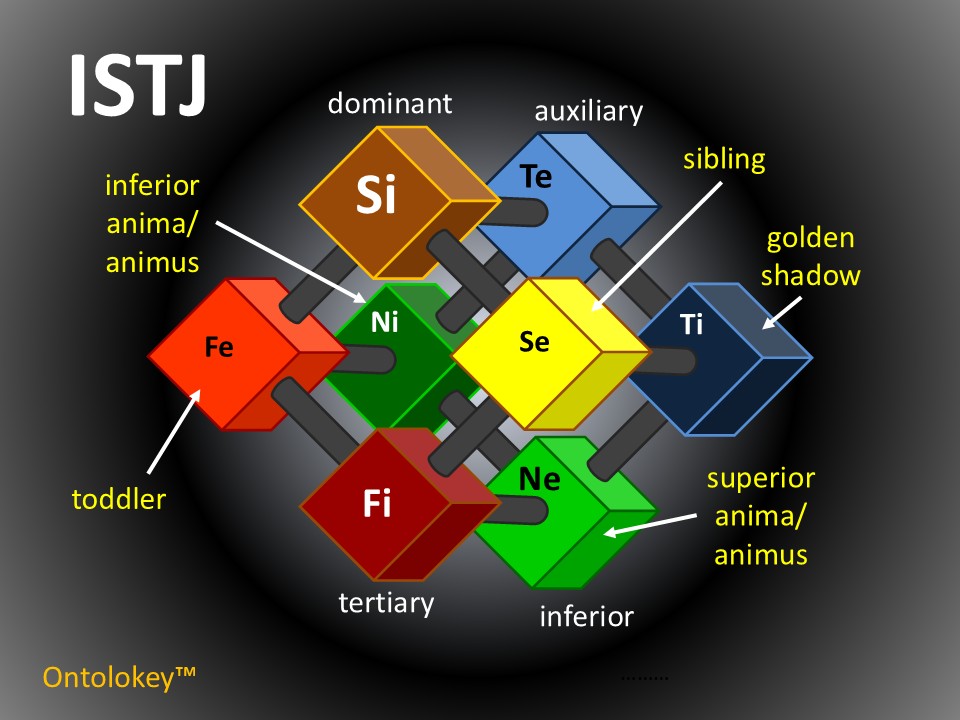
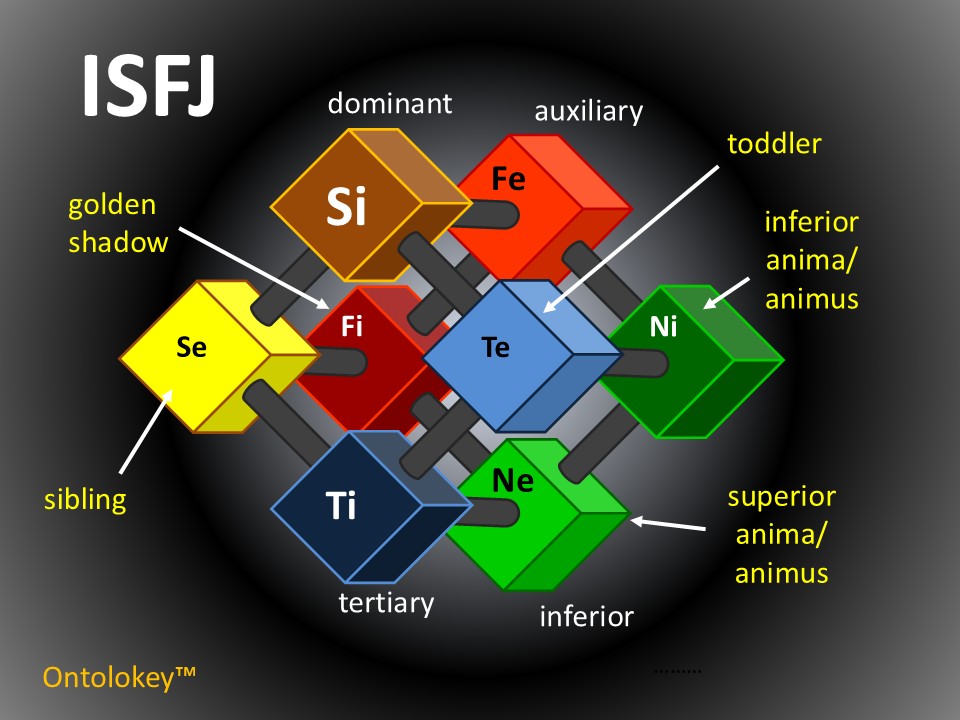
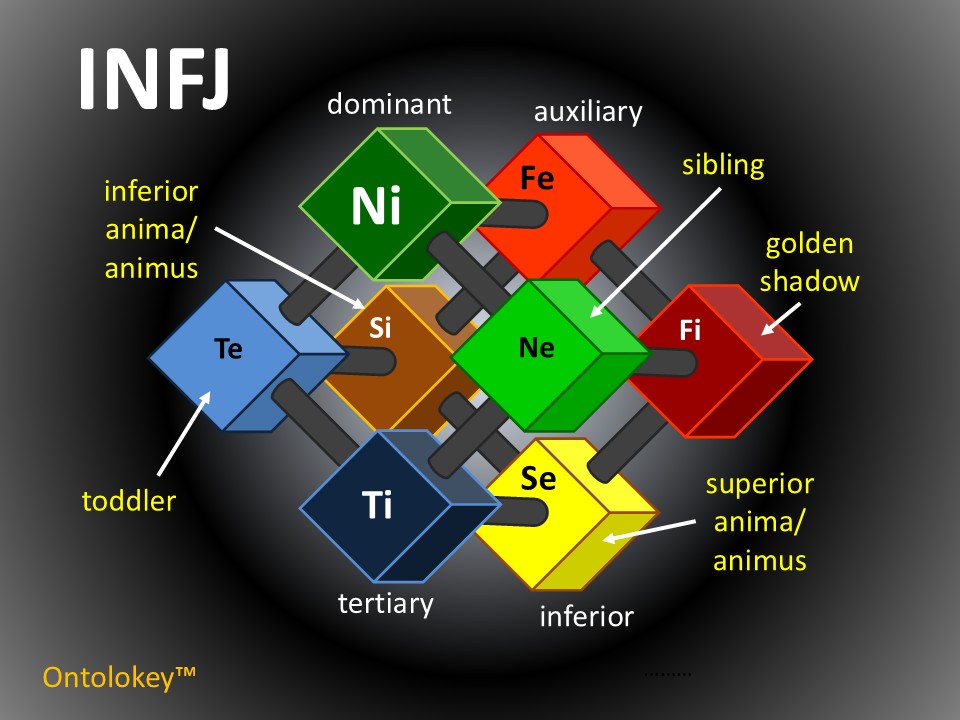
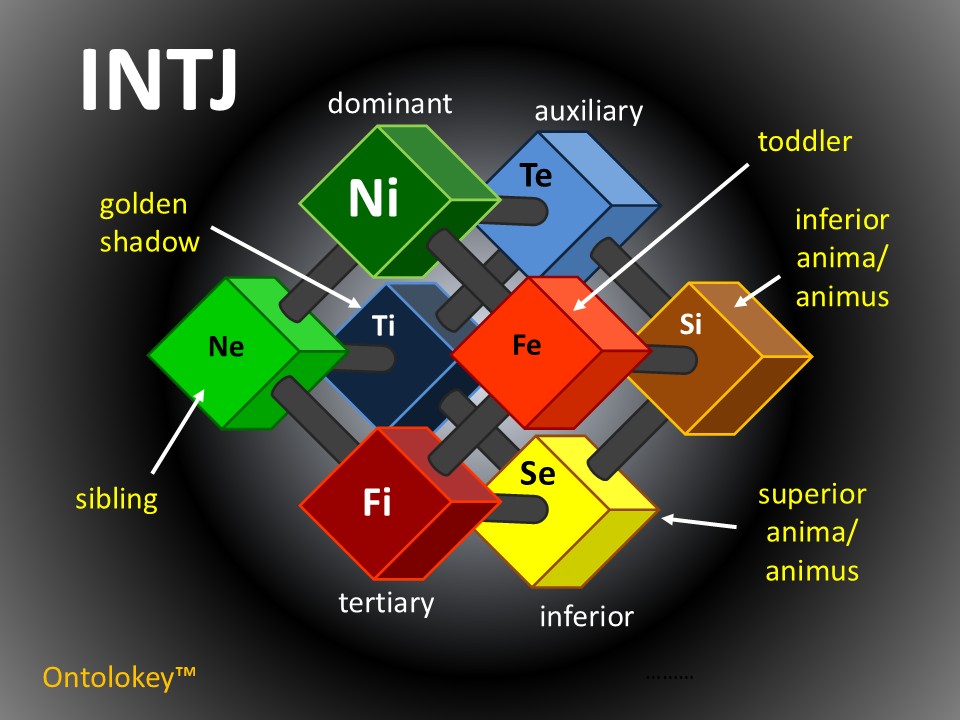
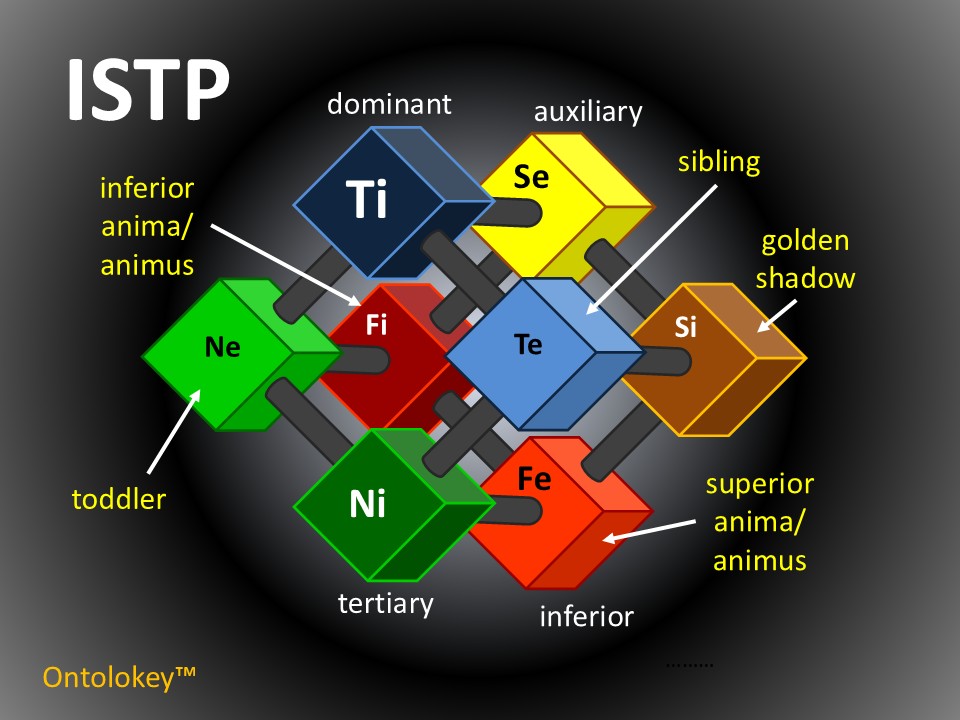
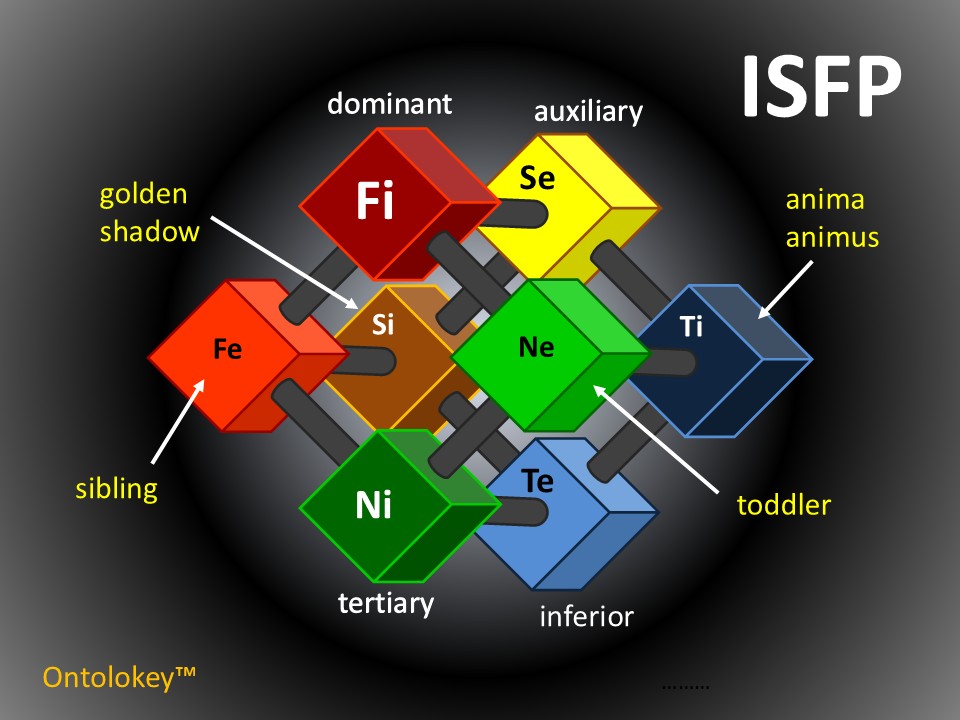
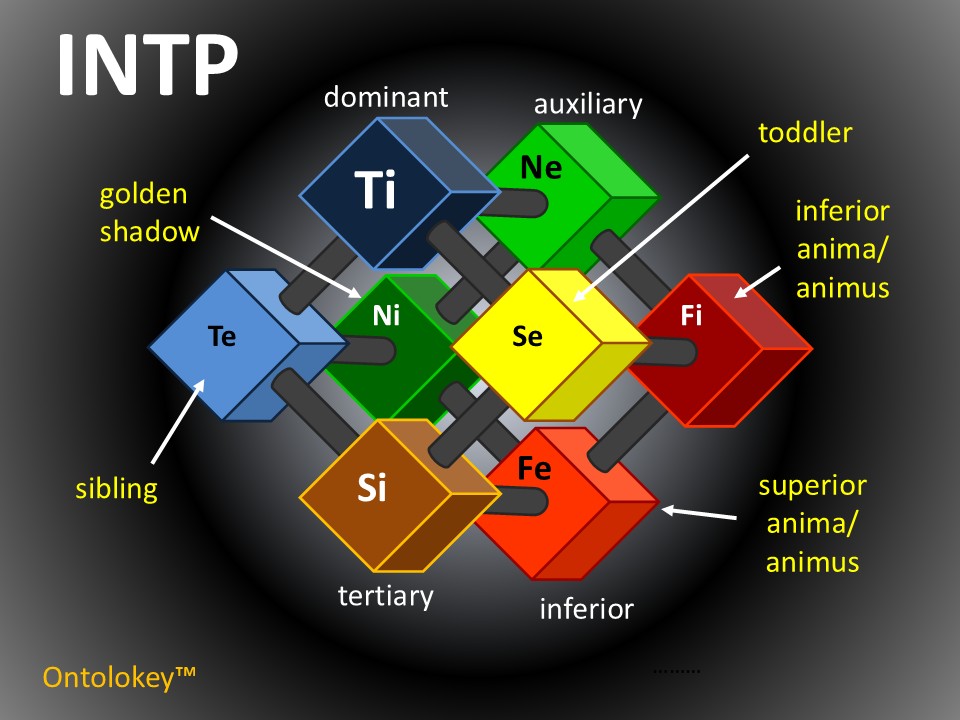
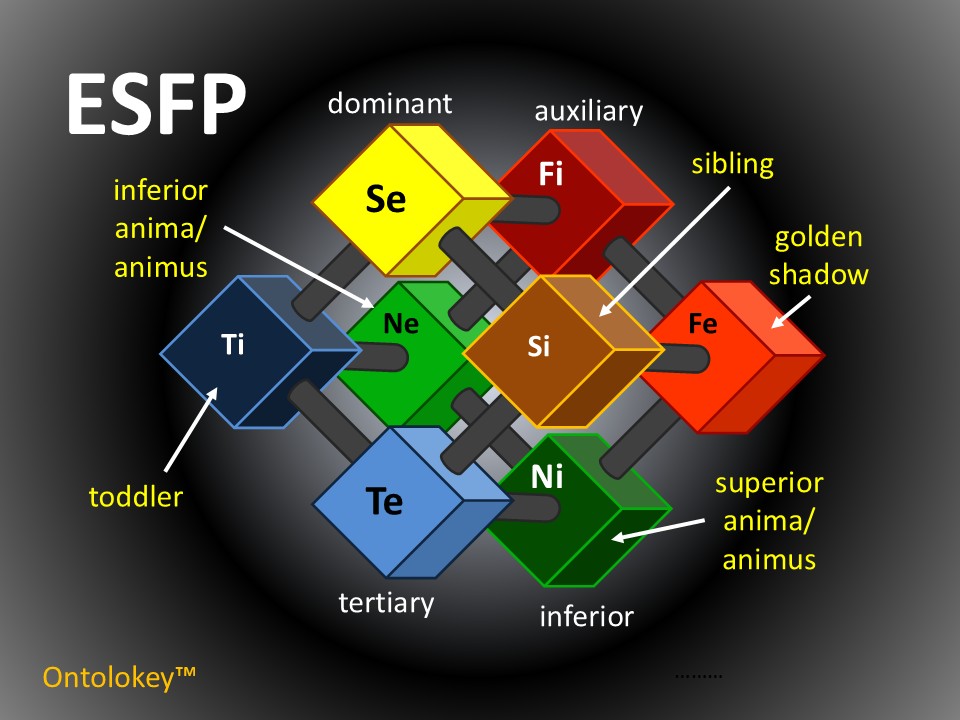
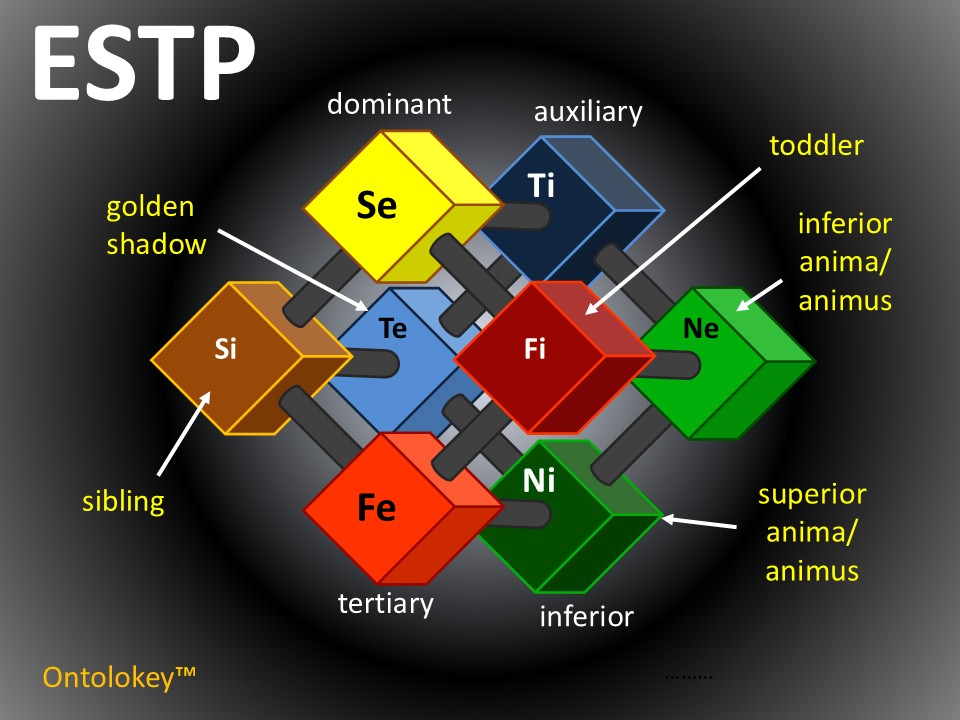
 Ontolokey